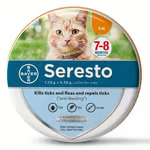
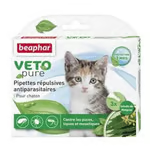
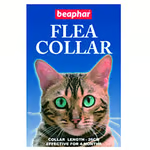
This category encompasses various deworming and flea control products, designed to provide fundamental health support for felines. These products typically come in different forms, such as oral medications, topical spot-ons, or sprays, targeting common internal parasites (like roundworms, tapeworms) and external parasites such as fleas and ticks. The selection of cat healthcare products is diverse, allowing for choices based on a cat's age, weight, and lifestyle. For instance, some products are formulated specifically for kittens, while others are suitable for adult cats. The administration methods and frequencies of these different deworming and flea control products vary, with some requiring regular application. These supplies aim to maintain the cat's health, forming a crucial part of routine care.
Flea and Worm Control and Cat Health Supplements represent a broad category of products designed to address specific physiological needs and external parasitic threats in felines.
This article aims to describe the structural and characteristic attributes of this product category, focusing on objective information rather than product recommendations or comparative evaluations.
Flea and Worm Control and Cat Health Supplements: Classification by Application Method
The classification of flea and worm control products for felines often differentiates based on their application method, which dictates how the active ingredients are administered to the animal. Topical treatments, such as spot-ons or neck collars, involve external application to the cat's skin or fur. Spot-on formulations typically come in small vials, containing a liquid solution that is applied directly to a localized area, commonly at the base of the neck or between the shoulder blades, to prevent the cat from licking it off. The active compounds then spread across the skin's surface or are absorbed into the sebaceous glands, distributing over the body over time. Neck collars release active ingredients that either repel or kill parasites through direct contact or by diffusion into the fur. Oral treatments, conversely, are administered internally. These can be in the form of tablets, chewable treats, or liquid suspensions, ingested by the cat. The active compounds are absorbed into the bloodstream, where they can then act systemically to target internal parasites or be distributed to the skin to affect external parasites when they feed on the treated animal. Injectable medications, while less common for routine owner administration, represent another internal application method, typically administered by veterinary professionals for specific long-acting treatments. Cat health supplements, distinct from parasiticides, are generally administered orally, often mixed with food or given directly as treats or liquids. Their primary mode of delivery is internal absorption through the digestive system to provide systemic nutritional support or target specific physiological functions.
Flea and Worm Control and Cat Health Supplements: Material Composition and Formulation
The material composition and formulation methods vary substantially across different types of flea and worm control and cat health supplements. For flea and worm control products, active pharmaceutical ingredients (APIs) are central. Insecticides and acaricides used for flea and tick control often include pyrethroids, fipronil, selamectin, or isoxazolines. These chemicals are formulated into solutions for topical spot-ons, embedded into polymer matrices for collars, or incorporated into palatable bases for oral tablets. Anthelmintics, for deworming, typically contain compounds like praziquantel, pyrantel, fenbendazole, or milbemycin oxime, designed to target various internal parasites. These are often formulated as tablets, pastes, or liquid suspensions to facilitate oral administration. Excipients, such as solvents, binders, flavoring agents, and stabilizers, are integral to ensure product stability, palatability, and effective delivery of the APIs. For cat health supplements, the material composition is primarily nutritional or therapeutic. Common ingredients include vitamins (e.g., B vitamins, vitamin E), minerals (e.g., zinc, selenium), essential fatty acids (e.g., omega-3 from fish oil), amino acids (e.g., taurine, lysine), probiotics, prebiotics, and botanical extracts. These are formulated into chewable tablets, powders, gels, or liquid drops. The selection of excipients for supplements focuses on palatability and bioavailability, often incorporating natural flavors or binders. Manufacturing processes for these products involve precise blending, granulation, compression (for tablets), or sterile filling (for liquids and spot-ons), adhering to pharmaceutical or nutraceutical production standards to ensure consistent dosage and purity. The structural characteristics of a spot-on applicator, for instance, include a calibrated pipette designed for accurate volume delivery, while a deworming tablet is typically a compressed powder matrix designed for dissolution in the digestive tract. Flea and worm control products require careful formulation to ensure the active ingredients remain stable and effective over the product's shelf life, while also minimizing potential irritation to the cat's skin or digestive system. Similarly, cat health supplements are formulated to ensure the stability of delicate nutrients and their absorption efficiency.
Flea and Worm Control and Cat Health Supplements: Usage Contexts and Environmental Factors
The efficacy and suitability of flea and worm control and cat health supplements can be influenced by various usage contexts and environmental factors. For flea and worm control products, the prevalence of parasites in a given geographical region, seasonal variations, and the cat's lifestyle (indoor versus outdoor) are significant considerations. Cats with outdoor access are generally exposed to a wider range of parasites, necessitating more consistent preventative measures. Environmental humidity and temperature can affect the survival rates of fleas and ticks, thereby influencing the required frequency or type of flea and worm control application. For example, some topical treatments may have reduced efficacy if a cat is frequently bathed or exposed to heavy rain shortly after application, as the active ingredients may be washed away before full distribution or absorption. The presence of other pets in the household, particularly those with active infestations, can also impact the effectiveness of a treatment regimen for an individual cat, as re-infestation can occur from untreated animals or the environment. Regarding cat health supplements, the cat's age, existing health conditions, and dietary intake are crucial contextual factors. For instance, a senior cat may benefit from joint support supplements, while a cat recovering from illness might require immune-boosting supplements. The overall nutritional quality of the cat's regular diet can also determine the necessity and type of supplementation. Environmental stressors, such as changes in routine or household, can sometimes lead to physiological responses that might be mitigated by certain calming or immune-supportive supplements. The storage conditions of both flea and worm control products and cat health supplements are also critical; exposure to extreme temperatures or light can degrade active ingredients or nutrients, compromising their effectiveness. Understanding these usage contexts is essential for comprehending the intended operational parameters of these Flea and Worm Control and Cat Health Supplements.
Flea and Worm Control and Cat Health Supplements: Product Characteristics from Sales Ranking
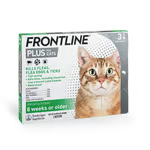
Rank 1: FRONTLINE Plus for Cats & Kittens Flea Drops. This product is a topical spot-on treatment. Its formulation typically includes fipronil and (S)-methoprene as active ingredients. Fipronil is an insecticide that acts on the central nervous system of insects, leading to paralysis and death. (S)-methoprene is an insect growth regulator (IGR) that prevents the development of flea eggs and larvae. The product is contained in pre-measured pipettes designed for application directly onto the cat's skin, usually between the shoulder blades. The liquid solution is formulated to spread across the skin's surface and be stored in the sebaceous glands, providing sustained release.
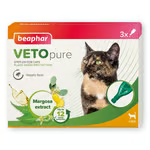
Rank 2: Beaphar VETO pure Adult Cat "Back to Nature" Drops, 3 tubes per box. This product is described as a "natural" drop formulation. Such products typically rely on botanical extracts or essential oils as their active components, rather than synthetic insecticides. Common ingredients in natural formulations for flea and tick deterrence include extracts from neem, lavender, eucalyptus, or citronella. These compounds are believed to act as repellents or inhibitors of parasitic development. The drops are packaged in individual tubes for topical application, similar to traditional spot-on treatments, intended to be applied to the cat's skin.
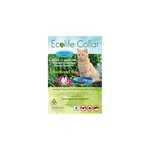
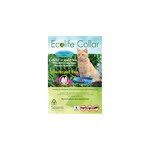
Rank 3: Ecolife Collar Natural Flea Repellent Collar for Cats, Blue. This item is a neck collar designed for continuous release of repellent substances. It is constructed from a polymer material, often PVC or a similar flexible plastic, impregnated with active ingredients. For "natural" repellent collars, these ingredients are typically essential oils or plant-derived compounds, such as geraniol, citronella, or neem oil, which evaporate from the collar surface to create a protective field around the cat. The blue color refers to the physical pigmentation of the polymer material itself. The collar's structure allows for adjustable fitting around the cat's neck, ensuring contact with the fur and skin while maintaining comfort.
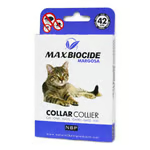
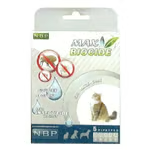
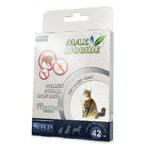
Rank 4: Max Biocide Cat Neem Oil Flea Repellent Collar, 42cm. Similar to other repellent collars, this product is a flexible polymer collar impregnated with active substances. The key active ingredient specified is neem oil. Neem oil, extracted from the neem tree (Azadirachta indica), contains compounds like azadirachtin, which are known for their insecticidal and repellent properties against various pests, including fleas. The collar's length of 42cm indicates its physical dimension, designed to accommodate a range of cat neck sizes, often requiring trimming for a customized fit. The polymer matrix ensures a slow and sustained release of the neem oil over an extended period. This design contributes to the continuous deterrence provided by Flea and Worm Control products of this type.
Rank 5: Japan Earth Pet Medicinal Anti-Tick Flea Drops for Cats, 3 bottles (Discontinued). This product, though discontinued, was a topical drop formulation. The term "medicinal" suggests it contained active pharmaceutical ingredients designed to kill or repel fleas and ticks. Japanese formulations often utilize pyrethroid compounds or similar synthetic insecticides in their topical applications. The packaging of "3 bottles" indicates multiple single-dose applications, consistent with typical spot-on product structures. The discontinuation implies a change in product line or regulatory status, not a fundamental difference in the structural category of such Flea and Worm Control items.
Flea and Worm Control and Cat Health Supplements: Quality Standards and Labeling Norms
Quality standards and labeling norms for flea and worm control and cat health supplements are subject to regulatory oversight, which varies by jurisdiction. For flea and worm control products, which are often classified as veterinary medicines or pesticides, stringent regulations typically govern their manufacturing, efficacy, and safety. In many regions, these products must undergo rigorous testing to demonstrate their effectiveness against target parasites and their safety for the intended animal species. Labels for these products are required to display the active ingredients, their concentrations, the target parasites, the duration of efficacy, application instructions, potential side effects, and warnings for users. The manufacturing facilities are often subject to Good Manufacturing Practices (GMP) regulations to ensure product consistency and purity. Batch numbers and expiration dates are mandatory for traceability and quality control. Transparency in labeling extends to specifying the age and weight range of cats for which the product is approved. For cat health supplements, regulatory frameworks can be less stringent than for veterinary medicines, often falling under food or feedstuff regulations. However, reputable manufacturers adhere to voluntary quality standards or specific nutraceutical guidelines. Labels for supplements typically list all ingredients, their quantities, and recommended daily dosages. Claims made regarding the product's benefits must be substantiated, though the burden of proof may differ from that of pharmaceutical products. Documentation norms include certificates of analysis for raw materials and finished products, demonstrating the absence of contaminants and the accurate concentration of active components. Some jurisdictions require registration of all Flea and Worm Control and Cat Health Supplements before they can be marketed. Adherence to these standards ensures consumer confidence and the safety of the animals receiving these products.
Flea and Worm Control and Cat Health Supplements: Factual Insights
One verifiable factual insight concerning flea and worm control products is that the life cycle of fleas can continue in the environment, even if adult fleas are removed from the animal. A significant portion of the flea population (approximately 95%) exists as eggs, larvae, and pupae within the cat's immediate surroundings, such as carpets, bedding, and furniture. Therefore, effective flea control often requires not only treating the animal but also addressing the environmental stages of the flea life cycle through methods like vacuuming and, in some cases, environmental sprays containing insect growth regulators. This understanding underpins the design of some Flea and Worm Control products that target multiple life stages. Another factual insight regarding cat health supplements, particularly those containing probiotics, relates to the specificity of bacterial strains. Not all probiotic strains offer the same benefits, nor are all strains effective across different species. For a probiotic supplement to be beneficial for felines, it must contain specific bacterial strains that are known to colonize the feline gastrointestinal tract and exert a positive effect on gut health. The efficacy is highly dependent on the viability of these strains through the digestive process and their ability to establish themselves in the gut microbiome. This highlights the importance of species-specific formulations within the broader category of Flea and Worm Control and Cat Health Supplements.
The category of Flea and Worm Control and Cat Health Supplements encompasses a diverse array of products designed to manage feline health. These products exhibit variations in their active ingredients, delivery mechanisms, and intended physiological impacts. Their structural components and material compositions are tailored to specific functions, ranging from external parasitic control to internal nutritional support. The application and effectiveness of these products are further influenced by environmental factors and the individual characteristics of the feline recipient. Adherence to established quality standards and transparent labeling practices remains a consistent expectation across this product domain.
......View All