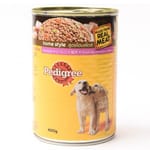
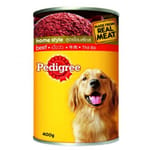
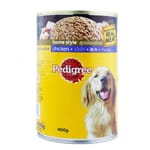
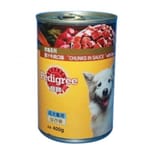
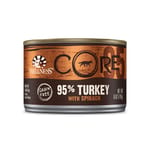
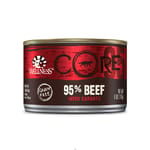
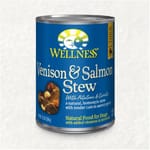
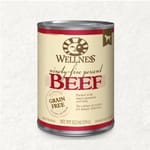
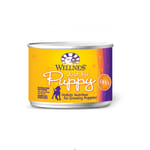
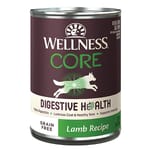
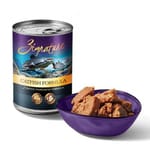
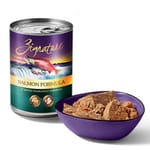
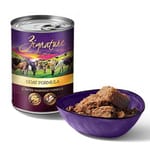
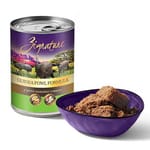
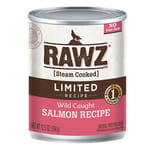
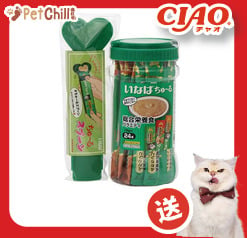
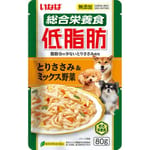
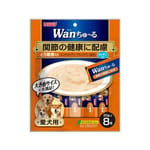
Dog wet food, often referred to as dog canned food, is a common type of canine diet that provides essential nutrients. These products typically consist of ingredients such as meat, organs, vegetables, and grains, processed to ensure a longer shelf life. Dog canned food has a higher moisture content and a distinct texture, which can contribute to a dog's hydration. Various formulations are available on the market, designed to cater to the needs of dogs of different ages, sizes, or activity levels. Some dog wet food products may be formulated with specific nutritional goals, such as providing additional protein or fiber. When selecting dog canned food, pet owners often consider the ingredient list and their dog's palatability preferences. Due to its convenience and variety, dog canned food holds a significant place in a dog's daily diet, serving as a main meal, a supplement to dry kibble, or a treat. This type of food is usually packaged in metal cans to maintain the freshness and safety of its contents.
Canned dog food refers to commercially prepared pet food products presented in hermetically sealed containers, typically metal cans, designed to preserve their contents without refrigeration until opened. These products are formulated to provide nutritional sustenance for canine consumption, with compositions varying based on intended dietary roles and target animal profiles.
This article aims to describe the structural attributes, material compositions, and usage contexts within the category of canned dog food. Its purpose is solely descriptive, focusing on verifiable, objective information regarding the characteristics of these products, rather than offering recommendations or comparative analyses of specific items.
Classifications of Canned Dog Food
The classification of canned dog food in practical use and supply contexts typically involves several primary distinctions. One common division is based on the food's intended dietary role: whether it serves as a complete and balanced meal or as a complementary feedingstuff. Complete and balanced canned dog food is formulated to meet all the nutritional requirements of a dog when fed as the sole diet, adhering to established nutritional profiles such as those set by the Association of American Feed Control Officials (AAFCO) or the European Pet Food Industry Federation (FEDIAF). Conversely, complementary canned dog food is designed to be fed alongside other food sources, providing supplemental nutrients, moisture, or palatability enhancers, but not intended to cover all dietary needs independently. Another significant classification differentiates between adult maintenance formulas, puppy formulas, and senior formulas, each tailored to the specific life stage and associated nutritional demands of the canine. Furthermore, specialized or therapeutic canned dog food formulations exist, often prescribed by veterinarians, addressing specific health conditions such as gastrointestinal sensitivities, renal issues, or weight management. These specialized diets feature modified nutrient profiles, including adjusted protein, fat, fiber, and mineral levels, to support therapeutic objectives. The physical form of the contents also provides a basis for classification, with common types including paté, chunks in gravy, shredded meat, or minced formulations, each offering distinct textural properties. These structural variations in canned dog food are achieved through specific processing techniques that influence the final consistency and appearance of the product.
Material Composition and Processing Techniques in Canned Dog Food
The material composition and processing techniques employed in the production of canned dog food exhibit considerable variation, influencing the final product's nutritional profile, texture, and shelf stability. Primary ingredients typically include a combination of animal-derived proteins, such as beef, chicken, lamb, or fish, along with plant-based components like grains (e.g., rice, barley, corn), vegetables (e.g., peas, carrots, sweet potatoes), and fruits. Protein sources can be incorporated as whole muscle meat, meat by-products, or rendered meals, each contributing different amino acid profiles and digestibility characteristics. Fats, often sourced from animal fats (e.g., chicken fat) or vegetable oils (e.g., sunflower oil, flaxseed oil), are included to provide energy, essential fatty acids, and to enhance palatability. Carbohydrate sources supply additional energy and fiber, while vitamins and minerals are added to ensure the product meets established nutritional standards. Gelling agents, such as carrageenan, guar gum, or xanthan gum, are frequently used to create the desired texture, particularly in paté or gravy formulations. The manufacturing process for canned dog food generally involves several key steps. Ingredients are first mixed according to a specific formulation. This mixture is then filled into metal cans, which are subsequently sealed. The sealed cans undergo a thermal sterilization process, typically retort cooking, where they are heated under pressure to high temperatures for a specific duration. This process eliminates pathogenic microorganisms and spoilage bacteria, ensuring the product's microbiological safety and extended shelf life. The high-temperature, high-pressure environment also cooks the ingredients, making them digestible and altering their texture. The exact temperature and duration of the retort process are precisely controlled to achieve commercial sterility while minimizing nutrient degradation. After sterilization, the cans are cooled and labeled. Variations in ingredient sourcing, formulation ratios, and specific thermal processing parameters contribute to the diverse array of canned dog food products available, each with distinct material and structural attributes.
Usage Contexts and Canned Dog Food Properties
The properties of canned dog food frequently vary across different usage environments or conditions, reflecting the diverse applications and specific requirements associated with canine nutrition. For instance, in contexts requiring increased hydration, such as for dogs with certain urinary tract conditions or those living in arid environments, canned dog food is often favored due to its high moisture content, typically ranging from 70% to 85%. This elevated moisture level contributes significantly to a dog's daily fluid intake, which can be particularly beneficial for maintaining renal function and preventing dehydration. In contrast, for dogs with specific caloric density requirements, such as highly active working dogs or those needing to gain weight, formulations may feature higher fat and protein content to deliver a more concentrated energy source per serving. Conversely, for dogs requiring weight management, low-fat and high-fiber canned dog food options are produced to promote satiety with fewer calories. The texture of canned dog food also plays a role in usage context; softer paté or minced formulations are often preferred for puppies, senior dogs, or those with dental issues, as they are easier to chew and digest compared to chunkier varieties. For dogs with food sensitivities or allergies, single-protein source or limited-ingredient canned dog food is formulated to minimize exposure to potential allergens. The packaging itself, a hermetically sealed can, is designed for long-term storage without refrigeration prior to opening, making it suitable for situations where refrigeration is not consistently available, such as during travel or in emergency preparedness kits. However, once opened, the product requires refrigeration and typically has a limited shelf life, usually 2-3 days, to maintain its safety and quality. These variations in material composition, moisture content, and textural properties in canned dog food directly correlate with their suitability for different canine health profiles, activity levels, and logistical considerations in various usage scenarios.
Canned Dog Food Product Characteristics by Sales Ranking
The following descriptions detail the material, formulation, and structural characteristics of specific canned dog food products, based strictly on their reported sales ranking. These descriptions focus on objective attributes without any assessment of quality or suitability.
Rank 1: Royal Canin Veterinary Diet Canine Gastrointestinal Low Fat Wet Dog Food 420g – This product is formulated as a veterinary diet, specifically targeting adult dogs requiring gastrointestinal support. Its composition emphasizes a low-fat profile, which is a key characteristic for managing certain digestive sensitivities. The formulation includes easily digestible proteins and prebiotics to support digestive health. The texture is typically a soft loaf or paté, facilitating consumption for dogs with compromised digestive systems. The primary ingredients are selected for their digestibility and to minimize gastrointestinal upset, often including rice, poultry by-products, and specific fibers. The 420g can contains a homogeneous mixture designed for controlled nutrient delivery.
Rank 2: CANAGAN Free-Run Chicken Feast Wet Dog Food for Senior Dogs 400g – This canned dog food is formulated for senior dogs, indicating a nutritional profile adjusted for the metabolic changes associated with aging. The primary protein source is chicken, presented as a "feast," suggesting a significant proportion of meat content. The formulation likely includes ingredients that support joint health, such as glucosamine or chondroitin, and may have adjusted phosphorus levels to support renal function in older animals. The 400g can typically contains a moist, palatable texture, often chunks in gravy or a soft paté, to accommodate potentially reduced appetite or dental issues common in senior canines. The ingredient list would emphasize high-quality protein and digestible carbohydrates.
Rank 3: Monge Simba Veal Wet Dog Food 415g – This product features veal as its primary protein source. The 415g can contains a formulation centered around this specific meat, likely combined with other ingredients such as cereals or vegetables to create a complete meal. The texture is generally a soft, minced, or chunky consistency, designed for palatability and ease of consumption. The material composition would include veal meat and derivatives, along with vitamins and minerals to meet general nutritional requirements for adult dogs. The product is intended for general adult dog maintenance, without specific therapeutic claims or life-stage targeting beyond adulthood.
Rank 4: Hills Prescription Diet i/d Low Fat Digestive Care Wet Dog Food 13oz – This is another veterinary prescription diet, similar in its therapeutic intent to the Rank 1 product. It is specifically formulated for digestive care with a "low fat" characteristic, which is crucial for managing conditions like pancreatitis or other fat-sensitive gastrointestinal issues. The 13oz (approximately 369g) can contains a highly digestible formulation, often incorporating ginger and specific fibers to support digestive health. The protein sources are selected for ease of digestion, and the overall nutrient balance is designed to restore and maintain gastrointestinal health. The texture is typically a smooth paté or a fine mince, intended to be gentle on the digestive system.
Rank 5: DogCatStar Silver Nourish Can for Senior Dogs 95% Low Sodium No-Gum Main Meal Can Vitality Roast Beef 80g – This canned dog food is specifically designed for senior dogs, emphasizing a "95% low sodium" and "no-gum" formulation. The primary flavor is vitality roast beef, indicating beef as a significant protein component. The "no-gum" characteristic suggests the absence of common gelling agents like carrageenan or guar gum, which may be a consideration for dogs with sensitivities to these ingredients. The 80g can size indicates a smaller portion, potentially suitable for smaller breeds or for serving as a supplemental meal. The "main meal can" designation implies it is formulated as a complete diet, despite its smaller size. The "low sodium" aspect is particularly relevant for managing conditions like cardiac disease in senior dogs. The texture is likely a soft, easily consumable consistency, given its target demographic.
Quality Standards and Labeling Transparency for Canned Dog Food
The adherence to verifiable quality standards and the provision of transparent labeling are fundamental aspects of the canned dog food industry. In regions such as the United States, the Association of American Feed Control Officials (AAFCO) plays a pivotal role in establishing model regulations and ingredient definitions for pet food. While AAFCO itself does not regulate pet food, its guidelines are adopted by individual states, which then enforce these standards. AAFCO's nutrient profiles for dog food, categorized by life stage (e.g., growth and reproduction, adult maintenance), dictate the minimum and maximum levels of essential nutrients that a complete and balanced canned dog food must contain. Compliance with these profiles is often indicated on labeling with statements such as "Formulated to meet the nutritional levels established by the AAFCO Dog Food Nutrient Profiles for [life stage]." Similarly, in Europe, the European Pet Food Industry Federation (FEDIAF) provides nutritional guidelines that are widely adopted by manufacturers. Labeling transparency requires manufacturers to list all ingredients in descending order by weight, providing consumers with information on the product's primary components. This includes specifying the source of proteins, fats, and carbohydrates. Additionally, guaranteed analysis panels on canned dog food labels provide minimum percentages for crude protein and crude fat, and maximum percentages for crude fiber and moisture. Some labels also include caloric content information. The manufacturing process itself is subject to quality control measures, including hazard analysis and critical control points (HACCP) systems, to ensure product safety and consistency. These systems monitor raw material quality, processing parameters (such as retort temperatures and pressures), and finished product testing for pathogens and nutrient integrity. Documentation norms often include batch numbers, manufacturing dates, and best-before dates, which are crucial for traceability and consumer safety. The presence of certifications from independent bodies can further attest to adherence to specific quality or ethical standards in the production of canned dog food.
Factual Insights on Canned Dog Food
A verifiable factual insight regarding canned dog food relates to its typical water activity. Water activity (aw) is a measure of the unbound water in a food product, indicating the amount of water available for microbial growth. Canned dog food, due to its high moisture content and thermal sterilization process, generally has a very low water activity value, typically below 0.85, and often much lower. This low water activity, combined with the hermetic sealing, is a primary reason for its long shelf stability at ambient temperatures, as it significantly inhibits the growth of bacteria, yeasts, and molds, even after the cooking process. Another verifiable factual insight concerns the degradation of certain heat-sensitive vitamins during the retort process. While thermal sterilization is essential for safety and shelf life, some vitamins, particularly certain B vitamins and vitamin C, can be partially degraded by high temperatures. To compensate for this, manufacturers often add these vitamins in excess of the minimum required amounts before processing, or they may utilize more heat-stable forms of these nutrients, to ensure that the final canned dog food product still meets its stated nutritional profiles after undergoing the necessary sterilization. This controlled over-fortification accounts for anticipated losses during manufacturing, ensuring the nutritional integrity of the canned dog food.
The preceding information has provided an overview of canned dog food, detailing its structural attributes, material composition, and usage contexts. The discussion has encompassed various classification methods, manufacturing techniques, and the role of quality standards, without making any recommendations or comparative evaluations of specific products.
......View All