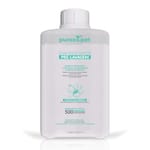
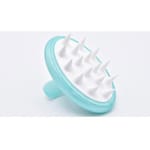
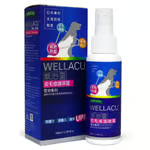
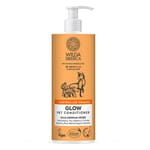
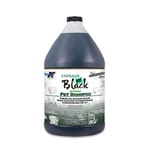
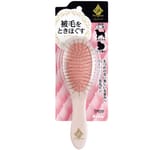
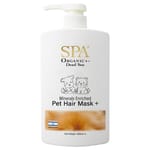
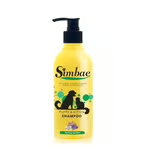
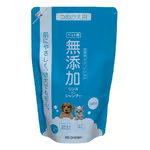
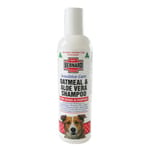
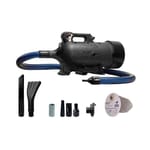
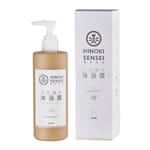
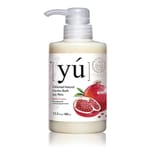
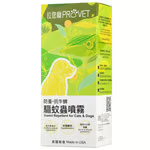
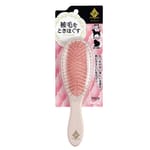
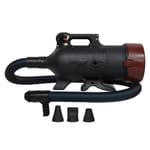
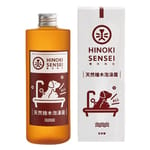
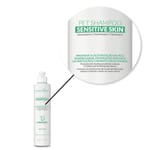
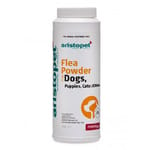
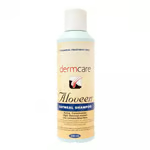
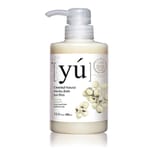
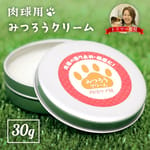
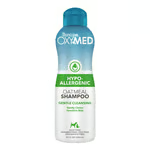
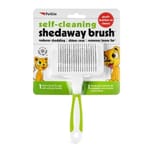
This category page compiles a variety of skin and hair care as well as grooming products, covering multiple aspects of pet daily cleaning and coat maintenance. Users can find appropriate shampoos, conditioners, and auxiliary tools for different hair types and skin conditions. For instance, in cases where a dog's coat color appears faded or dull, these products offer options ranging from basic cleaning to deep nourishment, aiming to maintain the health and luster of the pet's fur. The design of these skin and hair care products considers the sensitivity of pet skin, utilizing gentle formulations to ensure cleansing without irritation. The diverse range of personal care products is intended to meet pet owners' general needs for keeping their beloved companions clean and their coats healthy, ensuring pets maintain a good hair condition, which is a crucial part of daily care.
Pet skin and coat care and grooming products encompass a diverse range of formulations and devices designed to maintain the integumentary health and appearance of companion animals.
This article aims to describe the structural attributes, material composition, and usage contexts within this category, focusing on verifiable, objective information without offering product recommendations or comparative advantages.
Pet Skin and Coat Care and Grooming Products: Common Divisions
The pet skin and coat care and grooming products category is commonly divided based on their primary function and application method. One significant division is between topical treatments and internal supplements. Topical treatments include shampoos, conditioners, sprays, wipes, and specialized foams, each designed for external application to the animal's skin and coat. These products often target specific concerns such as cleansing, conditioning, moisturizing, or addressing dermatological conditions. Their material compositions vary widely, incorporating surfactants, emollients, humectants, and sometimes active pharmaceutical ingredients. The application methods for topical products range from direct washing to targeted spot treatments. For instance, a cleansing shampoo requires full body application and rinsing, while a localized foam might be applied to a specific area without rinsing. The physical form of these products—liquid, foam, spray, or wipe—also dictates their typical use scenario and the components required for their stability and efficacy. Another common division is by species classification, with formulations often tailored for either canine or feline use, recognizing differences in skin pH, coat structure, and grooming behaviors. Some products, however, are formulated for multi-species application, indicating a broader compatibility of their ingredients. Furthermore, products can be classified by their intended frequency of use, ranging from daily maintenance items like grooming wipes to periodic treatments such as medicated shampoos. The structural attributes of these divisions are reflected in their packaging, delivery systems, and ingredient lists, which are designed to support their specific functional claims. Pet skin and coat care and grooming products are therefore segmented into clear functional and application groups, each with distinct material and structural considerations.
Pet Skin and Coat Care and Grooming Products: Material Composition and Formulation Methods
The material composition and formulation methods of pet skin and coat care and grooming products exhibit considerable variation, driven by their intended function and target animal. Shampoos, for instance, primarily consist of water, surfactants, and conditioning agents. Surfactants, such as sodium laureth sulfate or cocamidopropyl betaine, are crucial for their cleansing action, forming micelles that encapsulate dirt and oils for removal during rinsing. The choice and concentration of surfactants influence the product's lathering properties and cleansing strength. Conditioning agents, including silicones, polyquaterniums, or natural oils, are incorporated to reduce static, improve combability, and impart a smooth feel to the coat. The pH of these formulations is carefully adjusted, typically to be near neutral or slightly acidic, to align with the physiological pH of canine and feline skin, minimizing irritation. Foams, such as an emergency foam for localized issues, often utilize specific surfactant systems and propellants (in aerosol forms) or foaming agents (in pump dispensers) to create their characteristic texture, allowing for targeted application and sometimes a leave-on formulation. The material composition of wipes typically involves a non-woven fabric substrate saturated with a liquid solution. This solution often contains mild cleansing agents, humectants like glycerin, and sometimes botanical extracts or antimicrobials. The substrate material, such as rayon or polyester, influences the wipe's strength, absorbency, and texture. Internal supplements aimed at improving canine coat nutrition, such as those related to dog coat health or addressing a dull dog coat, often contain fatty acids (Omega-3 and Omega-6), vitamins (especially biotin and vitamin E), and minerals (like zinc). These ingredients are typically encapsulated in softgels, chewable tablets, or liquid forms, with carrier oils such as fish oil or flaxseed oil. The formulation method for these supplements involves precise blending and encapsulation to ensure ingredient stability and bioavailability. Specialized products for specific concerns like tear stain removal or ear cleaning contain ingredients tailored to those applications. For example, tear stain removers may include mild oxidizers or chelating agents, while ear cleaners often feature ceruminolytic agents and drying alcohols. The manufacturing processes for these pet skin and coat care and grooming products involve steps such as ingredient dissolution, mixing, emulsification, pH adjustment, and quality control checks to ensure consistency and safety. Understanding these material compositions and formulation methods is central to comprehending the functional attributes of various pet skin and coat care and grooming products.
Pet Skin and Coat Care and Grooming Products: Property Variation Across Usage Environments
The properties of pet skin and coat care and grooming products can vary significantly across different usage environments and conditions, impacting their perceived efficacy and application characteristics. Environmental humidity, for instance, can influence the drying time of topical solutions and the overall feel of the coat after conditioning. In high humidity, products may take longer to dry, and certain humectant-rich formulations might feel slightly tacky. Conversely, in low humidity, the coat might dry more quickly, but some conditioning agents may be less effective at retaining moisture, potentially contributing to issues like a dull dog coat. Water hardness is another critical environmental factor, particularly for cleansing products. Hard water, which contains high concentrations of dissolved minerals like calcium and magnesium, can reduce the lathering ability of shampoos and conditioners. These minerals can react with surfactants, forming insoluble precipitates that may leave a residue on the coat, potentially affecting its shine or texture, which can be a concern for owners noting a black dog's coat turning brown or a white dog's coat turning yellow. Consequently, some pet skin and coat care and grooming products are formulated with chelating agents to mitigate the effects of hard water. The ambient temperature during application also plays a role; very cold water can decrease the solubility of some product components and make rinsing more challenging, while excessively warm water might be uncomfortable for the animal and could potentially strip natural oils from the skin. The presence of environmental allergens or pollutants can also interact with topical products. For example, if an animal is exposed to high levels of dust or pollen, even a freshly cleaned coat might quickly accumulate new particulate matter, necessitating more frequent use of pet skin and coat care and grooming products like grooming wipes. Furthermore, the animal's activity level and exposure to outdoor elements will dictate the type and frequency of care required. An indoor pet typically requires less intensive cleansing than an outdoor or working animal, whose coat may accumulate more dirt, debris, and environmental contaminants. These variations highlight that the performance of pet skin and coat care and grooming products is not solely an intrinsic property of the product itself but is also influenced by the external conditions under which it is used.
Pet Skin and Coat Care and Grooming Products: Product Information Based on Sales Ranking
Rank 1: Positive Care Foaming Emergency Foam Non-Medicated 50ml (Cat and Dog Use) (PPC01) — This product is a topical foam formulation. Its primary structural characteristic is its delivery system, which produces a foam for localized application. The material composition is described as non-medicated, suggesting the absence of pharmaceutical active ingredients. The 50ml volume indicates a relatively small, concentrated product size suitable for targeted use. The formulation is intended for both feline and canine application, implying a pH and ingredient profile generally compatible with both species' skin and coat requirements. The foam consistency allows for adherence to specific areas of the skin or coat without significant runoff, facilitating targeted treatment as part of pet skin and coat care and grooming products.
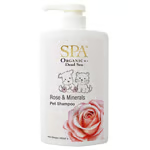
Rank 2: SPA Pet Hot Spring Peony Dead Sea Salt Pet Shampoo 1gal (Cat and Dog Use) (P069) — This product is a liquid shampoo formulation, characterized by its substantial 1-gallon volume, indicating commercial or frequent home use. The material composition specifies the inclusion of "Peony Dead Sea Salt," suggesting the presence of mineral salts, which are often utilized for their purported skin conditioning properties. As a shampoo, its primary function is cleansing, achieved through a surfactant system, though specific surfactants are not detailed. The liquid form necessitates dilution or direct application followed by rinsing. The "Cat and Dog Use" designation confirms its broad species applicability. The term "Hot Spring" in the name may allude to specific mineral components or a formulation designed to emulate certain properties associated with mineral-rich waters, contributing to comprehensive pet skin and coat care and grooming products.
Rank 3: IRIS Cat and Dog Pet Wipes Daily Care Anti-Mite Ear Cleaning Tear Stain Removal 100 Count (White) — This product consists of pre-moistened wipes. The structural characteristic is a non-woven fabric substrate, saturated with a liquid solution. The material composition of the solution is formulated for multiple functions: anti-mite action, ear cleaning, and tear stain removal. This indicates the presence of specific active or functional ingredients targeting each of these concerns. The "100 Count" specifies the quantity of individual wipes within the package. The "Daily Care" designation suggests a mild formulation suitable for regular use. The "White" descriptor likely refers to the color of the wipes themselves. These wipes are designed for external application and do not require rinsing, providing a convenient component of pet skin and coat care and grooming products.
Rank 4: IRIS Cat and Dog Pet Wipes Thickened Anti-Mite Ear Cleaning Tear Stain Removal 100 Count (Pink) — Similar to the Rank 3 product, this item comprises pre-moistened wipes for cats and dogs. The primary structural difference is the "Thickened" attribute, indicating a greater material density or ply of the non-woven fabric substrate compared to standard wipes. This increased thickness can affect absorbency and durability during use. The material composition of the liquid solution is consistent with the Rank 3 product, targeting anti-mite action, ear cleaning, and tear stain removal. The "100 Count" quantity is identical. The "Pink" descriptor refers to the color of the wipes. This variant offers a more robust physical wipe while maintaining the same multi-functional liquid formulation for pet skin and coat care and grooming products.
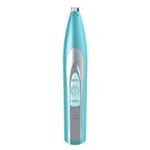
Rank 5: PETKIT Rechargeable Pet 2-in-1 Electric Clipper Pro (pkdt2a_pro) — This product is an electrical grooming tool rather than a topical formulation. Its structural characteristics include a rechargeable power source, an electric motor, and a cutting head designed for pet hair trimming. The "2-in-1" feature typically refers to interchangeable heads or settings for different cutting lengths or precision levels. The materials used in its construction would include plastics for the casing, metal alloys for the blades, and electronic components for the motor and battery. The "Pro" designation often implies enhanced durability, motor power, or precision compared to standard models. This device is a mechanical tool for physical hair removal and shaping, distinct from chemical or nutritional pet skin and coat care and grooming products.
Pet Skin and Coat Care and Grooming Products: Quality Standards and Labeling Norms
Verifiable quality standards, labeling transparency, and documentation norms are integral to the pet skin and coat care and grooming products industry, providing a framework for product integrity and consumer trust. While no single global standardization body governs all aspects, various national and regional regulations, along with industry-specific guidelines, contribute to these norms. In the United States, for instance, many pet grooming products fall under the purview of the Food and Drug Administration (FDA) if they make therapeutic claims (e.g., treating skin conditions), or the Federal Trade Commission (FTC) for general consumer product claims. Products with pesticidal claims (e.g., anti-mite) may be regulated by the Environmental Protection Agency (EPA). These agencies mandate specific labeling requirements, including ingredient lists, net contents, manufacturer information, and cautionary statements. Ingredient lists typically follow INCI (International Nomenclature Cosmetic Ingredient) or similar conventions, providing a standardized way to identify components. Manufacturers are expected to conduct stability testing to ensure the product maintains its physical, chemical, and microbiological properties over its stated shelf life. Good Manufacturing Practices (GMP) are often followed, even if not strictly mandated for all product types, to ensure consistent quality and safety during production. For internal supplements aimed at improving dog coat health or addressing issues like a black dog's coat turning brown, regulatory bodies like the National Animal Supplement Council (NASC) in the US provide a seal of quality assurance, indicating adherence to specific manufacturing, labeling, and adverse event reporting standards. Labeling transparency is crucial, with products expected to clearly state their intended use, species compatibility (e.g., cat and dog use), and any specific application instructions or warnings. For example, a product designed to address a dull dog coat should clearly state its active ingredients and how they contribute to the claimed benefit. Documentation norms include maintaining batch records, quality control data, and safety data sheets for ingredients. Claims such as "hypoallergenic" or "tear-free" are often supported by specific testing protocols, though the definition of these terms can vary across the industry. The absence of certain ingredients, such as parabens or sulfates, is also frequently highlighted on labels as a marketing point, reflecting consumer preferences for specific material compositions in pet skin and coat care and grooming products.
Pet Skin and Coat Care and Grooming Products: Verifiable Factual Insights
One verifiable factual insight regarding pet skin and coat care and grooming products relates to the pH of animal skin. Unlike human skin, which typically has an acidic pH ranging from 4.5 to 5.5, the average pH of canine skin is generally in the range of 6.0 to 7.5, making it more neutral to slightly alkaline. Feline skin pH is also generally within a similar range. Using human shampoos, which are formulated for human skin's acidic pH, on pets can disrupt the natural acid mantle of their skin, potentially leading to dryness, irritation, and increased susceptibility to bacterial or fungal infections. This is why specialized pet skin and coat care and grooming products are formulated to be pH-balanced for animals, maintaining the integrity of their skin barrier. The surfactant systems and buffering agents in pet-specific shampoos are chosen to ensure the final product falls within the appropriate pH range for dogs and cats, contributing to overall dog coat health and preventing issues such as a dull dog coat or a white dog's coat turning yellow due to irritation. Another verifiable insight pertains to the role of essential fatty acids in maintaining coat quality. The integumentary system, including the skin and hair follicles, requires specific nutrients for optimal function and structure. Omega-3 and Omega-6 fatty acids, particularly linoleic acid, alpha-linolenic acid, and eicosapentaenoic acid (EPA), are precursors to prostaglandins and other lipid mediators that play crucial roles in skin barrier function, inflammation regulation, and hair growth cycles. Dietary deficiencies in these essential fatty acids can manifest as a dry, flaky skin, a dull or brittle coat, increased shedding, and a slower rate of hair regrowth, addressing concerns like "what to feed a dog for good coat health" or "dog hair won't grow back." Therefore, internal supplements for canine coat nutrition often include these fatty acids as primary active ingredients. The bioavailability and stability of these fatty acids in supplements are critical, often requiring encapsulation or stabilization with antioxidants to prevent degradation. These pet skin and coat care and grooming products are designed to provide the necessary building blocks for a healthy coat from within, complementing external treatments.
The field of pet skin and coat care and grooming products is characterized by diverse formulations and applications tailored to animal physiology and specific needs. The range of products, from topical cleansers to nutritional supplements, reflects the varied approaches to maintaining animal integumentary health. Understanding the material science, structural attributes, and environmental interactions of these products provides insight into their functional design.
......View All