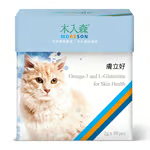
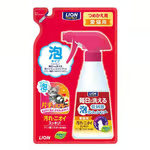
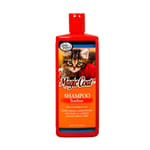
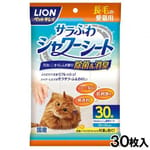
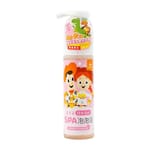
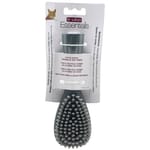
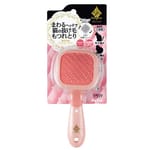
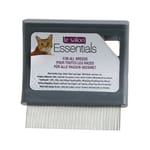
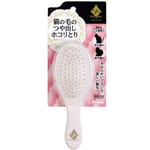
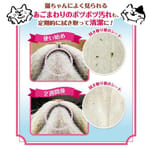
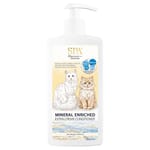
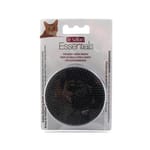
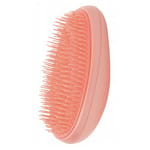
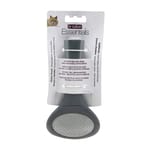
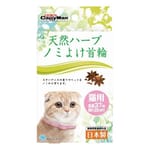
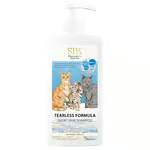
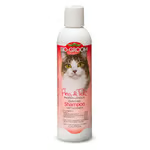
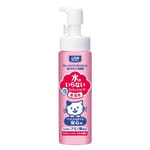
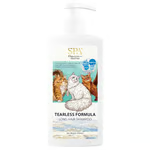
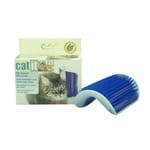
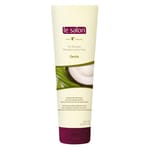
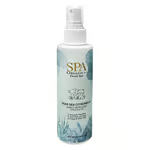
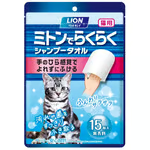
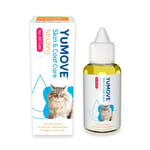
The pet skin and coat care category encompasses a variety of cleaning and grooming products specifically designed for pets, aiming to maintain animal skin health and coat luster. This category includes shampoos, conditioners, hair treatments, and detangling sprays, suitable for different coat types and skin conditions in both cats and dogs. Specifically, cat grooming supplies cater to the unique hair structure and self-grooming habits of felines, offering gentle and safe cleaning solutions. Some products also address issues such as a dog's coat turning yellow or losing its shine, providing corresponding care options to help maintain the natural state of the fur through external cleaning and nourishment. The design of these items considers pets' skin sensitivity and hair growth cycles, achieving basic cleaning and maintenance purposes. Furthermore, this category also includes various grooming tools to ensure coat neatness and reduce tangles.
Cat skin and coat care and grooming products encompass a diverse range of formulations and tools designed to maintain feline dermatological health and fur condition.
This article aims to describe the structural attributes, material composition, and usage context within this category, without providing product recommendations or comparative advantages.
Cat Skin and Coat Care and Grooming Products: Classification by Application Area
The classification of cat skin and coat care and grooming products can be understood through their primary application areas, which typically segment the market into topical treatments, internal supplements, and mechanical grooming tools. Topical treatments are applied directly to the cat's skin or fur and include items such as shampoos, conditioners, sprays, and spot-on solutions. These products often target specific concerns such as parasitic control, odor neutralization, or hydration. Internal supplements, conversely, are ingested and formulated to support skin and coat health from within, frequently containing vitamins, minerals, and fatty acids. Mechanical grooming tools represent a distinct segment, comprising brushes, combs, clippers, and nail trimmers, all designed for physical manipulation of the fur and nails. Each of these broad categories serves a unique function in the comprehensive approach to cat skin and coat care and grooming products, addressing different aspects of feline maintenance. Further differentiation within these categories is often based on the specific active ingredients or the ergonomic design of the tools. For example, shampoos can be medicated for dermatological conditions or formulated for general cleaning, reflecting varied usage contexts. The materials used in grooming tools, such as stainless steel for clippers or various plastics for brush handles, also contribute to their classification. This structured approach allows for a systematic understanding of the diverse offerings within cat skin and coat care and grooming products.
Cat Skin and Coat Care and Grooming Products: Material Composition and Formulation Methods
The material composition and formulation methods of cat skin and coat care and grooming products exhibit significant variation, reflecting their diverse functions. Topical liquid formulations, such as shampoos and conditioners, typically consist of a base of purified water, surfactants for cleansing, emollients for moisturizing, and often active ingredients. Surfactants, like sodium laureth sulfate or cocamidopropyl betaine, are chosen for their ability to emulsify oils and dirt. Emollients, such as glycerin, lanolin, or various plant-derived oils, are incorporated to prevent skin dryness and condition the fur. For products targeting specific issues like parasites, active pharmaceutical ingredients (APIs) such as fipronil or permethrin are integrated into a carrier solution, often a solvent base with stabilizers. The formulation process involves precise mixing and homogenization to ensure uniform distribution of ingredients and product stability. Sprays may utilize aerosol propellants or pump mechanisms, with the liquid matrix being a water-based or alcohol-based solution depending on the intended drying time and ingredient solubility. Internal supplements, on the other hand, are formulated as chewable tablets, capsules, or liquid drops. Common ingredients include omega-3 and omega-6 fatty acids derived from fish oil or flaxseed oil, biotin, zinc, and various B vitamins. These are typically encapsulated or pressed with excipients like microcrystalline cellulose or dicalcium phosphate to form stable dosages. The processing for these supplements involves blending dry ingredients, granulation, and compression for tablets, or precise liquid filling for drops. Mechanical grooming tools are primarily composed of durable materials such as stainless steel for blades and teeth, and various polymers like ABS plastic, polypropylene, or silicone for handles and brush bodies. The choice of polymer often depends on desired flexibility, grip, and resistance to cleaning agents. For instance, some brushes incorporate natural bristles, while others use synthetic fibers designed for specific fur types. The manufacturing involves injection molding for plastic components, stamping and grinding for metal parts, and assembly. This detailed examination of material composition and formulation methods provides insight into the structural characteristics of cat skin and coat care and grooming products.
Cat Skin and Coat Care and Grooming Products: Usage Environments and Conditions
The properties of cat skin and coat care and grooming products can vary considerably across different usage environments and conditions, influencing their efficacy and application. For instance, a shampoo designed for general cleaning in a home environment might be formulated with milder surfactants and a balanced pH suitable for routine use. In contrast, a medicated shampoo for dermatological conditions, often prescribed by a veterinarian, will contain specific active ingredients and potentially a different pH level to address issues such as fungal infections or bacterial dermatitis. The concentration of active ingredients in these medicated cat skin and coat care and grooming products is carefully controlled to ensure therapeutic effect while minimizing potential irritation. Environmental humidity can also impact the performance of certain products; for example, a leave-in conditioner might perform differently in a dry climate compared to a humid one, affecting its ability to moisturize or prevent static electricity. Similarly, the effectiveness of a flea and tick preventative spot-on treatment can be influenced by the cat's exposure to water, with some formulations designed to be water-resistant after a specific drying period, while others may require reapplication if the cat becomes wet. The type of fur, such as long-haired versus short-haired breeds, also dictates the suitability of grooming tools. A slicker brush, effective for detangling long fur, might be too harsh for a short-haired cat. Conversely, a rubber curry brush, ideal for removing loose hair from short coats, may not penetrate dense, long fur effectively. Furthermore, the temperament of the cat itself plays a role; a cat that tolerates water well will be amenable to bath-based cat skin and coat care and grooming products, whereas a cat averse to water might require waterless shampoos or grooming wipes. These factors underscore how the specific context of use determines the optimal selection and application of cat skin and coat care and grooming products, highlighting the importance of understanding their varied properties in different scenarios.
Cat Skin and Coat Care and Grooming Products: Product Characteristics from Sales Ranking
Rank 1: Dirty Dog Cat Pure Natural Insect Repellent Drops 2ml*2 (DDSP15) (GRDTCWC4MLZZZ) — This product consists of a liquid formulation designed for topical application. Its primary components are naturally derived essential oils, which function as insect repellents. The packaging typically includes two vials, each containing 2ml of the liquid, indicating a concentrated dosage. The formulation is intended to provide a barrier against external parasites through its aromatic properties. The carrier fluid is generally a non-greasy, volatile solvent that allows for quick drying on the fur. The specific blend of essential oils contributes to its characteristic scent and repellent action. The product's structure is that of a small-volume liquid dispensed via a dropper, allowing for precise application to specific areas of the cat's coat. This type of cat skin and coat care and grooming product is designed for periodic application.
Rank 2: HYPONIC Extreme Hypoallergenic Original Odorless Cat Shampoo 100ml (HC6569) — This shampoo is a liquid cleansing agent specifically formulated for cats. Its composition emphasizes hypoallergenic properties, typically achieved by excluding common irritants such as artificial fragrances, dyes, and harsh sulfates. The primary ingredients include a blend of mild surfactants, often plant-derived, which create lather and facilitate the removal of dirt and oils without stripping essential skin lipids. The "Original Odorless" designation indicates an absence of added perfumes, relying instead on the neutral scent of its base ingredients. The product is packaged in a 100ml bottle, suggesting a concentrated formula or a smaller volume for specific use cases. The pH level is typically balanced to match feline skin, which is generally more alkaline than human skin. The viscosity is designed for ease of application and rinsing, while ensuring proper distribution through the fur. This cat skin and coat care and grooming product is intended for lathering and rinsing with water.
Rank 3: Animology Cat Spray No-Rinse Cleaning Formula 250ml (ACGP250) — This product is a liquid spray formulation designed for waterless cleaning of a cat's coat. It is presented in a 250ml spray bottle, facilitating even distribution over the fur. The formula includes mild cleansing agents and conditioners that work to encapsulate dirt and dander, allowing them to be brushed out without the need for water rinsing. Common ingredients might include gentle surfactants, humectants like glycerin, and coat conditioning agents such as hydrolyzed proteins or silicones. The solvent base is typically water, ensuring a non-irritating application. The "no-rinse" characteristic is achieved through the selection of ingredients that do not leave a sticky residue and can be easily removed by brushing. The spray mechanism delivers a fine mist, which helps in uniform coverage and prevents oversaturation of the fur. This cat skin and coat care and grooming product offers an alternative to traditional bathing.
Rank 4: Japan CattyMan Cat Full Body Massage Brush 1 piece (Gray) — This item is a mechanical grooming tool, not a liquid formulation. It is constructed from a combination of materials, typically a rigid plastic base for the handle and body, and flexible silicone or rubber bristles. The "full body massage" aspect suggests the bristles are designed with rounded tips or a specific flexibility to provide a gentle sensation during use. The color is specified as gray, indicating a pigment added to the plastic during manufacturing. The brush's structure is ergonomic, designed for a comfortable grip during grooming sessions. The bristles are arranged in a pattern intended to collect loose fur and stimulate the skin without causing abrasion. The material choice for the bristles is crucial for durability and efficacy in detangling and removing shedding hair. This cat skin and coat care and grooming product is a non-consumable, reusable implement.
Rank 5: Petiy Beauty Tool Selection Scissor-Type Nail Clippers with File Set Cat Specific (Y91127) — This set comprises two distinct mechanical tools: a scissor-type nail clipper and a nail file. The nail clipper is constructed primarily from stainless steel for the cutting blades, ensuring sharpness and corrosion resistance. The handles are typically made from a durable plastic or rubberized material for grip and comfort. The scissor-type design provides leverage for clean cuts. The nail file, often a smaller, flat piece of metal with an abrasive surface, is used to smooth the edges of trimmed nails. The "cat specific" designation indicates that the size and curvature of the clipper blades are dimensioned appropriately for feline claws. The materials are selected for their durability and hygiene properties. This cat skin and coat care and grooming product is a non-consumable grooming implement.
Cat Skin and Coat Care and Grooming Products: Quality Standards and Labeling Norms
Quality standards and labeling norms for cat skin and coat care and grooming products are established through a combination of regulatory frameworks, industry guidelines, and voluntary certifications, ensuring product safety and transparency. For topical formulations, ingredients are typically listed in descending order of concentration, adhering to common cosmetic or pharmaceutical labeling practices. This allows consumers to identify the primary components and any potential allergens. The inclusion of an ingredient list, often referred to as an INCI (International Nomenclature of Cosmetic Ingredients) list, provides a standardized format for chemical names. Manufacturing practices for liquid products often follow Good Manufacturing Practices (GMP) guidelines, which dictate facility hygiene, raw material quality control, and consistent production processes. These guidelines ensure that products are manufactured to a consistent standard of purity and composition. For products making specific claims, such as "hypoallergenic" or "natural," documentation supporting these claims, such as dermatological testing results or ingredient sourcing certifications, may be available upon request or indicated through specific seals on the packaging. The pH value of shampoos and conditioners, while not always explicitly stated on the label for pet products, is often controlled to be within a range compatible with feline skin, typically around 6.5 to 7.5, which is slightly more alkaline than human skin. Mechanical grooming tools, while not subject to the same chemical ingredient labeling, often carry specifications regarding the material composition of their blades (e.g., "stainless steel") or handles (e.g., "BPA-free plastic"). Durability testing and ergonomic design considerations are part of their developmental standards. Furthermore, some cat skin and coat care and grooming products may carry certifications from independent organizations that attest to their organic content, cruelty-free status, or environmental impact, providing additional layers of verifiable information for consumers. Batch numbers and expiration dates are also standard on many formulations, facilitating traceability and ensuring product freshness. These various standards and labeling practices contribute to the overall reliability and verifiable characteristics of cat skin and coat care and grooming products.
Cat Skin and Coat Care and Grooming Products: Factual Insights on Feline Coat Health
One verifiable factual insight regarding cat skin and coat care and grooming products relates to the specific nutritional requirements for maintaining a healthy feline coat. The condition of a cat's fur is often a direct indicator of its internal health, with deficiencies in certain nutrients leading to issues such as a dull coat, excessive shedding, or even areas of hair loss. Essential fatty acids, particularly omega-3 and omega-6, play a crucial role in maintaining skin barrier function and coat luster. Omega-3 fatty acids, commonly found in fish oils, contribute to reducing inflammation, while omega-6 fatty acids, prevalent in vegetable oils, are vital for skin hydration and the structural integrity of the hair shaft. A balanced ratio of these fatty acids is more important than the absolute amount of either. Deficiencies can manifest as dry, flaky skin or a brittle coat. Therefore, some cat skin and coat care and grooming products, specifically dietary supplements, are formulated to provide these fatty acids. Another insight concerns the composition of feline hair itself. Cat hair is predominantly made of keratin, a fibrous structural protein. The health and appearance of the hair are influenced by the synthesis and deposition of keratin, which in turn depends on the availability of specific amino acids (the building blocks of proteins), vitamins, and minerals. For example, biotin (Vitamin B7) and zinc are cofactors in various enzymatic reactions involved in keratin synthesis and cell growth, directly impacting hair strength and growth. A lack of these micronutrients can lead to poor coat quality or problems like hair growth issues. Understanding these biochemical processes provides a foundation for comprehending the mechanisms by which certain cat skin and coat care and grooming products, whether topical or internal, aim to support feline dermatological and coat health.
The information presented provides a structural overview of cat skin and coat care and grooming products, detailing their classifications, material compositions, varied applications, and quality parameters. This objective description aims to enhance understanding of the category's distinct attributes.
......View All