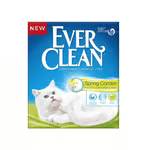
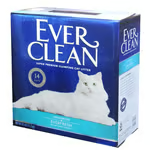
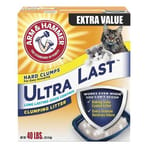
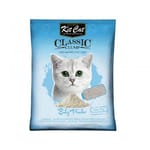
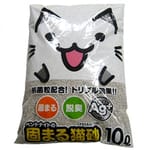
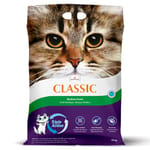
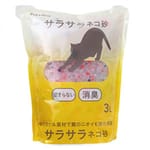
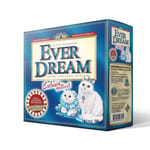
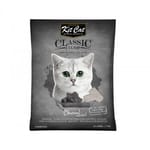
Mineral cat litter is a common type of cat litter primarily made from natural minerals, such as bentonite. The granules of this type of cat litter are typically fine, effectively absorbing cat excrement and forming clumps, which simplifies cleaning for pet owners. The absorbency and clumping ability of mineral cat litter are among its key characteristics, allowing for rapid solidification of urine into solid clumps, thereby helping to control odors. While different brands of mineral cat litter may vary in granule size, absorbency, and clumping strength, their fundamental purpose is to provide a medium for cats to relieve themselves. Pet owners often consider factors such as dust levels and clump hardness when selecting mineral cat litter. Various options for mineral cat litter are available in the market, including products designed for specific needs.
Mineral cat litter is a granular substrate utilized within litter boxes for the collection of feline waste products.
This article aims to describe the structural attributes, material composition, and usage context of mineral cat litter. The content focuses on verifiable, objective information regarding these aspects, without providing product recommendations or comparing advantages among different options.
Mineral Cat Litter: Understanding Subdivisions
Mineral cat litter is commonly understood through its primary material composition. The most prevalent subdivision within this category is based on the geological origin and subsequent processing of the raw mineral. Bentonite clay represents a significant subcategory, characterized by its high absorption capacity and clumping properties. Other mineral types, such as diatomite, silica gel (though often manufactured, its base material is silicon dioxide, a mineral), and various forms of zeolite, also contribute to the diversity of mineral cat litter. These materials exhibit distinct physical and chemical properties that influence their functional characteristics. Further distinctions can be made based on particle size and shape, which are outcomes of manufacturing processes like crushing, grinding, and sieving. The presence or absence of additives, such as activated carbon or scent compounds, also defines subdivisions within the broader mineral cat litter category. These additives are incorporated to address specific functional requirements, such as odor control. The structural integrity of the individual granules, whether they are fine, coarse, or irregular, also contributes to the classification. Some mineral cat litter products are designed for specific performance attributes, such as dust reduction, which is achieved through particular processing techniques or the addition of binding agents. The classification framework thus encompasses geological origin, physical form, and the inclusion of functional modifiers. Each of these elements contributes to the overall profile of a specific mineral cat litter product.
Mineral Cat Litter: Material Composition and Processing
The differences in mineral cat litter primarily stem from variations in material composition, structural forms, and processing techniques. Bentonite, a smectite clay mineral, is a common base for mineral cat litter due to its layered structure and ability to swell significantly when exposed to moisture. The primary constituent of bentonite is montmorillonite, a clay mineral known for its cation exchange capacity. This property allows it to absorb liquids and form solid clumps. The processing of bentonite typically involves mining the raw clay, drying it, and then crushing it into granules of various sizes. Some processes include calcination, which can alter the mineral's porosity and surface area. Another significant material is diatomite, composed of fossilized remains of diatoms, which are microscopic algae. Diatomite is characterized by its highly porous structure, providing excellent absorption capabilities without necessarily forming hard clumps. Its processing involves mining, drying, and milling into a fine powder or granules. Silica gel, while often referred to as "crystal litter," is derived from silicon dioxide, a mineral, and undergoes a chemical manufacturing process to create amorphous, porous beads. These beads absorb moisture through capillary action and can adsorb odors. Zeolites, another class of minerals, are microporous aluminosilicate minerals. They possess a cage-like structure that allows them to trap moisture and ammonia molecules, contributing to odor control. The processing of zeolite for mineral cat litter involves crushing and granulating naturally occurring zeolite rock. The structural forms of these materials can range from fine powders to coarse granules or uniform beads, each influencing dust levels and tracking. Formulation methods also vary, with some mineral cat litter products incorporating activated carbon, a material with a high surface area for adsorbing odor-causing molecules, or various mineral salts designed to neutralize ammonia. The inclusion of these additives alters the overall chemical profile and functional performance of the mineral cat litter. Particle size distribution is consistently controlled during manufacturing to achieve desired characteristics, such as clumping efficiency or dust suppression. The specific mineral source, its geological formation, and the subsequent industrial processing steps all contribute to the final properties of the mineral cat litter product.
Mineral Cat Litter: Properties Under Different Usage Conditions
The properties of mineral cat litter exhibit variations under different usage conditions, influencing its functional characteristics. For instance, in environments with high humidity, certain types of mineral cat litter, particularly those with a high content of hygroscopic minerals like bentonite, may absorb atmospheric moisture, potentially reducing their capacity to absorb feline waste. This can lead to softer clumps or a diminished ability to control odors over time. Conversely, in dry climates, the clumping action of bentonite-based mineral cat litter tends to be more efficient, forming harder and more defined clumps. The frequency of litter box cleaning also impacts performance. With less frequent cleaning, the accumulation of urine and feces can saturate the mineral cat litter, leading to a breakdown of its clumping structure and a reduction in odor absorption effectiveness. The volume of waste produced by a cat directly correlates with the rate at which the mineral cat litter becomes saturated, thus affecting its lifespan. The size and activity level of the cat can also influence tracking and dust levels. Larger or more active cats may displace more mineral cat litter from the box, leading to increased tracking outside the designated area. The type of litter box, specifically its depth and covered status, can also play a role. Deeper litter boxes may reduce tracking, while covered boxes can sometimes concentrate odors, necessitating mineral cat litter with enhanced odor control properties. The presence of multiple cats using the same litter box accelerates the depletion of the mineral cat litter's absorptive and odor-controlling capacities. Temperature also plays a role; higher temperatures can accelerate the decomposition of waste, potentially overwhelming the odor control mechanisms of some mineral cat litter. Understanding these contextual factors is necessary for assessing the performance of various mineral cat litter types. The intrinsic properties of the material interact with these external variables, manifesting different outcomes in real-world scenarios. For example, the particle size of the mineral cat litter can affect how much dust is generated during scooping, a factor that becomes more pronounced in poorly ventilated spaces. The chemical composition of the mineral cat litter, such as the inclusion of specific odor neutralizers, will determine its efficacy against various waste byproducts under varying environmental conditions. The structural integrity of the clumps formed by mineral cat litter is also subject to the moisture content of the waste and the ambient humidity. These interactions highlight the dynamic nature of mineral cat litter performance.
Mineral Cat Litter: Product Characteristics Based on Sales Ranking
This section presents product information strictly based on sales ranking, detailing material, formulation, and structural characteristics without usage recommendations. The information provided is objective and verifiable, focusing on the attributes of each mineral cat litter product as described by its manufacturer.
Rank 1: Ever Clean 美國 礦物貓砂 藍鑽 雙重活性碳貓砂 無香味 25lbs 藍色 (EF25) — This mineral cat litter is formulated with bentonite clay as its primary absorbent material. It incorporates a dual-action activated carbon system designed for odor adsorption. The granules are processed to a specific size for clumping efficiency. The product is described as unscented, relying on the activated carbon for odor control rather than added fragrances. The packaging indicates a weight of 25 pounds. Its composition focuses on the physical properties of bentonite and the chemical adsorption capabilities of activated carbon.
Rank 2: Pet Promise毛孩承諾 高級 礦物貓砂 黑鑽 雙重除臭鎖水配方 清香低敏 10L - 推介試用價 — This mineral cat litter utilizes a base of natural minerals, likely bentonite, for its absorbent properties. It features a dual odor elimination and moisture-locking formulation. The product includes a light, hypoallergenic scent, which indicates the presence of a fragrance compound. The volume is specified as 10 liters. The formulation emphasizes both moisture absorption and odor neutralization through a combination of mineral-based components and a scent additive. The structural form of the granules contributes to its moisture retention and clumping characteristics.
Rank 3: TIDY CATS 即時控制氣味 礦物貓砂 Immediate Odor Control 35lb (NE12307663) — This mineral cat litter is composed of natural minerals, primarily bentonite clay, engineered for rapid odor control. Its formulation is designed to encapsulate odors upon contact. The product is presented in a 35-pound package. The structural characteristics of the mineral granules are optimized for immediate absorption and clumping, contributing to its odor control claims. The material composition is focused on achieving quick and efficient waste encapsulation, a key aspect of its functionality. This mineral cat litter is engineered for specific performance metrics.
Rank 4: Ever Clean 美國 礦物貓砂 藍鑽 持久除臭貓砂 無香味 42lbs (ES42) — This mineral cat litter is derived from bentonite clay, known for its moisture absorption and clumping properties. It is formulated for prolonged odor elimination without the addition of fragrances, suggesting reliance on inherent mineral properties or integrated odor-adsorbing agents. The product is contained in a 42-pound package. The material composition emphasizes a durable clumping action and sustained odor control, characteristics achieved through specific processing of the bentonite and potentially other mineral components. This mineral cat litter is designed for extended efficacy.
Rank 5: Fussie Cat高竇貓 礦物貓砂 蘋果味 10L (FCLA2) — This mineral cat litter employs a mineral base, likely bentonite, for its absorbent and clumping functions. It is characterized by the inclusion of an apple scent, indicating the presence of a fragrance additive. The product volume is 10 liters. The formulation combines the physical attributes of the mineral granules with a specific aroma profile. The structural form of the mineral cat litter granules contributes to its ability to absorb liquid and form clumps, while the apple scent is a distinct characteristic of its composition.
Mineral Cat Litter: Quality Standards and Labeling Norms
Quality standards and labeling norms for mineral cat litter involve verifiable metrics and documentation. Manufacturers typically adhere to internal specifications and, in some regions, voluntary industry standards. These standards often cover aspects such as particle size distribution, dust content, moisture absorption capacity, and clumping strength for bentonite-based mineral cat litter. For instance, particle size is measured to ensure consistency and to control dust generation and tracking. Dust content can be quantified using standardized testing methods that measure airborne particulate matter released during pouring or scooping. Moisture absorption capacity is determined by measuring the weight increase of a sample after exposure to a controlled amount of liquid for a specified duration. Clumping strength, particularly relevant for bentonite cat litter, is assessed by evaluating the resistance of a formed clump to breakage under mechanical stress. Labeling transparency is crucial for consumers to understand the product's characteristics. Product labels typically declare the primary material composition, such as "100% natural bentonite clay" or "silica gel crystals." The presence of additives, such as activated carbon, baking soda, or fragrances, is usually listed. For scented mineral cat litter, the type of scent is often specified. Weight or volume is a standard declaration, providing a quantifiable measure of the product. Manufacturers may also include information about the product's specific features, such as "low dust" or "multi-cat formula," which should ideally be backed by internal testing data. Some labels provide instructions for proper disposal, which can vary based on local waste management regulations. Documentation norms can include technical data sheets that provide detailed specifications of the mineral cat litter, including chemical analysis results, physical properties, and performance data from internal quality control tests. Certificates of analysis from third-party laboratories might also be available for certain product batches, confirming compliance with specified parameters. The absence of certain materials, such as specific allergens or harmful chemicals, may also be stated on labels, particularly for hypoallergenic mineral cat litter. These labeling and documentation practices aim to provide factual information about the mineral cat litter's composition and performance characteristics, allowing for informed assessment.
Mineral Cat Litter: Factual Insights on Types of Cat Litter
One verifiable factual insight concerning mineral cat litter relates to the specific properties of bentonite cat litter. Bentonite, particularly sodium bentonite, possesses a unique molecular structure that allows it to absorb up to 10-15 times its dry weight in water. This high absorption capacity is attributable to the interlayer expansion of its montmorillonite platelets when hydrated, leading to the formation of solid, scoopable clumps. This property distinguishes bentonite from other types of cat litter that may absorb moisture but do not form cohesive clumps, such as some non-clumping clay litters or certain plant-based options. The clumping mechanism is a direct result of the mineral's crystalline structure and its interaction with water molecules. Another factual insight pertains to silica gel cat litter, often mentioned in discussions like tofu litter vs mineral litter. Silica gel, while manufactured, is derived from silicon dioxide, a mineral. Its primary absorption mechanism involves adsorption and capillary condensation within its highly porous structure, rather than swelling. This results in a material that can absorb a significant amount of liquid without changing its physical form or clumping. The absorbed liquid is retained within the internal pore network, leading to a gradual saturation of the beads. The color change observed in some silica gel mineral cat litter indicates the level of saturation, serving as a visual cue for replacement. This differs fundamentally from the clumping action of bentonite cat litter, where the material physically binds into a solid mass. The distinction between these absorption mechanisms is a key characteristic when discussing various types of cat litter, including alternatives to traditional mineral cat litter. The Water Magic cat litter and Ever Clean cat litter brands often employ these mineral-based technologies, illustrating the application of these material science principles in commercially available products. These distinctions highlight the diverse material science principles applied within the mineral cat litter category.
Mineral cat litter encompasses a range of materials and processing methods, each contributing to distinct physical and chemical attributes. The structural forms, material compositions, and manufacturing procedures define the characteristics of these products. These attributes dictate their functional performance under various conditions.
......View All