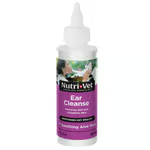
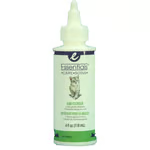
This category presents a variety of cat grooming and cleaning products specifically designed for ear care, encompassing cleaning solutions, cotton swabs, and wipes. These items are purposed to assist in maintaining the cleanliness of a cat's ear canal and preventing debris accumulation. Products vary in materials and ingredients, making them suitable for different cat breeds and age groups. Some formulations feature gentle ingredients, aiming to minimize irritation to the cat's ears. The selection within this category considers the physiological structure of feline ears, offering owners options for routine ear care without needing to consider the cost of professional ear cleaning. Regular use of appropriate ear care products contributes to the overall health and comfort of a cat's ears, making them an essential part of cat grooming supplies.
Feline ear care products encompass a diverse range of items designed for the cleaning, maintenance, and specific treatment of a cat's auditory canals and external ear structures.
This article aims to describe the structural attributes, material composition, and usage contexts within the category of feline ear care products. It does not intend to recommend specific products or provide comparative analysis of their advantages.
Feline Ear Care Products: Classification by Application Context
The classification of feline ear care products often reflects their intended application context, which broadly falls into several categories: general cleaning and hygiene, targeted treatment for specific conditions, and preventive maintenance. General cleaning solutions are formulated to remove accumulated wax, debris, and foreign particles from the ear canal. These products typically feature mild, non-irritating agents designed for regular use. Their primary function is to maintain a clean ear environment and prevent the buildup that can lead to discomfort or more serious issues. The structural design of these products often includes an applicator tip suitable for controlled delivery into the ear canal without causing injury. Differences in formulation can include varying pH levels, the inclusion of surfactants, or the absence of alcohol. The manufacturing process for these general cleaning solutions emphasizes sterility and pH balance to ensure safety for the delicate ear tissues. Labeling standards often require clear instructions for use and warnings regarding contact with eyes or ingestion. Packaging considerations focus on ease of use and prevention of contamination. The material composition of the containers is typically medical-grade plastic, chosen for its inertness and durability. Some products may incorporate natural extracts, which are selected for their purported soothing or antiseptic properties. The concentration of active ingredients in these cleaning solutions is generally low, prioritizing safety over aggressive action. This approach ensures that the product can be used routinely without adverse effects. The intended user for these products is typically the cat owner, who performs the cleaning at home as part of a routine grooming regimen. The frequency of use is often indicated on the product label, ranging from weekly to monthly applications depending on the cat's individual needs and predispositions. Specific design elements, such as the shape of the nozzle, are engineered to facilitate gentle administration and minimize stress for the animal. The volume of the product is also a practical consideration, with smaller sizes often preferred for initial trials and larger volumes for ongoing maintenance. The overall objective of this category within feline ear care products is to support ear health through consistent, non-invasive cleaning practices.
Feline Ear Care Products: Material Composition and Formulation Methods
Variations in feline ear care products stem significantly from their material composition, structural forms, formulation methods, and processing techniques. Ear cleaning solutions, for instance, are primarily aqueous or oil-based formulations. Aqueous solutions often contain a combination of water, mild detergents or surfactants, and pH-balancing agents. Common surfactants include polysorbate 20 or cocamidopropyl betaine, which aid in emulsifying and removing cerumen (ear wax) and debris. The pH is typically adjusted to be slightly acidic, mirroring the natural pH of a healthy feline ear canal, which helps inhibit bacterial and yeast growth. Chelating agents like EDTA may be included to disrupt bacterial biofilms and enhance the efficacy of other active ingredients. Preservatives, such as parabens or phenoxyethanol, are incorporated to maintain product stability and prevent microbial contamination over time. Some formulations feature botanical extracts, including aloe vera or chamomile, selected for their purported soothing properties. The processing techniques for these solutions involve sterile mixing and filtration to ensure product purity and safety. Oil-based ear cleaners, conversely, primarily utilize mineral oil, squalane, or plant-derived oils such as jojoba or almond oil. These oils act as emollients, dissolving waxy buildup and lubricating the ear canal. They are often preferred for very dry or excessively waxy ears. The structural form of these products is typically a liquid delivered via a dropper or soft-tipped nozzle. Ear powders, another distinct category of feline ear care products, are composed of finely milled powders, often containing drying agents like zinc oxide or boric acid. These powders are designed to absorb moisture within the ear canal, creating an environment less conducive to microbial proliferation, particularly for cats prone to moisture-related issues or those with excessive ear hair. Some powders incorporate astringents, such as tannic acid, to tighten tissues and reduce discharge. Insecticidal powders, a specialized subset, contain active ingredients like pyrethrins or permethrin, targeting ear mites. The manufacturing of ear powders involves precise blending and micronization to achieve a uniform particle size, which is critical for even distribution and to prevent irritation. Applicator designs vary, from simple squeeze bottles for liquids to puff-style dispensers for powders. The choice of materials for packaging, including medical-grade plastics for bottles and silicone or rubber for nozzles, is dictated by chemical compatibility with the product and durability. Specific formulations for medicated ear treatments, which are outside the scope of general cleaning and maintenance but still fall under feline ear care products, incorporate pharmaceuticals such as antibiotics, antifungals, or corticosteroids. These require stringent manufacturing processes to ensure precise dosing and stability of the active drug components. The distinction between these product types is not merely in their active components but also in the excipients, solvents, and delivery systems chosen to optimize their function and safety for feline use. The development of these products involves extensive research into feline physiology and common ear conditions to ensure appropriate and effective formulations.
Feline Ear Care Products: Property Variation Across Usage Environments
The properties of feline ear care products can vary considerably depending on the specific usage environment or conditions encountered. For instance, products intended for routine maintenance in a healthy cat's ears will often possess milder formulations compared to those designed for ears experiencing excessive wax buildup or minor irritation. In a dry climate, an ear cleaner with a higher emollient content might be preferred to prevent excessive drying of the ear canal skin, whereas in a humid environment, a product with stronger drying agents or antiseptic properties might be more appropriate to mitigate moisture-related issues. The frequency of use is also a critical factor influencing product properties; daily-use products are typically very gentle, featuring low concentrations of active ingredients, while products meant for occasional use might contain more potent cleaning agents. The presence of ear hair within the canal, common in some breeds, can necessitate specific product properties within feline ear care products. For example, some formulations are designed to help loosen and remove excess hair, or to provide a less sticky residue to prevent hair from clumping. Cats that spend significant time outdoors may be exposed to more environmental allergens or parasites, leading to a need for ear care products with anti-inflammatory components or preventative agents against mites. The physical structure of a cat's ear, such as vertically erect ears versus folded ears, also dictates optimal product properties. Folded ears, like those found in Scottish Folds, tend to have poorer ventilation and can accumulate moisture and debris more readily, often requiring products with enhanced drying capabilities or antimicrobial support. Conversely, cats with open, erect ears may simply need general cleaning to remove superficial debris. The consistency of the product, whether a thin liquid, a gel, or a powder, is also a property that adapts to the usage context. Liquids are generally used for flushing and deep cleaning, gels for localized application and longer contact time, and powders for moisture absorption and hair plucking. The specific medical history of the cat, including any known allergies or sensitivities, necessitates careful consideration of product ingredients, favoring hypoallergenic or single-ingredient formulations. Furthermore, the skill level of the caregiver also influences product choice; simpler, less invasive applicators are often preferred for novice owners, while professional groomers or veterinarians might utilize products requiring more precise application. The ambient temperature can also affect the viscosity of some oil-based feline ear care products, making them thicker in colder conditions and thinner in warmer ones, potentially impacting their flow and ease of application. Therefore, tailoring the product choice to the specific environmental, physiological, and historical context of the feline is essential for effective ear care.
Feline Ear Care Products: Product Characteristics from Sales Ranking
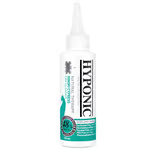
Rank 1: HYPONIC Extreme Hypoallergenic Cypress Feline Ear Cleaner 120ml (HC5180) — This product is formulated with cypress water as a primary ingredient, known for its purported soothing and purifying properties. The formulation emphasizes a hypoallergenic profile, suggesting a careful selection of ingredients to minimize potential irritant responses. Its liquid form is designed for direct application into the ear canal. The 120ml volume indicates it is intended for multiple uses over time. The product is characterized by the absence of common allergens and harsh chemicals, focusing on a gentle cleaning action. The container is typically a plastic bottle with a dispensing nozzle for controlled delivery.
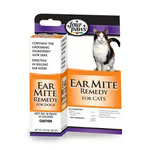
Rank 2: Four Paws Feline Ear Solution Care Series Anti-Mite Ear Drops 0.75oz (F1732) — This product is specifically formulated as an anti-mite ear drop, indicating the inclusion of active ingredients targeting parasitic infestations such as ear mites. The 0.75oz volume suggests a concentrated formulation, typical for medicated treatments where smaller doses are required. The format is likely a liquid, designed for precise droplet application. Its primary functional characteristic is the elimination of ear mites, which differentiates it from general cleaning solutions. The packaging typically includes a dropper for accurate administration. The material composition would include an acaricide as the active pharmaceutical ingredient, along with a carrier solution.
Rank 3: Hagen Feline Ear Cleaner 59ml (C50185) — This ear cleaner is presented in a 59ml volume, which is a smaller size, potentially suited for initial trials or for cats requiring less frequent ear cleaning. The formulation is a liquid, designed to aid in the removal of ear wax and debris. Its general classification as an ear cleaner implies a focus on hygiene and maintenance rather than specific medical treatment. The container is a plastic bottle with an applicator tip. The ingredients would typically include mild surfactants and possibly pH-balancing agents, consistent with standard ear hygiene products.
Rank 4: Hagen Feline Ear Cleaner 118ml (C50186) — This product is a larger volume version of the Hagen Feline Ear Cleaner, containing 118ml. Its characteristics are consistent with the 59ml variant regarding its function as a general ear cleaner for hygiene and maintenance. The increased volume provides a more economical option for regular users or households with multiple cats. The liquid formulation and plastic bottle with an applicator tip remain standard. The material composition would be similar to its smaller counterpart, focusing on general cleaning agents.
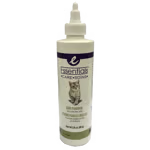
Rank 5: Hagen Essentials Care Series Anti-Itch Ear Powder 80g (C50188) — This product is an ear powder, distinct from liquid cleaners. Its primary characteristic is an anti-itch formulation, suggesting the inclusion of ingredients designed to soothe irritation and reduce scratching. The 80g weight indicates a substantial quantity for a powder product, intended for application within the ear canal. Powders in feline ear care products often contain drying agents to absorb moisture and create an unfavorable environment for bacteria and yeast, and astringents to help reduce inflammation. The application method would involve a puff or squeeze dispenser to distribute the powder. The material composition would include finely milled powders, potentially with active ingredients for itch relief and moisture absorption.
Feline Ear Care Products: Quality Standards and Labeling Norms
The quality standards and labeling norms for feline ear care products are primarily governed by regulations pertaining to animal health products, which can vary by geographical region but share common principles of safety, efficacy, and transparency. In many jurisdictions, these products fall under the purview of veterinary regulatory bodies, even if sold over-the-counter. Manufacturers are typically required to adhere to Good Manufacturing Practices (GMP) to ensure the consistency, quality, and purity of their products. This includes strict controls over raw material sourcing, production processes, packaging, and storage. For liquid formulations within feline ear care products, stability testing is crucial to ensure the product maintains its chemical and physical properties throughout its stated shelf life, including pH, viscosity, and the integrity of active ingredients. Microbiological testing is also standard to confirm the absence of harmful bacteria, fungi, and other contaminants. For ear powders, particle size distribution and flow characteristics are important parameters to ensure even application and prevent clumping. Labeling transparency is a cornerstone of these regulations. Product labels must clearly list all active and inactive ingredients, often in descending order of concentration. The purpose of the product must be explicitly stated, distinguishing between general hygiene, specific treatment (e.g., anti-mite), or symptomatic relief (e.g., anti-itch). Dosage instructions, frequency of application, and duration of use are mandatory elements, presented in an unambiguous manner. Warnings and precautions, such as "for external use only," "avoid contact with eyes," or "discontinue use if irritation occurs," are prominently displayed. Information regarding potential side effects, contraindications, and storage conditions is also required. Batch numbers and expiration dates are essential for traceability and quality control. In some regions, a product may require registration with a veterinary authority, especially if it contains pharmaceutical-grade active ingredients. This registration process often involves submitting data on product safety, efficacy, and manufacturing quality. Claims made on the packaging or in marketing materials must be substantiated by scientific evidence, preventing misleading or unsubstantiated assertions. The use of standardized units of measurement (e.g., ml, g, oz) is enforced to ensure clarity for consumers. Furthermore, some labeling may include certifications for specific attributes, such as "hypoallergenic," which indicates that the product has undergone testing to minimize allergic reactions, although this term can have varying legal definitions. The overall objective of these standards and norms for feline ear care products is to protect animal health by ensuring that products are safe, effective, and accurately represented to the consumer and veterinary professionals. This framework aims to build confidence in the product category and facilitate informed decision-making by caregivers.
Feline Ear Care Products: Verifiable Factual Insights
One verifiable factual insight regarding feline ear care products is that the natural pH of a healthy cat's ear canal is slightly acidic, typically ranging between 5.5 and 6.5. This acidic environment plays a role in inhibiting the growth of pathogenic bacteria and yeast. Many commercially available feline ear care products are formulated to maintain or restore this natural pH balance, as deviations can create a more favorable environment for microbial proliferation. Products that are too alkaline or too acidic relative to the natural ear pH can disrupt the delicate microflora and potentially lead to irritation or infection. Therefore, understanding and matching this physiological characteristic is a fundamental aspect of effective ear care product design. Another verifiable factual insight is that the ceruminous glands in a cat's ear canal produce cerumen, commonly known as ear wax, which is a complex mixture of secretions from sebaceous and apocrine glands, along with desquamated epithelial cells and environmental dust. The composition of this cerumen can vary in consistency, color, and quantity depending on the individual cat's genetics, diet, and health status. Some feline ear care products are specifically engineered to target the lipid components of cerumen for dissolution, while others focus on the proteinaceous elements or simply provide a flushing action to mechanically remove the buildup. The presence of specific lipids or proteins in excess can indicate underlying health issues, and the formulation of ear cleaners often takes into account the diverse compositions of ear wax to ensure effective removal without causing irritation. For example, some products may contain emulsifiers that are particularly effective at breaking down fatty components, aiding in the removal of sticky, waxy debris.
The category of feline ear care products encompasses a range of formulations and applications designed to support the health and hygiene of a cat's ears. Understanding the distinctions in material composition, structural attributes, and intended usage contexts provides a comprehensive overview of this product segment.
......View All