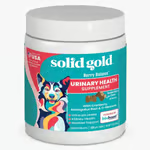
Kidney health products encompass various forms designed to support renal function in animals. This category includes a range of nutritional supplements and specialized diet formulations, with ingredients often selected to help maintain urinary system health. For the prevention of urinary stones, some products focus on regulating urine pH levels or providing components that help reduce the formation of mineral crystals. These health care products are formulated to offer additional support for the kidneys and can be incorporated into daily diets as an adjunct. Products within this classification are not intended for treatment but serve as part of routine maintenance and preventive measures to help sustain normal kidney operation. The product types are diverse, including powders, liquids, tablets, or those mixed into feed, to suit the needs of different animals. When selecting such products, the primary consideration is their ingredients and the specific requirements of the animal.
Kidney health and urinary stone prevention supplements encompass a diverse array of products designed to support renal function and mitigate the formation of urinary calculi in various organisms, primarily pets.
This article aims to provide a structural and characteristic classification of products within this category. It will describe material compositions, structural attributes, and usage contexts without making product recommendations or comparisons regarding efficacy or value.
Kidney Health and Urinary Stone Prevention Supplements: Common Divisions and Practical Applications
The classification of kidney health and urinary stone prevention supplements often reflects their primary intended action or the specific aspect of renal or urinary tract health they address. One common division is between products focusing on general kidney support and those specifically formulated for urinary stone prevention. General kidney support supplements frequently contain ingredients aimed at maintaining overall renal function, such as antioxidants, compounds that support healthy blood flow to the kidneys, or substances that help manage waste product accumulation. These can include formulations with B vitamins, omega-3 fatty acids, or specific botanical extracts known for their renoprotective properties. Conversely, supplements for urinary stone prevention are typically designed to alter urine pH, reduce the concentration of stone-forming minerals, or inhibit crystal aggregation. These often incorporate ingredients like methionine, cranberry extract, or potassium citrate, each targeting a different mechanism involved in stone formation. Another practical division arises from the target species, with formulations often tailored for canine, feline, or equine use, considering their distinct physiological needs and metabolic pathways. For instance, feline urinary health products frequently address struvite or calcium oxalate stones, which are common in cats, while canine products might focus on a broader spectrum of stone types. The form of administration also serves as a classification criterion, distinguishing between liquid drops, chewable tablets, powders, or capsules, each offering different practical application benefits depending on the animal's acceptance and owner's preference. Some products are designed for daily prophylactic use, while others are intended for short-term support during acute phases or specific dietary interventions. The ingredient sourcing and processing methods can also lead to distinctions, such as organic versus conventionally sourced components, or cold-processed versus heat-treated formulations, which can influence nutrient integrity. Furthermore, some supplements are classified by their suitability for different life stages, such as those for young animals, adults, or seniors, recognizing that renal health needs can evolve with age. The specific type of urinary stone, such as struvite, calcium oxalate, or urate, can also dictate the classification of a kidney health and urinary stone prevention supplement, as different stone types require distinct dietary and supplemental approaches to management or prevention. Products may also be categorized by their primary active ingredient, for example, those based on herbal extracts, amino acids, or mineral complexes. This allows for a more granular understanding of their potential mechanisms of action. The regulatory status of these products, whether classified as dietary supplements, veterinary health products, or feed additives, further influences their labeling, manufacturing standards, and claims, thereby creating another layer of classification. Some formulations are positioned as standalone supplements, while others are intended for use in conjunction with specific therapeutic diets or veterinary treatments, highlighting their role in a broader management strategy for kidney health and urinary stone prevention. The manufacturing process itself, including aspects like encapsulation methods or tablet compression techniques, can differentiate products, impacting their dissolution rates and bioavailability.
Kidney Health and Urinary Stone Prevention Supplements: Material Composition, Structural Forms, and Formulation Methods
The material composition of kidney health and urinary stone prevention supplements is highly varied, reflecting the diverse mechanisms by which they aim to support renal function and prevent stone formation. Common active ingredients include amino acids such as DL-Methionine, which can acidify urine and thereby help dissolve or prevent struvite crystals. Botanical extracts are frequently incorporated, with cranberry extract being a prominent example, known for its proanthocyanidin content that may inhibit bacterial adhesion to the urinary tract walls, a factor in some stone formations. Other plant-derived components might include dandelion root, nettle leaf, or astragalus, often selected for their purported diuretic or kidney-supporting properties. Minerals like potassium citrate are used to alkalinize urine, which can be beneficial in preventing calcium oxalate stones. Vitamins, particularly B-complex vitamins, are sometimes included to support overall metabolic health, which indirectly impacts kidney function, or vitamin C (ascorbic acid) which can acidify urine. Omega-3 fatty acids, such as EPA and DHA derived from fish oil, are also utilized for their anti-inflammatory properties, which can be relevant in cases of kidney inflammation. The structural forms of these supplements vary widely to accommodate different administration preferences and target species. Liquid drops provide a precise dosing mechanism and can be easily mixed into food or administered directly. Chewable tablets offer a palatable option, often formulated with flavorants to enhance acceptance. Powders can be sprinkled over food, providing flexibility in dosage and ease of mixing. Capsules typically contain concentrated active ingredients, often appealing to owners who prefer a more controlled and less flavored delivery method. The formulation methods for kidney health and urinary stone prevention supplements involve several considerations. For tablets, processes like direct compression or wet granulation are employed to ensure consistent dosage and tablet integrity. Liquid formulations require careful consideration of ingredient solubility, stability, and preservation to maintain their efficacy over time. Powders involve milling and blending processes to achieve uniform particle size and distribution. Encapsulation techniques are used for sensitive ingredients or to mask unpleasant tastes. Many formulations are designed to be palatable, incorporating natural flavors or palatability enhancers to ensure compliance. The choice of excipients, such as binders, fillers, disintegrants, and flow agents, is critical in determining the physical properties and stability of the final product. For instance, microcrystalline cellulose is a common filler in tablets, while glycerin or propylene glycol might be used in liquid formulations. The specific ratios of active ingredients are carefully determined based on scientific literature and professional guidelines to achieve the desired physiological effect without adverse reactions. Some formulations employ sustained-release technologies to provide a prolonged effect of the active ingredients, which can be particularly useful for maintaining consistent levels in the body. The selection of inactive ingredients also considers potential allergens or sensitivities in the target animal population, leading to grain-free or hypoallergenic formulations. The manufacturing process adheres to quality control standards to ensure the purity, potency, and safety of each batch of kidney health and urinary stone prevention supplements. This includes testing raw materials for contaminants and ensuring the final product meets specified dissolution rates or concentration levels.
Kidney Health and Urinary Stone Prevention Supplements: Properties Across Usage Environments and Conditions
The properties of kidney health and urinary stone prevention supplements exhibit variations depending on the specific usage environment or conditions, influencing their effectiveness and suitability. For example, products designed to alter urine pH, such as those containing DL-Methionine for acidification or potassium citrate for alkalinization, require consistent administration and a stable dietary regimen to achieve and maintain the desired urinary environment. Fluctuations in diet or inconsistent dosing can diminish their intended effect on urinary stone prevention. In environments where animals have limited access to fresh water, or where water intake is naturally low, liquid supplements or highly palatable powders that encourage hydration may demonstrate different practical properties compared to solid forms. Increased water intake is a fundamental component of urinary health management, and a supplement’s ability to indirectly support this can be a critical property. For animals with pre-existing kidney conditions, the formulation's protein, phosphorus, and sodium content becomes a significant property. Supplements for general kidney health often feature controlled levels of these nutrients to avoid exacerbating renal stress, differing from formulations for healthy animals where such restrictions may not be as stringent. The presence of concurrent medical conditions also affects the properties of kidney health and urinary stone prevention supplements. For instance, animals with cardiac issues might require formulations with very low sodium content, while those with gastrointestinal sensitivities may benefit from easily digestible liquid or powdered forms. The palatability of a supplement is a crucial property, especially in long-term usage scenarios. If an animal refuses to consume the supplement, its intended properties, regardless of formulation, become irrelevant. Manufacturers often invest in flavor technology to enhance acceptance, leading to variations in palatability across brands and forms. Storage conditions, such as temperature, humidity, and light exposure, can influence the stability and potency of active ingredients. Liquid formulations, for example, may require refrigeration after opening to maintain their properties, whereas encapsulated or powdered forms might be more shelf-stable at room temperature. The interaction with other medications or dietary components is another property that varies. Some ingredients in kidney health and urinary stone prevention supplements can interact with prescription drugs, requiring careful consideration and veterinary oversight. For example, certain diuretics or blood pressure medications can impact electrolyte balance, which might be further influenced by supplements containing potassium or other minerals. The duration of administration also affects observable properties. Acute support formulations might contain higher concentrations of specific active ingredients for short-term intervention, while maintenance products for kidney health and urinary stone prevention are typically designed for long-term, lower-dose use. The presence of specific stone types necessitates different properties in a kidney health and urinary stone prevention supplement. For example, supplements aimed at preventing calcium oxalate stones often focus on increasing urine volume and diluting stone-forming minerals, while those for struvite stones typically aim for urine acidification. Environmental stressors, such as high temperatures or stressful living conditions, can impact an animal's overall health, including kidney function, and thus influence the requirements and observed properties of kidney health and urinary stone prevention supplements. In these situations, supplements with antioxidant or stress-modulating properties might be considered. The age and physiological state of the animal also dictate the desirable properties. Young animals may have different metabolic needs compared to geriatric animals, influencing the appropriate concentrations of vitamins, minerals, and other active compounds in kidney health and urinary stone prevention products.
Kidney Health and Urinary Stone Prevention Supplements: Product Characteristics from Sales Ranking
The following descriptions are based on the characteristics of products observed in sales rankings, focusing solely on their material, formulation, and structural attributes.
Rank 1: PetAlive ProsPet Drops for Prostate and Urinary Tract Health 59ml — This product is presented as a liquid formulation, contained in a 59ml bottle. Its structural form is a tincture, indicating an herbal extract base often prepared through maceration or percolation in a solvent, typically alcohol or glycerin. The liquid delivery system allows for precise dosage adjustments and potentially rapid absorption. The material composition is characterized by a blend of botanical extracts, designed for liquid administration. The specific herbal components contribute to its functional profile for prostate and urinary tract health. The formulation is intended for oral administration via drops, which can be added to food or water, or administered directly. The dark glass bottle suggests protection from light, which can affect the stability of some botanical compounds. The volume of 59ml indicates a standard size for liquid dietary supplements, providing a certain number of doses depending on the recommended serving size. The absence of solid carriers or binders differentiates it from tablet or powder forms, emphasizing a concentrated liquid extract. The manufacturing process for such drops typically involves controlled extraction to isolate beneficial plant compounds and ensures a consistent concentration of active ingredients in each dose. The liquid nature also means it can be readily mixed, potentially improving palatability for some animals. The formulation does not contain solid matter or require dissolution, which can be a factor in absorption rates. The cap mechanism is typically designed for controlled dispensing of individual drops.
Rank 2: NaturVet Natural Pet Supplements Urinary Stone Prevention Formula 60 Count — This product is provided in a solid oral dosage form, specifically as 60 tablets or chewable soft chews. The "60 Count" indicates the quantity of individual units within the packaging. The material composition includes a blend of active ingredients typically associated with urinary stone prevention, such as specific amino acids, botanical extracts, or mineral compounds. The formulation method for these units involves binding agents and flavorants to create a palatable chewable form. The structure of each unit is a solid, often scored to facilitate division if partial dosing is required. The texture is designed to be appealing for direct consumption by pets. The packaging is likely a sealed container, such as a plastic bottle, to maintain freshness and protect the tablets from environmental factors. The inclusion of "Formula" suggests a specific combination of ingredients working synergistically. The manufacturing process involves blending, compression, and potentially coating to achieve the desired shape, consistency, and stability of each chew. The size and shape of each unit are standardized for consistent dosing. The material composition focuses on ingredients that can modify urine pH or reduce the concentration of stone-forming elements. The 60-count packaging implies a supply duration depending on the daily dosage recommendation. The solid form offers convenience for storage and handling compared to liquids or powders. The chewable format is a specific structural design choice to enhance animal acceptance, often incorporating natural flavors within the matrix. The formulation is designed for direct ingestion, bypassing the need for mixing with food or water. The stability of the active compounds within a solid matrix is generally higher than in liquid forms. The product is designed to be a long-term dietary addition for kidney health and urinary stone prevention.
Rank 3: NaturVet Natural Pet Supplements Anti-Inflammatory and Urinary Tract Infection Prevention Powder 50mg — This product is a powdered formulation, contained in a package designed for easy dispensing, with a stated quantity of 50mg. The material composition consists of finely milled active ingredients, likely a combination of botanical extracts, antioxidants, or other compounds targeting inflammation and bacterial adhesion within the urinary tract. The structural form is a dry, particulate substance, designed to be mixed with food or water. The "50mg" likely refers to the dosage unit or a key ingredient concentration, not the total package weight, which would be substantially higher for a powder. The formulation method involves precise blending of powdered ingredients to ensure homogeneity and consistent dosing. The packaging typically includes a scoop or measuring device for accurate administration. The powder form allows for flexible dosing and can be easier to administer to animals that resist pills or liquids. The product's properties are influenced by its particulate nature, which affects solubility and dispersion when mixed with liquids or food. The manufacturing process involves controlled grinding and mixing to achieve a uniform powder consistency. The stability of powdered ingredients is generally good, provided they are stored in a dry, sealed container, protecting them from moisture and oxygen. The material composition is focused on compounds that may modulate inflammatory responses and inhibit bacterial growth or adhesion. The specific particle size distribution can influence how easily the powder mixes and is absorbed. The absence of binders or excipients found in tablets or chews means the formulation is often more concentrated in active ingredients per unit weight. The 50mg notation suggests a precise active ingredient concentration, indicating a potent formulation. The product is intended for kidney health and urinary stone prevention through a multi-faceted approach addressing inflammation and infection risks.
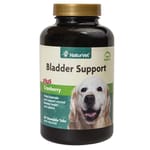
Rank 4: NaturVet Natural Pet Supplements Bladder Health Nutritional Chews 60 Count — This product is presented as 60 individual nutritional chews, a solid, palatable dosage form. The material composition includes a range of nutrients and active compounds specifically chosen to support bladder health. These often encompass ingredients like cranberry extract, D-mannose, or N-acetyl glucosamine, which are known for their roles in maintaining the integrity of the bladder lining or inhibiting bacterial attachment. The structural form is a soft chew, designed for direct ingestion by animals. This form is typically soft and pliable, distinguishing it from harder tablets. The formulation method involves blending active ingredients with palatable carriers and binders to create a semi-moist or soft texture. The "60 Count" refers to the number of chews in the package, providing a defined supply duration based on daily recommendations. The packaging is usually a sealed container, such as a resealable pouch or plastic jar, to preserve freshness and palatability. The manufacturing process for soft chews involves specific extrusion or molding techniques to achieve their characteristic texture and shape. The palatability enhancers are integral to the formulation, ensuring animal acceptance. The material composition is selected to provide comprehensive support for bladder function, contributing to overall kidney health and urinary stone prevention. The soft chew format allows for easier consumption, especially for older animals or those with dental issues, compared to hard tablets. The moisture content in soft chews is generally higher than in traditional tablets, which can influence their shelf life and storage requirements. The chews are designed to be a convenient and appealing method of delivering targeted nutrients for bladder health, thereby supporting aspects of kidney health and urinary stone prevention indirectly. The consistency of the chews is a key structural property, impacting how they are consumed. The formulation aims for a balanced nutrient profile specifically for the urinary system.
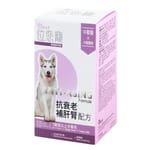
Rank 5: ProVet Anti-Aging Formula for Dogs 7 Years and Older 30 Capsules — This product is supplied as 30 capsules, a solid oral dosage form. The material composition is an anti-aging blend specifically formulated for senior dogs, targeting liver and kidney support. Active ingredients may include antioxidants, specific vitamins, minerals, and botanical extracts known for their roles in mitigating age-related decline in organ function. The structural form is a capsule, consisting of an outer shell, typically made of gelatin or a plant-based polymer, enclosing a powdered or granular blend of active ingredients. The "30 Capsules" indicates the total quantity in the package. The formulation method involves encapsulating a precise dose of powdered or granular material to ensure consistency and to mask the taste of certain ingredients. The capsule shell provides a protective barrier for the active compounds. The packaging is typically a bottle designed to protect the capsules from moisture and light. The manufacturing process involves accurate dosing of active ingredients into pre-formed capsule shells. The capsule form allows for a concentrated dose of active ingredients in a taste-neutral delivery system, which can be beneficial for animals that are sensitive to flavors. The material composition is tailored to the physiological needs of aging dogs, focusing on maintaining organ health, including kidney function, which is relevant to broader kidney health and urinary stone prevention. The capsule shell design can also influence the dissolution rate and absorption of the contents. The product is specifically positioned for a demographic of "7 Years and Older," indicating a formulation designed to address age-related changes in metabolism and organ health. The encapsulation provides a standardized and convenient dosage unit. The ingredients are chosen to support cellular health and reduce oxidative stress, which are factors in maintaining kidney health over time. This targeted approach to senior animal wellness contributes to the overall support of kidney health and urinary stone prevention by maintaining systemic well-being.
Kidney Health and Urinary Stone Prevention Supplements: Quality Standards, Labeling Transparency, and Documentation Norms
The quality standards, labeling transparency, and documentation norms for kidney health and urinary stone prevention supplements are crucial for ensuring product integrity and consumer confidence. In many regions, these products are regulated as dietary supplements or veterinary health products, falling under specific governmental oversight bodies. For instance, in the United States, the Food and Drug Administration (FDA) regulates pet supplements under the Federal Food, Drug, and Cosmetic Act, though their oversight differs from that for human pharmaceuticals. Manufacturers are expected to adhere to Good Manufacturing Practices (GMPs), which are a set of guidelines ensuring that products are consistently produced and controlled according to quality standards. GMPs cover all aspects of production, from raw material sourcing to finished product testing, minimizing risks inherent in any pharmaceutical production that cannot be eliminated through testing the final product. Documentation norms require companies to maintain detailed records of raw material specifications, supplier qualifications, manufacturing processes, quality control tests, and batch records. This extensive documentation trail allows for traceability and accountability throughout the product lifecycle. Labeling transparency is a key aspect, requiring that product labels clearly list all ingredients, both active and inactive, and their respective quantities. The label must also include the product name, net quantity, manufacturer's name and address, and specific use directions. Claims made on the label for kidney health and urinary stone prevention must be substantiated by scientific evidence, although the stringency of this requirement can vary by regulatory jurisdiction. Many reputable brands also voluntarily participate in third-party certification programs, such as those offered by the National Animal Supplement Council (NASC) in the US. The NASC provides a quality seal to products that meet their stringent requirements, which include adhering to specific quality control standards, undergoing independent audits, and having a system for adverse event reporting. This voluntary certification further enhances transparency and trust for kidney health and urinary stone prevention products. Batch testing for purity, potency, and contaminants (such as heavy metals, pesticides, and microbial contamination) is a common practice, with results often made available upon request or sometimes directly on product websites. The presence of lot numbers and expiration dates on packaging is a standard documentation norm, enabling product recalls if necessary and informing consumers about the product's shelf life. For products involving botanical extracts, standardization of the extract to a specific active compound is often a quality indicator, ensuring consistent potency across batches. For example, cranberry extracts might be standardized to a certain percentage of proanthocyanidins. In some cases, particularly for more specialized kidney health and urinary stone prevention formulations, manufacturers may provide Certificates of Analysis (CoAs) for each batch, detailing the analytical test results. The country of origin for raw materials and the manufacturing location are increasingly disclosed, providing further transparency to consumers. Clear instructions on storage conditions are also a part of labeling norms, as improper storage can degrade product quality and potency. The absence of specific allergens or common irritants, such as certain grains or artificial colors, is often highlighted on labels as a commitment to product quality and safety for kidney health and urinary stone prevention.
Kidney Health and Urinary Stone Prevention Supplements: Verifiable Factual Insights
A verifiable factual insight concerning kidney health and urinary stone prevention supplements is that the efficacy of certain ingredients, such as potassium citrate, in altering urinary pH is well-documented in veterinary medicine. Potassium citrate acts as an alkalinizing agent, increasing urinary pH and thereby diminishing the supersaturation of calcium oxalate, a common component of urinary stones. This mechanism reduces the likelihood of calcium oxalate crystal formation and growth. The precise dosage and individual animal response can influence the degree of pH alteration. However, the fundamental chemical reaction of potassium citrate in the body to produce bicarbonate, which is then excreted by the kidneys, directly impacts the acidity of the urine. This is a physiological response that has been observed and measured in controlled studies, establishing a clear link between the supplement's composition and its intended effect on urinary parameters relevant to kidney health and urinary stone prevention.
Another verifiable factual insight is that the active compounds in cranberry extracts, specifically proanthocyanidins (PACs), have been shown to inhibit the adhesion of certain pathogenic bacteria, particularly E. coli, to the uroepithelial cells lining the urinary tract. This anti-adhesion property is distinct from an antibiotic effect. By preventing bacteria from attaching to the bladder wall, PACs can reduce the incidence of urinary tract infections (UTIs), which are sometimes a predisposing factor for certain types of urinary stone formation. This mechanism has been investigated through in vitro studies and some clinical trials, demonstrating a specific biological action of cranberry-derived ingredients. The concentration and type of PACs are critical to this effect, with A-type PACs being particularly noted for their anti-adhesion capabilities. This provides a specific, measurable biochemical basis for the inclusion of cranberry in kidney health and urinary stone prevention formulations, particularly those targeting infection-related stone issues.
The classification of kidney health and urinary stone prevention supplements is based on their material composition, structural forms, and intended applications. Understanding these attributes provides a framework for comprehending the product landscape within this specialized category.
......View All