This category encompasses various health supplements and care products specifically designed for felines, aiming to support their overall well-being. It includes items focused on kidney health for cats, which typically provide targeted nutritional support to help maintain renal function. Furthermore, some products in this selection may also concentrate on preventing urolithiasis, managing the urinary environment through dietary adjustments or supplements. The product forms within this category are diverse, ranging from nutritional supplements to specialized feed formulations, all contributing to the daily care of cats. The ingredients and formulations of these health products are engineered to meet the physiological requirements of felines, offering routine maintenance and support. Such products provide a variety of options for the long-term health management of cats, and relevant solutions can be found within this category.
Feline kidney health and anti-urinary stone products constitute a category of formulations and devices designed to support renal function and mitigate the formation of urinary calculi in cats.
This article aims to describe the structural attributes, material compositions, and usage contexts within this category. It does not provide product recommendations or make comparisons of advantages.
Feline Kidney Health and Anti-Urinary Stone Products: Classification by Functional Focus
The category of feline kidney health and anti-urinary stone products is commonly divided based on their primary functional focus. One major division includes formulations aimed at general kidney support, which often involve ingredients that assist in maintaining overall renal function. These products typically address aspects such as toxin filtration, electrolyte balance, and blood pressure regulation, which are critical for kidney health. Another distinct division encompasses products specifically formulated to prevent the formation of urinary stones, also known as uroliths or calculi. These anti-urinary stone formulations often target specific mechanisms involved in stone formation, such as altering urine pH, diluting urine concentration, or inhibiting crystal aggregation. A third classification recognizes products that combine elements of both general kidney support and anti-urinary stone properties, offering a more comprehensive approach. These integrated formulations typically contain a wider array of active ingredients. Furthermore, some products are categorized by their delivery method, such as oral supplements in powder, paste, or chewable forms, or dietary interventions through specialized renal diets. The selection of a particular functional focus depends on the specific physiological needs identified in the feline patient, which may range from proactive maintenance to addressing existing conditions. Each functional focus dictates the specific active compounds and inert carriers utilized in the product formulation. The intended duration of use, whether short-term or long-term, also influences the formulation strategy within each functional focus. Products for acute support might have higher concentrations of certain active ingredients, while long-term maintenance products often feature more balanced and sustained-release profiles. The specific biological pathways targeted by the active ingredients define the functional classification of each feline kidney health and anti-urinary stone product.
Feline Kidney Health and Anti-Urinary Stone Products: Material Composition and Formulation Methods
The material composition and formulation methods of feline kidney health and anti-urinary stone products exhibit considerable variation, reflecting their diverse functional objectives. Products for general kidney support frequently incorporate ingredients such as omega-3 fatty acids, particularly eicosapentaenoic acid (EPA) and docosahexaenoic acid (DHA), derived from fish oil, which are known for their anti-inflammatory properties. Antioxidants, including vitamins E and C, and various botanical extracts, are also common components, intended to mitigate oxidative stress on renal tissues. B vitamins are often included to replenish those lost through increased urination, a common characteristic in cats with compromised kidney function. Phosphorus binders, such as aluminum hydroxide or calcium carbonate, are another significant class of ingredients, used to reduce the absorption of dietary phosphorus, which can accumulate in cats with reduced kidney filtration capacity. These binders work by forming insoluble complexes with phosphorus in the gastrointestinal tract. Anti-urinary stone formulations often focus on ingredients that modify urinary parameters. For instance, urinary acidifiers like methionine or ammonium chloride are used to lower urine pH, making the environment less conducive to the formation of struvite stones, which precipitate in alkaline urine. Conversely, urinary alkalinizers, such as potassium citrate, are employed to increase urine pH, thereby inhibiting the formation of calcium oxalate stones, which tend to form in acidic urine. Diuretics, often natural botanical extracts, may be included to increase urine volume and promote the flushing of the urinary tract, reducing the concentration of stone-forming minerals. Some formulations include glycosaminoglycans (GAGs), such as N-acetylglucosamine, which are believed to support the integrity of the bladder lining, potentially reducing bacterial adhesion and crystal adherence. The physical form of these products—powders, pastes, chewable tablets, or liquid solutions—also influences their material composition. Powders often consist of micronized active ingredients blended with inert excipients like cellulose or maltodextrin. Pastes frequently use a base of digestible oils or waxes to ensure palatability and ease of administration. Chewable tablets incorporate binders, flavors, and sometimes humectants to maintain texture. The manufacturing processes vary accordingly; powders involve mixing and blending, pastes require emulsification and extrusion, and tablets utilize compression. Encapsulation techniques are sometimes employed to protect sensitive ingredients from degradation or to provide controlled release. The specific combination and concentration of these materials are determined by the targeted physiological effect and the desired product stability, ensuring the efficacy of the feline kidney health and anti-urinary stone product.
Feline Kidney Health and Anti-Urinary Stone Products: Usage Environment and Conditions
The properties of feline kidney health and anti-urinary stone products may vary significantly across different usage environments or conditions. The primary environmental factor is the cat's dietary regimen. Products designed to supplement a regular commercial cat food diet will have different concentrations and ingredient profiles compared to those intended to complement a prescription renal diet. Prescription renal diets are specifically formulated to be low in protein, phosphorus, and sodium, with adjusted calcium levels, and often contain ingredients like omega-3 fatty acids. Therefore, a supplement used alongside such a diet must be carefully chosen to avoid nutrient imbalances or excessive intake of certain minerals. For instance, adding a phosphorus binder to a diet already restricted in phosphorus might be redundant or even lead to hypophosphatemia. The cat's hydration status is another critical condition impacting product efficacy. Adequate water intake is fundamental for urinary tract health and for diluting urine, which helps prevent stone formation. Products that encourage water consumption, such as palatable liquid supplements or wet food, can enhance the effectiveness of anti-urinary stone formulations. In environments where cats have limited access to fresh water or exhibit reduced drinking behavior, the properties of a supplement that aids in increasing fluid intake become more pronounced. Furthermore, the presence of concurrent medical conditions influences product selection and effectiveness. Cats with existing urinary tract infections (UTIs) may require different formulations than those solely at risk for stone formation. Some anti-urinary stone products might not be suitable for cats with certain cardiac conditions due to electrolyte considerations. The cat's age and activity level also play a role. Younger, more active cats may have different metabolic needs compared to geriatric or sedentary cats. The properties of a feline kidney health and anti-urinary stone product, such as its palatability and ease of administration, are also more critical in situations where the cat is stressed or has a reduced appetite. Environmental stressors, such as multi-cat households or changes in routine, can sometimes contribute to urinary issues, making the choice of a palatable and easily administered supplement more important. The geographical location and climate can also indirectly affect usage conditions, particularly concerning water quality and ambient temperature, which influence a cat's hydration needs. Understanding these varied conditions is essential for assessing the appropriate application and expected performance of any feline kidney health and anti-urinary stone product.
Feline Kidney Health and Anti-Urinary Stone Products: Product Characteristics from Sales Ranking
Rank 1: Dog Cat Star Urinary Tract Health Powder 90 Capsules (Upgraded Version) (For Cats and Dogs) — This product is presented in a powdered form, contained within capsules, designed for oral administration. The formulation indicates its suitability for both felines and canines, suggesting a broadly applicable ingredient profile. As a powder, its material composition likely includes finely ground active ingredients and inert carriers, possibly encapsulated for stability or controlled release. The "Upgraded Version" designation typically implies a revised formulation, potentially involving enhanced ingredient concentrations, new active compounds, or improved palatability agents. The capsule format provides a precise dosage and protects ingredients from environmental degradation until consumption. The powder can also be opened and sprinkled onto food, offering flexibility in administration. The primary function focuses on urinary tract health, which often encompasses aspects of bladder lining support, urine pH modulation, and anti-inflammatory effects. The material structure is a fine, dry particulate matter.
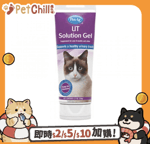
Rank 2: Nutrivet Cat Anti-Urinary Stone / Urinary Tract Infection Oral Paste 3oz — This product is an oral paste, indicating a semi-solid material structure with a viscous consistency. The paste format typically consists of active ingredients suspended or dissolved in a palatable base, often involving digestible oils, waxes, or hydrocolloids to achieve its texture and aid in administration. The dual focus on "Anti-Urinary Stone" and "Urinary Tract Infection" suggests a comprehensive formulation. Ingredients for anti-urinary stone properties might include urine acidifiers (e.g., methionine) or alkalinizers (e.g., potassium citrate) and potentially diuretics or bladder lining support compounds. For urinary tract infection support, ingredients with antimicrobial properties or those that enhance immune response in the urinary tract might be present. The 3oz volume indicates a standard size for a paste product, designed for multiple doses. The material composition would include active pharmaceutical ingredients or nutraceuticals, along with emulsifiers, stabilizers, and flavoring agents to ensure palatability and shelf life. The paste allows for direct oral application or mixing with food.
Rank 3: DR.pet Urinary Tract Health Specific Formula DP0123A 50g (Discontinued) — This product was a specific formula for urinary tract health, presented in a 50g package, likely in a powdered or granulated form, given the weight. The "specific formula" designation implies a targeted blend of ingredients designed to address particular aspects of feline urinary health, which could include pH balance, crystal inhibition, or bladder support. The material composition would have included a combination of active nutritional supplements or herbal extracts, along with excipients to ensure flowability and stability. The discontinuation indicates that this specific formulation is no longer produced, possibly due to product line restructuring, ingredient sourcing changes, or the introduction of a new, improved version. As a dry product, its structural characteristics would have been a free-flowing powder or small granules, suitable for mixing with food.
Rank 4: PetAg Baker Health Series Kidney Health Paste 100g — This is a kidney health paste, indicating a semi-solid, viscous material structure similar to other paste formulations. The "Kidney Health" focus suggests ingredients aimed at supporting overall renal function. Common components in such pastes include omega-3 fatty acids for anti-inflammatory effects, antioxidants to reduce oxidative stress, B vitamins to compensate for losses, and potentially phosphorus binders to manage mineral levels. The paste format ensures palatability and ease of administration, often containing a base of digestible oils, fats, and flavorings. The 100g size is a larger volume compared to some other paste products, suggesting suitability for extended use or for larger cats. The material composition would involve a blend of nutraceuticals, emulsifiers, stabilizers, and flavorings. The consistency would allow for direct oral feeding or mixing with food, ensuring the feline kidney health and anti-urinary stone product is consumed.
Rank 5: DR.pet Urinary Tract Health Specific Formula DP0123A 30g — This product was identical in formulation to the Rank 3 product, but offered in a smaller 30g package. Its characteristics, therefore, mirror the description for Rank 3: a specific formula for urinary tract health, likely in powdered or granulated form. The smaller size suggests an option for shorter treatment courses, trial periods, or for cats requiring less frequent supplementation. The material composition would have been the same as the 50g version, comprising active nutritional supplements or herbal extracts and excipients. The discontinuation applies to this size as well. The structural characteristics would have been a free-flowing powder or granules, intended to be mixed with food, supporting feline kidney health and anti-urinary stone objectives.
Feline Kidney Health and Anti-Urinary Stone Products: Quality Standards and Labeling Norms
The quality standards, labeling transparency, and documentation norms for feline kidney health and anti-urinary stone products are subject to various regulatory frameworks and industry best practices. In many regions, these products fall under the category of pet supplements or nutraceuticals, which may have different regulatory oversight compared to veterinary pharmaceuticals. Generally, manufacturers are expected to adhere to Good Manufacturing Practices (GMPs), which ensure that products are consistently produced and controlled according to quality standards appropriate to their intended use. GMPs cover aspects such as facility design, equipment maintenance, raw material sourcing, production processes, quality control, and personnel training. For ingredients, purity and potency standards are critical. Raw materials should be sourced from reputable suppliers and often undergo testing to confirm their identity, strength, and absence of contaminants like heavy metals, pesticides, or microbial pathogens. Finished products are also typically tested to verify that the active ingredients are present at the declared concentrations and that the product is free from undesirable substances. Labeling transparency is a key aspect of these products. Labels are expected to provide accurate information regarding the product's name, intended species (e.g., "for cats"), net content, list of ingredients (in descending order of predominance by weight), guaranteed analysis (e.g., minimum and maximum percentages of key nutrients or active compounds), feeding directions, and manufacturer or distributor information. The guaranteed analysis is particularly important for feline kidney health and anti-urinary stone products, as it quantifies the levels of active ingredients that contribute to kidney and urinary tract support. For instance, labels might specify minimum percentages of omega-3 fatty acids, antioxidants, or specific amino acids like methionine. Any claims made about the product's efficacy, such as "supports kidney function" or "helps prevent urinary stones," should ideally be substantiated by scientific evidence, although the stringency of this requirement varies by jurisdiction. Some products may carry certifications from independent organizations that attest to their quality, purity, or adherence to specific standards. Documentation norms include maintaining detailed records of raw material specifications, production batches, quality control test results, and product distribution. These records are essential for traceability and for demonstrating compliance with regulatory requirements. The absence of specific claims, such as those related to treating or curing diseases, typically demarcates supplements from drugs, which undergo a more rigorous approval process. The clarity and completeness of labeling are paramount for consumers to make informed decisions regarding feline kidney health and anti-urinary stone products.
Feline Kidney Health and Anti-Urinary Stone Products: Verifiable Factual Insights
A verifiable factual insight concerning feline kidney health and anti-urinary stone products relates to the specific gravity of urine. Urine specific gravity (USG) is a measure of the concentration of solutes in urine, and it is a direct indicator of a cat's hydration status and kidney concentrating ability. For cats, a USG consistently below 1.035 is often considered suboptimal and may indicate early kidney dysfunction or inadequate hydration, both of which are relevant to feline kidney health and anti-urinary stone considerations. Conversely, a USG consistently above 1.035 suggests concentrated urine, which can contribute to the formation of urinary crystals and stones. Many anti-urinary stone products, particularly those designed to promote diuresis or increase water intake, aim to reduce urine specific gravity, thereby diluting the concentration of stone-forming minerals. Monitoring USG through routine veterinary urinalysis provides an objective measure of the effectiveness of dietary interventions or supplements aimed at modifying urine concentration. This measurement is a concrete, quantifiable data point used in veterinary diagnostics and management of feline kidney health and anti-urinary stone conditions.
Another verifiable factual insight pertains to the role of diet in modulating urine pH. The pH of a cat's urine is significantly influenced by its diet, particularly the protein and mineral content. Diets high in meat protein tend to produce acidic urine, while diets high in certain plant-based materials or with specific mineral balances can lead to more alkaline urine. This dietary influence is a fundamental principle utilized in the formulation of therapeutic diets and supplements for feline kidney health and anti-urinary stone prevention. For instance, diets designed to prevent struvite stones (magnesium ammonium phosphate) are typically acidifying, aiming for a urine pH between 6.0 and 6.5, because struvite crystals precipitate in alkaline urine. Conversely, diets for preventing calcium oxalate stones are often formulated to produce slightly alkaline urine, typically above 6.5, as calcium oxalate tends to form in acidic environments. The specific ingredients, such as methionine or potassium citrate, are incorporated into feline kidney health and anti-urinary stone products to achieve these targeted pH ranges, demonstrating a direct and measurable effect of formulation on physiological parameters.
The category of feline kidney health and anti-urinary stone products encompasses a range of formulations designed to support renal function and mitigate urinary stone formation in cats. These products vary in their material composition, structural attributes, and intended usage contexts.
......View All