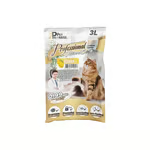
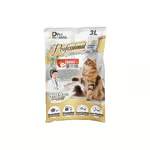
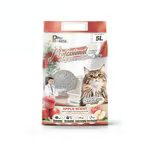
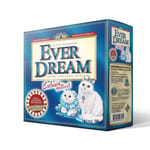
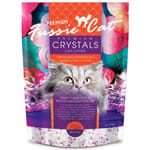
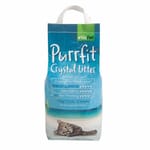
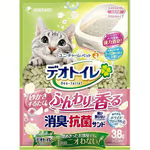
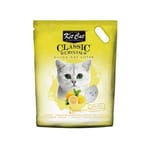
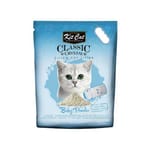
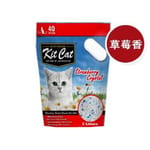
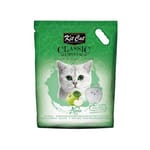
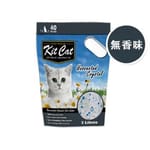
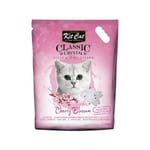
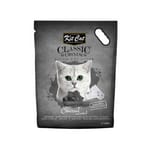
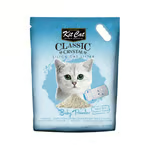
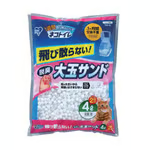
Cat litter is a product designed for managing feline waste, primarily used to absorb urine and encapsulate feces, thereby maintaining environmental hygiene. It comes in various forms, with common types including clumping clay litter, tofu litter, wood pellet litter, paper litter, and silica gel litter. Different kinds of cat litter vary in their absorbency, clumping ability, odor control effectiveness, and dust levels. For instance, tofu cat litter is favored by some users for its eco-friendly properties and flushable convenience. Furthermore, to complement cat litter, litter boxes are available in open, enclosed, and automatic designs, catering to diverse feline habits and owner preferences. Selecting appropriate cat litter and a litter box is a crucial step in ensuring a cat's comfort and household sanitation, with considerations including material properties, cat acceptance, and cleaning methods.
Cat Litter is a material placed in a litter box or pan to absorb feline waste products.
This article aims to describe the structural attributes, material composition, and usage context within the Cat Litter category. The information presented is objective and verifiable, focusing on the inherent characteristics of the materials and systems involved, rather than providing product recommendations or comparative analyses.
Cat Litter Subdivisions
The Cat Litter category is commonly understood and subdivided based on its primary material composition. These subdivisions include inorganic mineral-based materials, organic plant-based materials, and synthetic polymer-based materials. Each material group exhibits distinct physical and chemical properties that influence its interaction with moisture and odor. Within these broad classifications, further distinctions arise from particle size, granulation methods, and the inclusion of additives designed to enhance specific functionalities. For instance, mineral litters can be further categorized by the specific clay type used, such as bentonite or sepiolite, each possessing unique absorption capacities. Organic litters vary based on the plant source, including wood, corn, wheat, or tofu Cat Litter, and their processing methods determine their structural integrity and dust levels. Synthetic litters, while less common, often involve silica gel or other engineered materials with high absorbency. The structural form of these materials, whether granular, pelleted, or crystalline, also contributes to their classification and typical application within a Cat Litter box.
Cat Litter Material Composition and Processing
Differences in material composition, structural forms, and formulation methods are central to understanding Cat Litter. Mineral-based litters, predominantly composed of bentonite clay, utilize the clay's ability to swell and form clumps upon contact with liquid. The manufacturing process for bentonite involves mining, drying, crushing, and sifting the clay into granules of various sizes. Calcium bentonite and sodium bentonite are two common types, with sodium bentonite exhibiting superior clumping properties due to its higher swelling capacity. Other mineral litters, such as those derived from sepiolite or diatomaceous earth, function primarily through absorption rather than clumping, relying on their porous structures to trap moisture. Organic plant-based litters, such as Tofu Cat Litter, are manufactured from renewable resources. Tofu litter, for example, is typically produced from soybean pulp, a byproduct of tofu manufacturing. The pulp is dried, ground, and then extruded into pellets or granules. This process often incorporates a binding agent to maintain pellet integrity and enhance clumping ability. Wood litters are made from sawdust or timber byproducts, often compressed into pellets. Corn and wheat litters follow similar processing, involving grinding, heat treatment, and granulation. Synthetic litters, such as silica gel Cat Litter, are composed of amorphous silicon dioxide. These litters are produced through a chemical process that results in highly porous, crystalline structures capable of absorbing significant amounts of liquid. The pores within the silica gel trap moisture and odors through capillary action. The particle size and shape in all these types are controlled during manufacturing to influence factors such as dust generation and tracking. Formulation methods also include the addition of odor neutralizers, such as activated charcoal or baking soda, which are incorporated during the mixing or post-processing stages. These additives contribute to the functionality of the Cat Litter without altering its fundamental material classification.
Cat Litter Properties Under Usage Conditions
Variations in the properties of Cat Litter manifest under different usage conditions, directly influenced by their material composition and structural attributes. For mineral-based clumping litters, such as bentonite, the primary property under usage is agglomeration. When liquid waste contacts these granules, the clay particles absorb the moisture and swell, binding together to form a solid mass. The integrity and firmness of this clump are crucial for efficient removal from a Cat Litter pan. Factors such as ambient humidity and the frequency of use can influence the clumping performance, as constant moisture exposure can sometimes reduce clumping efficiency over time. Non-clumping mineral litters, conversely, rely on their inherent porosity to absorb and encapsulate liquid. Their effectiveness is measured by their absorptive capacity and ability to neutralize odors through physical entrapment within their porous structure. Organic litters, including Tofu Cat Litter and those derived from wood or corn, exhibit different usage characteristics. Tofu litter, for instance, typically clumps through the action of starches within the soybean material, which gelatinize upon contact with moisture. The resulting clumps are often softer than those formed by bentonite but are generally biodegradable. Wood pellet litters, on the other hand, often disintegrate into sawdust upon absorbing liquid, requiring a different method of removal and replenishment. The dust generation property of Cat Litter is also a significant variation under usage. Some mineral litters, particularly those with finer particle sizes, can produce dust during pouring or when disturbed by a cat, which can become airborne. Organic litters generally produce less dust, but certain formulations can still release fine particles. Odor control is another critical property that varies. Some litters rely on their natural absorptive capacity to trap odors, while others incorporate specific odor-neutralizing agents, such as activated carbon or plant-based extracts. The longevity of odor control can be affected by the volume of waste and environmental factors like ventilation. The interaction of the material with the Cat Litter box itself, particularly in automatic Cat Litter box systems, also presents usage variations. Some materials are more compatible with mechanical sifting mechanisms due to their particle size and clumping characteristics, while others may cause jamming or inefficient waste separation. Understanding these variations is essential for comprehending the functional attributes of different Cat Litter types in operational settings.
Cat Litter Product Characteristics from Sales Ranking
The following descriptions detail the material, formulation, and structural characteristics of Cat Litter products, based strictly on the provided sales ranking information. These descriptions are objective and do not include any usage recommendations or comparative assessments.
Rank 1: 富士貓之王樣 3.0粗粒 天然玉米豆乳 豆腐貓砂 原味 17.5L - 原裝行貨 — This product is a Tofu Cat Litter. Its primary material composition includes natural corn and soybean pulp, indicating a plant-based origin. The structural characteristic is described as "3.0 coarse grain," signifying a specific particle size or pellet diameter. The product is unfragranced, maintaining a "natural original flavor." Its packaging volume is 17.5 liters.
Rank 2: 富士姬之淡雪 3.0 天然淨白豆乳 豆腐貓砂 原味 18L - 原裝行貨 — This product is also a Tofu Cat Litter. It is composed of natural pure white soybean pulp, indicating a specific processing or selection of soybean material. The structural characteristic is "3.0" which likely refers to a uniform pellet size or granulation. The product is unfragranced, designated as "natural original flavor." Its packaging volume is 18 liters.
Rank 3: 富士一 天然極簡日常 3.0 豆腐貓砂 原味 6L - 原裝行貨 — This is a Tofu Cat Litter. It is described as "natural minimalist daily," suggesting a formulation focused on essential properties without additional complex features. The material composition is soybean-based. It features a "3.0" structural characteristic, indicating a specific particle size. The product is unfragranced, described as "natural original flavor." Its packaging volume is 6 liters.
Rank 4: 富士姬之淡雪 1.5+3.0 粗幼粒混合天然淨白豆乳 豆腐貓砂 原味 18L — This Tofu Cat Litter features a mixed particle size, specified as "1.5+3.0 coarse and fine grain." This blend suggests a combination of different pellet diameters within the same product. The material is natural pure white soybean pulp. The product is unfragranced, designated as "natural original flavor." Its packaging volume is 18 liters.
Rank 5: 富士姬之淡雪 3.0 天然淨白豆乳 豆腐貓砂 綠茶味 18L - 原裝行貨 — This product is a Tofu Cat Litter. Its material composition includes natural pure white soybean pulp. The structural characteristic is "3.0," indicating a uniform pellet size. This formulation includes a "green tea flavor," indicating the presence of a scent additive or infusion. Its packaging volume is 18 liters.
Cat Litter Quality Standards and Labeling
Verifiable quality standards, labeling transparency, and documentation norms are applied to Cat Litter to inform consumers about product attributes. While a single overarching international standard for all Cat Litter types does not exist, specific industry guidelines and national regulations address various aspects of their production and sale. For instance, in some regions, regulations may cover permissible dust levels, the presence of certain chemicals, or the biodegradability claims of organic litters. Labeling standards typically require manufacturers to list the primary material composition, such as bentonite clay, wood fiber, or soybean pulp, for Tofu Cat Litter. This allows consumers to identify the fundamental material base of the product. Information regarding particle size, such as "coarse grain" or "fine grain," is often included to describe the physical structure. The inclusion of additives, such as activated charcoal for odor control or fragrances, is also commonly disclosed on product packaging. For organic litters, certifications related to sustainable sourcing or biodegradability may be presented, often backed by third-party verification bodies. Documentation norms can include technical data sheets providing details on absorption capacity, clumping strength, and specific gravity, although these are more frequently available for commercial or industrial applications rather than consumer products. Manufacturers may also provide batch numbers and production dates, allowing for traceability. Claims regarding dust-free or low-dust formulations often refer to testing methodologies that measure airborne particulate matter. The term "natural" on packaging generally indicates that the materials are derived from natural sources, such as plants or minerals, and may imply minimal chemical processing, though specific definitions can vary by jurisdiction. For example, a Cat Litter labeled as "natural corn" would be expected to contain corn as a primary ingredient, without artificial colorants or synthetic binders if "natural" is strictly interpreted. The "original flavor" designation indicates the absence of added scents, relying on the inherent aroma of the material itself. Compliance with these standards and norms contributes to the transparency of Cat Litter products in the market.
Verifiable Factual Insights on Cat Litter
One verifiable factual insight related to Cat Litter concerns the chemical structure of bentonite clay and its impact on water absorption. Bentonite clay, a common component in many Cat Litter formulations, is primarily composed of montmorillonite, a 2:1 phyllosilicate mineral. This layered silicate structure possesses an expandable lattice, meaning that water molecules can penetrate between the layers of the mineral. This intercalation of water molecules causes the clay to swell significantly, which is the physical basis for its clumping action in a Cat Litter box. The specific type of exchangeable cation present in the interlayers, typically sodium or calcium, dictates the degree of swelling. Sodium bentonite exhibits a higher swelling capacity compared to calcium bentonite due to the smaller ionic radius and higher hydration energy of sodium ions, allowing for greater water uptake and more robust clump formation. This structural property directly translates to its functional performance as a clumping Cat Litter material. Another factual insight pertains to the biodegradability of certain organic Cat Litter types. Tofu Cat Litter, derived from soybean pulp, is classified as a biodegradable material. The organic compounds present in the soybean pulp are susceptible to microbial decomposition, meaning that under appropriate environmental conditions (e.g., in a composting facility), microorganisms can break down the material into simpler, non-toxic substances such as carbon dioxide, water, and biomass. This contrasts with mineral-based litters, such as bentonite, which are geologically stable and do not undergo significant biological degradation within typical environmental timescales. The biodegradability of Tofu Cat Litter is a direct consequence of its plant-based origin and organic chemical composition, offering a different end-of-life pathway compared to inorganic Cat Litter varieties.
The preceding text has presented an objective examination of Cat Litter, detailing its various classifications based on material composition, structural attributes, and processing methods. Information regarding product characteristics was derived solely from sales ranking data, maintaining a focus on verifiable properties without offering any form of recommendation or comparative assessment. The discussion also covered applicable quality standards and provided factual insights into material science relevant to Cat Litter functionality.
......View All