Dining utensils encompass a wide array of tools utilized for food preparation, serving, and consumption. Their materials are diverse, commonly including ceramic, glass, stainless steel, wood, and plastic. These dining utensils can be categorized by function into cooking tools, tableware, storage containers, and drinkware. For instance, cooking tools include pots and baking molds, while tableware covers plates, bowls, cups, chopsticks, and cutlery. Storage containers are used for food preservation or storing leftovers. The selection of dining utensils typically considers factors such as heat resistance, durability, ease of cleaning, and suitability for various cooking methods. These tools play a crucial role in daily life, supporting a wide range of eating activities.
Pet feeding supplies encompass a diverse range of products designed for the containment, dispensing, and consumption of food and water by domestic animals.
This article aims to describe the structural attributes, material composition, and usage contexts within the category of pet feeding supplies, without promoting purchase or providing selection advice.
Pet Feeding Supplies: Classification by Function
Pet feeding supplies are commonly categorized based on their primary function in the feeding process. One fundamental division separates items intended for food from those designed for water. Within food-related items, further distinctions exist between standard bowls for dry or wet food, slow-feeder bowls engineered to regulate consumption speed, and automatic feeders that dispense food at pre-set intervals. Water-related supplies include simple water bowls, elevated dispensers, and sophisticated water fountains that incorporate filtration systems. Accessories such as storage containers for kibble or measuring scoops also form part of this broader classification. Each functional type of pet feeding supplies addresses a specific aspect of pet nourishment, from basic access to food and hydration to specialized dietary management or hydration enhancement.
Pet Feeding Supplies: Material Composition and Structural Forms
The material composition of pet feeding supplies varies considerably, influencing durability, hygiene properties, and suitability for different environments. Common materials include various plastics, stainless steel, ceramic, and silicone. Plastic pet feeding supplies, often made from polypropylene or ABS, are typically lightweight and shatter-resistant, exhibiting a range of structural forms from simple open bowls to complex multi-part automatic dispensers. Stainless steel offers high resistance to corrosion and bacterial growth, presenting as single-piece stamped bowls or multi-component elevated stands. Ceramic items, fired at high temperatures, provide weight and stability, often featuring glazed surfaces and traditional bowl shapes. Silicone, a flexible polymer, is frequently used for collapsible travel bowls or mat bases, known for its non-slip properties and ease of cleaning. Each material imparts distinct characteristics to the pet feeding supplies, affecting their thermal properties, resistance to chemical degradation, and surface texture. Structural forms range from low-profile dishes to tall, elevated feeders, and from stationary units to portable, collapsible designs. The method of manufacture, whether injection molding for plastics, stamping for metals, or casting and firing for ceramics, dictates the achievable shapes and surface finishes of the pet feeding supplies.
Pet Feeding Supplies: Usage Environments and Conditions
The properties of pet feeding supplies are often adapted to different usage environments and conditions, reflecting the diverse needs of pets and their owners. For indoor use, considerations often center on aesthetics, stability, and ease of cleaning. Ceramic and stainless steel pet feeding supplies are frequently chosen for their weight, which prevents tipping, and their smooth surfaces, which facilitate hygiene. For outdoor environments, durability and weather resistance become paramount. Plastic pet feeding supplies, due to their resistance to impact and moisture, are often preferred. Travel or portable pet feeding supplies emphasize collapsibility and light weight, utilizing materials like silicone or specific types of plastic that can be easily folded or nested. Specialized conditions, such as those involving pets with mobility issues, may necessitate elevated pet feeding supplies to reduce strain on joints during eating or drinking. Similarly, pets prone to rapid consumption might benefit from slow-feeder designs, which incorporate internal baffles or ridges to extend meal times. The thermal properties of the materials also play a role; for example, some pet feeding supplies are designed to keep water cooler for longer periods in warm climates, while others are insulated to prevent freezing in colder conditions. Environmental factors such as humidity, exposure to sunlight, and potential for accidental drops all influence the selection and design of appropriate pet feeding supplies.
Pet Feeding Supplies: Product Characteristics Based on Sales Ranking
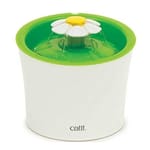
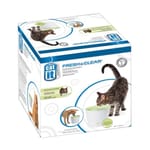
Rank 1: Hagen Catit Water Fountain Flower Design 1.5L (C43735W) — This item is a water fountain designed for pets, constructed primarily from plastic. Its structure includes a reservoir for water, a pump mechanism, and a multi-flow top designed to create different water flow patterns, resembling a flower. The capacity of the reservoir is 1.5 liters. The plastic material is typically BPA-free, ensuring suitability for pet hydration. The internal components are designed for easy disassembly to facilitate cleaning and filter replacement. The design emphasizes continuous water circulation.
Rank 2: PETKIT Ceramic Elevated Bowl Single Bowl (Color Random) (pkfcb1b) — This product is an elevated feeding bowl, fabricated from ceramic material. The elevation is achieved through an integrated stand that forms part of the bowl's structure. Ceramic is known for its weight and stability, which minimizes movement during feeding. The surface is typically glazed, rendering it non-porous and resistant to bacterial accumulation. The single-bowl configuration is designed for either food or water. The color variation indicates a range of aesthetic finishes available for the ceramic pet feeding supplies.
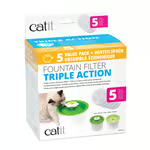
Rank 3: Hagen Catit Filter Replacements Triple Action Round 5-pack (C43746) — These are replacement filter cartridges for pet water fountains, specifically designed for Catit series fountains. Each filter incorporates a triple-action filtration system. The components typically include activated carbon to remove odors and impurities, ion exchange resin to soften water, and a mesh screen to trap debris and sediment. The filters are round in shape and designed for insertion into designated slots within compatible water fountains. The material composition of the filter media is engineered for water purification.
Rank 4: Hagen Catit Filter Replacements Round 3-pack (C50057) — Similar to the previous entry, these are replacement filter cartridges for Catit water fountains. This pack contains three round filters. While the specific filtration mechanism is not detailed as "triple action" in the product name, these filters are generally composed of activated carbon and a particulate filter layer to purify water by removing debris and odors. The round form factor ensures compatibility with specific fountain models. The material used for the filter housing is typically plastic, encasing the filtration media.
Rank 5: VIGOR & SAGE Fine Practical Pet Food Scoop (Discontinued) — This item is a pet food scoop, designed for portioning and dispensing dry pet food. The material is typically a durable plastic, molded into a scoop shape with a handle. Its structure is simple, intended for practical use in measuring out specific quantities of kibble from a larger container. The term "fine practical" suggests a functional design without complex features. As a discontinued item, specific detailed material specifications may be less readily available, but its purpose as a measuring tool for pet feeding supplies remains clear.
Pet Feeding Supplies: Quality Standards and Labeling Norms
Quality standards for pet feeding supplies primarily focus on material safety, structural integrity, and hygienic properties. For materials such as plastics, ceramic, and stainless steel, compliance with food-grade regulations is a common requirement, ensuring that no harmful substances leach into food or water. For instance, plastic pet feeding supplies are often certified as BPA-free, indicating the absence of Bisphenol A, a chemical that can have adverse health effects. Ceramic items are expected to be lead and cadmium-free, particularly their glazes, to prevent contamination. Stainless steel pet feeding supplies are typically required to be of a high-grade alloy, such as 304 or 316, to resist rust and corrosion. Structural integrity standards address aspects like stability, resistance to tipping, and durability under normal use conditions. For automatic dispensers or water fountains, electrical safety certifications (e.g., CE, UL) are pertinent for components such as pumps and power adapters. Labeling transparency commonly includes material composition, capacity (for bowls and fountains), and cleaning instructions. For filters in water fountains, the labeling often specifies the type of filtration media (e.g., activated carbon, ion exchange resin) and recommended replacement intervals. Documentation norms may include manufacturing batch numbers, country of origin, and explicit warnings regarding intended use or potential hazards. These standards and labeling practices aim to provide verifiable information about the construction and safety of pet feeding supplies.
Pet Feeding Supplies: Factual Insights
One verifiable factual insight concerning pet feeding supplies relates to the specific properties of different plastic types. Polypropylene (PP), a common plastic used in many pet feeding supplies, has a melting point typically around 160-170 degrees Celsius, making it suitable for dishwashing at standard temperatures without deformation. Another insight pertains to the design of slow-feeder bowls; the internal geometric patterns are often engineered based on principles of fluid dynamics and cognitive engagement, specifically to increase the time a pet spends foraging for food, thereby reducing the rate of ingestion. This design principle is not about making food inaccessible, but rather about extending the activity of eating.
The information presented describes the characteristics and classifications of pet feeding supplies, focusing on their material, structure, and functional attributes.
......View All