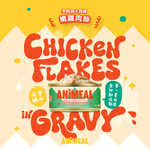
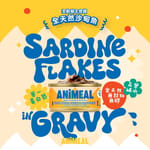
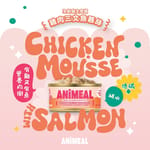
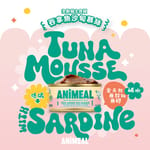
The ANiMEAL wet cat food series encompasses various moist food products specifically formulated for felines, offering a selection of flavors and textures. These products typically feature meat or fish as primary ingredients, complemented by other nutrients, with the aim of supplying cats with their daily requirements of protein, fats, vitamins, and minerals. ANiMEAL cat food comes in diverse forms, commonly including pâté, chunks, or shredded textures, catering to cats of different age groups and dietary preferences. Packaging is usually in sealed cans, intended to maintain the freshness and palatability of the contents. When making a selection, one may consider the cat's specific needs and veterinary recommendations to choose appropriate product types, ensuring balanced nutrition. This category of cat food is intended for daily dietary consumption and does not involve therapeutic or health-improving medical claims.
Canned cat food represents a category of commercially prepared feline sustenance, typically sealed in airtight containers to preserve freshness and nutritional integrity.
This article aims to describe the structural attributes, material compositions, and usage contexts within the category of canned cat food, without providing product recommendations or comparing advantages.
Canned Cat Food Classification by Formulations
Canned cat food is commonly differentiated in practical use and supply contexts based on its primary formulation characteristics. These distinctions often involve the moisture content, the consistency of the product, and the inclusion of specific dietary components. For instance, some formulations are designed to be complete and balanced meals, providing all necessary nutrients for a feline's daily intake, while others may be intended as complementary feedingstuffs, serving as a supplement or treat rather than a sole nutritional source. The preparation method, such as whether ingredients are minced, shredded, or pureed, also contributes significantly to how canned cat food products are categorized by consumers and manufacturers. Furthermore, specific dietary needs, such as formulations for kittens, adult cats, or senior cats, often define distinct sub-categories within the broader canned cat food market. The presence or absence of grains, common allergens, or specialized protein sources further refines these classifications, allowing for a structured approach to understanding the diverse offerings.
Canned Cat Food: Material Composition and Processing Techniques
The material composition of canned cat food is centered around protein sources, typically derived from animal tissues, alongside fats, carbohydrates, vitamins, and minerals. Common protein ingredients include various meat and fish types, such as chicken, tuna, salmon, and sardine, which are often processed into different textures. The structural forms within canned cat food can range from finely ground pâtés and mousses to shredded or diced pieces suspended in gravy or jelly. These variations in texture are achieved through specific processing techniques. For example, pâtés and mousses undergo extensive grinding and emulsification to create a smooth, uniform consistency. Shredded or flaked varieties involve cutting meat or fish into distinct pieces before cooking and canning. Gravy or jelly formulations often incorporate gelling agents like carrageenan or guar gum, which provide a viscous matrix to suspend the solid components. The manufacturing process typically involves mixing raw ingredients, cooking them to ensure safety and palatability, and then sealing them into metal cans, followed by a sterilization step (retorting) to ensure product stability and a long shelf life. This heat treatment eliminates pathogenic microorganisms and spoilage enzymes, making the canned cat food safe for consumption without refrigeration until opened. The selection of ingredients and the precise control over each processing stage are critical in determining the final physical and nutritional attributes of the canned cat food.
Canned Cat Food: Property Variation Across Usage Environments
The properties of canned cat food can exhibit variations depending on the intended usage environment or specific conditions. For example, formulations designed for felines in warmer climates might emphasize higher moisture content to support hydration, while those for colder environments might focus on a slightly higher caloric density to aid energy expenditure. The presentation of canned cat food also plays a role; products with a smooth, uniform texture, such as a mousse, may be preferred for cats with dental sensitivities, as they require minimal chewing. Conversely, chunkier formulations with distinct pieces of meat or fish in gravy can offer a different sensory experience and may be favored by cats that prefer more textural variety. The specific nutritional profile of canned cat food also aligns with different life stages or health conditions. Kitten formulations, for instance, contain higher levels of protein and fat to support rapid growth, while senior cat formulations may feature ingredients that promote joint health or kidney function. The stability of canned cat food once opened is another property influenced by the usage environment; products exposed to air and warmer temperatures will degrade more quickly, necessitating proper storage, typically refrigeration, to maintain their integrity. These variations in properties are a direct result of tailored formulations and processing methods designed to meet specific needs.
Canned Cat Food Product Characteristics by Sales Ranking
The following describes the material, formulation, and structural characteristics of specific canned cat food products based on their sales ranking. These descriptions are purely factual, focusing on objective attributes.
Rank 1: ANiMEAL All Life Stage Canned Cat Food Tuna Sardine Mousse 80g (CC-MOU-TU-SD) — This canned cat food is formulated as a mousse, indicating a finely pureed and homogenized texture. The primary protein sources are tuna and sardine, which are processed to achieve a smooth, uniform consistency. The product is designed for all life stages, suggesting a balanced nutritional profile suitable for various feline age groups. The 80g unit size is a common individual serving format.
Rank 2: ANiMEAL All Life Stage Canned Cat Food Chicken Salmon Mousse 80g (CC-MOU-CKSAL) — Similar to the top-ranked product, this canned cat food also presents as a mousse, characterized by its smooth, uniform texture. The protein composition features chicken and salmon, blended into a finely processed form. It is designated for all life stages, implying a comprehensive nutritional composition. The packaging is in an 80g can.
Rank 3: ANiMEAL All Life Stage Canned Cat Food Tender Chicken Fillet Gravy 80g (CC-GRV-CK) — This canned cat food is distinguished by its gravy formulation, which means tender chicken fillet pieces are suspended in a liquid matrix. The chicken is typically shredded or finely cut, providing a distinct textural component within the gravy. This product is also suitable for all life stages, indicating a complete and balanced nutritional profile. The unit size is 80g.
Rank 4: ANiMEAL All Life Stage Canned Cat Food Natural Sardine Fillet Gravy 80g (CC-GRV-SD) — This canned cat food features natural sardine fillets presented in a gravy. The sardines are likely prepared as distinct pieces, offering a different texture compared to mousse formulations. The gravy provides moisture and a complementary flavor profile. It is formulated for all life stages, containing essential nutrients for a broad range of feline ages. The product is packaged in an 80g can.
Canned Cat Food: Quality Standards and Labeling Norms
Quality standards for canned cat food are established to ensure product safety, nutritional adequacy, and accurate representation. In many regions, regulatory bodies such as the Association of American Feed Control Officials (AAFCO) in the United States or the European Pet Food Industry Federation (FEDIAF) in Europe define guidelines for pet food manufacturing and labeling. These guidelines often specify minimum and maximum levels for crude protein, crude fat, crude fiber, moisture, and essential vitamins and minerals. For a canned cat food product to be labeled as "complete and balanced," it must meet specific nutrient profiles established for a particular life stage (e.g., growth, adult maintenance, gestation/lactation). Labeling transparency is a key aspect of these standards. Product labels are required to list ingredients in descending order by weight, provide a guaranteed analysis of key nutrients, and include feeding guidelines. The manufacturing process for canned cat food must adhere to Good Manufacturing Practices (GMPs), which dictate sanitation, quality control, and record-keeping protocols to prevent contamination and ensure consistent product quality. Furthermore, claims such as "natural" or "organic" on canned cat food products are often subject to specific regulatory definitions and verification processes, requiring manufacturers to provide documentation that substantiates these claims. Adherence to these standards provides a verifiable framework for the production and commercialization of canned cat food.
Canned Cat Food: Factual Insights
A verifiable factual insight concerning canned cat food relates to its typical moisture content. Unlike dry kibble, which generally contains 6-10% moisture, canned cat food formulations commonly feature a moisture content ranging from 70% to 85%. This elevated moisture level is a direct result of the ingredients and the canning process, contributing significantly to a cat's daily water intake. Another factual insight is that the sterilization process, known as retorting, which involves heating sealed cans under pressure, is crucial for the extended shelf life of canned cat food. This process effectively kills microorganisms and deactivates enzymes that would otherwise cause spoilage, allowing canned cat food to remain stable at room temperature for years without preservatives, provided the can remains hermetically sealed.
The category of canned cat food encompasses a variety of formulations and structural attributes, influenced by material composition and processing techniques. Understanding these characteristics provides a framework for analyzing the diverse products available in the market.
......View All