The CatManDoo cat and dog treats category encompasses a variety of pet food options, primarily offering freeze-dried treat products. These treats typically utilize single ingredients as their main components, such as Cat man doo freeze dried chicken, and are processed through low-temperature dehydration to preserve the natural flavor and nutrients of the ingredients. The treats in this category are often presented in chunk or flake forms, making them convenient for pets to consume and for owners to distribute. CatManDoo cat and dog treats can serve as a supplement to a pet's daily diet or be used as training rewards. Their design aims to provide a simple and minimally processed treat choice, suitable for cats and dogs of various sizes and breeds. Products within this classification emphasize ingredient simplicity, catering to owners who have specific considerations regarding ingredient sources, thereby offering diverse treat options for pets.
Pet treats for cats and dogs encompass a diverse range of supplementary food items formulated to provide nutritional enrichment, behavioral reinforcement, or simply as palatable additions to an animal's diet.
This article aims to describe the structural attributes, material composition, and usage contexts within the category of pet treats for cats and dogs, without recommending specific products or comparing their advantages.
Pet Treats for Cats and Dogs: Classification by Primary Ingredient
The classification of pet treats for cats and dogs is frequently based on their primary ingredient, which dictates both their nutritional profile and their physical characteristics. Common primary ingredients include various animal proteins, such as chicken, beef, fish, and lamb, often presented in forms like freeze-dried, dehydrated, or baked. Vegetable-based treats, although less prevalent for felines, are also available, incorporating ingredients like sweet potato, peas, or carrots. Grains, such as rice or oats, may serve as binders or fillers in some formulations. The selection of a primary ingredient directly influences the treat's palatability and its suitability for animals with specific dietary requirements or sensitivities. For example, treats primarily composed of a single animal protein are often utilized for pets with allergies to other protein sources. The method of processing these primary ingredients also contributes to the final classification, with distinctions made between raw, cooked, and highly processed forms. Understanding these ingredient-based classifications provides a foundational framework for analyzing the treat market.
Pet Treats for Cats and Dogs: Structural Forms and Processing Techniques
Pet treats for cats and dogs exhibit a wide array of structural forms, each resulting from distinct processing techniques and material compositions. Freeze-dried treats, for instance, are created by freezing raw or cooked ingredients rapidly and then placing them in a vacuum chamber, where ice sublimes directly into vapor, removing moisture while largely preserving the original nutrient structure and cellular integrity. This process results in a lightweight, porous product. Dehydrated treats, conversely, involve removing moisture through controlled heat and air circulation, leading to a denser, chewier texture. Baked treats, similar to human biscuits, are formed from a dough-like mixture of ingredients, then cooked in an oven, resulting in a firm, often crunchy consistency. Soft and chewy treats typically incorporate humectants and emulsifiers to maintain their pliable texture, often undergoing an extrusion process. Dental chews are specifically engineered with particular shapes, textures, and sometimes enzymatic additives to mechanically or chemically assist in plaque and tartar reduction. The choice of processing technique directly influences the treat's shelf stability, texture, and the extent to which its original nutritional content is altered. These structural and processing distinctions are fundamental to understanding the characteristics of various pet treats for cats and dogs.
Pet Treats for Cats and Dogs: Property Variation Across Usage Environments
The properties of pet treats for cats and dogs can exhibit variations depending on the environmental conditions in which they are stored or presented. Humidity, for example, significantly impacts the texture and stability of many treat types. Freeze-dried and dehydrated treats, being low in moisture, are highly susceptible to moisture absorption from humid air, which can lead to a loss of crispness, clumping, or even microbial growth if not stored in airtight containers. Conversely, soft and chewy treats may become harder or brittle in very dry environments due to moisture loss. Temperature also plays a role; high temperatures can accelerate oxidative rancidity in treats containing fats, leading to undesirable changes in odor and palatability. Freezing or refrigeration, while extending shelf life for some treat types, can alter the texture of others, making them harder or less palatable upon thawing. Exposure to light can degrade certain vitamins and pigments present in the treats, affecting their nutritional value and visual appeal. Therefore, the physical and chemical properties of pet treats for cats and dogs are not static but interact dynamically with their storage and usage environments, necessitating appropriate handling to maintain their intended characteristics.
Pet Treats for Cats and Dogs: Product Characteristics from Sales Ranking
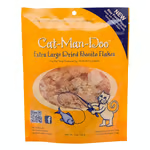
Rank 1: Cat-Man-Doo Bonito Flakes 1oz — This product consists of thinly shaved, dried flakes of skipjack tuna (bonito). The processing involves cooking, smoking, and then drying the fish, followed by shaving. It is a single-ingredient product, primarily composed of protein. The flakes are light, delicate, and have a dry, papery texture. The moisture content is very low, contributing to its extended shelf life.
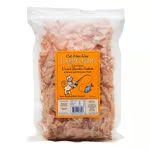
Rank 2: Cat-Man-Doo Bonito Flakes 4oz — Similar to the 1oz variant, this product is also composed of thinly shaved, dried skipjack tuna (bonito) flakes. The material composition and processing method are identical to the smaller package, focusing on preserving the natural properties of the fish through cooking, smoking, and drying. The primary difference lies solely in the package quantity. It provides a larger volume of the same single-ingredient pet treats for cats and dogs.
Pet Treats for Cats and Dogs: Quality Standards and Labeling Norms
Quality standards and labeling norms for pet treats for cats and dogs are established by regulatory bodies to ensure product safety, accurate representation, and consumer information. In many regions, regulations mandate that product labels include a guaranteed analysis, specifying minimum percentages of crude protein and crude fat, and maximum percentages of crude fiber and moisture. Ingredient lists must be provided in descending order by weight, allowing consumers to identify the primary components. Manufacturers are often required to list feeding guidelines, although these are typically recommendations and not strictly part of the product's intrinsic characteristics. Statements regarding nutritional adequacy, such as "for intermittent or supplemental feeding only," are also common, distinguishing treats from complete and balanced diets. Manufacturing processes are subject to good manufacturing practices (GMPs), which dictate hygienic conditions and quality control measures during production. The presence of certifications from independent testing organizations or adherence to specific industry standards can further indicate compliance with particular quality benchmarks for pet treats for cats and dogs. These regulatory frameworks aim to provide transparency regarding the product's composition and intended use.
Pet Treats for Cats and Dogs: Verifiable Factual Insights
A verifiable factual insight concerning pet treats for cats and dogs is that the freeze-drying process, as applied to protein sources like chicken, can remove approximately 98% of the water content while retaining the majority of the original vitamins, minerals, and amino acids. This contrasts with traditional dehydration, which often involves higher temperatures that can degrade certain heat-sensitive nutrients. Another insight is that the term "Cat man doo freeze dried chicken" refers to a specific product form within the broader category. Freeze-dried products, due to their significantly reduced moisture content, possess a low water activity level, which inhibits microbial growth without the need for artificial preservatives. This characteristic contributes to their extended shelf stability when stored properly in sealed packaging. The structural integrity of the raw material, such as chicken, is largely maintained during freeze-drying, resulting in a product that can be rehydrated or consumed in its dry, brittle state. These characteristics are inherent to the processing method and material composition of such pet treats for cats and dogs.
This comprehensive overview has provided a structural and compositional examination of pet treats for cats and dogs, detailing their classifications, processing methods, environmental interactions, and regulatory aspects.
......View All