This category features various products centered around Icelandic dog treats, encompassing forms such as dried meat pieces, dental chews, and chew sticks. These dog treats are typically made from single or multiple animal protein sources, with common ingredient types including fish, poultry, and red meat, intended for supplementary nutrition or as rewards for dogs. Some Icelandic dog treats may undergo processing methods like air-drying, baking, or freeze-drying to preserve the natural characteristics of the ingredients. The products in this category offer diverse options in terms of size, hardness, and flavor, allowing selection based on a dog's size, age, and chewing habits. Products within this classification are not intended for treating or improving health, but rather serve as dietary supplements or training aids for dogs.
Icelandic dog treats encompass a range of supplemental food products specifically formulated for canine consumption, originating from or primarily utilizing ingredients sourced from Iceland.
This article aims to describe the structural attributes, material composition, and usage contexts within the category of Icelandic dog treats, without providing recommendations for purchase or comparing product advantages.
Icelandic Dog Treats: Categorization by Production Method
The category of Icelandic dog treats is commonly divided based on their primary production method, reflecting variations in processing and ingredient presentation. One significant classification distinguishes between dehydrated products and freeze-dried products. Dehydrated Icelandic dog treats undergo a process where moisture is removed through heat and air circulation, resulting in a product with reduced water activity that inhibits microbial growth. This method often preserves the natural texture to a certain extent while concentrating flavors. Freeze-dried Icelandic dog treats, conversely, involve freezing the raw material and then placing it in a vacuum chamber, where ice sublimes directly into vapor. This process typically results in a lighter, more porous product that retains a higher percentage of its original nutritional content and structure compared to traditional dehydration. Another common classification pertains to whether the treat consists of a single ingredient or is a multi-ingredient formulation. Single-ingredient Icelandic dog treats, such as dried fish skins, offer a straightforward composition, emphasizing the core ingredient's properties. Multi-ingredient formulations, however, combine various components, potentially including different types of fish, vegetables, or binders, to achieve specific nutritional profiles or textures. Furthermore, the form factor provides another layer of categorization, distinguishing between whole pieces, flakes, or ground and pressed forms. Whole pieces, like a full dried fish or large skin segments, retain much of their original shape and provide a more substantial chewing experience. Flakes, often seen with fish fillets, are smaller, irregular pieces convenient for various applications. Ground and pressed forms are created by processing ingredients into a paste or powder and then shaping them, offering a consistent size and density. These distinctions shape the practical application and perceived attributes of various Icelandic dog treats within the market.
Icelandic Dog Treats: Material Composition and Processing Techniques
The material composition of Icelandic dog treats primarily centers on marine resources, reflecting Iceland's abundant fisheries. Cod, herring, and redfish are frequently utilized species, often sourced from the cold, clean waters surrounding the island. Cod skin, for instance, is a prevalent ingredient, known for its collagen content and texture when dried. Herring, typically processed whole or as fillets, provides a different fatty acid profile, including omega-3s. Redfish skin also contributes to the diversity of raw materials. Beyond the primary fish components, some Icelandic dog treats incorporate other marine elements like lobster, or combine fish with supplementary ingredients such as salmon. These additions can alter the nutritional balance and palatability. The structural forms of these treats vary significantly. They can appear as whole dried fish, strips of fish skin, or as more processed forms like flakes or granular pieces. The choice of form factor is often dictated by the original raw material and the intended processing method. For example, cod skin lends itself well to being dried into rigid, elongated strips, while whole herring is typically dried intact. Processing techniques are fundamental in defining the characteristics of Icelandic dog treats. Air-drying is a common method, involving the gradual removal of moisture over an extended period. This traditional technique often results in a dense, chewy product. Dehydration, as mentioned, uses controlled heat and airflow to reduce moisture content more rapidly than traditional air-drying, while still preserving many nutrients. Freeze-drying, a more advanced technique, removes water through sublimation, which generally minimizes structural changes and nutrient degradation, yielding a lightweight, porous product. The specific method employed influences the final texture, moisture content, and nutrient retention of the Icelandic dog treats. For instance, freeze-dried products tend to rehydrate more easily and retain more of the original aroma compared to extensively heat-dried products. Furthermore, some products undergo minimal processing, essentially being raw ingredients that have been dried, while others might involve more complex steps such as cutting, shaping, or combining with other ingredients before the final drying stage. This range of materials and processing ensures a diverse array of Icelandic dog treats with distinct physical and chemical properties.
Icelandic Dog Treats: Property Variation Across Usage Contexts
The properties of Icelandic dog treats can vary across different usage environments or conditions, primarily due to their intrinsic material composition and processing. For instance, the moisture content, a direct result of the drying method, significantly impacts storage requirements. Dehydrated Icelandic dog treats, having a very low moisture percentage, exhibit extended shelf stability when stored in cool, dry conditions, making them suitable for long-term pantry storage without refrigeration. Freeze-dried variants, while also low in moisture, are often more susceptible to absorbing ambient humidity if not properly sealed, which can alter their texture and potentially reduce their shelf life. Their airy structure means they are also more fragile and can crumble more easily in transport or handling compared to denser, air-dried products. The physical hardness and chewiness of Icelandic dog treats are also important variables. Whole dried fish or thick strips of cod skin, for example, provide a substantial chewing experience, which can be sustained for longer periods. This characteristic is relevant in usage contexts where prolonged engagement is desired, such as for dental health benefits or behavioral enrichment. Conversely, flaked or granulated Icelandic dog treats, which are softer and break down more readily, are often used as meal toppers or for training purposes where rapid consumption is preferred. The environmental humidity of the storage location directly impacts the texture of certain Icelandic dog treats. A very dry environment helps maintain crispness, while a humid environment might cause some products to become slightly pliable or sticky over time. Temperature also plays a role; while most dried treats are shelf-stable at room temperature, extreme heat can potentially affect fat stability, leading to rancidity in products with higher oil content, such as those made from herring or salmon. Packaging also influences how Icelandic dog treats perform in different contexts. Airtight, opaque packaging protects against moisture, light, and oxygen, preserving the product's integrity. Products intended for travel or outdoor activities often require robust, resealable packaging to maintain freshness and prevent contamination. The inherent oil content of the fish ingredients also dictates how Icelandic dog treats behave. Fish rich in omega-3 fatty acids, like herring or salmon, while nutritionally beneficial, can be more prone to oxidation if exposed to air and light, potentially leading to a shorter optimal consumption window once opened, especially in warmer climates. Understanding these variations allows for appropriate handling and storage, ensuring that the Icelandic dog treats retain their intended characteristics throughout their shelf life.
Icelandic Dog Treats: Product Information Based on Sales Ranking
The following details the material, formulation, and structural characteristics of Icelandic dog treats based on their sales ranking, without providing usage recommendations.
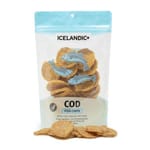
Rank 1: Icelandic+ Dog Treats Icelandic Cod Flakes 2.5oz — This product consists solely of Icelandic cod, presented in a flaked form. The cod undergoes a natural drying process, resulting in irregular, thin pieces. The material is 100% pure cod, without any additives, preservatives, or artificial ingredients. Its structure is relatively brittle and light due to the flaked nature and low moisture content.
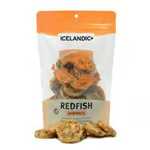
Rank 2: Icelandic+ Dog Treats Icelandic Redfish Skins 3oz — Composed exclusively of Icelandic redfish skins. These skins are typically air-dried, producing a rigid, somewhat chewy texture. The product is a single-ingredient item, free from any supplementary components. The structure is characterized by elongated, flat pieces derived directly from the fish skin, maintaining a consistent thickness and density.
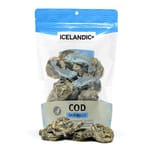
Rank 3: Icelandic+ Dog Treats Icelandic Cod Skins 3oz — This offering features 100% Icelandic cod skins. Similar to the redfish skins, these are air-dried to achieve a firm and resilient consistency. The product's formulation is singular, comprising only the fish skin. Structurally, these are often presented as strips or rolls of dried cod skin, providing a durable chew. The drying process ensures a low moisture level, contributing to its stability.
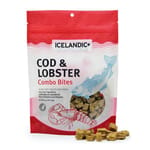
Rank 4: Icelandic+ Dog Treats Icelandic Cod + Lobster Bites 3.52oz — This product is a multi-ingredient formulation, combining Icelandic cod and lobster. The primary ingredients are processed into smaller, bite-sized pieces. The composition includes both fish and shellfish components, which are then typically dried or dehydrated. The structure is uniform, designed for consistent portioning, and the texture is likely dense due to the combination and processing of two distinct protein sources. The presence of lobster adds a distinct flavor profile to the Icelandic dog treats.
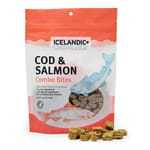
Rank 5: Icelandic+ Dog Treats Icelandic Cod + Salmon Bites 3.52oz — This item features a blend of Icelandic cod and salmon. The formulation incorporates two types of fish, which are then formed into small, uniform bites. The processing method likely involves dehydration to achieve a stable, low-moisture product. The structure of these Icelandic dog treats is consistent, with each bite offering a combination of the two fish species. The inclusion of salmon contributes a different fatty acid profile compared to pure cod products.
Icelandic Dog Treats: Quality Standards, Labeling, and Documentation Norms
Verifiable quality standards for Icelandic dog treats are often aligned with general pet food regulations, but also incorporate specific considerations for marine-sourced ingredients. In many regions, pet food manufacturing facilities must adhere to Good Manufacturing Practices (GMPs), which dictate hygienic processing environments, equipment maintenance, and quality control protocols. For products like Icelandic dog treats, the origin of the raw material is a key quality differentiator. Reputable manufacturers often provide documentation verifying the sourcing of fish from Icelandic waters, which are known for their ecological purity and sustainable fishing practices. This can include certifications from fisheries management bodies. The processing methods employed for Icelandic dog treats are also subject to standards. For instance, dehydration and freeze-drying processes must be controlled to ensure adequate moisture reduction, preventing microbial growth, while simultaneously preserving nutritional integrity. Temperature and humidity controls during drying are critical. Labeling transparency is a fundamental norm in the Icelandic dog treats category. Product labels are expected to clearly list all ingredients in descending order by weight, as mandated by regulatory bodies in target markets such as the USA (e.g., AAFCO guidelines) and the European Union. This includes specifying the species of fish (e.g., "Icelandic Cod," "Icelandic Herring") and any additional components. The guaranteed analysis, which provides minimum percentages for crude protein and crude fat, and maximum percentages for crude fiber and moisture, is a standard requirement. This information allows consumers to understand the macronutrient profile of the Icelandic dog treats. Furthermore, manufacturers are often expected to provide information regarding the absence of artificial colors, flavors, or preservatives, particularly for products marketed as "all-natural dog treats." Batch numbers and "best by" dates are also standard on packaging, enabling traceability and ensuring product freshness. Some Icelandic dog treats may carry certifications for sustainability or organic claims, which require third-party verification and adherence to specific standards. For example, certifications related to sustainable fishing practices ensure that the raw materials are harvested in an environmentally responsible manner. Documentation norms extend to providing clear instructions for storage and handling, ensuring the product maintains its quality until consumed. For Icelandic dog treats, this often includes recommendations for storage in a cool, dry place and proper sealing after opening to prevent moisture absorption and maintain freshness. The commitment to these standards and transparency in labeling contributes to the overall reliability and perceived quality of Icelandic dog treats.
Icelandic Dog Treats: Verifiable Factual Insights
A verifiable factual insight concerning Icelandic dog treats is their typically low moisture content, a direct result of the prevalent drying methods. For example, many air-dried or dehydrated Icelandic dog treats have a moisture content ranging from 8% to 12%. This low water activity is a primary factor in their extended shelf life without the need for synthetic preservatives. The removal of water inhibits the growth of bacteria, yeasts, and molds, which require moisture to thrive. This characteristic differentiates them from fresh or semi-moist treats, which often rely on refrigeration or higher levels of humectants to prevent spoilage. This low moisture level also means that the nutritional content, particularly protein and fat, is highly concentrated by weight compared to the raw ingredients. Another insight is the significant presence of collagen in Icelandic dog treats made from fish skins. Fish skins, particularly from species like cod and redfish, are rich in Type I collagen. When these skins are dried to create Icelandic dog treats, this collagen network remains largely intact, contributing to the product's structural integrity and chewiness. Collagen is a fibrous protein that is a major component of connective tissues. The drying process denatures the collagen to some extent, but its inherent structure provides a durable matrix. This natural collagen content is often highlighted as a characteristic of these specific Icelandic dog treats, distinguishing them from other protein sources that may have different structural proteins or lower collagen concentrations.
The category of Icelandic dog treats is characterized by its reliance on marine-sourced ingredients and various drying techniques. The structural attributes, material composition, and processing methods distinguish different products within this category. Understanding these elements provides a comprehensive overview of Icelandic dog treats without presenting any comparative assessments or purchasing recommendations.
......View All