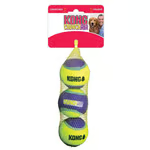
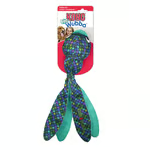
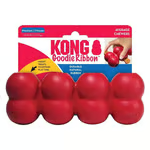
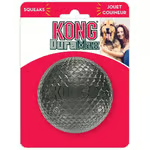
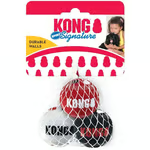
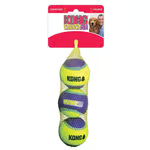
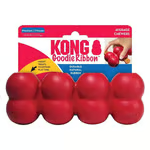
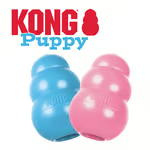
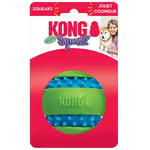
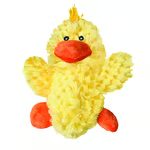
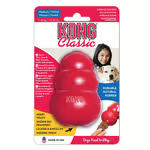
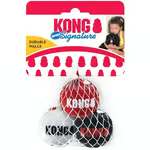
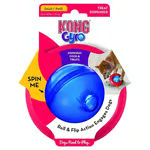
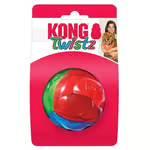
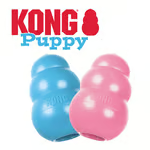
The KONG dog toy series encompasses various types of toys designed for canines, recognized for their unique construction and diverse functionalities. These toys are typically made from durable, chew-resistant materials, intended to provide dogs with interactive methods such as chewing, chasing, or food-stuffing activities. The design of KONG dog toys considers the activity needs of dogs, including treat-dispensing toys that can be filled with food, flexible chew toys, and interactive toys for throwing and retrieving. Different shapes and sizes of KONG toys cater to dogs of varying sizes and chewing habits; for instance, some toys are designed with unpredictable bounce characteristics to enhance playtime engagement. Among numerous dog toy options, KONG toys offer a range of structurally robust and versatile choices for dogs' daily play and activities.
KONG dog toys constitute a category of manufactured articles designed for canine interaction, typically characterized by their material composition, structural forms, and intended applications.
This article aims to describe the structural attributes, material composition, and usage context within the category of KONG dog toys. It presents verifiable, objective information and does not provide product recommendations or comparative analysis of advantages.
KONG Dog Toys: Common Classification by Intended Use
The classification of KONG dog toys often reflects their primary functional design and the typical scenarios in which they are employed. One common division distinguishes between toys primarily used for chewing, those designed for interactive play, and items focused on mental stimulation through food dispensing. Chewing toys, for instance, are frequently constructed from durable rubber formulations engineered to withstand prolonged mastication. Their structures often feature solid forms or thick walls to resist degradation. Interactive play KONG dog toys, conversely, might incorporate elements like ropes, soft fabrics, or internal noisemakers, facilitating engagement between a dog and its owner, or between multiple dogs. These toys prioritize features that encourage fetching, tugging, or retrieving. A third distinct category encompasses KONG dog toys that serve as treat or food dispensers. These items are designed with internal cavities or mazes that require a dog to manipulate the toy to access edible rewards. This type of KONG dog toy emphasizes cognitive engagement and extended play duration, often employing specific rubber hardness levels to control the dispensing rate.
Further practical classifications can arise from the size and breed suitability, with manufacturers often producing ranges specifically tailored for miniature, small, medium, large, and extra-large canines. The weight and overall dimensions of a KONG dog toy are direct considerations in these classifications. Another distinction pertains to the environment of use, differentiating between toys primarily for indoor play, those suitable for outdoor environments (e.g., water-resistant or highly visible designs), and those adaptable to both. The material properties, such as buoyancy or resistance to UV degradation, are pertinent to these environmental classifications. Some KONG dog toys are also classified by their noise-making capabilities, featuring internal squeakers, crinklers, or shakers, which provide auditory stimulation during play. The integration of these sound-producing components influences the overall structural design, requiring specific internal chambers or material enclosures to house the mechanisms. These classifications provide a framework for understanding the functional diversity within the KONG dog toys range.
KONG Dog Toys: Material Composition and Structural Forms
The material composition of KONG dog toys is a fundamental aspect that dictates their durability, flexibility, and overall performance characteristics. Natural rubber is a prevalent material, frequently processed to achieve varying degrees of hardness and resilience. The specific formulation of rubber can include additives that enhance tear resistance, elasticity, or resistance to abrasion. For instance, some KONG dog toys utilize a proprietary blend of natural rubber engineered for extreme durability, often designated by color codes such as red for standard strength or black for extra-strength formulations. Synthetic polymers, including various plastics, are also incorporated, particularly in components requiring rigidity or complex molding, such as treat-dispensing mechanisms or external shells. Fabric elements, typically durable textiles like polyester or nylon, are employed in KONG dog toys designed for tugging, fetching, or comfort, often featuring double-stitched seams for enhanced structural integrity. The fill material for plush toys within the KONG dog toys lineup commonly consists of polyester fiberfill, chosen for its light weight and compressibility.
Structural forms within KONG dog toys exhibit significant diversity, ranging from solid, conical shapes to intricate multi-component assemblies. The classic KONG dog toy, for example, features a distinctive snowman-like silhouette with a hollow interior, designed to be filled with treats. This structure leverages the elasticity of rubber to create a challenging dispensing mechanism. Other KONG dog toys may adopt bone-like forms, often solid or with internal air chambers to provide varied chewing resistance. Plush toys, by contrast, feature soft outer shells encasing internal stuffing and sometimes sound-generating components. These structures rely on textile engineering and stitching techniques. Dispensing toys frequently incorporate multiple parts, such as an outer shell, an internal treat-holding chamber, and a mechanism for controlled release, which might involve a screw-on cap or a labyrinthine interior. The integration of different materials, such as a rubber core encased in a fabric exterior, creates hybrid structures designed to offer multiple sensory and functional experiences. The manufacturing process for rubber KONG dog toys often involves injection molding or compression molding, shaping the raw rubber into the desired form under heat and pressure, which influences the density and uniformity of the final product. Fabric KONG dog toys, conversely, involve cutting, sewing, and stuffing processes. These variations in material and structure are central to the functional attributes of each KONG dog toy.
KONG Dog Toys: Properties Across Usage Environments
The properties of KONG dog toys can vary significantly based on their intended usage environments and the conditions to which they are subjected. For instance, KONG dog toys designed for outdoor use often incorporate materials treated for UV resistance, which helps to mitigate material degradation and color fading when exposed to sunlight over prolonged periods. Such toys may also feature enhanced water resistance or even buoyancy, making them suitable for retrieval activities in aquatic settings. The density and material composition of these KONG dog toys are specifically engineered to prevent water absorption and maintain structural integrity when wet. In contrast, KONG dog toys primarily intended for indoor use may prioritize different properties, such as reduced noise generation or softer external textures that are less likely to damage indoor surfaces. The material formulations for indoor KONG dog toys might focus on lower rebound characteristics to prevent excessive bouncing within confined spaces.
Temperature variations also influence the properties of KONG dog toys. Rubber compositions, for example, can exhibit changes in elasticity and hardness across a range of temperatures. At lower temperatures, some rubber KONG dog toys may become stiffer and less pliable, potentially altering their chewing characteristics or bounce patterns. Conversely, at higher temperatures, the rubber may become softer and more flexible. KONG dog toys designed for treat dispensing might be formulated with specific rubber hardness to function optimally within a typical room temperature range, ensuring treats are dispensed at an appropriate rate. The structural integrity of KONG dog toys with multiple components, such as those combining plastic and rubber, must also account for differential thermal expansion of materials, ensuring that joints and connections remain secure across temperature fluctuations. Furthermore, the cleanliness and hygiene of KONG dog toys are influenced by their usage environment. Toys used outdoors may accumulate soil and debris, necessitating materials that are easily washable and resistant to microbial growth. Indoor KONG dog toys, while less exposed to environmental contaminants, still require regular cleaning, and their materials are often selected for ease of sanitation. These considerations underscore how environmental factors directly impact the observable properties and maintenance requirements of KONG dog toys.
KONG Dog Toys: Product Characteristics from Sales Ranking
This section presents characteristics of KONG dog toys based on their observed sales ranking, focusing solely on material, formulation, and structural attributes without offering usage recommendations.
Rank 1: KONG Shakers Honkers 42cm, Turkey — This KONG dog toy is characterized by its elongated, soft-bodied structure, typically constructed from durable fabric materials such as polyester, often with internal stitching to enhance resilience. The internal components include a shaker mechanism, which produces auditory stimulation when the toy is moved. The 42cm length indicates a substantial physical presence. The exterior fabric is generally resistant to moderate abrasion and designed for tactile engagement. The internal filling consists of polyester fibers, providing a soft yet resilient form. The overall structural design is intended for interactive play and carrying.
Rank 2: KONG Squeaker Bone 23.5cm — This KONG dog toy adopts a bone-like form, primarily composed of a durable rubber formulation. The material is engineered for chewing resistance and elasticity. Internally, it incorporates a squeaker mechanism, designed to produce a sound when compressed. The 23.5cm length indicates a medium-sized chew toy. The external surface may feature textured patterns, derived from the molding process, which contribute to its surface characteristics. The structural integrity is maintained by the uniform rubber composition throughout the main body, with the squeaker secured within an internal cavity.
Rank 3: KONG Rewards Shell 10cm — This KONG dog toy is a treat-dispensing item, featuring a shell-like or spherical structure with a diameter of 10cm. It is typically constructed from a robust polymer material, often a type of hard plastic or a firm rubber compound, designed to withstand manipulation by a dog. The main characteristic is its internal treat-holding compartment and a controlled dispensing aperture, requiring interaction to release contents. The external surface may have a textured or ridged pattern, enhancing grip for the dog. The multi-piece construction allows for filling and securing the treats within the shell, utilizing internal mechanisms to regulate treat release.
Rank 4: KONG Low Stuff Speckles Monkey 42cm — This KONG dog toy is a plush item, characterized by a soft exterior fabric, typically polyester, and a specific "low stuff" design, meaning it contains a reduced amount of internal polyester fiberfill compared to conventional plush toys. The 42cm length indicates a substantial size. The structural form is that of a monkey, with stitched seams defining its shape and features. The reduced stuffing contributes to a less voluminous profile and may alter the tactile sensation for a dog. It may also include an internal squeaker or crinkle material to provide auditory stimulation.
Rank 5: KONG Classic XS 6cm — This KONG dog toy represents the foundational design of the brand, featuring the distinctive snowman-like conical structure. It is manufactured from a proprietary natural rubber formulation, engineered for high elasticity and durability. The "XS" designation indicates an extra-small size, with a height of 6cm, suitable for very small canines. The hollow interior is a key structural characteristic, designed for filling with treats or pastes. The rubber material is non-toxic and possesses a specific hardness level that allows for both chewing and bounce. The external surface is typically smooth, with a slight texture from the molding process.
KONG Dog Toys: Quality Standards and Labeling Norms
The manufacturing and distribution of KONG dog toys are subject to various quality standards and labeling norms, ensuring product safety and providing verifiable information to consumers. One primary aspect of these standards relates to material safety. KONG dog toys are typically produced from non-toxic materials, a claim often substantiated by testing reports confirming the absence of harmful heavy metals, phthalates, and other hazardous substances. Compliance with regulations such as the European Union's REACH (Registration, Evaluation, Authorisation and Restriction of Chemicals) or similar national standards is a common practice, demonstrating adherence to chemical safety protocols. The specific rubber formulations used in KONG dog toys undergo rigorous testing to ensure they are safe for canine ingestion, even if small pieces are accidentally swallowed. These tests often involve chemical analyses and biological assays to confirm inertness and non-toxicity.
Structural integrity and durability are further areas covered by quality standards for KONG dog toys. Manufacturers often employ internal testing protocols to assess resistance to chewing, tearing, and impact. These tests might simulate repetitive stress or apply controlled forces to gauge the toy's resilience. For example, specific KONG dog toys designed for aggressive chewers are formulated with a harder rubber compound, and this characteristic is often verified through mechanical stress tests. Labeling norms typically mandate clear identification of the product, including the brand name, model, and country of origin. Furthermore, information regarding material composition, such as "natural rubber" or "polyester fabric," is commonly provided. Size specifications, such as length or diameter, are also standard labeling elements, allowing consumers to select appropriately sized KONG dog toys. Some KONG dog toys may also carry certifications from independent testing bodies, further validating their safety and quality claims. Instructions for cleaning and maintenance, as well as general safety warnings, are often included on product packaging, contributing to transparent communication regarding the product's characteristics and proper use. These verifiable standards and labeling practices provide a framework for objective assessment of KONG dog toys.
KONG Dog Toys: Factual Insights on Material Science
A verifiable factual insight concerning KONG dog toys involves the specific natural rubber formulation used in many of their products. Natural rubber, chemically known as polyisoprene, is derived from the latex sap of rubber trees, primarily Hevea brasiliensis. The unique elasticity and resilience of natural rubber, which are critical properties for chew toys, stem from its molecular structure. This structure consists of long, coiled polymer chains that can stretch significantly and then return to their original configuration due to thermodynamic principles. The vulcanization process, involving the addition of sulfur and heat, creates cross-links between these polymer chains, enhancing the rubber's strength, durability, and resistance to permanent deformation. The precise amount of sulfur and the vulcanization conditions are crucial in determining the final hardness and elasticity of a KONG dog toy, influencing its chew resistance and bounce characteristics. Different KONG dog toys may utilize variations in this vulcanization process to achieve distinct material properties, such as the softer, more flexible rubber found in puppy-specific toys versus the harder, more resilient compounds in extreme chewer versions. This controlled modification of natural rubber’s molecular structure through vulcanization is a fundamental aspect of KONG dog toy material science.
Another factual insight relates to the design principles behind treat-dispensing KONG dog toys, often involving principles of physics and animal behavior. The internal geometry of these KONG dog toys is meticulously designed to create a challenge for the dog in extracting treats. For example, the classic KONG dog toy's hollow, conical shape, combined with the elasticity of its rubber, creates an unpredictable bounce pattern when dropped, engaging the dog in dynamic play. Furthermore, the internal cavity's tapered shape and the flexibility of the rubber rim are engineered to hold treats securely but also allow for their gradual release as the dog manipulates or chews the toy. The size and shape of the opening are critical, often requiring a dog to lick, nudge, or bat the KONG dog toy to dislodge contents. Some designs incorporate internal ridges or baffles to further increase the difficulty of treat extraction, extending the duration of engagement. The material's friction coefficient also plays a role, influencing how easily treats slide within the interior. These design elements are not arbitrary but are based on an understanding of mechanical forces and canine problem-solving behaviors.
The category of KONG dog toys is characterized by a range of materials, structural designs, and functional attributes. The products are designed for various forms of canine interaction, with specific properties tailored to different usage contexts. The manufacturing processes and material compositions are subject to industry standards, reflecting a focus on product integrity.
......View All