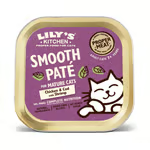
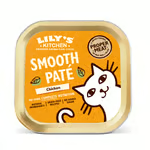
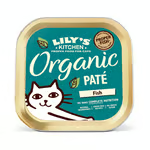
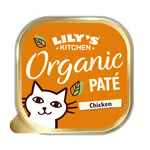
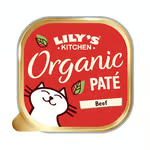
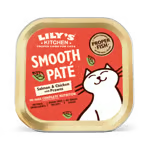
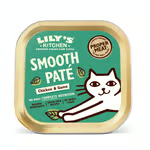
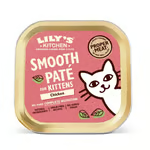
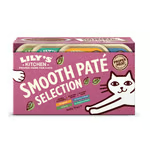
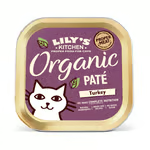
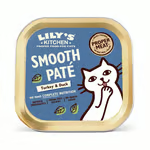
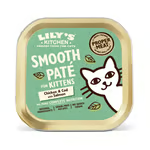
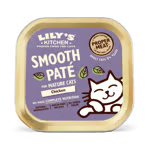
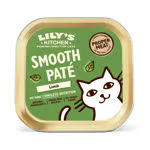
LILYs KITCHEN cat wet food offers a variety of wet food options, with product lines covering different flavors and textures, aiming to provide balanced nutrition for cats. This type of cat wet food typically features meat or fish as primary ingredients, and may include added vegetables, fruits, or other nutritional supplements. When selecting LILYs KITCHEN cat wet food, consumers can choose based on their cat's age, activity level, and specific dietary requirements. Different formulas may be designed for kittens, adult cats, or senior cats, and there are also products developed for specific health needs. The packaging types for LILYs KITCHEN cat wet food are diverse, commonly available in single cans or multi-can packs, making it convenient for pet owners to purchase and store according to their needs. Products within this category are intended to be part of a cat's daily diet, providing hydration and essential nutrients.
Lily's Kitchen Cat Wet Food refers to a specific range of prepared feline nutritional products characterized by their moisture content and primary packaging form.
This article aims to describe the structural attributes, material composition, and typical usage contexts associated with this product category, without providing recommendations for purchase or guidance on product selection.
Lily's Kitchen Cat Wet Food: Common Product Classifications
The Lily's Kitchen Cat Wet Food product line is commonly segmented based on several criteria that reflect dietary purpose, ingredient sourcing, and life stage suitability. One pervasive classification distinguishes products formulated for adult cats from those designed for kittens. Kitten formulations typically feature altered nutrient profiles, often with higher caloric density and specific ratios of proteins and fats to support growth and development. Another common distinction involves products marketed as "complete" versus "complementary" foods. Complete foods are formulated to provide all necessary nutrients for a cat's daily dietary requirements, while complementary foods are intended to be fed alongside other food sources and do not, by themselves, constitute a balanced diet. Furthermore, the range is often categorized by its primary protein sources, such as poultry, fish, or red meat, appealing to different palatability preferences or addressing specific dietary sensitivities. The packaging format, predominantly cans or pouches, also serves as a practical classification criterion in supply chains and retail environments. Within the Lily's Kitchen Cat Wet Food offering, specific recipes are often grouped by their ingredient philosophies, such as grain-free formulations, which remove certain carbohydrate sources from the ingredient list. These classifications aid consumers in navigating the product range based on their cat's specific needs, though the article does not delve into the efficacy or suitability of these choices. The structural integrity of the packaging, typically aluminum cans, ensures product freshness and contributes to the overall classification within the pet food industry as a shelf-stable wet food option. This structured approach to product classification provides a framework for understanding the breadth of the Lily's Kitchen Cat Wet Food portfolio.
Lily's Kitchen Cat Wet Food: Material Composition and Formulation Techniques
The material composition of Lily's Kitchen Cat Wet Food is a defining attribute, primarily consisting of animal-derived protein sources, fats, and moisture, alongside various vitamins, minerals, and other nutritional supplements. Protein sources often include fresh meat and fish, which are processed to maintain their nutritional integrity. For instance, common ingredients might involve chicken, turkey, salmon, or lamb, often listed as the primary components by weight. The formulation techniques employed aim to create a palatable and nutritionally balanced product. This typically involves a precise blending of raw ingredients, followed by cooking processes such as retorting, which uses high heat and pressure to sterilize the food and extend its shelf life without refrigeration until opened. The moisture content in Lily's Kitchen Cat Wet Food is consistently high, usually exceeding 70%, which distinguishes it from dry kibble and contributes to feline hydration. Grain-free recipes, a notable characteristic of this brand, substitute traditional cereal grains with alternative carbohydrate sources, such as potatoes, peas, or lentils, or minimize carbohydrate content altogether. Fats are incorporated from animal sources, such as chicken fat, or plant-based oils, like sunflower oil, providing essential fatty acids and energy. The inclusion of botanicals, herbs, and fruits is another characteristic feature, though these are typically present in smaller quantities and contribute to the overall nutrient profile. Vitamins and minerals, often added as a pre-mix, ensure the food meets complete and balanced nutritional standards established by regulatory bodies for feline diets. The structural form of the food itself can vary from pâté-like textures, which are finely ground and homogenized, to chunkier formulations that contain discernible pieces of meat or fish in gravy or jelly. These differences in texture are achieved through variations in grinding processes and the inclusion of gelling agents or thickeners, such as guar gum or carrageenan, in the formulation. The processing techniques are designed to preserve the nutritional value of the ingredients while ensuring microbial safety and product stability over time. Each ingredient in Lily's Kitchen Cat Wet Food is selected for its specific contribution to the overall nutritional profile and palatability, adhering to a defined set of formulation principles. This meticulous attention to material composition and processing contributes to the distinct characteristics of Lily's Kitchen Cat Wet Food.
Lily's Kitchen Cat Wet Food: Properties Across Usage Environments
The properties of Lily's Kitchen Cat Wet Food manifest differently across various usage environments and conditions, primarily due to factors such as storage, ambient temperature, and post-opening handling. Before opening, the product's properties are largely stable due to the hermetic sealing and sterilization processes. Canned Lily's Kitchen Cat Wet Food products, when stored in a cool, dry place away from direct sunlight, maintain their intended nutritional composition and palatability for extended periods, as indicated by the expiration date. The metal can acts as an effective barrier against oxygen, light, and moisture, preventing degradation of ingredients. Once opened, the properties of Lily's Kitchen Cat Wet Food undergo rapid changes. Exposure to air initiates oxidative processes, which can affect the color, aroma, and nutritional value of the food. Refrigeration becomes necessary to slow down microbial growth and maintain freshness, typically for a period of 24 to 72 hours, depending on ambient temperature and specific product formulation. Freezing is also a viable option for preserving opened portions for longer durations, though thawing can alter the texture and potentially the palatability. The physical form of the wet food, whether pâté or chunks in gravy, influences its handling and presentation. Pâté forms maintain their consistency more readily when refrigerated and reheated, while chunks in gravy might separate or become less cohesive. Serving temperature also impacts a cat's acceptance of Lily's Kitchen Cat Wet Food; many cats prefer food served at room temperature or slightly warmed, as this enhances the aroma and palatability. Extreme cold can diminish the aromatic profile, making the food less appealing. Conversely, excessively high temperatures can degrade heat-sensitive nutrients. The environmental humidity can affect the speed at which opened food dries out if left exposed. In arid conditions, the surface of the wet food can harden more quickly, potentially reducing its appeal. The packaging structure, particularly the can's lid, plays a role in preserving properties after opening, with resealable plastic lids offering a temporary barrier against environmental factors. These varied responses to environmental conditions underscore the importance of proper storage and handling to maintain the intended properties of Lily's Kitchen Cat Wet Food throughout its usage cycle.
Lily's Kitchen Cat Wet Food: Product Characteristics from Sales Ranking
Rank 1: Lily's Kitchen Cat Main Meal Grain-Free Series Seafood Medley 85g — This formulation features a blend of multiple seafood proteins, including fish and crustaceans, combined with other ingredients to form a complete and balanced meal. The texture is typically a fine pâté, ensuring a consistent and easily consumable consistency. The 85g unit size is standard for single servings. The product is characterized by its grain-free composition, emphasizing animal protein sources and excluding common cereal grains. Its moisture content is high, consistent with wet food products. The specific ingredients contribute to a distinct flavor profile associated with marine organisms. This Lily's Kitchen Cat Wet Food variant is designed to meet the nutritional requirements of adult felines.
Rank 2: Lily's Kitchen Cat Main Meal Grain-Free Series Kitten Growth Meal 85g — Specifically formulated for growing kittens, this product provides a higher caloric and nutrient density compared to adult cat formulations. The protein sources are primarily animal-derived, contributing to muscle development. It maintains a grain-free composition. The texture is usually a smooth pâté, facilitating consumption by young felines with developing dentition. The 85g can size is suitable for portion control for kittens. The nutrient profile includes elevated levels of essential vitamins and minerals crucial for rapid growth and bone development. This Lily's Kitchen Cat Wet Food is tailored to support the specific physiological demands of young cats.
Rank 3: Lily's Kitchen Cat Main Meal Grain-Free Series Hunter's Stew 85g — This formulation incorporates a variety of game meats, often including poultry or rabbit, to offer a distinct protein profile. The product is grain-free, focusing on animal protein as the primary component. The texture is typically a stew-like consistency, containing discernible pieces of meat in a savory gravy or jelly, providing textural variation. The 85g unit size is consistent with other single-serve wet food offerings. The ingredient list emphasizes natural components and aims to provide a complete and balanced diet for adult cats. This Lily's Kitchen Cat Wet Food variant seeks to replicate a natural prey-based diet through its ingredient selection.
Rank 4: Lily's Kitchen Cat Main Meal Grain-Free Series Kitten Booster Meal 85g — Designed for kittens, this formulation provides concentrated nutrition to support growth and development. It is characterized by a rich blend of protein sources, often including chicken or turkey, and a high moisture content. The product is grain-free, aligning with the brand's general formulation philosophy. The texture is a smooth, easily digestible pâté, suitable for young cats. The 85g can ensures appropriate portioning for kittens. The nutrient composition includes specific vitamins and minerals vital for skeletal and muscular development in growing felines. This Lily's Kitchen Cat Wet Food option is crafted to deliver supplementary nutritional support for kittens.
Rank 5: Lily's Kitchen Cat Main Meal Grain-Free Series Fresh Lamb Pot 85g — This formulation primarily features lamb as its single animal protein source, making it suitable for cats with sensitivities to other proteins. It maintains a grain-free composition. The texture is typically a fine pâté or a minced consistency, designed for ease of consumption. The 85g can provides a single serving portion. The ingredient list is focused on providing a complete and balanced meal with a distinct lamb flavor profile. This Lily's Kitchen Cat Wet Food recipe offers a specific protein option for adult cats.
Lily's Kitchen Cat Wet Food: Quality Standards and Labeling Norms
The quality standards and labeling norms pertaining to Lily's Kitchen Cat Wet Food are governed by national and international regulations designed to ensure product safety, nutritional adequacy, and transparency for consumers. In regions like the European Union, pet food products, including Lily's Kitchen Cat Wet Food, must comply with regulations such as EC Regulation 767/2009 on the placing on the market and use of feed, which covers labeling, claims, and undesirable substances. These regulations mandate the clear declaration of ingredients, listed in descending order by weight. This includes main protein sources, fats, carbohydrates, and any added vitamins, minerals, or other additives. The term "complete feed" or "complementary feed" must be explicitly stated, indicating whether the product provides all necessary nutrients or requires supplementation. Nutritional analysis, typically presented as guaranteed analysis, details the minimum percentages of crude protein, crude fat, and maximum percentages of crude fiber and moisture. Ash content, representing the mineral residue after incineration, is also commonly declared. For Lily's Kitchen Cat Wet Food, specific claims such as "grain-free" are subject to verification and must accurately reflect the absence of cereal grains in the formulation. The use of terms like "natural" also adheres to specific definitions, generally implying that ingredients have not been chemically altered beyond what is necessary for processing and preservation. Manufacturing processes are subject to quality control protocols, including Hazard Analysis and Critical Control Points (HACCP) principles, to ensure food safety. Traceability systems are often in place to track ingredients from their source through to the final product. Packaging for Lily's Kitchen Cat Wet Food includes batch numbers and expiration dates, which are essential for product recall procedures and maintaining consumer confidence. The labeling also often includes feeding guidelines, though these are typically generalized and subject to individual cat requirements. Certifications from independent bodies or adherence to specific industry codes of practice, such as those from FEDIAF (European Pet Food Industry Federation), further underscore the quality standards. These stringent requirements ensure that Lily's Kitchen Cat Wet Food products consistently meet defined criteria for composition and safety. The detailed labeling allows consumers to make informed observations about the Lily's Kitchen Cat Wet Food they are considering.
Lily's Kitchen Cat Wet Food: Factual Insights
A verifiable factual insight regarding Lily's Kitchen Cat Wet Food, and wet cat food in general, relates to the processing technique known as retorting. This method involves sealing the food in airtight containers, such as the aluminum cans used for Lily's Kitchen Cat Wet Food, and then subjecting them to high temperatures (typically 110-130°C) and pressure for a specific duration. This process effectively sterilizes the food, destroying pathogenic microorganisms and spoilage bacteria. The primary outcome is a shelf-stable product that does not require refrigeration until opened. This thermal processing also plays a significant role in altering the physical structure of the ingredients, often breaking down connective tissues in meats and rendering the food more digestible for felines. The specific parameters of time and temperature are meticulously controlled to ensure microbial safety while minimizing nutrient degradation, though some heat-sensitive vitamins may require post-processing supplementation. Another factual insight concerns the role of moisture content in feline hydration. Domestic cats have a relatively low thirst drive compared to other mammals, often deriving a significant portion of their daily water intake from their food. Lily's Kitchen Cat Wet Food, with its typical moisture content exceeding 70%, contributes substantially to a cat's hydration status. This high water content is a fundamental characteristic of wet pet food and is distinct from dry kibble, which typically has a moisture content below 10%. The evolutionary history of cats as desert-dwelling predators, consuming prey with high moisture content, has shaped their physiological adaptation to obtaining water through food. Therefore, the inherent moisture in Lily's Kitchen Cat Wet Food directly aligns with this biological predisposition, providing a consistent source of hydration. The presence of this high moisture content is a deliberate aspect of the formulation, distinguishing Lily's Kitchen Cat Wet Food from other dietary forms and influencing its physiological impact on the animal. The Edgard & Cooper brand, a peer in the premium pet food market, also utilizes similar principles in its wet food offerings, underscoring the industry-wide recognition of these factors.
The preceding text has provided a structural and compositional overview of Lily's Kitchen Cat Wet Food, detailing its various classifications, material attributes, and responses to different environmental parameters. The information presented remains objective, focusing on observable characteristics and established industry practices, without offering any form of product endorsement or guidance on selection.
......View All