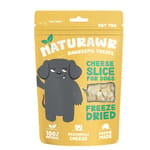
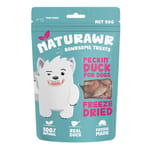
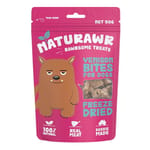
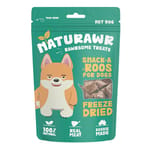
The NATURAWR dog treats category offers a diverse range of forms and ingredient options, designed to cater to various canine needs. This product line is characterized by its varied flavors and textures, providing choices from chewy to brittle types. Each NATURAWR dog treat features a specific ingredient composition, suitable for use as rewards, training aids, or inter-meal snacks. The products vary in size and hardness, making them applicable to dogs of different sizes and life stages. This category page showcases the comprehensive assortment of NATURAWR dog treats, allowing users to browse and understand the specific characteristics of each item. All products are formulated for dogs, offering diverse selections to suit individual requirements.
Freeze-dried dog treats represent a category of pet food supplements manufactured through a specific dehydration process.
This article aims to describe the structural attributes, material composition, and usage context within the category of freeze-dried dog treats. The content presented focuses on verifiable, objective information, without providing product recommendations or comparative advantages.
Freeze-dried Dog Treats: Classification by Primary Ingredient
The classification of freeze-dried dog treats often centers on their primary protein source or other dominant ingredient. This approach allows for a clear distinction based on the fundamental material composition. Common divisions include single-ingredient protein treats, multi-ingredient protein blends, and treats incorporating fruits, vegetables, or dairy components. Single-ingredient protein treats, such as those derived solely from chicken, beef, or lamb, are characterized by their direct source material and minimal additional components. Multi-ingredient protein blends combine various animal proteins, potentially offering a broader spectrum of amino acids. Treats with added plant-based or dairy ingredients introduce different nutritional profiles and textural variations, though the freeze-drying process remains consistent across these ingredient types. The choice of primary ingredient directly influences the treat's macronutrient profile, including its protein, fat, and ash content, which are standard metrics for nutritional analysis. The structural integrity of the final product is also influenced by the inherent properties of the raw material, such as muscle fiber density or fat content, which can affect rehydration characteristics and friability. Understanding these classifications by primary ingredient is fundamental to discerning the material basis of various freeze-dried dog treats available in the market.
Freeze-dried Dog Treats: Material Composition and Processing Techniques
The material composition of freeze-dried dog treats is primarily defined by the raw ingredients selected, typically animal proteins, but also including fruits, vegetables, and dairy products. The processing technique, specifically freeze-drying (also known as lyophilization), distinguishes these treats from other forms of dehydrated pet food. This process involves freezing the raw material, then placing it in a vacuum chamber where the ice sublimes directly into water vapor, bypassing the liquid phase. This method aims to preserve the cellular structure and nutritional integrity of the ingredients to a greater extent than conventional heat-drying methods. The resulting product is characterized by a porous, light texture and a significantly reduced moisture content, typically below 5%. The low moisture content inhibits microbial growth and enzymatic activity, contributing to a longer shelf life without the need for additional preservatives. The nutritional profile of freeze-dried dog treats largely mirrors that of the raw ingredients, with concentrated levels of protein, fats, and minerals due to the removal of water. For example, a freeze-dried chicken treat will have a higher protein percentage by weight than an equivalent amount of fresh chicken, simply because the water has been removed. The structural form of the final product can range from whole pieces of meat or fruit to powdered or crumbled forms, depending on the initial preparation of the raw material and subsequent processing steps. Some freeze-dried dog treats may undergo a re-forming process after lyophilization, where the dried material is compressed or shaped, altering its physical density while maintaining its low moisture content. The precise control of temperature and pressure during the sublimation phase is critical to achieving the desired texture and nutrient retention in freeze-dried dog treats.
Freeze-dried Dog Treats: Variation Across Usage Environments
The properties of freeze-dried dog treats can exhibit variations when exposed to different usage environments or conditions. A primary factor is ambient humidity. Due to their extremely low moisture content, freeze-dried dog treats are highly hygroscopic, meaning they readily absorb moisture from the surrounding atmosphere. In high-humidity environments, prolonged exposure to open air can lead to a gradual increase in moisture content within the treat. This absorption can alter the texture, often making the treat less crisp and more pliable, and in extreme cases, can compromise its stability over extended periods by creating conditions more favorable for microbial growth, although still significantly less so than with fresh or semi-moist products. Temperature also plays a role, though less directly on the physical structure than humidity. Elevated temperatures, especially when combined with oxygen exposure, can accelerate oxidative processes in the fats present in freeze-dried dog treats, potentially leading to rancidity over time. Therefore, storage in cool, dry conditions is generally recommended to maintain the product's intended characteristics. Furthermore, the physical handling environment can impact the structural integrity of these treats. Their porous and brittle nature means they are susceptible to crumbling or breaking into smaller pieces if subjected to significant mechanical stress, such as jostling during transport or rough handling. The intended application, such as use as a training reward versus a meal topper, also influences how these treats are perceived and handled. For example, smaller, more uniformly structured freeze-dried dog treats might be preferred for training due to ease of portioning, while larger, irregular pieces might be used for enrichment or as a substantial snack. The rehydration properties of freeze-dried dog treats are also relevant to usage. While often consumed dry, they can be rehydrated with water, which changes their texture to a softer, more meat-like consistency, altering their palatability and potentially their digestive transit. The rate and extent of rehydration are influenced by the treat's initial porosity and the temperature of the water used.
Freeze-dried Dog Treats: Product Information by Sales Ranking
This section presents information on freeze-dried dog treats based on observed sales ranking data, focusing solely on their material, formulation, and structural characteristics.
Rank 1: NATURAWR Freeze-dried Dog Treat Cheese 70g (NR-00091) — This product primarily consists of cheese, which is a dairy-derived protein and fat source. The cheese undergoes a freeze-drying process to remove moisture, resulting in a lightweight, porous structure. The material composition is characterized by concentrated dairy solids, including casein proteins and milk fats, with a significantly reduced water activity level. The texture is typically crisp and brittle due to the lyophilization. The formulation is single-ingredient focused, meaning it does not incorporate additional protein sources or significant non-dairy components beyond the cheese itself. The 70g weight indicates the net dry weight of the product.
Rank 2: NATURAWR Freeze-dried Dog Treat Duck Gizzard, Duck Heart, Duck Liver 50g (NR-00077) — This product is a multi-ingredient blend featuring various duck organ meats: gizzard, heart, and liver. Each organ contributes a distinct nutritional profile; duck gizzard provides muscle tissue, duck heart offers lean muscle and cardiac tissue, and duck liver is rich in vitamins and minerals. The ensemble of these ingredients is subjected to the freeze-drying process, which preserves the cellular structure and nutrient content of the organ meats while removing moisture. The structural characteristics include variations in texture corresponding to the original organ tissues, such as the denser gizzard tissue versus the softer liver tissue, all in a dehydrated, porous form. The 50g weight represents the total dry mass of the combined organ meats.
Rank 3: NATURAWR Freeze-dried Dog Treat Venison 50g (NR-00053) — This freeze-dried dog treat is composed solely of venison, which is deer meat. Venison is a lean red meat protein source. The raw venison is prepared and then subjected to the freeze-drying process, which removes water content through sublimation. This results in a highly concentrated protein product with a low moisture level. The structural form is typically irregular pieces of dehydrated venison muscle tissue, characterized by its light weight and porous, brittle texture. The material composition is predominantly venison protein and fats, with minimal ash content. The 50g net weight indicates the total amount of freeze-dried venison present.
Rank 4: NATURAWR Freeze-dried Dog Treat Kangaroo Meat 50g (NR-00084) — This product consists of kangaroo meat, which is freeze-dried. Kangaroo meat is recognized as a lean protein source, often characterized by its low fat content. The freeze-drying process removes water from the raw kangaroo meat, concentrating its protein and mineral components. The resulting treat exhibits a porous, light texture typical of lyophilized products. The structural integrity of the meat fibers is largely maintained despite the dehydration. The material composition is primarily kangaroo muscle tissue, with its inherent amino acid profile and mineral content. The 50g weight specifies the dry mass of kangaroo meat in the package.
Freeze-dried Dog Treats: Quality Standards and Labeling Norms
Verifiable quality standards and labeling transparency are established practices within the freeze-dried dog treats industry. Regulatory bodies in various regions provide guidelines for pet food manufacturing, encompassing aspects such as ingredient sourcing, processing hygiene, and finished product specifications. For freeze-dried dog treats, key quality parameters often include moisture content, protein percentage, fat percentage, and ash content, which are typically determined through laboratory analysis. A moisture content below 5% is a standard benchmark for freeze-dried products, indicating effective dehydration and contributing to microbial stability. Protein and fat percentages are crucial for assessing the nutritional density of the treats, directly reflecting the concentration of these macronutrients after water removal. Ash content provides an indication of the total mineral content. Furthermore, the absence of specific pathogens, such as Salmonella and E. coli, is a critical safety standard for all pet food, including freeze-dried dog treats, often verified through microbiological testing. Labeling norms mandate the clear declaration of ingredients, typically listed in descending order by weight before processing. This transparency allows consumers to understand the primary components of the freeze-dried dog treats. Nutritional guarantees, often presented as a "Guaranteed Analysis," provide minimum percentages for crude protein and crude fat, and maximum percentages for crude fiber and moisture. The manufacturing date and an expiration date or "best by" date are also standard labeling requirements, providing information on product freshness and shelf life. Some labels may also include information about the country of origin for ingredients, processing methods, or certifications from third-party organizations that attest to specific quality attributes, such as "human-grade" ingredients or adherence to specific manufacturing practices. The packaging itself, often designed to be airtight and moisture-resistant, is also an aspect of quality control, ensuring the integrity of the freeze-dried dog treats until opening.
Freeze-dried Dog Treats: Factual Insights
One verifiable factual insight concerning freeze-dried dog treats relates to the sublimation point of water. During the freeze-drying process, the temperature and pressure are carefully controlled to ensure that water transitions directly from its solid state (ice) to its gaseous state (vapor) without passing through a liquid phase. This phenomenon, known as sublimation, occurs at specific conditions below the triple point of water (0.01°C and 611.7 Pa). For freeze-dried dog treats, maintaining temperatures well below freezing (often -40°C to -50°C) in a high vacuum environment facilitates this phase change efficiently, which is critical for preserving the structural integrity and nutrient profile of the raw ingredients. The precise control over this sublimation process distinguishes freeze-drying from conventional dehydration methods which rely on heat and evaporation.
Another factual insight pertains to the rehydration capacity of freeze-dried dog treats. Due to their porous structure, which is a direct result of the ice crystals subliming and leaving behind empty spaces, these treats possess a high capacity for water absorption. When rehydrated, the treats can absorb a volume of water approaching their original fresh weight, restoring a texture that closely resembles the raw material. This rehydration property is utilized by some pet owners to soften the treats for dogs with dental sensitivities or to incorporate them into a wet food diet, further demonstrating the functional characteristics of freeze-dried dog treats beyond their dry consumption.
The preceding text has provided an overview of freeze-dried dog treats, detailing their classification, material composition, processing, environmental considerations, product characteristics, and quality standards. The information presented is descriptive and objective.
......View All