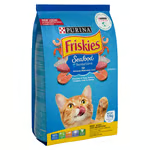
The PURINA Friskies cat food range encompasses various feline food products designed to meet the nutritional requirements of cats across different ages and life stages. These products typically include essential nutrients such as proteins, fats, carbohydrates, vitamins, and minerals, formulated to provide the energy necessary for a cat's daily activities. Friskies, a brand under Purina, offers a diverse array of product forms, commonly including dry kibble and wet food, with a relatively broad selection of flavors. This category page showcases the various options within PURINA Friskies cat food, allowing consumers to explore different formulations and packaging sizes.
Purina Friskies cat food represents a significant segment within the broader pet nutrition industry, characterized by specific formulations designed to meet the dietary requirements of felines through various ingredient profiles and processing methods.
This article aims to provide a structured understanding of the cat food category, focusing on its classification, material composition, structural attributes, and relevant regulations. The intent is to describe the inherent properties and organizational principles of cat food products, rather than to endorse specific items or offer comparative evaluations of their perceived benefits.
Classification of Purina Friskies Cat Food and Related Products
The classification of cat food, including Purina Friskies cat food, is commonly observed through several primary divisions that reflect practical use and supply chain contexts. These divisions often include distinctions based on moisture content, form factor, and intended dietary purpose. Dry cat food, frequently referred to as kibble, constitutes a major category, recognized for its low moisture content, typically ranging from 6% to 10%. This format is produced through an extrusion process, where ingredients are mixed, cooked under high pressure, and then cut into uniform pieces. Wet cat food, conversely, possesses a high moisture content, often exceeding 70%, and is commonly presented in cans, pouches, or trays. Its production involves cooking ingredients with added liquid, followed by sterilization. Semi-moist cat food represents an intermediate category, with moisture levels generally between 25% and 40%, offering a texture that is softer than dry kibble but firmer than wet food. Beyond these physical forms, cat food can also be classified by its life stage suitability, such as formulations for kittens, adult cats, or senior cats, each tailored to specific nutritional demands. Another classification method involves dietary purpose, distinguishing between complete and balanced diets, which are formulated to provide all necessary nutrients, and complementary foods, intended as supplements or treats. The brand Purina, for instance, offers a range of products across these classifications, including its Friskies line. Understanding these classifications provides a foundational structure for analyzing the diverse offerings within the cat food market.
Differences in Material Composition and Processing Techniques for Purina Friskies Cat Food
The material composition and processing techniques employed in the production of cat food, including Purina Friskies cat food, exhibit substantial variations that directly influence the final product’s characteristics. Ingredient selection is a primary differentiator. Common protein sources include poultry meals (chicken meal, turkey meal), fish meals (salmon meal, ocean fish meal), and sometimes other animal proteins. Carbohydrate sources frequently include corn, wheat, rice, and barley, providing energy. Fats, such as animal fat or vegetable oils, are incorporated for energy concentration and essential fatty acids. Vitamins and minerals are added to ensure nutritional completeness, often in the form of vitamin premixes and chelated minerals for improved bioavailability. The specific ratios and types of these ingredients vary significantly between product lines and brands. For instance, some formulations might emphasize a higher protein content from animal sources, while others might incorporate a broader spectrum of grains. The processing techniques further define the product. Dry kibble production, as mentioned, relies on extrusion, which cooks ingredients, forms them into shapes, and reduces moisture. This process can affect nutrient availability and palatability. Wet cat food production typically involves grinding ingredients, mixing them with liquids, filling containers, and then subjecting them to high-temperature sterilization. This sterilization ensures product safety and extends shelf life. The texture and consistency of wet food are largely determined by the amount of liquid added and the specific cooking parameters. Semi-moist foods often incorporate humectants, such as propylene glycol or glycerin, to maintain their pliable texture and prevent microbial growth, alongside a different drying process than dry kibble. These variations in material selection and manufacturing processes contribute to the distinct nutritional profiles and physical attributes observed across the range of cat food products, including those offered under the Purina Friskies brand.
Purina Friskies Cat Food: Properties Across Usage Environments
The properties of cat food, such as Purina Friskies cat food, can manifest differently depending on the specific usage environment or storage conditions. Environmental factors primarily influence the physical and chemical stability of the product. For dry cat food, exposure to air, light, and moisture are critical considerations. High humidity can lead to moisture absorption, potentially compromising the kibble's texture and increasing the risk of mold growth. Oxidation of fats, accelerated by exposure to air and light, can result in rancidity, altering the palatability and potentially reducing the nutritional value of essential fatty acids. Storage in airtight containers, away from direct sunlight and heat, is a common recommendation to mitigate these effects. The structural integrity of dry kibble can also be affected by physical stress, such as crushing, which can lead to increased fines (powdered particles) and reduced palatability. Wet cat food, with its high moisture content, is particularly susceptible to microbial spoilage once opened and exposed to air. Refrigeration is essential for opened wet food to inhibit bacterial growth and maintain freshness for a limited period, typically 24-72 hours. Unopened wet food, being hermetically sealed and sterilized, maintains its integrity for extended periods at ambient temperatures, provided the container remains intact. The temperature of the storage environment also impacts nutrient degradation rates across all cat food types. Elevated temperatures can accelerate the breakdown of heat-sensitive vitamins, even in dry formulations. The presence of pests, such as insects or rodents, represents another environmental challenge, necessitating secure storage to prevent contamination. Therefore, the intrinsic properties of Purina Friskies cat food, whether dry or wet, interact with its surrounding environment, dictating optimal storage practices to preserve its intended characteristics and nutritional profile.
Purina Friskies Cat Food Product Information Based on Sales Ranking
Rank 1: Friskies Ocean Fish Medley Formula 6kg — This dry cat food product is characterized by its primary protein sources, which include various fish meals, indicating a marine-derived protein profile. The formulation typically incorporates a blend of grains, such as corn and wheat, serving as carbohydrate sources. Essential fatty acids are present, often sourced from animal fats and potentially fish oils, contributing to the overall energy density. The kibble is formed through an extrusion process, resulting in uniform pieces designed for feline consumption. Mineral and vitamin supplements are included to ensure a complete nutritional profile for adult cats. The 6kg packaging format indicates a bulk quantity for extended use.
Quality Standards and Labeling Transparency for Purina Friskies Cat Food
Verifiable quality standards and labeling transparency are fundamental aspects of the cat food industry, including products like Purina Friskies cat food. Regulatory bodies in various regions establish guidelines for pet food manufacturing, ingredient definitions, and nutritional claims. In the United States, the Association of American Feed Control Officials (AAFCO) plays a significant role in setting these standards. While AAFCO is not a regulatory agency, its guidelines are widely adopted by state feed control officials and are referenced in federal legislation. AAFCO provides nutrient profiles for cat foods, differentiating between formulations for growth and reproduction (kittens and pregnant/lactating queens) and adult maintenance. Products labeled as "complete and balanced" must meet or exceed these AAFCO nutrient profiles, which can be substantiated through laboratory analysis or feeding trials. The ingredient list on Purina Friskies cat food packaging is mandated to declare all ingredients in descending order by weight. This transparency allows consumers to understand the primary components of the formulation. Each ingredient must have a recognized common name or an AAFCO-defined name. Nutritional guarantees, also known as the guaranteed analysis, provide minimum percentages for crude protein and crude fat, and maximum percentages for crude fiber and moisture. These figures offer a basic overview of the macronutrient content. Furthermore, manufacturers are often required to include feeding guidelines based on a cat's weight and activity level, storage instructions, and the manufacturer's contact information. Date codes, such as "best by" or "expiration" dates, are crucial for indicating product freshness and shelf life. Adherence to Good Manufacturing Practices (GMPs) ensures that facilities operate under sanitary conditions and maintain consistent product quality. Some manufacturers also pursue third-party certifications or conduct internal quality control checks beyond regulatory minimums, further contributing to verifiable quality. The clarity and comprehensiveness of labeling empower informed decisions regarding Purina Friskies cat food and other pet food products.
Factual Insights on Purina Friskies Cat Food and Feline Nutrition
One verifiable factual insight regarding cat nutrition, relevant to products like Purina Friskies cat food, is the obligate carnivorous nature of felines. This biological characteristic means that cats require specific nutrients found primarily in animal tissues to thrive. Unlike omnivores or herbivores, cats have evolved physiological adaptations that necessitate a diet rich in animal protein and fat. For instance, cats cannot synthesize taurine, an essential amino acid, in sufficient quantities from plant precursors, making dietary taurine from animal sources crucial for cardiovascular function and retinal health. Deficiencies in taurine can lead to serious health issues, including dilated cardiomyopathy and retinal degeneration. Consequently, all complete and balanced cat foods, including Purina Friskies cat food, must be supplemented with adequate levels of taurine. Another factual insight pertains to the water intake mechanisms in cats. Domestic cats often have a low thirst drive compared to other species, a trait believed to be inherited from their desert-dwelling ancestors who obtained much of their hydration from prey. This physiological characteristic makes the moisture content of their diet a significant factor in overall hydration. While dry cat food contributes some moisture, wet cat food, with its high water content, can play a substantial role in ensuring adequate fluid intake, particularly for cats prone to urinary tract issues. Understanding these specific physiological requirements informs the formulation of Purina Friskies cat food and other feline dietary products, ensuring they meet the unique nutritional demands of the species.
The preceding sections have systematically outlined the structural attributes, material compositions, processing methodologies, and regulatory frameworks pertinent to the cat food category. This descriptive overview provides a foundational understanding of the product landscape without engaging in comparative assessments or purchase recommendations.
......View All