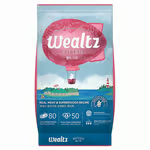
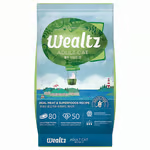
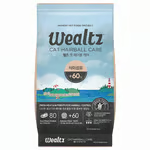
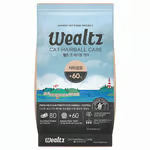
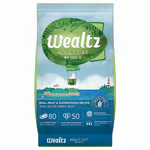
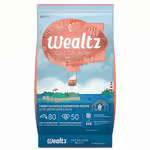
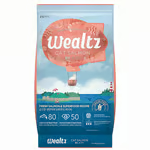
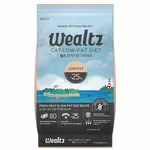
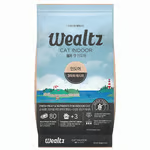
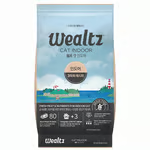
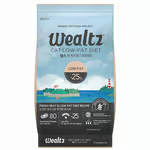
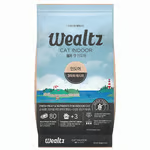
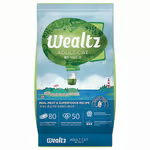
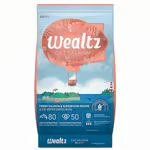
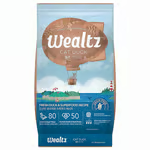
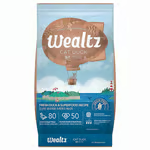
The Wealtz cat food range offers a variety of formulations designed to meet the nutritional needs of different cats. This category includes products tailored for kittens, adult cats, and senior cats, taking into account specific dietary preferences or requirements that felines may have. Wealtz cat food products come in both dry and wet forms, with ingredient compositions varying across different formulas. These may include various types of meat proteins, grains, or other plant-based components. Consumers selecting Wealtz cat food can filter options based on their cat's age, activity level, and other nutritional considerations. Furthermore, some formulations may offer support for aspects such as coat health, digestion, or urinary tract care. This category page aims to showcase the diverse product line of Wealtz cat food and provide consumers with information to understand each product's characteristics, facilitating their selection of suitable cat food.
Wealtz cat food refers to a specific brand of feline nutritional products developed for domestic cats. This category encompasses various formulations designed to meet the dietary requirements of cats across different life stages and physiological conditions. The primary function of Wealtz cat food is to provide essential nutrients, including proteins, fats, carbohydrates, vitamins, and minerals, formulated to support feline health and well-being.
This article aims to describe the structural attributes, material composition, and usage context within the Wealtz cat food category. It focuses on presenting verifiable, objective information regarding its characteristics and classification, without providing product recommendations or comparing advantages.
Wealtz Cat Food: Practical Classification and Usage Context
The Wealtz cat food category is commonly divided based on several practical criteria, primarily reflecting the specific nutritional needs of cats at different life stages or with particular dietary considerations. One principal division is by age. Formulations are typically categorized for kittens, adult cats, and senior cats. Kitten formulas, such as certain Wealtz cat food offerings, are characterized by higher protein and fat content to support rapid growth and development. Conversely, adult formulas aim to maintain a cat's health and energy levels, while senior formulas often include ingredients that support joint health and kidney function, adapting to the metabolic changes in older felines. Another common classification within Wealtz cat food involves specific dietary requirements. This can include formulations designed for indoor cats, which may have lower calorie counts to prevent weight gain due to reduced activity levels, or formulas targeting specific health concerns, although such specialized therapeutic diets are typically developed under veterinary guidance. The physical form of the food also serves as a practical classification. The majority of Wealtz cat food products are dry kibble, which is convenient for storage and feeding. Wet food, while not extensively represented in the provided product list, generally offers higher moisture content, which can be beneficial for feline hydration. Understanding these practical divisions helps in situating individual Wealtz cat food products within the broader market landscape.
Wealtz Cat Food: Material Composition and Formulation Methods
The material composition and formulation methods employed in Wealtz cat food are central to its nutritional profile. The primary components typically include protein sources, fats, carbohydrates, vitamins, and minerals. High-quality protein is a cornerstone of feline diets, as cats are obligate carnivores. Common protein sources in Wealtz cat food include fresh chicken and fresh salmon, as indicated in product names like "Fresh Chicken + Superfood Recipe" and "Fresh Salmon + Superfood Recipe." These animal-derived proteins provide essential amino acids vital for muscle maintenance, enzyme production, and overall cellular function. Fats, such as those derived from animal sources or specific oils, provide concentrated energy and essential fatty acids like omega-3 and omega-6, which contribute to skin and coat health. Carbohydrates, often from grains or alternative sources, serve as an energy source and contribute to the structural integrity of kibble. The inclusion of "superfoods" in Wealtz cat food formulations suggests the incorporation of ingredients recognized for their high nutrient density or beneficial compounds, such as antioxidants. The manufacturing process for dry Wealtz cat food typically involves extrusion. Ingredients are mixed, cooked under high pressure and temperature, and then forced through a die to create uniform kibble shapes. This process helps to ensure digestibility and palatability. Subsequent steps include drying to reduce moisture content and coating with palatability enhancers and sometimes additional nutrients. The specific ratios of these macronutrients and the inclusion of micronutrients are carefully balanced according to established feline nutritional guidelines, ensuring that each Wealtz cat food variant provides a complete and balanced diet for its intended life stage.
Wealtz Cat Food: Properties Across Usage Environments
The properties of Wealtz cat food can exhibit variations depending on the usage environment and storage conditions. For instance, dry kibble, which constitutes the majority of Wealtz cat food offerings, is designed for stability at room temperature. Its low moisture content inhibits microbial growth, making it suitable for open feeding bowls for extended periods compared to wet food. However, exposure to air, light, and humidity can still affect its quality over time. Oxidation of fats, for example, can lead to rancidity, altering palatability and potentially reducing nutritional value. Therefore, proper storage in airtight containers in a cool, dry place is recommended to preserve the integrity of Wealtz cat food. The physical properties of the kibble, such as its hardness and size, are also considerations in various usage contexts. Smaller kibble sizes, often found in Wealtz cat food kitten formulas, are easier for young cats with developing teeth to consume. The texture of the kibble can also play a role in dental health, with some formulations designed to provide a mild abrasive action that helps reduce plaque buildup. In multi-cat households or environments with varied feeding routines, the stability of dry Wealtz cat food allows for free-feeding, where food is available throughout the day. Conversely, if the environment is humid, there is an increased risk of mold growth if the food is left exposed for too long. Understanding these environmental interactions with Wealtz cat food helps in optimizing its presentation and ensuring its quality from the bag to the bowl. The consistency of the manufacturing process aims to produce a uniform product whose characteristics remain stable under appropriate storage and usage conditions.
Wealtz Cat Food: Product Characteristics Based on Sales Ranking
The following describes the material, formulation, and structural characteristics of Wealtz cat food products based on their reported sales ranking. This information focuses solely on objective product attributes.
Rank 1: Wealtz Cat Food All Cat Formula Fresh Chicken + Superfood Recipe 2.1kg – This product is characterized by its primary protein source, fresh chicken, which provides essential amino acids. The inclusion of a "superfood recipe" indicates the presence of nutrient-dense ingredients beyond basic macronutrients. This formulation is designed as an "All Cat Formula," suggesting it is intended for a broad range of adult cats without specific age or condition-based restrictions. The product is presented in a 2.1kg bag, indicating a standard consumer size for regular use.
Rank 2: Wealtz Cat Food All Cat Formula Fresh Chicken + Superfood Recipe 6kg – This product shares the same material and formulation characteristics as the Rank 1 product, featuring fresh chicken as the main protein and a superfood recipe. The primary difference is its larger packaging size of 6kg. This larger format typically offers a more economical option for consumers and reduces the frequency of purchase, suitable for households with multiple cats or those who prefer buying in bulk. The "All Cat Formula" designation remains consistent, indicating broad applicability for adult felines.
Rank 3: Wealtz Cat Food All Cat Formula Fresh Salmon + Superfood Recipe 2.1kg – This Wealtz cat food variant distinguishes itself by using fresh salmon as its primary protein source. Salmon provides a different amino acid profile compared to chicken and is also a natural source of omega-3 fatty acids, which contribute to skin and coat health. Similar to the other top-ranked products, it incorporates a "superfood recipe" for enhanced nutrient content. The "All Cat Formula" indicates its suitability for general adult cat consumption. It is packaged in a 2.1kg bag, aligning with a common retail unit size.
Rank 4: Wealtz Cat Food Kitten Formula Fresh Chicken + Superfood Recipe 6kg – This formulation of Wealtz cat food is specifically tailored for kittens. Its "Kitten Formula" designation implies a higher concentration of protein, fat, and specific vitamins and minerals crucial for the rapid growth and development phases of young cats. Fresh chicken is the primary protein source, supporting muscle development. The "superfood recipe" is included to provide additional nutritional support during this critical life stage. The 6kg packaging suggests it is designed for sustained feeding, potentially for breeders or households with multiple kittens, recognizing the higher caloric needs of growing felines.
Rank 5: Wealtz Cat Food Adult Cat Formula Fresh Chicken + Superfood Recipe 1.2kg – This product is designated as an "Adult Cat Formula," indicating its nutritional profile is balanced to meet the maintenance requirements of mature cats. Fresh chicken serves as the main protein component, complemented by a "superfood recipe." The 1.2kg package size is smaller than others in the ranking, catering to individual cat households or those who prefer smaller, fresher batches of food. This Wealtz cat food variant focuses on sustaining the health and energy levels of adult felines through its balanced composition.
Wealtz Cat Food: Quality Standards and Labeling Norms
The quality standards and labeling norms for Wealtz cat food adhere to established regulations and industry practices designed to ensure product safety, nutritional adequacy, and transparency for consumers. In many regions, pet food manufacturing is subject to governmental oversight, which dictates requirements for ingredient sourcing, processing, and nutrient content. For instance, the Association of American Feed Control Officials (AAFCO) in the United States sets nutritional profiles for cat food, which are widely referenced internationally. Products labeled as "complete and balanced" Wealtz cat food are formulated to meet these AAFCO profiles for specific life stages, such as growth (kittens) or adult maintenance. This implies that the food contains all essential nutrients in appropriate amounts and ratios. Labeling transparency is a crucial aspect of quality assurance. Wealtz cat food packaging typically includes an ingredient list, presented in descending order by weight, allowing consumers to identify the primary components. Guaranteed analysis information provides minimum percentages for crude protein and crude fat, and maximum percentages for crude fiber and moisture. These figures offer a quantitative overview of the macronutrient content. Furthermore, manufacturers often provide feeding guidelines based on a cat's weight and activity level, though these are general recommendations. The production facilities for Wealtz cat food are expected to follow Good Manufacturing Practices (GMPs) to ensure consistent quality and safety. Compliance with these standards and clear, accurate labeling provides verifiable information for consumers regarding the composition and intended use of Wealtz cat food products.
Wealtz Cat Food: Factual Insights
One verifiable factual insight regarding the Wealtz cat food category, and dry cat food in general, relates to its energy density. Dry kibble, due to its low moisture content, possesses a significantly higher energy density per unit of weight compared to wet cat food. For example, a typical dry Wealtz cat food might contain approximately 3500-4000 kilocalories per kilogram, whereas wet food, which can be 70-80% water, would have a much lower caloric density, often around 800-1200 kilocalories per kilogram. This difference in energy concentration means that a smaller volume of dry Wealtz cat food is required to meet a cat's daily caloric needs compared to wet food, impacting feeding protocols and portion control. Another factual insight pertains to the role of specific ingredients in Wealtz cat food formulations. The inclusion of "superfoods" often refers to ingredients such as cranberries, blueberries, spinach, or kale. These ingredients are incorporated not primarily for their macronutrient contribution but for their phytochemical content, such as antioxidants. For instance, cranberries are known for compounds that can support urinary tract health, while blueberries are rich in anthocyanins. While these ingredients are present in smaller quantities compared to the main protein and carbohydrate sources, their inclusion aims to provide specific beneficial compounds, contributing to the overall nutritional breadth of Wealtz cat food formulations. These are quantifiable aspects of the product composition rather than subjective benefits.
This article has provided a structured overview of the Wealtz cat food category, detailing its practical classifications, material composition, formulation methods, and properties in various usage environments. It has also presented objective characteristics of specific products based on sales rankings and discussed relevant quality standards and factual insights. The information presented aims to enhance understanding of the structural and compositional attributes of Wealtz cat food.
......View All