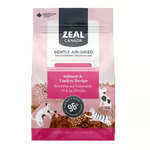
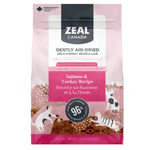
The ZEAL cat food range presents a variety of feline food options designed to meet the diverse dietary requirements of cats. This product line includes dry food, wet food, and various treats, with formulations aimed at providing the daily nutrition essential for cats. ZEAL cat food's product spectrum caters to different life stages, offering suitable products for kittens, adult cats, and senior cats alike. Whether intended as a main meal or as rewarding treats, ZEAL cat food offers a wide array of choices. Some products are formulated with a single protein source, making them suitable for cats with sensitivities to specific ingredients. Furthermore, the range also features specialized formulas tailored for cats of different sizes or activity levels. When selecting, one can choose appropriate items from the extensive ZEAL cat food options, such as wet food cans or cat treats, based on the cat's age, health condition, and dietary preferences, to ensure comprehensive nutritional support. This category page compiles all ZEAL cat food items for easy browsing and comparison.
Cat food encompasses a diverse range of nutritional products formulated specifically for feline consumption, adhering to specific dietary requirements and life stages.
This article aims to describe the structural attributes, material composition, and usage contexts within the cat food category, rather than to recommend specific products or compare their advantages.
Cat Food Classification and Supply Contexts
Cat food products are commonly divided based on their moisture content, which significantly influences their processing, preservation, and typical feeding methods. Dry kibble, characterized by a low moisture content, typically below 10%, is produced through an extrusion process that cooks and shapes ingredients into uniform pieces. This form offers convenience in storage and feeding due to its extended shelf life and resistance to spoilage when properly stored. Wet cat food, conversely, possesses a high moisture content, often exceeding 70%, and is commonly presented in cans, pouches, or trays. Its production involves cooking ingredients with added liquid, followed by sealing and sterilization to ensure microbial stability. Semi-moist cat food represents an intermediate category with moisture levels generally between 10% and 60%, often achieved through the inclusion of humectants to maintain pliability. Another distinct category is raw cat food, which consists of uncooked ingredients, sometimes including bones and organ meats, and may be presented in fresh, frozen, or freeze-dried forms. Freeze-dried cat food specifically involves removing moisture from raw ingredients through sublimation, resulting in a lightweight product that retains much of the original nutritional profile and can be rehydrated before feeding. Understanding these classifications is fundamental to comprehending the various forms of cat food available on the market.
Cat Food Material Composition and Processing Techniques
The material composition of cat food is primarily structured around providing essential nutrients for feline health, including proteins, fats, carbohydrates, vitamins, and minerals. Protein sources are typically animal-derived, such as chicken, turkey, salmon, beef, or lamb, and are crucial for muscle maintenance and overall physiological functions. The quality and digestibility of these protein sources directly impact nutrient absorption. Fats, often sourced from animal fats or specific oils like fish oil, provide concentrated energy and essential fatty acids, such as omega-3 and omega-6, which are vital for skin, coat, and neurological health. Carbohydrates, while not a primary energy source for obligate carnivores, can be included in varying proportions, often derived from ingredients like potatoes, peas, or rice, particularly in dry cat food formulations. Vitamins and minerals are added to ensure a complete and balanced diet, covering requirements for bone health, immune function, and metabolic processes. The processing techniques significantly alter the final product's physical and nutritional characteristics. Extrusion, common for dry cat food, involves high heat and pressure, which can affect the bioavailability of certain nutrients but also enhance digestibility of starches and reduce microbial load. Canning for wet cat food uses heat sterilization, preserving the ingredients while making them palatable. Freeze-drying, as seen in some specialty cat food products, removes water at low temperatures, aiming to preserve the raw nutritional integrity of ingredients. Air-drying is another method that uses controlled air circulation to reduce moisture content, often at lower temperatures than extrusion, which can also help retain nutrient profiles. The specific combination of ingredients and processing methods dictates the nutrient density and digestibility of each cat food formulation.
Cat Food Properties in Varying Usage Environments
The properties of cat food can vary significantly depending on the environmental conditions and intended usage context. Dry cat food, due to its low moisture content, exhibits superior stability in ambient temperatures and humidity, making it suitable for free-feeding arrangements where food is left out for extended periods. Its hard texture also contributes to dental hygiene through mechanical abrasion during chewing. However, in high humidity environments, dry kibble can absorb moisture, leading to a loss of crispness and potentially increasing susceptibility to mold growth if not stored in airtight containers. Wet cat food, with its high moisture content, is generally more palatable to some cats and contributes to their hydration, which is beneficial for urinary tract health. However, once opened, wet cat food is highly perishable and requires refrigeration to prevent bacterial proliferation; it should not be left at room temperature for more than a few hours. Freeze-dried cat food offers a compromise, being shelf-stable in its dry form but offering the hydration benefits of wet food when rehydrated. Its lightweight nature also makes it convenient for travel. Raw or fresh cat food requires stringent temperature control, typically frozen storage, to maintain safety and prevent pathogen growth, necessitating careful handling and preparation. The choice of cat food type can therefore be influenced by logistical considerations such as climate, feeding schedules, and the owner's ability to maintain proper storage conditions. Different types of cat food are designed to function optimally under specific environmental parameters.
Cat Food Product Characteristics from Sales Ranking
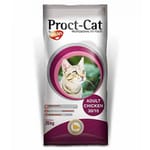
Rank 1: Proct-Cat Crown Royal Natural Organic Adult Cat Chicken Formula 20kg — This cat food product features a chicken-based protein formula designed for adult cats. Its organic designation indicates adherence to specific cultivation and processing standards for its ingredients, often implying the absence of synthetic pesticides, hormones, and antibiotics in the primary protein sources. The formulation is intended to provide complete nutrition for adult felines. The product is supplied in a 20kg bulk package, indicating its suitability for multi-cat households or for re-packaging into smaller containers for storage. The dry kibble format suggests an extrusion manufacturing process, resulting in low moisture content and a firm texture.
Rank 2: Proct-Cat Crown Royal Natural Organic Adult Cat Hairball Control Formula 20kg — This cat food is an organic formulation for adult cats, specifically designed with ingredients intended to support hairball management. While the specific components for hairball control are not detailed, such formulations typically include increased fiber content from sources like cellulose or psyllium husk, which aids in the passage of ingested hair through the digestive tract. Like the first-ranked product, it is presented in a 20kg dry kibble format, indicating similar manufacturing and storage characteristics. The organic nature of the ingredients is a consistent characteristic with the brand's other top-selling product, emphasizing a focus on ingredient sourcing and quality standards for cat food.
Rank 3: ZEAL Cat Food Canadian Grain-Free Air-Dried Salmon + Turkey Formula 14oz (CJ1613) — This cat food product is characterized by its Canadian origin, grain-free formulation, and air-drying processing method. The primary protein sources are salmon and turkey, indicating a blend of poultry and fish proteins. Air-drying is a gentle process that slowly removes moisture from raw ingredients, aiming to preserve their nutritional integrity more effectively than high-heat extrusion. The grain-free aspect suggests the absence of common cereal grains like corn, wheat, and soy, often replaced by alternative carbohydrate sources such as peas or lentils, or simply a higher protein content. The 14oz package size is relatively small, suitable for trial purchases or for single-cat households. The air-dried format means it retains a higher moisture content than typical kibble but is still shelf-stable without refrigeration until opened, representing a distinct structural type of cat food.
Rank 4: ZEAL Cat Food Canadian Grain-Free Air-Dried Salmon Turkey Formula 14lb — This product shares the core characteristics of the third-ranked item: Canadian origin, grain-free, and air-dried, with salmon and turkey as primary protein sources. The primary difference lies in the packaging size, which is a substantial 14lb, suggesting it is intended for more regular use or for larger households. The consistent formulation and processing method across different package sizes highlight the brand's commitment to this specific cat food type. The air-dried nature of this cat food indicates a specific approach to nutrient preservation and palatability, distinct from both traditional dry kibble and wet canned foods. The grain-free recipe aligns with specific dietary preferences in the cat food market.
Rank 5: ZEAL Cat Food Air-Dried Grain-Free Fresh Meat Formula Air-Dried Chicken + King Salmon 320g (NP176) — This cat food product is another offering from the ZEAL brand, emphasizing an air-dried, grain-free fresh meat formula. The protein sources are specified as chicken and King Salmon, the latter indicating a premium variety of salmon. The "fresh meat" designation typically implies that the meat ingredients were not rendered or meal-based prior to processing. The 320g package size is a smaller offering, potentially for sampling or as a supplement rather than a primary food source for an extended period. The air-drying process again distinguishes this cat food from conventional kibble, aiming for a product that retains more of the original ingredient characteristics. The grain-free attribute is consistent across the ZEAL cat food line, catering to consumer preferences for such formulations.
Cat Food Quality Standards and Labeling Norms
The quality standards and labeling for cat food are subject to various regulatory frameworks, which differ geographically but share common objectives: ensuring nutritional adequacy, product safety, and transparent communication to consumers. In the United States, the Association of American Feed Control Officials (AAFCO) sets nutritional profiles and labeling guidelines that most pet food manufacturers voluntarily adhere to. AAFCO provides nutrient requirements for "complete and balanced" cat food for different life stages, such as growth, adult maintenance, or all life stages. Labels typically include a guaranteed analysis, which lists the minimum percentages of crude protein and crude fat, and maximum percentages of crude fiber and moisture. The ingredient list is also a mandatory component, with ingredients listed in descending order by weight. In the European Union, regulations are governed by the European Pet Food Industry Federation (FEDIAF), which provides similar nutritional guidelines and labeling requirements. These guidelines classify ingredients, define acceptable processing aids, and stipulate rules for claims like "natural" or "organic." For cat food, traceability of ingredients is increasingly emphasized, requiring manufacturers to document the origin and handling of raw materials. Furthermore, specific labeling terms, such as "meal" versus "fresh meat," carry defined meanings regarding the form and processing of the ingredient prior to its inclusion in the cat food. Adherence to these standards provides a verifiable basis for assessing the nutritional completeness and safety of cat food products. The presence of specific certifications, such as organic or human-grade, also indicates compliance with additional, often stricter, regulatory criteria for ingredient sourcing and processing in cat food.
Insights into Cat Food Production
A verifiable insight regarding cat food production is the practice of "nutrient blending." While ingredient lists on cat food labels detail components like chicken, salmon, or rice, these are often raw materials. During formulation, manufacturers frequently use nutrient premixes—concentrated blends of vitamins, minerals, and sometimes amino acids—to ensure the final cat food product meets specific nutritional profiles, such as those established by AAFCO or FEDIAF. This approach allows for precise control over the micronutrient content, compensating for potential nutrient losses during processing or variations in the natural nutrient levels of bulk ingredients. Another factual insight concerns the role of palatants in cat food. Palatants, often derived from animal digests, are substances applied to the surface of dry kibble or incorporated into wet cat food to enhance its aroma and taste. Cats have a highly developed sense of smell and distinct taste preferences, and palatants are engineered to stimulate these senses, encouraging consumption. These palatants are typically food-grade and undergo rigorous testing to ensure safety and efficacy, playing a significant role in the acceptance of cat food by felines, especially for formulations that might otherwise be less appealing due due to their base ingredients.
This overview has detailed the structural and characteristic attributes of cat food, covering its various forms, material compositions, processing methods, and regulatory frameworks. The information presented is objective and intended to provide an understanding of the category's factual elements.
......View All