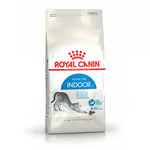
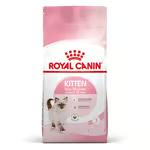
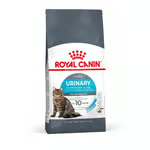
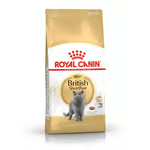
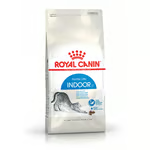
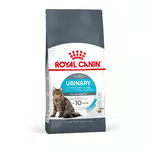
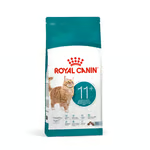
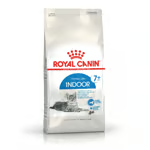
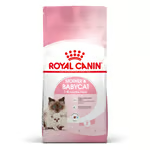
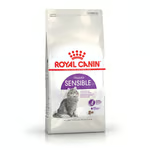
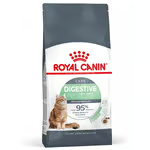
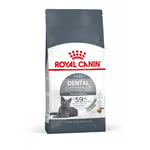
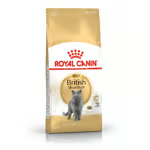
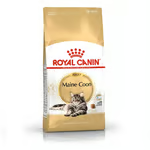
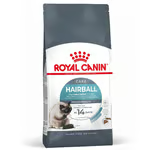
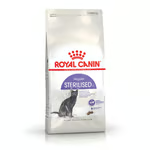
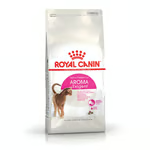
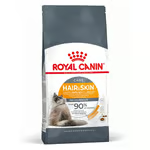
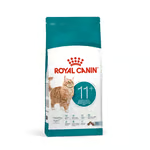
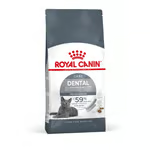
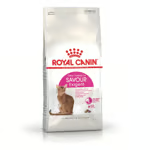
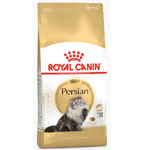
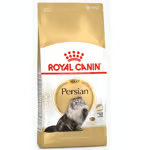
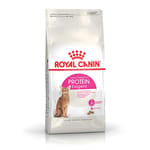
This category page features products from the Royal Canin cat food range, which includes formulations designed for felines at various life stages, such as kitten food and adult cat food. Royal Canin cat food offers diverse textures and nutritional compositions to meet the daily dietary requirements of cats, with its primary product form being dry kibble. Within this category, options for prescription diets tailored to specific nutritional considerations are also available. Users can select suitable Royal Canin cat food products based on their cat's age, physiological condition, or particular needs. The product information presented here is derived from official brand classifications and does not contain any promotional descriptions.
Royal Canin cat food encompasses a diverse range of nutritional formulations designed for felines across various life stages and physiological conditions.
This article aims to describe the structural attributes, material composition, and usage contexts within the Royal Canin cat food category. It does not provide product recommendations or comparative analyses of advantages.
Royal Canin Cat Food Classification by Life Stage and Physiological Condition
Royal Canin cat food is commonly divided in practical application based on the cat's life stage, breed, and specific physiological requirements. This classification system addresses the varying nutritional demands that occur throughout a cat's life cycle. For instance, kittens require formulations with higher energy and protein concentrations to support rapid growth and development, while adult cats typically require balanced maintenance diets. Senior cats, conversely, may benefit from diets that support joint health and kidney function. Beyond life stage, specific physiological conditions such as urinary tract sensitivities, digestive sensitivities, or skin and coat issues lead to specialized dietary categories. Reproductive status also influences dietary needs, with specific formulations available for pregnant or lactating queens. The categorization reflects a systematic approach to addressing distinct biological needs through tailored nutritional profiles. This structured approach allows for a precise matching of dietary characteristics to an individual feline's biological state, aiming to support health and well-being. The differentiation is not arbitrary but is grounded in scientific understanding of feline metabolism and nutritional science. Each segment of Royal Canin cat food represents a distinct nutritional strategy.
Royal Canin Cat Food Material Composition and Formulation Methods
The material composition and formulation methods of Royal Canin cat food are defined by specific ingredient selections and processing techniques. Primary ingredients typically include various animal proteins, such as dehydrated poultry protein, pork protein, and fish meal, which serve as essential sources of amino acids. Carbohydrate sources often include rice, maize, wheat, and beet pulp, providing energy and dietary fiber. Fats, primarily from animal fats and fish oil, supply concentrated energy and essential fatty acids like Omega-3 and Omega-6. Vitamins and minerals are added to ensure complete and balanced nutrition, often including vitamin A, D3, E, iron, iodine, copper, manganese, zinc, and selenium. Specific formulations may incorporate novel ingredients such as psyllium husks for digestive support or hydrolyzed proteins for allergy management. The manufacturing process typically involves extrusion, where ingredients are mixed, cooked under high pressure and temperature, and then shaped into kibble. This process ensures palatability, digestibility, and shelf stability. The precise ratios of these components are determined by the targeted nutritional profile for each Royal Canin cat food product. For example, a formulation for urinary health might have controlled mineral levels, while a hairball control diet would emphasize specific fiber types. The selection of ingredients and their processing are meticulously controlled to meet declared nutritional guarantees and product specifications, reflecting a consistent approach to product development. This detailed approach to material selection and processing distinguishes different Royal Canin cat food varieties.
Royal Canin Cat Food Properties Across Usage Environments
The properties of Royal Canin cat food can vary in their manifestation across different usage environments and conditions, primarily concerning how the nutritional benefits are realized. For example, a diet formulated for indoor cats, often labeled as "indoor cat food," typically has a moderate calorie content and specific fiber blends to address reduced activity levels and aid in hairball elimination. An outdoor cat, with higher energy expenditure, would theoretically benefit more from a diet with a denser caloric profile, although specific outdoor cat formulations are less common than indoor ones. Environmental temperature can also influence a cat's energy requirements, thereby subtly altering the optimal caloric intake from a given Royal Canin cat food. In humid environments, the shelf life and palatability of dry kibble can be affected if not stored correctly, leading to potential degradation of nutritional quality or palatability issues. Conversely, in very dry climates, ensuring adequate water intake alongside dry Royal Canin cat food becomes even more important for overall hydration. The effectiveness of a specialized diet, such as one for skin and coat health, might be influenced by environmental allergens or stressors, which could exacerbate underlying conditions despite appropriate dietary intervention. Therefore, while the intrinsic properties of Royal Canin cat food remain constant, their practical impact on a cat's health and well-being can be modulated by external environmental factors and the cat's specific lifestyle. This interaction highlights the nuanced relationship between diet and environment, impacting the perceived efficacy of Royal Canin cat food.
Royal Canin Cat Food Product Characteristics Based on Sales Ranking
This section presents material and structural characteristics of Royal Canin cat food products based on their sales ranking, without offering usage recommendations or comparative evaluations. The information is derived directly from product specifications.
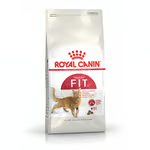
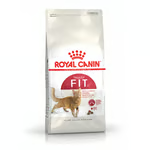
Rank 1: Royal Canin Cat Food Adult Complete Health Nutrition Formula FIT32 15kg — This formulation is characterized by its balanced nutrient profile, designed for adult cats with moderate activity levels. It contains dehydrated poultry protein, maize, rice, vegetable protein isolate, animal fats, maize gluten, hydrolyzed animal proteins, vegetable fibers, yeasts, beet pulp, minerals, soya oil, fish oil, and psyllium husks. The kibble structure is typically uniform in size and shape, facilitating consistent intake. The protein content is around 32%, with a fat content of approximately 15%.
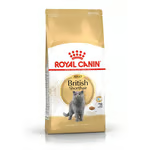
Rank 2: Royal Canin Cat Food Breed Specific British Shorthair Adult Formula BSH 10kg — This specific Royal Canin cat food is tailored for British Shorthair adult cats, considering their robust body type and specific jaw structure. It features dehydrated poultry protein, rice, vegetable protein isolate, animal fats, maize, maize gluten, vegetable fibers, hydrolyzed animal proteins, chicory pulp, fish oil, soya oil, minerals, yeasts, fructo-oligo-saccharides, hydrolyzed yeast (source of manno-oligo-saccharides), borage oil, and marigold extract (source of lutein). The kibble is designed with a crescent shape to encourage mastication and slow down ingestion, aligning with the breed's eating habits. Key nutrients include L-carnitine, taurine, EPA, and DHA for cardiac health.
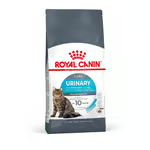
Rank 3: Royal Canin Cat Food Urinary Care Adult Urinary Tract Support Anti-Urinary Stone Formula UC33 10kg — This Royal Canin cat food is formulated to support urinary tract health and help reduce the risk of urinary stone formation. Its composition includes dehydrated poultry protein, maize, vegetable protein isolate, rice, wheat, animal fats, vegetable fibers, maize gluten, hydrolyzed animal proteins, minerals, beet pulp, yeasts, soya oil, fish oil, and marigold extract (source of lutein). The formulation aims to create an unfavorable urinary environment for the formation of struvite and calcium oxalate stones by adjusting mineral levels, particularly magnesium, and promoting appropriate urine dilution. The protein content is approximately 33%, with a moderate fat level.
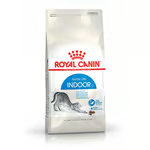
Rank 4: Royal Canin Cat Food Healthy Nutrition Indoor Adult Nutrition Formula IN27 10kg — This Royal Canin cat food is specifically developed for adult indoor cats, addressing their lower activity levels and potential for hairball formation. Ingredients include dehydrated poultry protein, rice, maize, vegetable protein isolate, wheat, animal fats, hydrolyzed animal proteins, vegetable fibers, beet pulp, minerals, soya oil, fructo-oligo-saccharides, yeasts, fish oil, and psyllium husks. It features a controlled calorie intake to help maintain an ideal weight and a specific blend of fibers to stimulate intestinal transit and help eliminate ingested hair. The protein content is around 27%, with a fat content of approximately 13%.
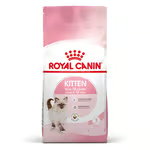
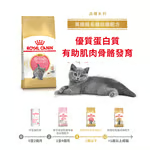
Rank 5: Royal Canin Cat Food Kitten Healthy Nutrition Formula K36 10kg — Designed for growing kittens, this Royal Canin cat food provides high energy and protein to support intense growth and development. The composition includes dehydrated poultry protein, rice, animal fats, maize flour, vegetable protein isolate, hydrolyzed animal proteins, vegetable fibers, yeasts, beet pulp, fish oil, soya oil, minerals, fructo-oligo-saccharides, hydrolyzed yeast (source of manno-oligo-saccharides), marigold extract (source of lutein). It contains a complex of antioxidants, including vitamin E, vitamin C, taurine, and lutein, to support the development of the kitten's immune system. The kibble is small and easily rehydratable for young kittens, with a protein content near 36% and fat content around 18%.
Royal Canin Cat Food Quality Standards and Labeling Norms
Quality standards and labeling norms for Royal Canin cat food adhere to established regulatory frameworks in the pet food industry. These frameworks typically involve guidelines set by authorities such as the Association of American Feed Control Officials (AAFCO) in North America or the European Pet Food Industry Federation (FEDIAF) in Europe. These organizations define nutritional requirements for different life stages of cats, ensuring that products labeled as "complete and balanced" meet specific nutrient profiles. For Royal Canin cat food, this means that ingredient lists are presented in descending order by weight, and guaranteed analysis values for crude protein, crude fat, crude fiber, and moisture are clearly stated on the packaging. Additionally, specific mineral content, such as magnesium, phosphorus, and calcium, may be declared, particularly for specialized or veterinary diets. The presence of artificial preservatives, colors, or flavors is also typically indicated. Manufacturing facilities often undergo certifications for quality management systems, such as ISO 9001, to ensure consistent production processes and product safety. Traceability systems are implemented to track ingredients from sourcing to the final product. The labeling also provides feeding guidelines based on the cat's weight and activity level, though these are general recommendations. The product name itself often conveys key attributes, such as "Royal Canin cat food for kittens" or "Royal Canin cat food for urinary care," indicating its intended use. Compliance with these standards ensures transparency and allows consumers to verify the basic composition and nutritional claims of the Royal Canin cat food.
Royal Canin Cat Food Verifiable Factual Insights
Royal Canin cat food formulations often incorporate a specific type of soluble fiber, such as psyllium husks, in diets designed for hairball control. Psyllium husks absorb water and form a gel-like substance in the digestive tract, which can help facilitate the passage of ingested hair through the digestive system and reduce hairball formation. This mechanism is a physical action rather than a chemical one. Another verifiable fact pertaining to Royal Canin cat food involves its breed-specific diets. The development of these diets, such as those for British Shorthair cats, includes consideration of breed-specific anatomical features, like the shape of the jaw. The kibble in these formulations is often designed with a particular shape and texture to encourage proper chewing and reduce the rate of ingestion, which can have implications for dental health and digestion. This structural adaptation of the kibble is a direct response to observed breed characteristics. These are examples of specific design considerations within the Royal Canin cat food range.
The information presented describes the structural and compositional aspects of Royal Canin cat food. This material is designed to provide an understanding of the category's characteristics without offering guidance on product selection or implying preferences.
......View All