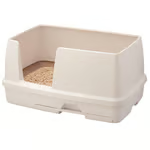
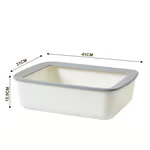
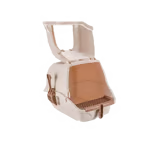
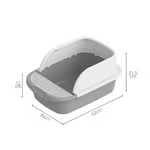
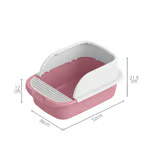
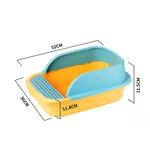
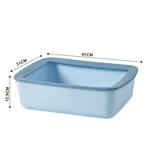
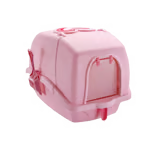
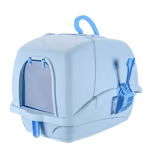
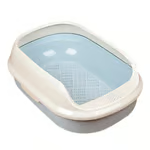
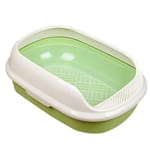
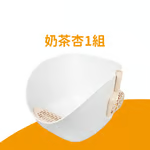
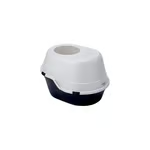
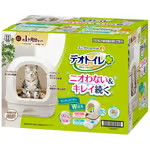
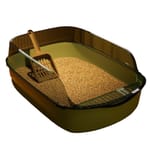
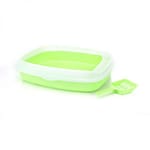
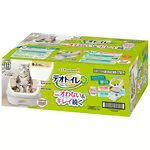
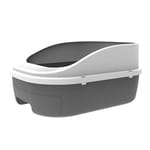
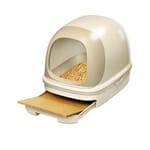
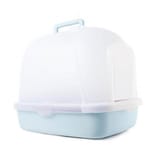
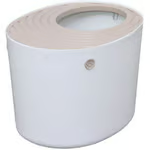
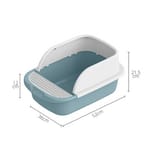
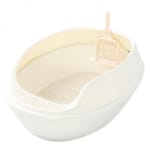
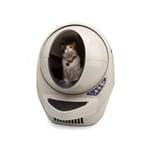
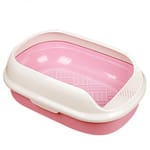
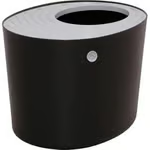
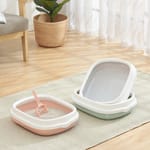
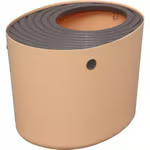
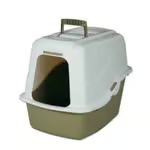
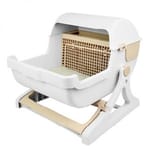
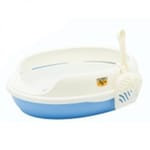
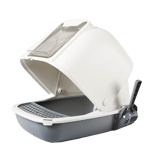
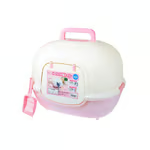
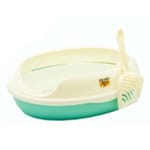
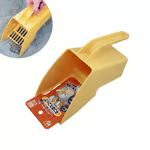
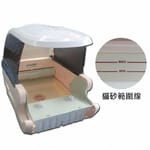
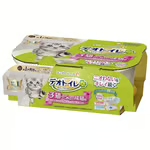
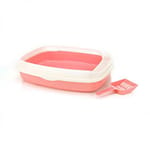
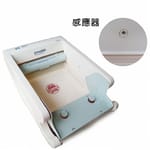
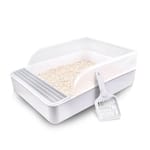
A litter box is a container designed for feline excretion, aiming to provide cats with a private and sanitary toilet area. Various types of litter boxes are available in the market, including open-top, enclosed, and semi-enclosed designs, catering to different cat habits and owner preferences. Some litter boxes incorporate a double-layer structure, intended to separate solid waste from liquid, thereby enhancing cleaning efficiency. Furthermore, automatic litter boxes utilize mechanical or sensor-based mechanisms to self-clean the litter, reducing manual intervention. Litter boxes come in diverse materials, commonly plastic and stainless steel. Their sizes and shapes also vary to accommodate cats of different builds and can be used with various types of litter, such as clay litter, tofu litter, or wood pellet litter, collectively forming a crucial part of a cat's daily hygiene routine. Whether it is a traditional litter box or a product with specific designs such as the unicharm litter box, their core function remains to provide an appropriate place for feline elimination.
A cat litter box is a receptacle designed for domestic cats to excrete waste products, typically containing an absorbent material to manage odors and facilitate disposal.
This article aims to describe the structural attributes, material composition, and usage context within the category of cat litter boxes. It does not provide product recommendations or offer selection advice.
Cat Litter Boxes: Common Divisions
Cat litter boxes are commonly divided based on their enclosure type, which primarily dictates their functional characteristics and suitability for various feline behaviors and household environments. The most fundamental division separates open-top designs from enclosed or hooded designs. Open-top cat litter boxes, often referred to as basic or traditional models, consist of a simple tray with raised sides. These units provide unrestricted access for the cat and can be advantageous for owners who prioritize ease of cleaning and visual monitoring of their cat's habits. They also allow for maximum air circulation, which can help in odor dissipation, although the litter itself remains exposed. Another classification within this category includes those with higher sides, designed to contain litter scatter. Within the spectrum of enclosed designs, further distinctions arise based on the degree of enclosure and additional features. Fully enclosed cat litter boxes, for instance, typically feature a hood or a lid that covers the litter area, often with a small entrance for the cat. These designs are frequently chosen for their ability to contain odors and litter scatter more effectively than open-top models. They can also offer a greater sense of privacy for the cat. Some variations include top-entry designs, where the cat enters from an opening on the top surface, which can be particularly effective in preventing litter tracking as the cat must jump out, dislodging litter from its paws. The structural attributes of these divisions directly influence their practical application in a household setting, impacting factors such as space utilization and maintenance requirements. The design variations are a direct response to different user needs and preferences regarding waste management for domestic cats. A cat litter box, regardless of its enclosure type, serves the primary function of providing a designated area for feline elimination. The choice between these divisions is often determined by factors such as the cat's size, age, and behavioral patterns, as well as the owner's tolerance for litter scatter and odor visibility.
Cat Litter Boxes: Material Composition and Structural Forms
The material composition and structural forms of a cat litter box are fundamental to its functionality and durability. The predominant material used in the manufacturing of most cat litter boxes is plastic, specifically polypropylene (PP) or polyethylene (PE). These plastics are selected due to their inherent properties such as chemical resistance, lightweight nature, and ease of molding into various shapes and sizes. Polypropylene offers good stiffness and impact resistance, making it suitable for robust, long-lasting units. Polyethylene, while sometimes softer, can offer greater flexibility and resistance to cracking. The surfaces of these plastic cat litter boxes are typically non-porous and smooth, which facilitates cleaning and reduces the absorption of odors. Some specialized designs may incorporate antimicrobial additives directly into the plastic during the manufacturing process to inhibit bacterial growth and further mitigate odor development. Beyond basic plastic constructions, some premium or specialized cat litter boxes may feature components made from other materials. For example, certain models might include stainless steel trays, which offer enhanced durability and are entirely non-porous, preventing odor absorption and making them exceptionally easy to sanitize. However, stainless steel increases the unit's weight and manufacturing cost. Structural forms vary significantly, ranging from simple shallow trays to complex multi-component systems. Basic open-top designs are generally single-piece molded plastic units. Enclosed cat litter boxes typically consist of a base tray and a detachable hood, often secured by latches or clips. These hoods can be simple covers or may integrate ventilation systems, sometimes with filters. Double-layer cat litter boxes, a specific structural form, feature a perforated upper tray nested within a solid lower tray. This design is specifically intended for use with certain types of litter, such as silica gel or wood pellets, which allow liquid waste to pass through the perforations to be absorbed by a pad or collected in the lower tray. The structural forms also encompass features like splash guards, elevated entry points, and integrated ramps, all designed to address specific aspects of cat behavior and owner convenience. The manufacturing process for plastic cat litter boxes primarily involves injection molding, where molten plastic is injected into a mold cavity and then cooled and solidified into the desired shape. This method allows for mass production of consistent, complex forms. The material selection and structural design directly influence the product's performance characteristics, including its resistance to wear, ease of maintenance, and effectiveness in managing waste. The automatic cat litter box represents a more advanced structural form, incorporating mechanical and electronic components for self-cleaning functions. These units often feature rotating drums, raking mechanisms, or conveyor belts, all constructed from durable plastics and sometimes metal components, designed to separate solid waste from clean litter automatically. The overall structural integrity of a cat litter box is paramount to its long-term utility.
Cat Litter Boxes: Properties in Different Usage Environments
The properties of a cat litter box can exhibit varying characteristics depending on the specific usage environment and conditions. In a multi-cat household, for instance, the size and number of cat litter boxes become critical factors. Larger units or multiple strategically placed smaller units are typically required to accommodate the increased volume of waste and to prevent territorial conflicts among cats. In such environments, the durability of the materials used in the cat litter box is particularly important, as it will be subjected to more frequent use and cleaning cycles. Furthermore, odor control properties, such as those offered by enclosed designs or those compatible with highly absorbent litter types, gain heightened significance in multi-cat settings to maintain air quality. For households with limited space, compact cat litter boxes or those with a vertical design, such as top-entry models, may be preferred. These designs optimize floor space while still providing an adequate area for the cat. In apartments or smaller living areas, the aesthetic integration of the cat litter box into the home environment can also be a consideration, leading to the selection of designs that are less conspicuous or that blend with furniture. The material properties, such as resistance to staining and ease of cleaning, become more pronounced in these contexts. Outdoor or semi-outdoor usage, such as on a covered patio or in a garage, introduces different environmental challenges. Here, the cat litter box must withstand greater temperature fluctuations and potentially higher humidity levels. Plastics with UV resistance may be beneficial to prevent material degradation over time. The structural integrity must also be sufficient to deter pests or other animals from accessing the contents. In environments with high foot traffic, the stability of the cat litter box base is important to prevent accidental tipping. The type of cat litter box chosen can also be influenced by the presence of other pets in the household. For example, in homes with dogs, an enclosed or top-entry cat litter box can prevent dogs from accessing the litter, which is a common behavioral issue. The design of the entrance and the overall height of the cat litter box play a role in this. For cats with specific health conditions, such as arthritis or mobility issues, a low-entry cat litter box or one with a gentle ramp is necessary to ensure ease of access and prevent discomfort. The material's texture and temperature can also affect a cat's willingness to use the cat litter box, particularly for sensitive or elderly animals. Therefore, the selection and placement of a cat litter box are not universal but are highly dependent on the specific conditions and inhabitants of the usage environment.
Cat Litter Boxes: Product Characteristics from Sales Ranking
The following describes the material, formulation, and structural characteristics of cat litter boxes based on a sales ranking, without providing any recommendations or comparative analysis.
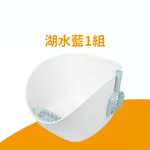
Rank 1: DogCatStar Patented White Whale Litter Box Lake Blue (49.5*41.5*35cm) (GC888) — This cat litter box features a design that incorporates a specific form factor, referred to as a "White Whale" design, which suggests an aesthetic and structural approach. Its dimensions are 49.5 cm in length, 41.5 cm in width, and 35 cm in height. The primary material is likely plastic, given the typical construction of such items, and the color is specified as lake blue. The "patented" designation indicates unique design elements or functional attributes that have been legally protected. The structure is generally an open-top design with a specific profile intended for litter containment and ease of access.
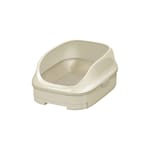
Rank 2: Semi-Enclosed Single-Layer Anti-Splash Elevated Cat Litter Box Large Gray-White — This cat litter box is characterized by its semi-enclosed structure, which means it has raised sides or a partial hood without being fully sealed. It is a single-layer design, indicating a basic tray structure without a separate sifting or collection tray. The "anti-splash" feature suggests the inclusion of higher walls or a specific lip design to prevent litter from scattering outside the box during use. It is described as "elevated," which might refer to the overall height or the presence of feet that lift the base off the floor. The color scheme is gray-white, and its size is classified as large, implying greater internal volume compared to standard models. The material is typically molded plastic.
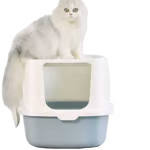
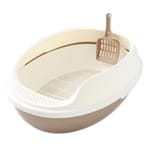
Rank 3: Fully Enclosed Anti-Splash Deodorizing Cat Litter Box Suitable for Tofu Cat Litter Khaki — This cat litter box is a fully enclosed unit, meaning it has a complete hood or cover with an entry point for the cat, designed for maximum containment of litter and odors. The "anti-splash" characteristic indicates design elements aimed at preventing litter scatter. A "deodorizing" feature suggests integrated mechanisms or design principles to mitigate odors, which could include carbon filters, ventilation systems, or specific material properties that resist odor absorption. It is specified as suitable for tofu cat litter, implying that its internal dimensions, grate size (if applicable), or cleaning mechanism (for automatic versions) are compatible with the specific particle size and clumping properties of tofu-based litter. The color is khaki, and the construction material is typically plastic.
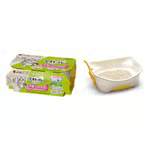
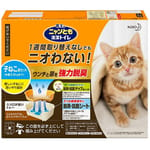
Rank 4: Unicharm Japan Extra Large Cat Litter Box Set (Color Random) (uca4a/uca4b/uca4c) — This cat litter box is an extra-large unit originating from Japan, provided as a set. The "set" designation suggests it may include additional components beyond the basic litter box, such as a scoop, waste bags, or specific litter types. Being extra-large indicates substantial dimensions, offering greater internal space. The color is specified as random, meaning the exact hue may vary among available options. The material is primarily plastic, consistent with most commercially available cat litter boxes. The structural form is likely a standard open-top or semi-enclosed design, intended for general use. The product codes uca4a/uca4b/uca4c indicate specific variations within the Unicharm product line.
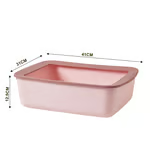
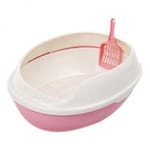
Rank 5: Semi-Enclosed Single-Layer Anti-Splash Elevated Cat Litter Box Rectangular (Color Random) — Similar to Rank 2, this cat litter box is a semi-enclosed, single-layer design with anti-splash features and an elevated structure. The primary distinguishing characteristic is its "rectangular" shape, which defines its footprint and internal volume distribution. The color is specified as random, indicating variability in the aesthetic presentation. The material is typically molded plastic, providing a non-porous surface for hygiene. The elevated aspect may contribute to reduced litter tracking by providing a higher barrier for the cat's exit, or it could refer to integrated feet for floor clearance. This type of cat litter box is designed for ease of access while offering some degree of litter containment.
Cat Litter Boxes: Quality Standards and Labeling Norms
Verifiable quality standards and labeling transparency for a cat litter box typically revolve around material safety, structural integrity, and functional performance claims. While there are no universally mandated international standards specifically for cat litter boxes akin to those for human consumer goods or medical devices, manufacturers often adhere to general safety guidelines for plastics and consumer products. For instance, any plastic used in a cat litter box should ideally be free from harmful chemicals such as BPA (Bisphenol A) or phthalates, especially if there is a possibility of ingestion by pets. While not always explicitly stated on the packaging, reputable brands often confirm the inertness and non-toxicity of their plastic materials upon inquiry or through their corporate social responsibility statements. Structural integrity standards focus on the durability and stability of the cat litter box. This includes resistance to cracking, warping, and deformation under typical usage conditions, as well as the ability to withstand the weight of litter and waste without collapsing. For automatic cat litter boxes, electrical safety certifications, such as CE marking in Europe or UL certification in North America, are paramount, ensuring that the electrical components and mechanisms operate without posing a risk of electric shock or fire. Labeling norms typically include the dimensions of the cat litter box, its material composition (e.g., "made from durable plastic"), and instructions for assembly and cleaning. Claims such as "anti-splash," "odor control," or "easy to clean" are functional attributes that should ideally be verifiable through the product's design features, such as high walls, specific lid designs, or non-stick surfaces. For double-layer cat litter boxes, compatibility with specific litter types (e.g., "suitable for silica gel litter") is an important labeling detail. The manufacturer's name, country of origin, and contact information are standard labeling requirements, facilitating consumer inquiries and accountability. Transparency in labeling also extends to providing clear guidance on maintenance, such as recommended cleaning frequencies and methods, which contributes to the longevity and hygienic performance of the cat litter box. While there isn't a single global regulatory body overseeing cat litter box quality, adherence to general product safety and manufacturing best practices is the standard expectation across the industry. The presence of specific brand names like Petkit cat litter box or Iris cat litter box often implies adherence to internal quality control protocols established by those manufacturers. The Unicharm cat litter box also falls under this category of brand-specific quality assurance.
Cat Litter Boxes: Factual Insights
One verifiable factual insight regarding cat litter boxes pertains to the historical development of indoor feline waste management. Before the widespread availability of commercial cat litter in the mid-20th century, domestic cats were often allowed outdoors for elimination, or owners used materials such as sand, ashes, or dirt in trays for indoor waste collection. The invention of absorbent clay litter in 1947 by Edward Lowe marked a significant turning point, providing a more effective and hygienic solution that contributed to the rise of indoor cat keeping. This innovation directly influenced the design and widespread adoption of the modern cat litter box as a dedicated indoor sanitation device for felines. The material properties of the original clay litter, particularly its superior absorption and odor control compared to previous alternatives, necessitated a simple, open-tray cat litter box design to contain the material.
Another factual insight concerns the physiological characteristics of cats that influence cat litter box design. Cats possess a highly developed sense of smell, significantly more acute than humans. This olfactory sensitivity means that strong odors emanating from a cat litter box can be highly deterrent to a cat, potentially leading to aversion and inappropriate elimination behaviors outside the box. Consequently, the design elements aimed at odor control, such as enclosed structures, carbon filters, or materials that resist odor absorption, are direct responses to this feline physiological trait. The design of a cat litter box, therefore, must consider not only human convenience but also the sensory experience of the cat, prioritizing features that maintain a relatively neutral olfactory environment within and around the unit. This understanding underscores why features like a deodorizing cat litter box are developed.
The structure and characteristics of a cat litter box are defined by its material composition, design, and intended function. This overview has focused on objective attributes without evaluating performance or making recommendations.
......View All