
📌 Key Takeaways
- ✅ Chasing is instinct; the goal is to interrupt early, not punish the dog
- ✅ The ideal moment to intervene is before the dog locks onto a target
- ✅ Practise recall indoors first; until it is solid, keep the leash on outdoors at all times
- ✅ Reward recall immediately with the favourite toy so coming back is more worthwhile than chasing
- ✅ Never chase after the dog while shouting; it only makes the dog run away or swallow what is in its mouth
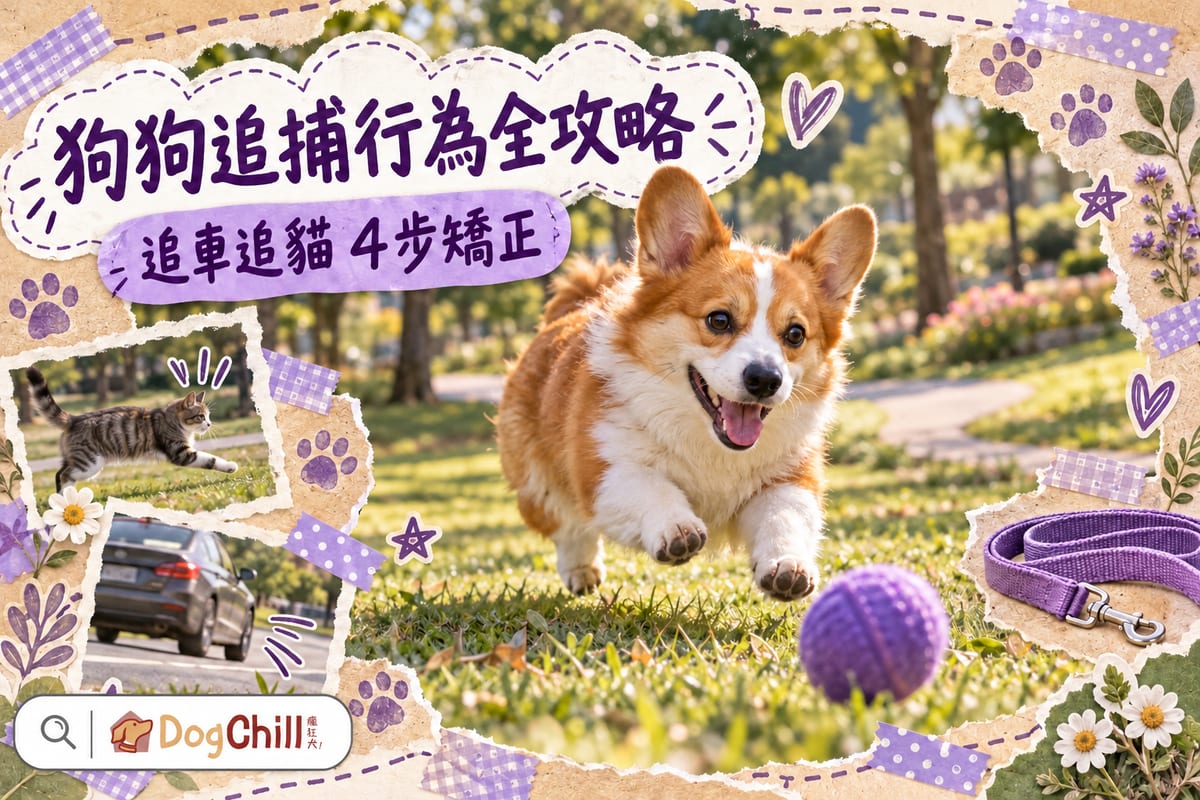
Have you ever been on a nice walk when your dog suddenly spots a cat, a bicycle, or a jogger and shoots off like an arrow? The leash goes taut, you stand there thinking, "What if he actually catches it?" Chasing behaviour is a natural canine instinct. The key is not to "switch it off" but to understand it, intervene early, and guide it with the right methods. In this article, DogChill brings you the 3 main causes of chasing behaviour, the 3-stage chase sequence, and a 4-step correction training method so you can walk your pet safely.
The 3 Common Causes of Chasing Behaviour
1. Predatory instinct and breed traits
The urge to chase is part of every dog's nature to some degree. Hounds have a strong tracking and hunting drive, while herding and guarding breeds (such as Border Collies and Shetland Sheepdogs) display protective instincts; many herding dogs will even try to chase moving cars or bicycles. Even non-working dogs will have the chase switch flipped in their brains when they see a moving target—a cat, a squirrel, a bicycle.
2. Insufficient exercise and mental stimulation
When a dog's daily energy and mental needs are not met, chasing becomes the easiest outlet. A dog that only gets a 15-minute walk and has no puzzle toys at home will chase with particular enthusiasm because it is the most fun part of its day.
3. Previous success
Many owners overlook this. If a dog has ever successfully caught a target (even once), the behaviour is strongly reinforced—"Chasing is so much fun!"—and correction becomes much harder. So if your dog has ever "gotten lucky", be extra patient and rebuild the recall response step by step through training.
The 3-Stage Chase Sequence: Scan → Lock → Launch
To interrupt effectively, you need to recognise the three stages from initial interest to launch:
- Scanning the environment: The dog lifts its head and explores with eyes or nose, reading the terrain and scents. When it shows great interest in sounds from fields or woods, or even jumps up, that is the first signal.
- Locking on: After detecting a clue, it may lie flat on the ground, run around incessantly, or lift a front paw to listen. This stage is already very close to launch.
- Launching the chase: Once it takes off, getting it to turn back is much harder.
The ideal moment to intervene is before the dog locks onto the target. Once the chase begins, self-control drops immediately, so "early detection, early interruption" is the core of the whole training programme.
The 4-Step Correction Training Method
Step 1: Build a solid recall foundation
All outdoor training is built on "the dog listens when you call". Practise the recall cue (e.g. "come") indoors with high-value treats, paired with a whistle, so the dog turns back immediately on hearing it and expects something good to happen. Until recall is solid, keep the leash on outdoors at all times.
Step 2: Interrupt at the budding stage
Watch your dog's movements during walks. As soon as it starts focusing intently on sniffing the ground or carefully analysing a particular scent in the air, blow the whistle or give the recall cue immediately, and quickly move away yourself. Do not wait, do not stand and watch—delay only wastes the best moment.
Step 3: Redirect with the favourite toy + reward
If the dog comes back when called, immediately give it the feeling of "Wow, something great is happening": throw its favourite ball or chew toy, use an exaggerated happy tone, let it chase, and finally bring the "prize" back to you. If it performs well, reward generously on the spot. Over time, "coming back" becomes more worthwhile than "chasing out".
Step 4: Leash management and environment management
For dogs with high chase drive that are hard to control, always put the leash on before going out and avoid places with too many temptations in the wild. Another big mistake is chasing after the dog while shouting—this usually has only two outcomes: the dog runs away, or it immediately swallows whatever is in its mouth. You can also arrange enough activity along the walk route so it has little attention to spare for distractions.
Outdoor Practical Tips
- Try the "don't leave the path" exercise: drop a biscuit in the middle of the path in front of the dog, let it go and pick it up, and the moment it turns back, immediately give the "come" cue; reward success.
- Avoid high-risk routes: places with lots of rubbish and frequent animal activity are hotspots for trouble.
- If chasing behaviour already affects safety (e.g. darting into the road), seek help from an experienced trainer or behaviour consultant early; do not try to handle it alone.
DogChill Reminder
A dog pulling like crazy is not being naughty; its brain's "chase switch" has been triggered. Rather than getting angry afterwards, prepare beforehand: practise recall, bring the right gear, choose the right route, and make every walk a training opportunity. To learn more about dog behaviour and training, keep following DogChill's latest articles!