
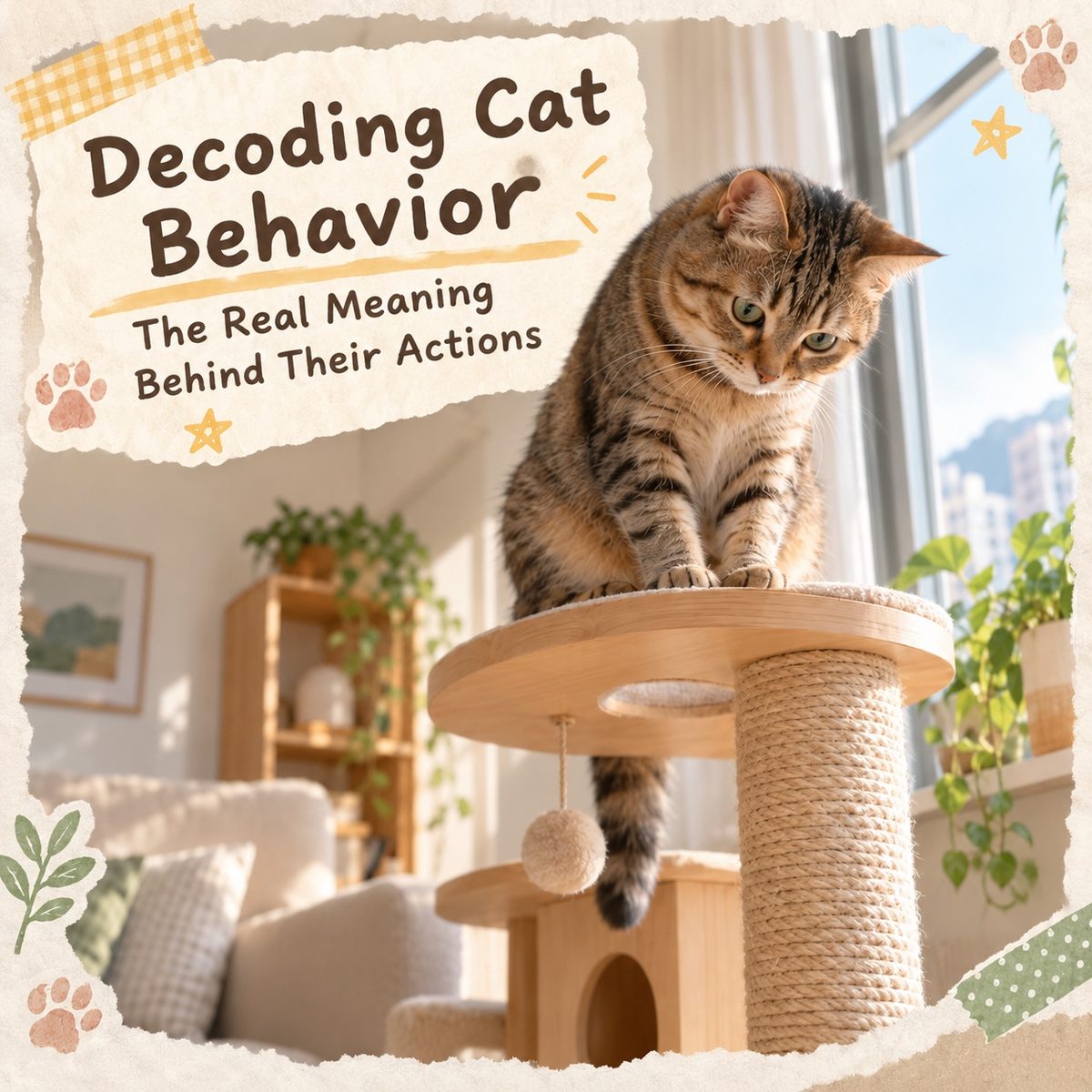
Quick answer: Cat behaviour should not be judged as "good / naughty" but decoded in four steps: context → real meaning → correct response → when to worry. The same action (a belly-up roll, hand-biting, midnight zoomies) can be relaxation or a stress signal; the key is the combination of tail, ears, pupils and body tension. This article's 30-row quick-reference table plus the 🟢🟡🔴 system helps you read your cat in 30 seconds.
Cats don't explain themselves in words, but they send signals every second. The problem is that humans often interpret them "with their own logic": kneading = loves me, belly-up = wants a rub, biting = revenge. These readings are not only wrong, they raise the cat's stress and make behaviour problems worse.
This article is the master index of PetChill's cat behaviour content: start with the quick-reference table, then use the traffic-light system to judge, and finish with the 7-step environment makeover and the red-line list. All behaviour is explained by mechanism, never moral judgement.
3 key points
- Behaviour = context × body-language combination, not a single action; tail, ears and pupils must be read together.
- 🟢🟡🔴 triage: normal (nothing to do) / watch out (change environment and rhythm) / seek help (see a veterinarian or veterinary behaviourist).
- Rule out pain first: when behaviour changes suddenly, the first step is a vet check, not training.
Cat behaviour quick-reference table (30 actions)
| Behaviour | Common context | Real meaning | Triage |
|---|---|---|---|
| Kneading | On your lap, on a blanket | A replay of the kitten's instinct to press the mother's teats = deeply secure; also scent-marking | 🟢 Normal |
| Purring | When petted, sometimes at the vet | Mostly contentment, but cats also purr when tense or in pain (self-soothing) | 🟢🟡 Depends on context |
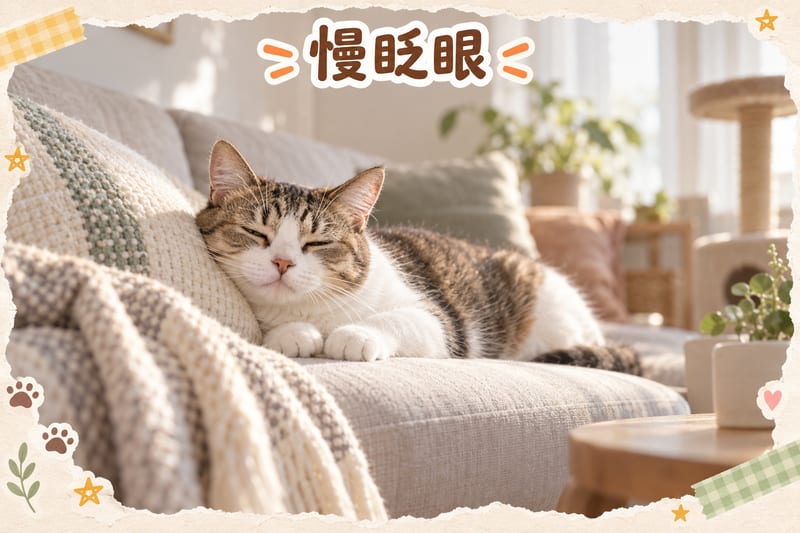
| Slow blink | Slowly closing the eyes during eye contact | A social signal of trust and relaxation | 🟢 Normal |
| Head tilt | Listening, looking at you | Curiosity / locating a sound | 🟢 Normal |
| Head tilt + loss of balance | Persistent tilt, walking crooked | Possible inner-ear or neurological problem | 🔴 Seek help |
| Belly-up roll | Lying down when the environment feels safe | Relaxation plus "I can fight back"; not an invitation to rub the belly | 🟡 Watch out |
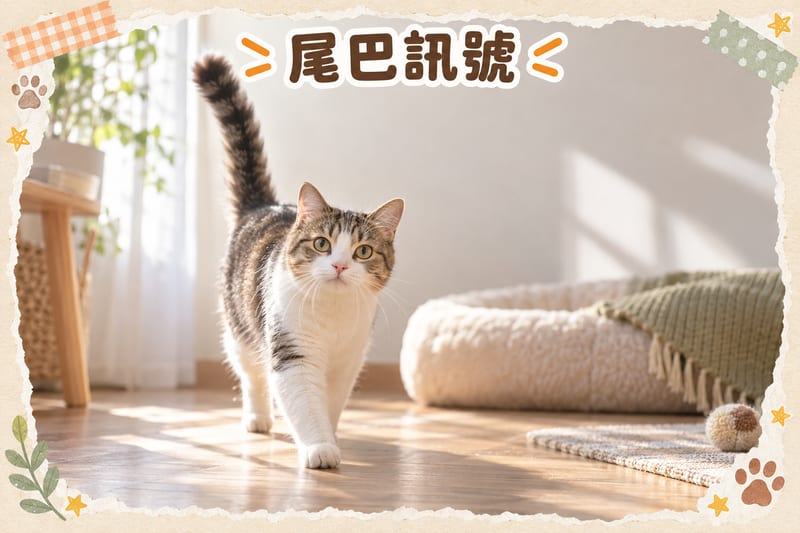
| Tail held high | Walking towards you, roaming the home | Friendly, confident greeting | 🟢 Normal |
| Fast tail swishing | Being held or petted | Over-stimulation, wants you to stop; fast swishing = emotions rising | 🟡 Stop at once |
| Tail tucked / wrapped around body | Unfamiliar environment, new member | Tense, fearful, trying to make itself small | 🔴 Address if it persists |
| Aeroplane ears (ears flattened back) | Being petted, seeing a dog or stranger | Alert, fearful, preparing to defend | 🟡 Stop interacting |
| Dilated pupils | Large even in normal light | Excitement, tension, possibly pain | 🟡 Check the environment |
| Head bunting | Bumping your forehead or legs | Marking you with facial glands = social closeness | 🟢 Normal |
| Face rubbing | Door frames, chair legs, you | Scent-marking, establishing "my territory" | 🟢 Normal |
| Butt wiggle / ready to charge | Seeing a prey-like target | Pre-hunt sway = preparing to pounce | 🟢 Normal |
| Gentle bite (no broken skin) | Mid-interaction | Play bite, or a social boundary meaning "enough" | 🟡 Read the signals |
| Hard bite to the hand | Mid-petting, play getting too excited | Petting-induced aggression / play out of control / pain | 🔴 Assess if frequent |
| Grabbing your ankles | As you walk past | Hunting practice; ankles = moving targets | 🟡 Redirect to a toy |
| Midnight zoomies | Late at night, after using the litter box | A normal burst to release pent-up energy | 🟢 Normal |
| Following you to the toilet | When you leave its sight | Social companionship, curiosity, wanting to be together | 🟢 Normal |
| Sniffing your shoes | When you come home | Reading outside scent intelligence = social behaviour | 🟢 Normal |
| Walking on the keyboard / sitting on books | When you are focused on work | Seeking attention, claiming resources, wanting interaction | 🟢 Normal |
| Sucking a blanket (with kneading) | Recently separated from the mother, stressful periods | A replay of kitten nursing, a form of self-soothing | 🟡 Watch for fabric swallowing |
| Scratching / clawing furniture | On waking, at entrances, sofa corners | Nail maintenance + stretching + scent-marking, an essential behaviour | 🟡 Check placement |
| "Gift-giving" (carrying toys) | Calling to you with a toy | Social sharing / practising carrying prey | 🟢 Normal |
| Tongue out (Flehmen) | After smelling something unusual | Analysing scent molecules with the vomeronasal organ | 🟢 Normal |
| Open-mouth breathing | Not hot, not after intense exercise | Possible pain, heat, heart, lung or breathing problem | 🔴 Seek help |
| Head pressing | Pressing the head against a wall or furniture | A classic sign of neurological abnormality | 🔴 Seek help immediately |
| Over-grooming to baldness | Belly, inner thighs | Stress, skin disease, pain; behavioural or physical causes | 🔴 Seek help |
| Toileting outside the litter box | New environment, new litter, multiple cats | Medical (urinary tract disease) or environmental stress; disease must be ruled out first | 🔴 Seek help |
| Hiding continuously for over 48 hours | Moving house, renovation, new member | Extreme insecurity; may also be illness | 🔴 Seek help |
How to use this table: look at the "Triage" column first, then ask "when did this behaviour start, and when is it most frequent?" If the same behaviour jumps from 🟢 to 🟡 or 🔴, it is usually not a behaviour change but an environment or health change.
The 6 big signals that your cat "doesn't like you" (with the right response)
These are the 6 most commonly misread signals. The point: don't ask "why is it doing that", adjust how you interact right away.
- Fast tail swishing — the first alarm that emotions are rising. Response: stop at once, let go, don't "try one more stroke".
- Ears flattened back (aeroplane ears) — alert / fearful. Response: move out of sight, give an escape route, don't hold on tight.
- Dilated pupils + body leaning back — preparing to defend. Response: don't approach head-on; turn sideways and back away slowly.
- Biting you mid-petting — usually "that's enough petting". Response: note the trigger spot (belly, tail base, back legs), shorten petting sessions, switch to several short interactions a day.
- Actively avoiding you, taking detours, hiding for long periods — stress signals. Response: add high places and hiding spots, reduce noise and stranger traffic.
- Changes in appetite / toileting habits — not "doesn't like you" but a hard signal of a physical or emotional problem. Response: vet check first, then review environmental changes.
One common misunderstanding to clear up: a cat sitting with its back to you, bottom facing you, does not hate you; it usually means relaxation and trust (it doesn't need to keep an eye on you). What really needs attention is "avoiding you", not "turning its back on you".
7-step environment makeover (a practical version of the AAFP/ISFM environmental needs)
The AAFP/ISFM environmental needs guidelines set out five pillars: a safe haven, multiple and separated key resources, opportunities for play and hunting, positive and predictable human-cat interaction, and an environment that respects the value of scent. Here is the at-home version:
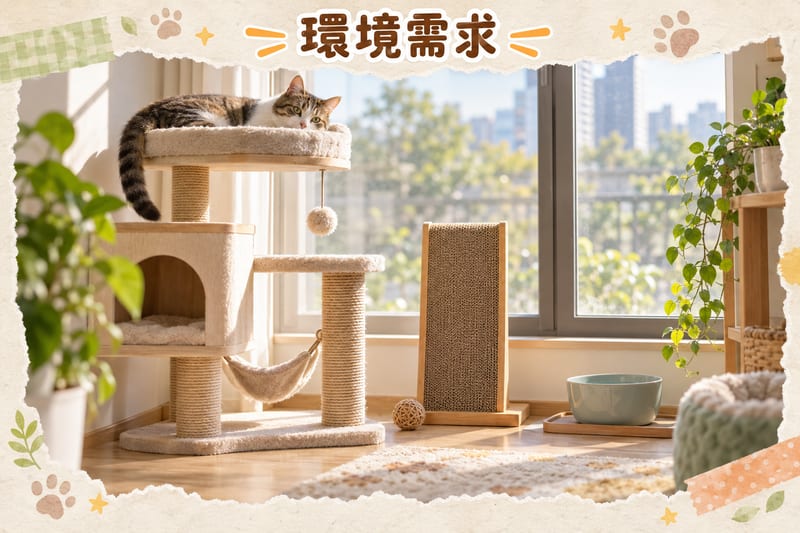
- Provide safe havens (≥3) — high, semi-enclosed, with a view of the entrances. In a new environment or when guests visit, the cat doesn't have to "socialise".
- Spread out key resources — food, water, litter and resting spots in separate places, not clustered in one corner. Resource rule: number of cats + 1.
- Add vertical space — cat trees, shelving, window steps. Height should allow at least a landing spot where the cat can stretch out fully; in small flats, building upwards is the most practical option.
- Scratching post placement formula — one beside the sleeping area, one at the main entrance, one at the sofa corner; at least one horizontal and one vertical, and the post must be tall enough for a full stretch.
- 2 hunting play sessions a day — 10 minutes each, following chase → pounce → catch → eat, finishing with a treat or a meal so the hunting cycle is complete.
- Scent management — no strong fragrances; catnip and pheromone products are aids, not replacements for environmental change.
- Advance warning for changes — for two weeks before and after moving house, renovating or adding a new member: set up a "safe room" with all resources first, so the cat has a retreat.
Environmental change is the first line of handling behaviour problems, ahead of any training method.
Red lines: see a veterinarian or veterinary behaviourist in these cases
- Behaviour changes suddenly (a friendly cat turns fearful, a quiet cat turns aggressive)
- Head pressing, open-mouth breathing, persistent head tilt with loss of balance (neurological / respiratory warning signs)
- Over-grooming to baldness, red swollen skin, symmetrical hair loss
- Toileting outside the litter box (urinary tract disease must be ruled out first)
- Attacking family members, biting until bleeding
- Hiding continuously for more than 48 hours, or refusing food for more than 24 hours
- Howling day and night, obvious anxiety at night
Order matters: veterinarian rules out pain and illness first → environmental change → behaviour modification (if needed, guided by a veterinary behaviourist). Hong Kong has veterinary services offering home visits or clinic behaviour consultations, charged by the hour.
Hong Kong reality: small flats and the humid season
- Small flats, build upwards: in a 200–400 sq ft flat, vertical space is the most effective investment — cat trees, shelving, window spots.
- Humid season: mould and dust mites increase, and itchy skin raises over-grooming / scratching behaviour; dehumidifying and regularly cleaning fabric items matter just as much.
- Small flats with many windows: good daylight is a plus, but watch for "window stress" when the view includes street cats or birds (over-alertness, calling, charging the window); block part of the view if needed.
- Many family members: more stranger traffic means more stress; preparing a safe room and high escape routes works better than soothing afterwards.
Sources
- AAFP/ISFM Feline Environmental Needs Guidelines (five pillars of environmental needs)
- AAFP/ISFM Feline Environmental Needs Guidelines (PMC full text)
- AAFP/ISFM Feline-Friendly Handling Guidelines
- International Cat Care: Problem behaviour in cats
- International Cat Care: Handling and interactions
- International Cat Care: Scratching on furniture and carpets
PetChill's Reminder
Once you can read the behaviour, the next step is the right kit: scratching posts, cat trees, hiding spots and interactive toys are all tools for "channelling the need to the right outlet". PetChill, Hong Kong's pet supplies platform, stocks cat scratching posts, cat trees and interactive toys, so you can choose according to your flat size and your cat's personality.
Disclaimer: This article is behavioural education information and does not constitute veterinary diagnosis or treatment advice. If your cat's behaviour changes suddenly, consult a registered veterinarian first; for long-term behaviour problems, seek help from a veterinary behaviour specialist or a recognised animal behaviour expert.
Related articles
- The complete guide to cat kneading behaviour →
- Cat tail language: 8 tail positions illustrated →
- The complete cat scratching post guide: why cats scratch + placement formula →
- What does a belly-up cat really want? A guide to deciding whether to pet →
- Cat biting: 6 types triage + 5 steps to fix it →
- Recognising and easing (chronic) cat anxiety →
- Handling acute cat stress reactions →
- How to choose a cat tree? Size formula + placement in small Hong Kong flats →
- Cat carrier buying guide + 5 steps of carrier training →
- Decoding cat sounds: meows have meanings too →
- Litter box placement and toileting problems explained →
- Hong Kong new cat owner 90-day roadmap →
📌 Key takeaways
- ✅ Four steps to decode behaviour: context → meaning → correct response → when to worry
- ✅ 30-row quick-reference table + 🟢🟡🔴 triage, a 30-second judgement
- ✅ 7-step environment makeover: safe havens, resources N+1, vertical space, scratching post placement, hunting rhythm, scent, advance warning of changes
- ❌ Don't read behaviour as "good / naughty" or punish it — that only makes signals hidden
- ❌ When behaviour changes suddenly, the first stop is the vet, not a training class
 Feline Natural full guide →
 Fuji One full guide →

