
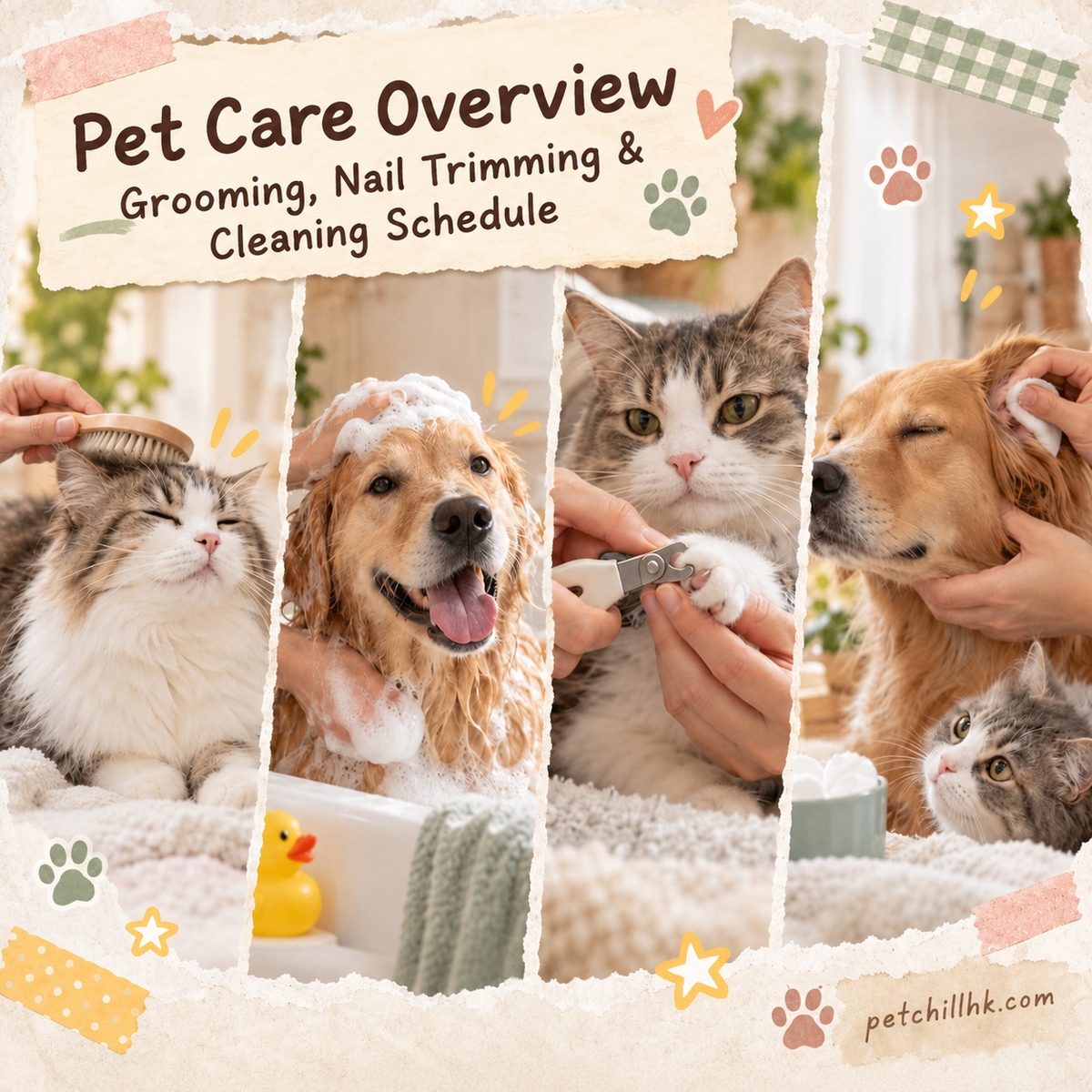
Quick answer: The core of daily care is to fix brushing, nail trimming, ear cleaning, eye cleaning, toothbrushing and weight monitoring into a weekly schedule: for cats, brushing from daily to three times a week, nails about every two to four weeks, and toothbrushing ideally daily; disinfectants must be used at the correct dilution, with good ventilation, and surfaces wiped dry before pets return. If you have any doubts about concentration or usage, ask your veterinarian.
Many Hong Kong owners think "daily care" just means brushing when you have time and giving a bath now and then. In fact, care is a set of procedures with frequency, order and checkpoints: the real value of brushing is not just removing loose fur, but feeling all over your pet's body every week to find problems before they grow. Nail trimming, ear cleaning, eye cleaning, toothbrushing and weighing are the same—each corresponds to the health of an organ system. This pillar article first gives you a schedule you can stick on the fridge, then breaks down techniques, tools and contraindications item by item, and finally addresses the most overlooked part—the safety limits of disinfectants and home cleaning.
Information checked as of 2026-10-12. Sources: World Small Animal Veterinary Association (WSAVA) oral care guidelines, American Animal Hospital Association (AAHA) preventive care guidelines, International Society of Feline Medicine (ISFM) senior cat care guidelines, US Centers for Disease Control and Prevention (CDC) home disinfection recommendations, and Hong Kong Agriculture, Fisheries and Conservation Department (AFCD) public pet care information; product prices are based on current online store prices.
Daily Care Schedule: What to Do Each Week
Care frequency is not random; it is determined by three factors: coat type and breed, age and activity pattern, and whether there is any known disease. Long-haired cats and double-coated dogs need brushing three to four times more often than short-haired cats; pets with joint problems need gentler techniques and shorter sessions, because staying in one position for a long time causes pain; senior pets also need more frequent weight records, because weight change is often the earliest sign of disease.
The schedule below is a general starting point; adjust it to your pet's actual situation. The principle is "short and frequent rather than long and sparse"—five minutes every day is far more effective than half an hour once and then nothing for two weeks, and it is much less stressful for the pet.
| Care item | Recommended frequency for cats | Recommended frequency for dogs | Key checks each time |
|---|---|---|---|
| Brushing | Short hair: daily to three times a week; long hair: daily | Short hair: two to three times a week; long hair or double coat: daily | Skin for rashes, bald patches, lumps, flea dirt |
| Nail trimming | Every two to four weeks | Every three to six weeks (can extend with more walking) | Nails for cracks, nail bed for redness and swelling |
| Ear cleaning | Healthy ears once a month or as needed | Drop-eared breeds every two to four weeks; prick-eared breeds monthly | Odour, colour, pain when touched |
| Eye cleaning | Observe daily; wipe only if discharge | Observe daily; wipe daily if tear staining is obvious | Redness, discharge colour, squinting |
| Toothbrushing | Ideally daily, at least three to four times a week | Ideally daily, at least three to four times a week | Breath, tartar, bleeding gums |
| Weight recording | Adult cats monthly; over seven years every two weeks | Adult dogs monthly; large and senior dogs every two weeks | Unexplained short-term gain or loss |
| Full-body touch check | Once a week, during brushing | Once a week, during brushing | Lymph nodes, abdomen, limb joints for abnormalities |

Brushing: Frequency by Coat Type and Season
Brushing is the highest-return item of all care tasks because it accomplishes three things at once: removing dead hair to reduce hairballs, massaging the skin to promote blood circulation, and giving you an excuse to feel all over the body for checks. Cats shed far more hair daily than owners imagine; without brushing, some loose hair is swallowed and forms hairballs, and the rest floats around the home.
You do not need a full set of tools. For short-haired cats, a rubber glove or fine-toothed comb is enough; for long-haired cats and double-coated dogs, an undercoat rake plus a comb is needed—first deal with the undercoat close to the skin, then use the comb on the top coat. De-shedding tools are suitable for shedding season but not recommended daily, because over-scraping irritates the skin.
Remember three rules: brush in the direction of the coat, work in sections and go slowly, and never pull hard on tangles. Pulling hard not only hurts but also makes pets run away at the sight of a brush, turning every future session into a struggle. Work tangles apart with your fingers, or use a small amount of pet-specific detangling spray; if you really cannot manage, have a groomer cut them out. Brushing is also the best time for a skin check, especially behind the ears, armpits, abdomen and tail base—common sites for fleas and skin disease. For more on brushing techniques and tool choices, see Complete Cat Brushing Tutorial and Cat Brushing Tools and Techniques Guide.
Nail Trimming: How Often, and How to Avoid Cutting the Quick
The most direct consequence of overlong nails is pain. Cat nails curve inward; if too long they pierce the paw pads. Overlong dog nails force the toes to tilt upward, changing the whole gait and increasing joint strain over time. For pets that already have joint problems, nail length deserves extra attention, because every step hurts, so they become less willing to walk and muscle loss follows. For related content, see Daily Care for Pet Arthritis.
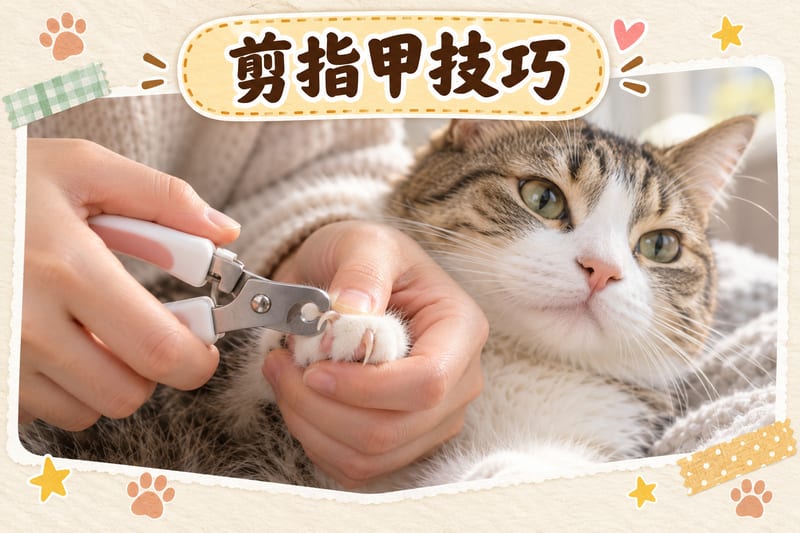
Before cutting, look carefully at the nail structure. In a transparent nail you can see a pink area in the middle containing blood vessels and nerves, commonly called the "quick" by veterinarians. White nails are easier to see; black nails are much harder—cut only a small slice at a time, and stop when a light-coloured small circle appears in the centre of the cut surface. Do not cut all the way in one go.
- Prepare pet-specific nail clippers: scissor-type for cats, scissor or plier type for dogs. Human nail clippers are not suitable and can crack the nail.
- Ensure good lighting, preferably natural light or a desk lamp.
- Hold the pet with its back to you and paws facing up, or let it lie on your lap; do not trim while suspended in the air.
- Gently press the paw pad to extend the nail, trim one by one, and reward with a treat immediately after each.
- After trimming, lightly file the tips to avoid sharp edges scratching floors or people.
- If you accidentally cut the quick and it bleeds, apply styptic powder to the wound, comfort the pet and let it rest; if bleeding does not stop, contact a veterinarian immediately.
Ear Cleaning: Frequency, Tools, and When Not to Clean
A healthy ear canal should be pale pink, clean and free of strong odour. Many owners think the more often ears are cleaned the better, but over-cleaning destroys the ear canal's natural protective layer and actually increases the chance of infection. Healthy cats may not even need regular ear cleaning; just look and smell during each brushing session.
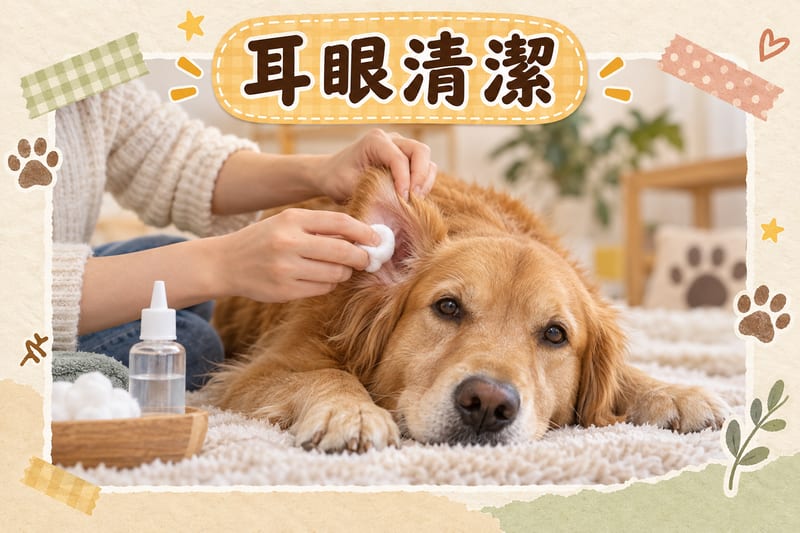
Use a veterinarian-recommended ear cleaner (not human alcohol or hydrogen peroxide), squeeze an appropriate amount into the ear canal, massage the base of the ear for ten-odd seconds, let the pet shake its head, then wipe away the expelled dirt with a cotton ball. Never insert a cotton swab deep into the ear canal—it only pushes dirt deeper and may injure the eardrum. After cleaning, always dry the ear opening with a dry cotton ball; Hong Kong's humid weather makes pooled water in the ear canal a breeding ground for fungi and bacteria.
Do not clean the ears yourself in the following situations; see a veterinarian directly: obvious redness, swelling or heat in the ear canal, yellow-green purulent or abundant black discharge, strong foul odour, pain when you touch the ear, or persistent head shaking and ear scratching. Ear infections require medication targeting the pathogen; cleaning is only supportive and will not resolve them alone.
Eye Care: The Relationship Between Tear Stains, Redness and Diet
The first principle of eye care is "observe more than clean". A daily glance to check whether the eyes are symmetrical, whether there is discharge, and whether the whites are too red is more important than any cleaning action. For cleaning, use a clean cotton ball dipped in saline or warm boiled water, wipe gently from the inner corner outward, and use one cotton ball per eye—do not share between eyes, to avoid cross-infection.
Tear staining is common in flat-faced breeds such as Persian and Exotic Shorthair cats, because their tear ducts are naturally shorter and tears overflow easily. Besides breed factors, distichiasis (ingrown eyelashes), environmental irritants (dust, fragrances, second-hand smoke) and food sensitivity can all increase tear production.
As for the question "is eye redness related to diet changes?" the answer is "possibly, but it cannot be the only explanation". Food sensitivity can indeed cause conjunctival congestion, but redness may also be a sign of conjunctivitis, corneal scratches, foreign bodies, herpesvirus infection and other conditions. In practice: first record the date redness appeared and whether it matches the timing of changing food or treats; if redness lasts more than a day, or is accompanied by discharge, squinting or light sensitivity, stop observing. To learn about elimination diets, see Cat Gastrointestinal Health and Food Sensitivity; for detailed management of eye problems, see Complete Guide to Cat Eye Care.
Remember one thing: human eye drops must not be used on pets. The ingredients, pH and concentration of human formulations may not suit pets, and some preservatives may cause harm. Any eye drops must be prescribed by a veterinarian.
Toothbrushing: Oral Care Is More Than Bad Breath
Periodontal disease is one of the most common health problems in dogs and cats; veterinary dental literature generally indicates that most dogs and cats over three years old have varying degrees of plaque and tartar accumulation. The problem is that oral bacteria do not only affect the teeth: long-term gum inflammation allows bacteria to spread through the blood and is associated with chronic problems in the heart, kidneys and liver. So toothbrushing is not for fresh breath; it is a real investment in whole-body health.
The World Small Animal Veterinary Association (WSAVA) and the American Veterinary Dental College (AVDC) both recommend daily toothbrushing, or at least three to four times a week, because plaque begins to calcify into tartar about two days after formation; once calcified it cannot be brushed away and can only be removed by professional dental cleaning under a veterinarian.
- Use a pet-specific toothbrush: finger brushes suit beginners, double-ended toothbrushes suit pets already used to brushing.
- Use pet-specific enzymatic toothpaste, in flavours such as chicken or malt. Human toothpaste must never be used; fluoride and some sweeteners (such as xylitol) are harmful to pets.
- Do not start brushing immediately; first let the pet lick toothpaste from your finger to build the association that "this taste is good".
- Then use a finger or finger brush to wipe the outside of the front teeth for a few seconds, gradually extending to the back teeth and inner surfaces.
- Reward with a treat and praise immediately after each brushing; keep the whole session to one to two minutes.
- Dental chews, dental treats and dental water additives are only adjuncts; their effect is far less than direct brushing.
If your pet already has obvious bad breath, yellow-brown tartar, red swollen bleeding gums, reduced appetite or chewing on one side, the problem is beyond home care and a veterinary examination and dental cleaning should be arranged. Dental cleaning requires anaesthesia, and blood tests are needed before anaesthesia; this must be assessed by a veterinarian. For the complete oral care process, see Complete Guide to Cat Oral Care.
Bathing: How Often, and How to Choose Shampoo
Cats are almost "self-cleaning" animals; healthy cats generally do not need frequent baths—indoor cats may be bathed every few months, or even once or twice a year, depending on living environment and any skin problems. Dogs depend on breed, skin condition and activity level, generally every three to eight weeks. Over-bathing washes away the skin's surface oils and damages the skin barrier, leaving skin drier and itchier.
Principles for choosing shampoo: pet-specific, gentle, pH-appropriate. Human shampoo is designed for human skin pH and formulation and is not suitable for long-term use on pets. If your pet has skin disease, the frequency and contact time of prescription shampoo (usually needs to stay on for five to ten minutes before rinsing) must follow veterinary instructions; do not adjust on your own.
Before bathing, remember a few safety details: brush out tangles first, use warm water (not hot to the touch), plug the ears with cotton to prevent water entry, rinse thoroughly—residual shampoo is a common cause of itchy skin. After bathing, dry completely, especially the undercoat and abdomen; a damp environment easily triggers fungal problems. Always rinse thoroughly after using scented shampoos, because pets groom themselves and residues will be ingested; for pets with skin or respiratory sensitivity, choose fragrance-free formulas, and ask your veterinarian if in doubt.
For example, Supermoss Cat and Dog Deodorising and Insect-Repelling Shampoo Lavender 500ml is priced at HK$198 (price subject to current online store price) and is a pet-specific formula suitable for households needing both cleaning and odour management. Before using any shampoo, test a small area on the inside of the hind leg and observe for 24 hours for any rash reaction.
Weight Monitoring: The Easiest Home-Made Health Indicator
If I could choose only one home monitoring item, it would be weight. The reason is that weight change usually appears earliest, is easiest to quantify, and requires almost no skill. In cats, chronic kidney disease, thyroid problems, diabetes, and reduced activity due to joint pain often first show up objectively as weight change, but the naked eye often only notices when it is already obvious.
Use fixed conditions: same scale, same time of day, before meals, recorded in the same chart or phone memo. Veterinarians generally look for unexplained significant short-term changes; for example, a weight loss of more than 5% within a month is worth arranging a check-up. Besides weighing, body condition scoring (ribs palpable but not visible, a waistline visible from above) is also a supporting indicator; recording both is most accurate. Weight management and joint care in senior pets are closely related; see Daily Care for Pet Arthritis alongside this.
| Equipment type | Suitable for | Advantages | Notes |
|---|---|---|---|
| Baby electronic scale plus fixed basket | Cats, small dogs | High accuracy, tare function, good value | Choose a model with a flat base and stable readings; use the same basket each time |
| Pet-specific electronic scale (with tray) | Cats, very small dogs | Designed for pets, non-slip, clear units | Larger dogs will exceed the capacity |
| Household scale plus holding the pet | Medium to large dogs | No extra equipment needed | Subtract two readings; greater error; use same scale and posture |
| Smart pet scale (connected to phone app) | Households needing long-term trend records | Automatic recording, trend graphs, reminders | Higher price; data for reference only; abnormalities still need veterinary judgement |
Disinfectant Safety: Iodine Tincture, Povidone-Iodine, White Vinegar, Bleach
This section is the most important part of the whole article, because the vast majority of pet poisoning cases caused by household cleaning products arise from "the owner thought it was safe". The biggest difference between pets and humans is that they live close to the floor, lick their fur and paws, and have a sense of smell many times more sensitive than humans. A cleaning concentration that is completely fine for humans may already be irritating or even toxic to pets.
First, four general rules: 1. Dilute according to product instructions; do not think "stronger means cleaner". 2. Keep good ventilation during cleaning, preferably isolating pets in another room. 3. Pets must never be able to lick undried cleaning surfaces or tools. 4. After cleaning, wipe again with clean water and wait until the surface is completely dry before letting pets return.
The difference between iodine tincture and povidone-iodine is the solvent: iodine tincture is iodine plus alcohol and is more irritating; povidone-iodine is an aqueous solution of iodine and povidone and is less irritating, so veterinarians more often recommend povidone-iodine. It is mainly for disinfecting very small superficial wounds and for post-operative care under veterinary instruction. Daily home cleaning generally does not require iodine, and it should never be used to wipe the ear canal or around the eyes. Large, deep or persistently oozing wounds, and any questions about concentration or frequency, must be decided by a veterinarian.
White vinegar is a natural cleaning alternative many people use. Diluted white vinegar itself has low toxicity to cats, and acetic acid has some antibacterial effect, but it has several practical limitations: acetic acid irritates the respiratory tract and skin and is unfriendly to pets with sensitive airways or skin wounds; acidic solutions corrode some stone and metal surfaces; most importantly, acetic acid cannot kill all pathogens and should not be treated as a disinfectant. After cleaning, always wipe again with clean water and wait until the surface is completely dry.
Bleach (sodium hypochlorite) is the highest-risk category. The US Centers for Disease Control and Prevention (CDC) suggests a dilution of about five tablespoons of bleach per gallon of water for home disinfection, but even diluted, if pets lick it, it can cause burns to the mouth and digestive tract. Two iron rules must be remembered: diluted bleach must never be mixed with acidic cleaners (such as white vinegar) or ammonia-containing cleaners, because toxic chlorine gas or chloramine is produced; when using it, open windows for ventilation and completely isolate pets.
Two other categories need special attention: phenol-containing (phenolic) cleaners are especially dangerous for cats, because cats' livers have limited ability to metabolise these substances, and contact can cause severe poisoning; essential-oil-containing cleaning products also carry risks—tea tree oil, eucalyptus and some citrus essential oils are known to be toxic to cats, so do not use them on surfaces pets contact.
| Disinfectant/cleaning product | Common use | Safe-use points | Main risks |
|---|---|---|---|
| Povidone-iodine (aqueous) | Very small superficial wounds, post-operative care under veterinary instruction | Small areas, short duration only; avoid eyes, ear canal, mucous membranes | Large-area long-term use can be absorbed through skin; must follow veterinary instructions |
| Iodine tincture (alcohol-containing) | Same as above, more irritating | Not recommended for open wounds on pets without veterinary advice | Alcohol stings, irritates inflamed tissue |
| Diluted white vinegar | Wiping counters, removing limescale, deodorising | Wipe again with water after cleaning, dry completely, keep ventilated | Irritates respiratory tract; does not fully disinfect; corrodes some surfaces |
| Diluted bleach | Floors, toilets, disinfection after pet waste | Dilute as instructed, use alone, isolate pets, ventilate well, wipe with water | Licking can cause burns; mixing with acidic or ammonia cleaners produces toxic gas |
| Phenol-containing cleaners | Traditional disinfectants | Avoid in households with cats | Cats have limited metabolism; high risk on contact |
| Essential-oil-containing cleaning products | Fragrance, natural cleaning | Avoid on surfaces pets contact | Tea tree oil, eucalyptus, some citrus are toxic to cats |
Home Environment Cleaning: Cat- and Dog-Friendly Practices
The relationship between environmental cleaning and pet health is more direct than many imagine. In damp, dust-mite-heavy, poorly ventilated flats, skin and respiratory problems increase noticeably, especially during Hong Kong's humid spring and plum rain season. The goal of cleaning is not "sterile" but "dry, ventilated and orderly".
For feeding utensils, food and water bowls should be washed daily and water changed daily. Cat water bowls are best placed away from food and the litter box, because cats naturally dislike drinking near food or elimination areas; the wrong location can lead to low water intake and increase long-term urinary risk. Scoop the litter box at least daily, partially or fully change litter weekly, and thoroughly clean with a pet-friendly cleaner monthly and dry completely. Beds, blankets and washable toys should be washed every two to four weeks.
Environmental hazard checks are also part of daily care. Cables should be tidied or covered with protective tubing, especially during kitten and puppy stages; some plants are toxic to pets—lilies are especially dangerous to cats, so do not keep them in a cat household; when using mosquito coils, insect sprays, glue traps and some pest-control products, ensure pets are not present. Controlling humidity and maintaining air circulation are the most effective home measures for preventing fungal skin problems; combine with Cat and Dog Skin Health Care for best results.
When to See a Veterinarian Immediately
The value of daily care is early detection, but it cannot replace diagnosis. If any of the following occur, stop home observation and arrange a veterinary examination as soon as possible: difficulty breathing or rapid breathing, persistent vomiting or diarrhoea, sudden refusal to eat or drink for more than a day, extreme lethargy or inability to stand, seizures, ingestion of cleaning products or medication, heavy bleeding, obvious abdominal distension, sudden eye swelling or corneal clouding, difficulty urinating (especially critical in cats).
In emergencies, contact a veterinarian immediately; this article is for reference only and cannot replace veterinary diagnosis. Any questions about dosage, medication, or management of cleaning-product exposure must be judged by a veterinarian or pet poison consultation service; do not induce vomiting or give medication on your own.
Summary: Start Building a Care Calendar Today
Daily care does not need to be perfect all at once. The most effective way to start is to pick three things: brushing, weight recording and toothbrushing. Do brushing and toothbrushing daily, weigh monthly; these three already cover the three most common health signals: skin, oral health and weight trends. Nails, ears and eye cleaning can be added according to the schedule, and bathing arranged as needed.
Also remember that the safety limits of home cleaning are just as important as care techniques: dilute disinfectants according to instructions, ventilate, isolate pets, and wipe dry before letting them return; avoid phenol-containing and essential-oil-containing cleaning products. Get both sides right, and your pet's daily health is largely in your hands. For more detailed techniques on individual items, see the feature articles on the PetChill Blog and adjust the pace to your pet's breed, age and health condition.
This article is for reference only and cannot replace veterinary diagnosis; in emergencies, contact a veterinarian immediately.
 Feline Natural full guide →