Quick answer: Most digestive problems in cats and dogs are short-lived, but "mucus in stool, persistent vomiting, bloody diarrhoea, or a simultaneous decline in energy and appetite" are warning signs. First-line action is to keep a fresh stool sample and record frequency and appearance; do not give human medication on your own. Probiotics are only supportive and cannot replace a veterinarian's diagnosis. When giving probiotics alongside antibiotics, it is generally advised to space them about two hours apart.
The digestive tract is one of the systems most frequently exposed to the outside world: food, parasites, bacteria, medication and stress all affect it directly. Many owners hesitate the first time they see soft stool or vomiting—"Should I go to the vet right away?"—too much anxiety wastes consultation fees, too little may miss warning signs. This article fills that gap in judgement: recognise symptoms clearly, read stool, understand the real role of probiotics and hydrolysed protein, and know which situations cannot wait.
Information checked as of 2026-10-12. Sources: American College of Veterinary Internal Medicine (ACVIM) consensus guidelines on gastrointestinal disease, World Small Animal Veterinary Association (WSAVA) standardised gastrointestinal guidelines, International Society of Feline Medicine (ISFM) feline care guidelines, and PetChill database compilation.
Why digestive problems are one of the most common reasons for veterinary visits
Digestive problems in cats and dogs can present very differently. Dogs mostly show acute diarrhoea and vomiting, often linked to scavenging, food changes or contact with unclean environments outdoors; cats more often have soft stool, chronic weight loss and a gradual decline in appetite, and owners may not notice for weeks. This difference comes from two reasons: first, cats are better at hiding discomfort and may still eat and play in the early stages; second, the feline gut is more sensitive to food ingredients and stress, so problems may not erupt all at once but accumulate slowly.
The digestive tract is also one of the body's largest immune organs. Chronic irritation of the intestinal lining not only affects digestion and absorption but can also make pets tired, dull their coat and make weight hard to maintain, so digestive management is really part of daily diet and environmental management.
1. Symptom comparison: telling vomiting, diarrhoea, soft stool and mucus apart
"Digestive upset" can look very different, and the underlying causes and urgency vary greatly. The table below helps you locate the problem quickly, but remember it is only a guide and cannot replace veterinary examination.
| Symptom | Common possible causes | When to see a veterinarian immediately |
|---|---|---|
| Occasional vomiting (hairballs, whole kibble) | Hairballs, eating too fast, food transition | More than twice a week, or marked lethargy after vomiting |
| White foam or stomach fluid | Empty stomach for too long, excess stomach acid | Several consecutive days, or increased water intake at the same time |
| Yellow-green bile | Biliary problems, pancreatitis, intestinal obstruction | Warning sign; see a vet the same day |
| Blood in vomit (bright red or coffee-coloured) | Gastritis, gastrointestinal ulcer, swallowed sharp foreign object | Emergency; see a vet immediately and keep the sample |
| Watery diarrhoea but normal energy | Food transition, food intolerance, mild gastroenteritis | No improvement within 24 hours, or energy starts to drop |
| Mucus coating formed stool | Mild irritation of the large intestine lining, parasites, stress | Lasts more than 2-3 days or recurs |
| Jelly-like bloody mucus stool | Colitis, parasites, foreign body | Warning sign; see a vet the same day |
| Straining but unable to pass stool | Dehydration, hairballs, insufficient fibre, megacolon | No stool for over 48 hours, or vomiting at the same time |
The most easily overlooked row is "watery diarrhoea but normal energy". Many owners relax because the pet still eats and plays, but if diarrhoea continues, water and electrolyte loss can be rapid, especially dangerous for kittens and puppies. Conversely, an occasional hairball vomit followed by normal play usually does not require a midnight clinic visit. For detailed guidance on vomiting and home first aid, see the Cat Vomiting Guide.
2. Reading stool with the faecal scoring chart
Veterinarians internationally commonly use a 7-point faecal scoring chart, from 1 (hardest) to 7 (completely watery). Hong Kong owners do not need to memorise the whole chart, but being able to roughly classify into three groups—too hard, ideal, too soft—is enough, because this is the most valuable objective information when communicating with your veterinarian.
| Score | Appearance | Meaning | Suggested action |
|---|---|---|---|
| 1 | Dry hard pellets, does not break when picked up | Constipation | Increase water and wet food proportion; consult a veterinarian |
| 2 | Formed but hard, no residue when picked up | Slightly hard | Increase water and moderate fibre |
| 3 | Formed, like soft ice cream, leaves slight residue when picked up | Ideal | Maintain current diet and routine |
| 4 | Soft but still formed | Slightly soft | Observe; check food transition speed and treats |
| 5 | Very soft, only a little shape left | Soft stool | Check diet and parasites; consider probiotic support |
| 6 | Watery, with some shape remaining | Diarrhoea | Record, hydrate, consult a veterinarian |
| 7 | Completely watery, no shape | Severe diarrhoea | See a vet as soon as possible; watch for dehydration |
The biggest advantage of the chart is that you can track trends rather than a single moment. A cat gradually moving from 3 to 4 to 5 is often more noteworthy than a single sudden soft stool, because slow changes usually reflect chronic intestinal problems rather than a single bad meal.
3. What is mucus in stool? Is it normal?
Mucus is a natural protective layer secreted by the large intestine lining, lubricating and isolating irritants. So a very small amount of clear or pale yellow mucus on the outside of stool is not a disease in itself. The issue is "amount" and "frequency".
The following are relatively normal: one or two thin streaks of mucus during a food transition; a little mucus at the end of a bowel movement but overall formed stool and normal energy and appetite.
The following are abnormal and need veterinary assessment: mucus so abundant it is jelly-like or snot-like; mucus with blood streaks or dark red; mucus stool lasting more than 2-3 days or recurring; accompanied by soft stool, weight loss, reduced appetite or frequent straining.
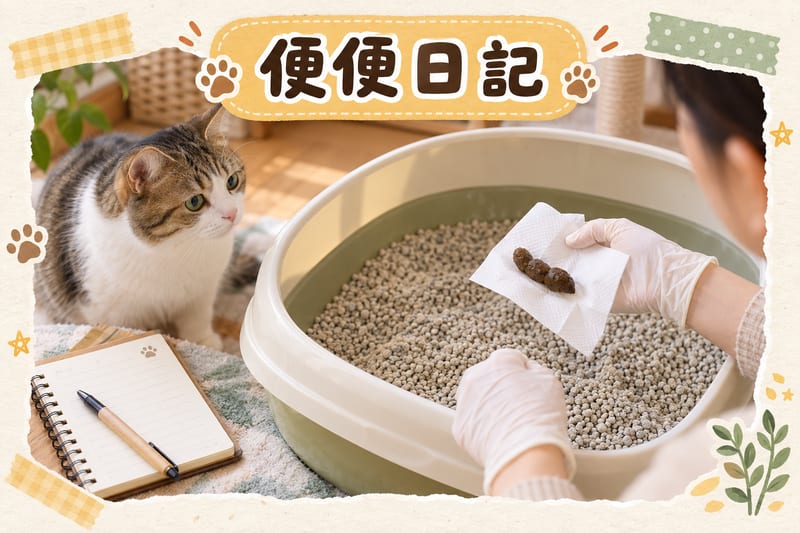
Common causes include parasites (such as Giardia, coccidia), colitis, food intolerance, foreign body irritation and stress-related diarrhoea. These cannot be distinguished by eye and usually require faecal testing. The most practical approach: photograph the abnormal stool with your phone, collect a fresh sample in a clean container (ideally within two hours) and take it to the veterinarian; remember to wash your hands afterwards.
4. How to tell acute diarrhoea from chronic intestinal problems
Acute diarrhoea generally means lasting less than 1-2 weeks, most commonly caused by too-rapid food transition, eating something inappropriate, mild gastroenteritis or stress. Many of these improve within a few days after adjusting diet and ensuring adequate hydration.
Chronic intestinal problems are symptoms lasting more than three weeks or recurring. Features usually include: intermittent soft stool alternating with normal stool, gradual weight loss, normal appetite but poor absorption, coarser coat, occasional vomiting. Chronic cases usually need more investigations, and some require biopsy to determine whether it is food-responsive enteropathy, inflammatory bowel disease or another cause.
The practical significance of distinguishing acute from chronic is "don't guess". Acute cases can be observed for a day or two; chronic cases should have a complete history established early, and that history depends on your daily records.
5. Managing antibiotic-associated diarrhoea and constipation
Antibiotics suppress both pathogenic bacteria and beneficial gut bacteria; the resulting imbalance is the most common cause of diarrhoea. This usually appears within a few days of starting medication and is a known side effect; it does not necessarily mean stopping the drug—but you must not stop on your own, because interrupting the course can lead to relapse or resistance.
Management can be divided into four steps:
First, maintain adequate hydration. Water loss is rapid during diarrhoea; use multiple water bowls, a flowing fountain or wet food to increase intake.
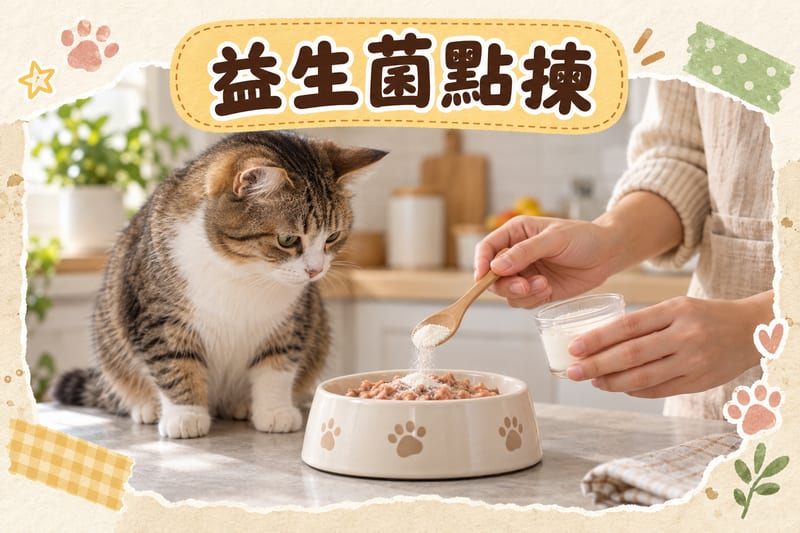
Second, confirm the role and timing of probiotics with your veterinarian. It is generally advised to space probiotics about two hours apart from antibiotics to avoid the antibiotic killing the newly ingested bacteria. Always follow veterinary instructions.
Third, feed an easily digestible diet. Temporarily keep the food the pet is already used to; do not switch to a new food during medication, as this makes it hard to tell whether diarrhoea is due to the drug, the diet or the illness.
Fourth, record changes. Note daily bowel movement frequency, score, food intake and energy. If diarrhoea contains blood, is very frequent, is accompanied by vomiting or complete loss of appetite, contact your veterinarian immediately.
As for constipation, it is less often directly caused by antibiotics and is usually related to three factors: insufficient water intake, reduced fibre intake due to decreased appetite, and reduced activity. Consider increasing the proportion of wet food, providing plenty of fresh water, and using interactive toys to maintain activity. If there is no bowel movement for over 48 hours, or the pet strains without passing stool and vomits, seek veterinary care promptly. For more comprehensive medication and pill-giving tips, see the Cat Medication Guide.
6. Main reasons for appetite loss during antibiotics
Reduced appetite is another common problem during antibiotic courses, especially in cats. Main reasons include:
Bitter taste of medication. Many pills are bitter; when cats taste it they drool, refuse food, and may even become wary of all food. Giving a little water or a small favourite treat after medication helps rinse bitter residue from the mouth.
Gastrointestinal discomfort. Antibiotics may cause nausea, bloating or mild abdominal pain, making the pet reluctant to eat.
Gut flora imbalance. Changes in flora affect digestive efficiency and appetite regulation.
The underlying illness itself. Infection makes pets tired, feverish and weak, naturally reducing appetite.
The key is "don't wait until the pet eats nothing at all". Try slightly warmed wet food or prescription canned food to increase aroma and palatability, and divide the daily portion into several small meals. Note: if a cat eats nothing for more than 24 hours, there is a risk of fatty liver, which requires veterinary intervention and should not be dismissed as "will be fine in a couple of days".
7. Choosing probiotics: strains, dosage and storage
Probiotics are supportive tools, not medicines. They help during food transitions, antibiotic courses, mild soft stool and stress-related diarrhoea, but will not help manage parasite infections or intestinal obstruction. When choosing, look at three things: strain, live bacteria count, and storage method.
| Type | Common strain directions | Suitable situations | Notes |
|---|---|---|---|
| Cat chewable tablets or powder | Enterococcus faecium, Bifidobacterium animalis | Food transition, antibiotic course, mild soft stool | Note storage temperature; space about two hours from antibiotics |
| Dog digestive chew treats | Lactobacillus, Bacillus, etc. | Chronic soft stool, poor appetite, sensitive gut | Choose number of pieces by weight; note treat proportion of daily calories |
| Prebiotic or fibre supplements | Psyllium, fructo-oligosaccharides | Large bowel diarrhoea, soft stool | Must be paired with adequate water, otherwise may worsen bloating |
| Prescription intestinal formulas | Contain prebiotics and hydrolysed or hypoallergenic protein | Chronic digestive upset, food-responsive enteropathy | Requires veterinary assessment; part of long-term dietary management |
Storage is the most overlooked aspect. Live bacteria dislike heat, moisture and light; after opening, store according to label instructions and keep away from the kitchen stove or windowsill. Also, probiotic effects depend on strain, dose and the pet's individual condition.
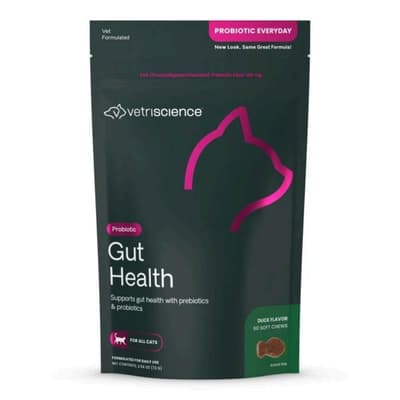
For actual products, cats can consider VetriScience Probiotic Chewable Tablets for Cats, 60 tablets (duck flavour), priced at HK$195 (price subject to the live price on the online store); the chewable form makes portion control easy. Dogs can consider Nulo Functional Health Chewable Dog Treats, Probiotic Digestive System Formula, 90 pieces, priced at HK$380 (price subject to the live price on the online store), designed for both digestive and general health. Both are supportive in nature; any persistent or worsening digestive symptoms still require veterinary diagnosis.
8. Beyond probiotics: prebiotics, fibre and water
To improve digestion, probiotics alone are usually not enough. Prebiotics are "food" for probiotics, such as chicory fibre and fructo-oligosaccharides; fibre is divided into soluble and insoluble, the former helps regulate soft stool, the latter supports intestinal motility and improves constipation. Psyllium is a common soluble fibre but must be paired with plenty of water.
As for water, it can be called the cheapest and most effective digestive helper—cats naturally drink little, so increasing wet food proportion, using a flowing fountain and placing more water bowls can reduce constipation and urinary problems.
9. Hydrolysed protein and sensitive guts
The principle of hydrolysed protein formulas is to break whole protein molecules into shorter peptides, making them less recognisable to the immune system and thus reducing adverse food reactions. For confirmed food sensitivity, food-responsive enteropathy or chronic diarrhoea, veterinarians sometimes recommend an 8-12 week dietary trial, during which only the specified formula is fed and no treats or human food are allowed.
When choosing a hydrolysed protein formula, note three points: degree of hydrolysis (partial vs extensive hydrolysis differ), protein source (some use feather hydrolysate, others casein or soy), and whether it is also low-fat and hypoallergenic. Several international brands offer such formulas, but prescription and non-prescription hypoallergenic formulas have different roles, and long-term switching should not be done on your own.
This involves overall nutritional balance; if you want to build basic concepts first, see the Cat Nutrition Complete Guide to understand the roles of protein, fat, vitamins and fibre before discussing formula changes with your veterinarian.
10. Stress-related digestive problems
Many owners do not know that emotions and digestion are directly connected. Moving house, renovation, a new family member (human or pet), boarding, long car journeys can all cause diarrhoea or soft stool, sometimes called stress gastritis or stress-related diarrhoea by veterinarians.
Identify by timeline: symptoms usually appear 1-2 days around the event, there is no fever, energy is generally still okay, and they gradually improve once the environment stabilises. The key is to "reduce simultaneous changes", for example, do not change food during a move. In multi-cat households, increase resource points to reduce chronic stress from competition.
11. Practical dietary management: food transitions, portions and wet food
First, use the 7-day transition method. Days 1-2: new food about one quarter; days 3-4: about half; days 5-6: about three quarters; day 7: fully new food. If soft stool occurs, go back to the previous stage's ratio and stabilise for a few days before advancing. This is especially important for cats, as their gut adapts to new food more slowly than dogs.
Second, small frequent meals. Change from two meals a day to three or four, reducing the digestive load per meal and also reducing vomiting from eating too fast.
Third, increase the proportion of wet food. Wet food has high water content, especially valuable for cats that drink little. Transition to wet food gradually as well; do not switch all at once.
Fourth, count treats in total calories. Many cases of "poor digestion" are actually related to excessive treats; choose products with simple ingredients.
12. Ingestion and poisoning: another line behind digestive symptoms
Vomiting and diarrhoea are sometimes not primarily digestive problems but caused by ingestion. Common examples include onion, garlic, chocolate, raisins and grapes, xylitol, and some household plants and medications. These cases usually come on quickly and may be accompanied by drooling, seizures, lethargy and other neurological signs.
The principle: do not induce vomiting on your own, do not give human medication, contact a veterinarian immediately and be ready with three pieces of information: "what was eaten, how much, when". To learn the common dangerous food list and management flow first, see the Cat & Dog Ingestion and Poisoning Guide.
13. Home monitoring and records: what veterinarians most want to see
The following is a practical home record checklist that is extremely helpful at follow-up visits.
| Record item | How to record | Purpose |
|---|---|---|
| Bowel movement frequency and time | Record by time period daily | Distinguish constipation, diarrhoea and abnormal frequency |
| Faecal score | Use the 1-7 scale | Track trends; more reliable than single observations |
| Vomiting frequency and content | Photograph each time | Help the veterinarian judge severity |
| Food and water intake | Measure with the same container | Early detection of appetite loss and increased drinking/urination |
| Weight | Weigh once weekly at a fixed time | Important indicator for chronic intestinal problems |
A phone note or simple table is enough; the key is consistency.
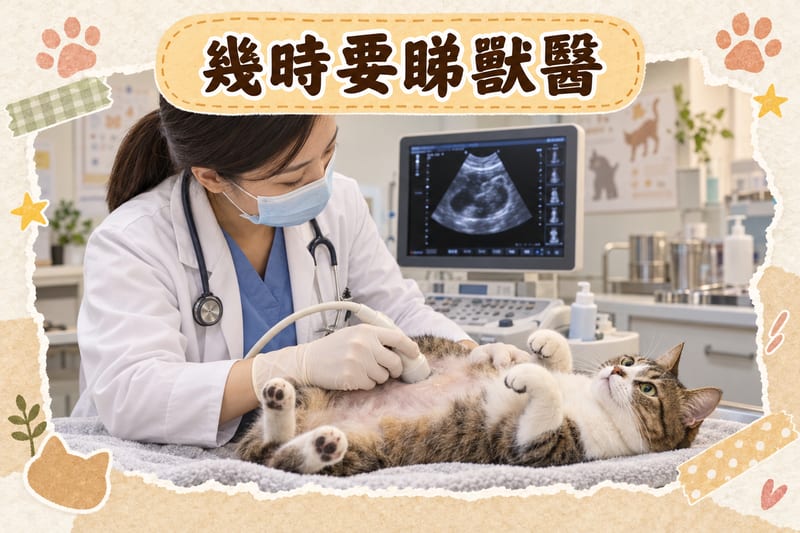
When to see a veterinarian immediately
The following are warning signs; home observation is not advised: vomiting or diarrhoea not improving after more than 24 hours; blood in vomit or stool, black or coffee-coloured; persistent vomiting, retching without producing anything; obvious abdominal distension or crying when touched; lethargy, complete loss of appetite, sudden large increase in water intake; any digestive symptoms in kittens, puppies, senior pets or those with chronic illness.
Safety reminder: For any of the above emergencies, contact a veterinarian immediately; this article is for reference only and cannot replace veterinary diagnosis. Any decision about medication, dosage, prescription food and supplements must be made by a veterinarian based on the pet's actual condition; never self-medicate or stop medication on your own.
PetChill's Reminder
What digestive problems test most is not knowledge but "observation habits". Spend 30 seconds a day glancing at stool and noting food intake, and after a month your understanding of your pet will be completely different. Good food transition management, adequate hydration and reducing sudden environmental changes will already prevent most digestive problems.
If your pet has recently shown digestive symptoms and you want to start with daily health support, browse PetChill HK's cat and dog digestive health product range; probiotics, intestinal formulas and wet food are in stock, and free pickup is available at the Fo Tan, Yuen Long and Fanling stores. Remember: health products are supportive; if symptoms appear, see a veterinarian first.
 Feline Natural full guide →