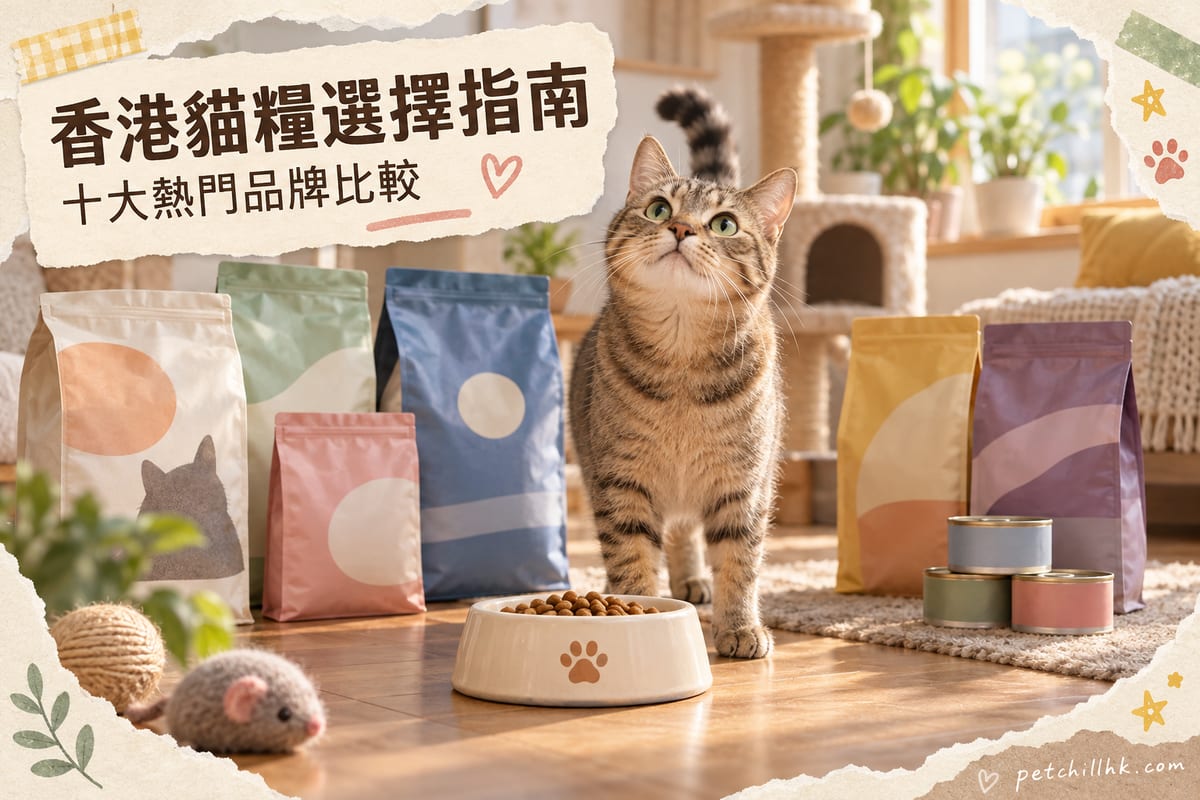
Quick answer: Cat food recommendations: three steps for choosing cat food in Hong Kong: first set a daily budget, then pick a protein percentage by life stage (kitten / adult / senior), and finally check whether the first five ingredients are meat. Dry food is convenient enough, wet food is the most effective way to add hydration, and freeze-dried and air-dried are expensive but high in meat content.
This article compares the protein, price range and suitable users of 10 popular cat food brands in Hong Kong in 2026: choose Orijen and ZiwiPeak for quality, Wellness Core for high cost-effectiveness, and Royal Canin and Hill's for prescription food. The core of choosing food is meeting the protein target and having meat in the first five ingredients.
Quick choice: match directly by need
Don't want to read the whole article? Match your situation first, then go to the details in that section.
| Your situation | Suggested route | Check before ordering |
|---|---|---|
| Healthy adult cat, tight budget | Mainly large-bag high-protein dry food, one complementary wet food meal a day for hydration | Crude protein ≥30%, first five ingredients are meat |
| Indoor cat that only eats dry food and drinks little water | Dry food + one can of complete wet food a day | Canned food must state "complete and balanced" |
| Kitten (<1 year) | Kitten formula (dry food or mousse wet food) | Crude protein ≥35%, small kibble that is easy to bite and crush |
| Senior cat (>7 years) | Senior formula (easy to digest) | Crude protein ≥28%, watch phosphorus for cats over 10 |
| Neutered, prone to weight gain | Weight control formula or smaller portions | Weigh monthly, check kcal label to calculate portions |
| Vet-diagnosed kidney disease / urinary problems | Prescription food | Requires vet guidance, do not switch long-term on your own |
Three-sentence summary: protein should be animal-based, hydration matters more than brand, no single food suits all cats.
How to choose dry cat food? Three things to check
Many people search "dry cat food recommendations", but what you actually need to check is three things on the packaging:
| Check point | Standard | What to do if it fails |
|---|---|---|
| Crude protein (dry matter basis) | Adult ≥30%, kitten ≥35%, senior ≥28% | Check whether plant protein is making up the numbers |
| First five ingredients | Mostly animal-based ingredients (chicken, turkey, salmon, chicken liver) | Think twice if corn, wheat or soy appear near the top |
| Calorie labelling | Has kcal/kg or kcal/can | Convert by weight according to the feeding guide on the packaging, don't just pour by feel |
The biggest advantage of dry food is convenience and scheduled feeding; the biggest disadvantage is a moisture content of only about 8–12%; even if you choose dry food that meets the standard, it is recommended to pair it with a water fountain or one complete wet food meal a day for hydration. Budget first: large-bag dry food has the lowest price per kilogram, and $200–300 a month is already enough to choose options that meet the protein target; hydration first: mainly dry food plus one can of complete wet food a day.
What are cat food recommendations? Read the key points in 30 seconds
"Cat food recommendations" is not a brand ranking, but a method of matching food types to a cat's life stage, health condition and monthly budget. The same food can be a good choice for a healthy adult cat and completely unsuitable for a senior cat with kidney disease. The table below shows the dimensions Hong Kong owners most commonly use to judge, and later sections break down price, suitable users and common misunderstandings one by one.
Direct answer for cat food recommendations in Hong Kong: For a 4kg indoor adult cat, the practical plan is mainly high-protein dry food (about $4–11 a day) + one can of complete wet food a day for hydration (about $12–30 per can), with monthly food expenses of about HK$400–1,200. The first step in choosing food is to check three things on the packaging: the first five ingredients are meat, crude protein on a dry matter basis ≥30% (kitten ≥35%), and an AAFCO "complete and balanced" statement.
| Item | Core indicators for cat food recommendations |
|---|---|
| Adult cat protein | Dry matter basis ≥30% (kitten ≥35%, senior ≥28%) |
| First five ingredients | Mostly animal-based ingredients (chicken, turkey, salmon, chicken liver) |
| Complete nutrition statement | AAFCO / FEDIAF "complete and balanced" wording |
| Dry food moisture | About 8–12% (needs additional hydration) |
| Complete wet food moisture | About 78–89% (most effective for hydration) |
| Common price range in Hong Kong | Dry food about $25–90 per kg; complete wet food $100–187 per kg |
| Daily cost | Dry food about $4–11/day; all-wet about $27–74/day |
| Monthly food expenses | About HK$200–1,000 (depending on dry/wet ratio) |
| Fastest effective step | Check the first five ingredients and protein percentage on the packaging |
Three basics you must know:
- Look at whether protein is "animal-based", not just the number — the label meets the target but plant protein makes up the numbers, and nutrition is a notch lower.
- Hydration matters more than brand — cats have a dull thirst sensation, and chronic dehydration is directly linked to urinary and kidney problems.
- No single food suits all cats — kittens, adult cats, senior cats and cats with kidney disease have completely different needs.
Cat food recommendation prices and monthly expenses (2026 Hong Kong market)
Price should be viewed on two levels: one-off start-up costs (food container, water fountain, first batch of stock) and monthly recurring expenses. The table below shows actual ranges in Hong Kong; figures are for reference only, check each item against the packaging label before ordering.
| Item | Range (HK$) | Notes |
|---|---|---|
| First batch of dry food (5kg large bag) | 200–450 | $40–90 per kg |
| First batch of complete wet food (24 cans) | 290–720 | $12–30 per can |
| Airtight food container + scoop | 80–250 | Hong Kong is humid, airtight is essential |
| Flowing water fountain | 200–500 | Most effective for increasing water intake |
| Monthly dry food | 200–500 | Lower per kg in large bags |
| Monthly complete wet food (one can a day) | 360–900 | Biggest variable in daily cost |
| Monthly cat litter | 120–250 | A recurring expense |
| Monthly deworming + supplements | 80–200 | Calculated pro rata |
| Annual vaccine booster | 300–600 | One injection |
| Medical reserve (recommended) | 200–500/month | For unexpected medical costs |
| Monthly total | About HK$400–1,200 | Excludes neutering and unexpected medical costs |
Three suggested budget routes:
- $200–300 a month: mainly large-bag dry food (Royal Canin and Hill's have full prescription lines; Wellness Core is good value), one complementary wet food meal a day for hydration.
- $300–500 a month: mid-priced high-protein dry food (CANAGAN, ACANA, Instinct) + 2–3 cans of complete wet food a week.
- Over $500 a month: freeze-dried or air-dried (ZiwiPeak, K9 Natural, Feline Natural) + daily complete wet food.
The easiest thing to underestimate is the expense once the wet food ratio goes up: the daily cost of all-wet is 3–7 times that of dry food. The practical approach is "mainly dry food, one can a day as a supplement", no need to go all-wet in one step.
Who are cat food recommendations suitable for?
| Owner situation | Suggested route | Reason |
|---|---|---|
| Beginner, single cat, healthy adult cat | Mid-priced high-protein dry food + one can a day | Easy to follow, controllable cost, enough protein |
| Tight budget, multi-cat household | Large-bag dry food + 2 cans a week | Lowest price per kg |
| Kitten (<1 year) | High-protein, high-fat kitten formula | Growing stage needs ≥35% protein |
| Senior cat (>7 years) / cat with kidney disease | Senior formula or vet prescription food | Needs phosphorus control, easy to digest |
| Indoor cat that only eats dry food and drinks little water | Dry food + one can a day for hydration | Hydration is most critical for urinary and kidney health |
Reverse self-check (three questions):
- Can you name the first five ingredients of the food you are currently feeding?
- Do you choose food by your cat's age and health condition (not just by price)?
- Does your monthly food budget include wet food and supplements?
If the answer to any of the three is "I don't know", it's time to review the label again using the 30-second method above.
Comparison of cat food recommendations with other options
| Type | Price per kg (HK$) | Daily cost | Hydration effect | Suitable users |
|---|---|---|---|---|
| Dry food | 25–90 | $4–11 | Low | Tight budget, multi-cat, scheduled feeding |
| Complete wet food | 100–187 | $27–74 | High | Drinks little water, urinary sensitive |
| Freeze-dried | 320–514 | Depends on rehydration ratio | High (after rehydration) | Pursuing high meat content |
| Air-dried | 296–349 | About $17 | Medium | No refrigeration needed, high palatability |
| Fresh food complete packs | 264–349 | Depends on packaging | High | Closer to a natural diet |
One-sentence summary: if hydration comes first, choose wet food; if cost-effectiveness comes first, choose large-bag dry food; you don't have to choose one or the other, mixed feeding is the answer for most Hong Kong households.
Four most common misunderstandings about cat food recommendations
| Misconception | Actual situation |
|---|---|
| Expensive must be better than cheap | Price mainly reflects meat grade and processing; large-bag dry food at $25–90 per kg can also meet standards |
| "Grain-free" equals low-carb | Some grain-free foods replace grains with potatoes, making carbs even higher |
| The higher the protein percentage, the better | The key is the proportion of animal-based protein; a number that meets the standard but is padded with plant protein is a notch lower in nutrition |
| Canned food can be fed as a main diet | Only main-diet cans labelled "complete and balanced" can; complementary cans lack balanced calcium and phosphorus and can only be mixed with food |
Cat Food Recommendations: Five-Step Shopping Checklist
- Set a budget: $200–300 per month on food (mainly dry food) / $300–500 (mixed feeding) / over $500 (freeze-dried or fully wet food).
- Set the life stage: kittens ≥35%, adult cats ≥30%, senior cats ≥28% protein.
- Check the complete statement: the packaging must carry an AAFCO or FEDIAF "complete and balanced" statement.
- Check the first five ingredients: mostly meat; if you see corn, wheat or soy high up the list, think twice.
- Check the calorie labelling: only with kcal/kg can you calculate the daily feeding amount—don't just pour by feel.
Cat Food Recommendations Health Check Schedule: What Food to Buy by Age
| Age | Recommended food type | Protein | Approximate monthly spend (HK$) |
|---|---|---|---|
| 0–4 months | Kitten formula (mousse/wet food) | ≥35% | 300–600 |
| 4–12 months | Kitten formula (kibble) | ≥35% | 250–500 |
| 1–7 years | Adult cat complete food | ≥30% | 200–500 |
| 7–10 years | Senior cat formula (easy to digest) | ≥28% | 250–550 |
| Over 10 years | Senior cat formula or prescription food | ≥28% + low phosphorus | 300–700 |
Senior cats (>7 years) should have a blood test once a year; cats with kidney disease or urinary problems need veterinary prescription food—do not switch to it long-term on your own.
Cat Food Recommendations Daily Feeding Amount Reference (4kg indoor adult cat)
| Food type | Daily portion | Daily cost (HK$) |
|---|---|---|
| Dry food only | About 55–70 g | 4–11 |
| Mainly wet food (156g can) | About 2–2.5 cans | 27–74 |
| Air-dried food | About 45–55 g | About 17 |
| Mixed feeding (30g dry food + one can) | — | About 20–30 |
| Freeze-dried (after rehydration) | According to package ratio | 30–50 |
Adjust portions according to the calorie labelling on the packaging and body condition: weigh once every two weeks; being able to feel the ribs and seeing a waistline from above is the ideal state.
What's the difference between dry food, wet food, freeze-dried and prescription food?
Cats are obligate carnivores, and protein is the most important source of nutrition; choosing the wrong food may increase the risk of malnutrition, obesity and urinary tract disease. The differences between the four mainstream types of cat food:
| Type | Moisture content | Advantages | Disadvantages |
|---|---|---|---|
| Dry food | About 10% | Cheap, easy to store, can be fed free-choice | Higher carbs, easy to under-hydrate |
| Wet food/canned | About 75-80% | Helps urinary tract health, highly palatable | Expensive, opened cans need refrigeration |
| Freeze-dried food | Extremely low (needs rehydration) | Nutrients well preserved, high meat content | Most expensive, more troublesome to feed |
| Prescription food | Depends on product | Targets kidney, urinary, digestive tract and weight-loss needs | Requires veterinary prescription guidance |
Dry food is convenient but low in moisture—pair it with a water fountain or one wet meal a day to top up hydration; kidney food (low phosphorus, low protein), urinary food (controlled magnesium content), easy-to-digest food and weight-loss food are prescription types—do not switch to them long-term on your own.
30-Second Food Selection Decision Tree (3 steps)
| Step | Ask yourself | Decision |
|---|---|---|
| Step 1: Set a budget | What is your monthly food budget? | Under $200 per month → large-bag dry food; $250-400 → mid-priced dry food + 2-3 cans per week; over $400 → freeze-dried/air-dried/daily canned |
| Step 2: Set the life stage | How old is the cat? | 0-12 months → kitten formula (protein ≥35%); 1-7 years → adult cat formula (≥30%); over 7 years → senior cat formula (≥28% + easy to digest) |
| Step 3: Set special needs | Is there a veterinary diagnosis? | Kidney disease/urinary/diabetes/gastrointestinal disease → veterinary prescription food, do not choose on your own; healthy cats → general complete food is fine, no extra vitamin supplements needed |
The last step before ordering: turn to the back of the packaging and confirm the AAFCO (or equivalent) "complete and balanced" nutritional statement. Cans without this statement are complementary cans and cannot be used as a main diet long-term.
Comparison Table of 5 Main Diet Types (2026 Hong Kong Actual Prices)
All prices in the table below are actual in-store selling prices at PetChill (per bag/per can), converted to price per kg for easy comparison; "daily cost" is calculated only for products with calorie labelling on the packaging (based on a 4kg indoor adult cat needing about 250 kcal per day).
| Type | Moisture content | Protein (package labelling) | Example SKU (Hong Kong actual price) | Price per kg | Daily cost | Advantages | Notes |
|---|---|---|---|---|---|---|---|
| Dry food | About 8-12% | 32-40% | nutram Nutram potato-free grain-free all-life-stage cat food 5.4kg (discontinued) $397.6 | $74/kg | Package does not state kcal | Cheap, easy to store, can be fed on a schedule | Low moisture, needs extra hydration |
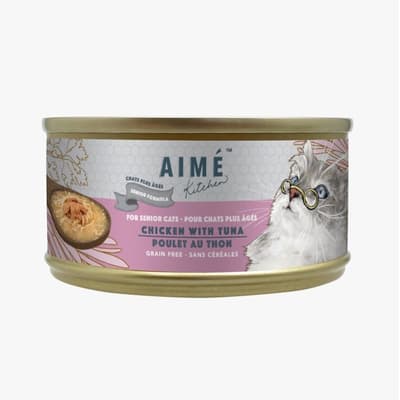
| Main-diet can/wet food | 78-89% | 5-15% (wet basis) | WeRuVa main-diet can chicken broth chicken breast pumpkin 156g (discontinued) $15.6; AIME senior cat can 75g $14 | $100-187/kg | AIME 75g can (labelled 690 kcal/kg): about $68/day | Most effective for hydration, highly palatable | Refrigerate after opening and finish within 24 hours |
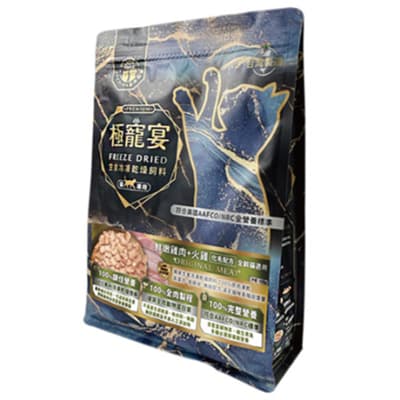
| Freeze-dried | About 3-6% | 38-48% | Instinct raw freeze-dried kitten main food 9.5oz (discontinued) $86; Ji Chong Yan raw freeze-dried 500g $257 | $320-514/kg | Package does not state kcal | High meat content, can be rehydrated into wet food | Highest unit price, must rehydrate according to ratio |
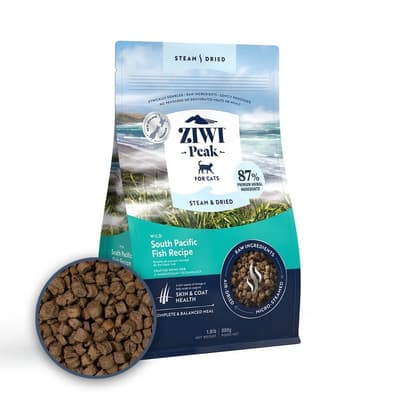
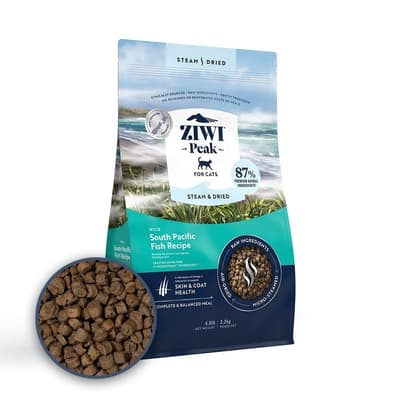
| Air-dried | About 12-14% | 38-40% | ZiwiPeak steam-dried 800g $279; ZiwiPeak steam-dried 2.2kg $652 | $296-349/kg | 2.2kg pack (labelled 4,400 kcal/kg): about $17/day | No refrigeration needed, palatability close to fresh meat | High calorie density, easy to overfeed |
| Fresh food/fresh meat main-diet pouch | About 75-80% | 10-14% | Monster Tribe 98% fresh meat main food 250g $87.2; Astkatta Feast fresh meat feast main-diet pouch 110g $29 | $264-349/kg | Package does not state kcal | Close to a natural diet, sufficient moisture | Must confirm a complete nutritional statement |
How to read this table: price per kg does not equal daily cost—wet food is 80% water, so the same weight provides only 20-30% of the calories of dry food. To compare real spending, "cost per 100 kcal" is most accurate: for the products above with full labelling, dry food works out to about $4.2-6.7/100 kcal, and wet food about $27-30/100 kcal. So "fully wet feeding" is an extra expense on top of dry food, but for cats with low water intake (especially indoor cats that eat only dry food and drink little), it is a worthwhile investment.
30-Second Label Reading Method
Turn the bag over and spend just 30 seconds looking at four things:
- 0-10 seconds: Check the "complete and balanced" statement. If the packaging has the words complete and balanced from AAFCO (Association of American Feed Control Officials) or the EU's FEDIAF, it means this food can be used as the sole main diet. If not, it is a treat or a complementary can.
- 10-20 seconds: Check the first five ingredients. Ingredients are ordered by weight, and the first five should mostly be animal-based ingredients (chicken, turkey, salmon, chicken liver, etc.). If you see "corn, wheat, soy" near the top, it means there is a lot of plant filler.
- 20-25 seconds: Check the nutritional analysis. Adult cats protein ≥30%, kittens ≥35%, senior cats ≥28%; fat is generally 15-25%; ash and magnesium content affect urinary health. Remember to convert to a dry matter basis: 10% protein on a wet food label is roughly equal to 40-50% on a dry matter basis.
- 25-30 seconds: Check the calorie statement. Only with kcal/kg or kcal/can can you calculate the daily feeding amount; if it is not stated, you need to convert according to the feeding table on the packaging by body weight—don't just pour by feel.
Extra reminder for Hong Kong's humid weather: after opening dry food, keep it sealed and stored off the floor, and finish it within one month; if you see oil on the kibble, an off smell or mould spots, throw it away immediately.
2026 Hong Kong Top 10 Cat Food Brand Comparison
Below are the 10 most popular brands in the Hong Kong market, with data including protein content, monthly budget and suitable users:
| Brand | Origin | Protein | Price/month | Suitable for |
|---|---|---|---|---|
| Orijen | Canada | 40% | $400-600 | Quality seekers |
| ZiwiPeak | New Zealand | 38% | $500-800 | Top budget |
| CANAGAN | UK | 37% | $300-450 | Grain-free |
| Feline Natural | New Zealand | 37% | $400-600 | Natural ingredients |
| Wellness Core | USA | 38% | $250-400 | Value for money |
| Instinct | USA | 36% | $350-500 | High meat content |
| K9 Natural | New Zealand | 36% | $400-600 | Freeze-dried cans |
| ACANA | Canada | 35% | $300-400 | Quality + price |
| Royal Canin | France | 30-34% | $200-350 | Breed/prescription |
| Hill's | USA | 30-35% | $200-350 | Prescription food |
Key points: Orijen is built on the concept of "biologically appropriate", uses fresh meat as the main ingredient, and its 40% protein is among the highest on the market; for the full review see Orijen cat food review. CANAGAN focuses on grain-free natural formulas; see CANAGAN review for details. ACANA is Orijen's sister brand, also using fresh meat but at a more affordable price; Royal Canin and Hill's win on having a full range of breed and prescription lines; ZiwiPeak, K9 Natural and Feline Natural take the New Zealand natural pasture-raised meat route, suitable for households that are not short of money.
How to choose cat food? Four steps to read the label
- Check protein: Kittens (<1 year) ≥35%, adults (1-7 years) ≥30%, seniors (>7 years) ≥28% and easy to digest.
- Check the ingredient list: Ingredients are ordered by content, and the first five should be meat—chicken, turkey, salmon, lamb, beef; avoid corn, wheat, soy, meat by-products and artificial colours.
- Check age and health: Kittens use high-protein, high-fat kitten food; overweight cats use low-calorie weight-loss food; cats with kidney disease use low-phosphorus, low-protein prescription food.
- Check budget: For $200-300 per month choose Royal Canin, Hill's, Wellness Core; for $300-400 choose CANAGAN, ACANA, Instinct; for $400-600 choose Orijen, K9 Natural, Feline Natural; only consider ZiwiPeak above $600.
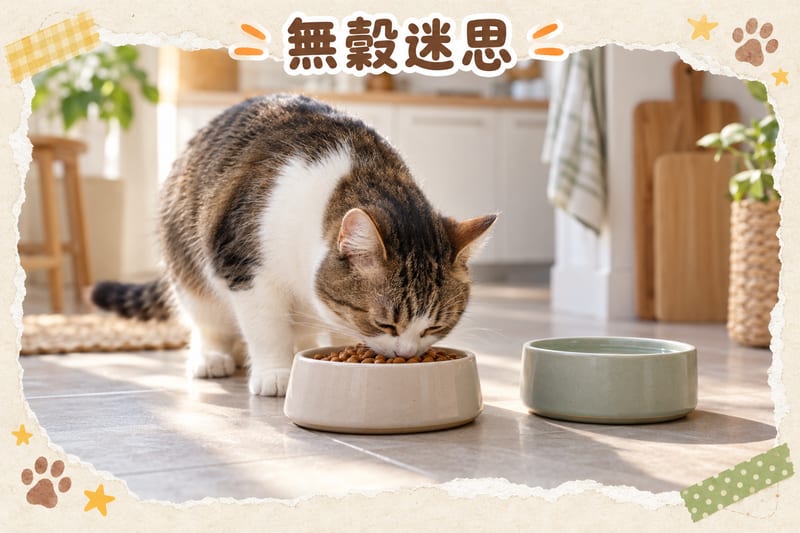
Common misconception: Is grain-free always better?
Grain-free cat food suits cats sensitive to grains, but not all cats need it. Some grain-free foods use potatoes instead of grains, and the carbohydrate content is actually higher. The criterion should be overall nutrition: meat content, protein ratio, and whether there are fillers—not just recognising the words "grain-free". Another misconception is looking only at price—cheap foods often use plant protein to make up the numbers; the protein label meets the target but the animal protein ratio is low, and the nutritional value is a notch lower.
How to match feeding plans to different ages?
- Kittens (<1 year old): High-protein, high-fat kitten food, 3-4 small meals a day; kibble should be small enough to bite and crush easily. To find out which one suits best, see Kitten Food Recommendations.
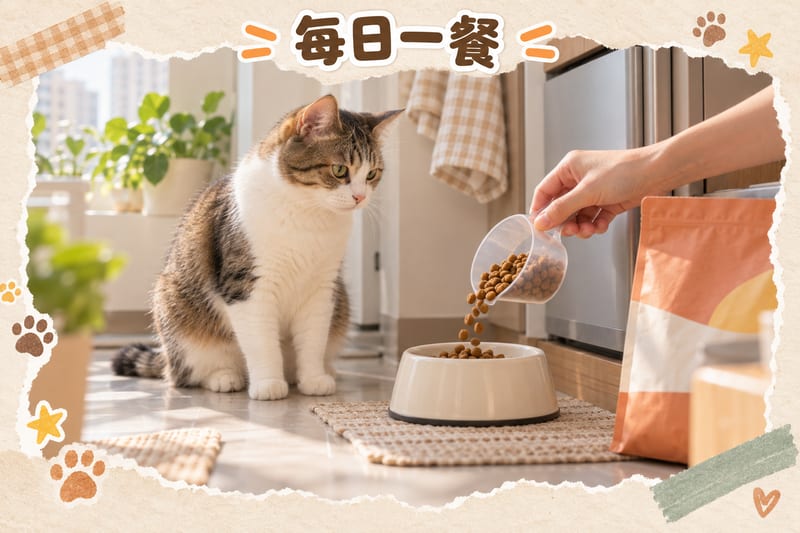
- Adult cats (1-7 years old): Adult cat food twice a day is the mainstream; if free-feeding, measure the daily total to avoid eating too much without noticing.
- Neutered cats: After neutering, calorie needs drop and they gain weight easily; consider switching to a lower-fat formula or reducing portions by 10%, and also watch urinary tract health; for timing of surgery and post-op care, see the Complete Cat Neutering Guide.
- Senior cats (>7 years old): Easily digestible, high-quality protein senior formulas, with joint health ingredients; if appetite drops, get checked early.
- Overweight cats: Low-calorie weight-loss food plus timed feeding; weight loss should be gradual — rapid dieting causes problems instead.
Things to Note When Switching Food and Food Safety
Switch food gradually over 7-10 days: start by mixing 70% old food with new food for three days, then increase the proportion of new food each day to avoid sensitive stomachs and diarrhoea. Storage and spotting spoilage: Hong Kong is hot and humid; after opening dry food, it is recommended to store it in an airtight container off the floor and finish it within one month; after opening wet food, refrigerate for no more than 24 hours, and discard if left at room temperature for more than half a day. If you see oil on the surface of the kibble, unusual odour, mould spots, insects or ants gathering, or your cat suddenly refuses food it is used to, these are all warning signs of spoilage.
When to see a vet: Persistent vomiting after switching to new food, soft stool for more than two days, complete refusal to eat for more than 24 hours, or a clear decline in energy and appetite — all should prompt a prompt consultation with a registered vet; for cats with kidney disease or urinary tract disease, do not switch their food on your own.
Feeding Amount and Bowl Strategy
After choosing the food, how much to feed and how to feed it also affect health:
- Count calories, not just volume: The calorie density of different foods varies greatly; after switching food, recalculate portions according to the feeding table on the packaging — do not keep using the old food's cup count.
- Two meals a day as a baseline: Feeding at fixed times makes it easier to observe changes in appetite — appetite is one of the earliest smoke detectors for a cat's health.
- Increase the wet food ratio as much as possible: Cats have a dull sense of thirst; chronic dehydration is linked to urinary tract disease and kidney burden; even if you only manage one canned meal a day, it is a worthwhile investment.
- Bowl choice matters too: Shallow bowls avoid the stress of whiskers constantly touching the sides; ceramic and stainless steel are easy to clean — wash daily; automatic feeders suit households with fixed feeding times, but remember to check the amount fed regularly.
- Weigh monthly: The ideal body condition is feeling the ribs without seeing them, and a waistline visible from above; if too fat or too thin, adjust the food type and portion — do not feed buffet-style.
Advanced: Mixed Dry and Wet Feeding and Supplement Myths
Is mixed dry and wet feeding better? Many nutritionists recommend a "dry food as the main, wet food as a supplement" combination: dry food maintains calories and convenience, wet food adds moisture and palatability — getting the best of both. It is simple to do — put out a measured amount of dry food in the morning, and add a canned meal in the evening and at midnight; choose canned food at complete-food level (with a full nutritional statement), and do not use "treat-grade" canned food as a long-term substitute for staple food, because those have an incomplete calcium-phosphorus ratio.
Do supplements need to be added? Healthy cats eating balanced commercial food generally do not need extra vitamins; fish oil can be considered to improve coat and skin, but the dose should be calculated by body weight — overdose causes soft stool and may even affect clotting. The most commonly over-supplemented are "probiotics" and "joint pills" — fed as health treats without a diagnostic basis, the effect is no different from a placebo; the money is better spent on the food quality itself.
The trap of reading feeding guidelines: The recommended portion on the packaging is for the "average cat"; indoor neutered cats have low activity levels, and feeding at the upper limit will make many of them fat; the correct approach is to start from the middle value and weigh every two weeks, fine-tuning until the ideal body condition is maintained.
What You Can Do Starting Today
- Take the cat food you are currently feeding at home and check whether the first five ingredients are meat and whether the protein meets the standard.
- Match by your cat's age: kittens ≥35%, adult cats ≥30%, senior cats ≥28%.
- Set a monthly food budget, pick 2-3 from the table above to shortlist and compare.
- If you want to switch food, start the 7-10 day gradual mixing method from today.
- Not sure which one suits your cat? Check each brand's actual test results against the PetChill cat food review database.
Further reading: Complete Cat Litter Guide, Kitten Food Recommendations, Beginner Pet Owner Guide. This article is for reference only; consult a registered vet for any problems.
Sources
- AAFCO Cat Food Nutrient Profiles: adult maintenance minimum crude protein 26% dry matter basis, growth 30%; taurine minimum 0.10% (dry food) / 0.20% (canned) dry matter basis.
- WSAVA Global Nutrition Guidelines: choose food and feeding amounts based on "complete and balanced" statements, body condition assessment (BCS) and calorie requirement assessment.
- NRC (National Research Council) 2006: recommended total daily water intake for cats 50-60 ml/kg body weight; cats are obligate carnivores.
- IRIS (International Renal Interest Society) CKD guidelines: dietary phosphorus density targets (stage 1-2 ≤150, stage 3-4 ≤120 mg/100 kcal).
- Product price, net weight, labelling (moisture/protein/fat/phosphorus/calories): PetChill product page packaging labels (checked 2026-10-02).
This article is general nutritional information and does not constitute veterinary diagnosis or prescription.
Related Articles
- 12 Popular Cat Foods Recommended by Scenario (Hong Kong Actual Prices + Daily Cost) →
- Senior Cat Food Guide 2026|How to Choose Protein, Phosphorus and Moisture After Age 7 →
- Kitten Food Guide 2026|Feeding Amount Curve, Food Switching SOP and Hong Kong Actual Price Comparison →
- Complete Cat Neutering Guide: Timing for Female Cats, Pre- and Post-Surgery Care →
- Orijen Brand Guide: Full Range of Formulas and Prices →
Further Reading
- 12 Popular Cat Foods Recommended by Scenario (Hong Kong Actual Prices) →
- Canned Cat Food vs Dry Food: Moisture Content, Water Intake and Daily Cost →
- How to Tell Staple Cans from Complementary Cans? Label Identification Method →
- Carrageenan, Guar Gum and 6 Other Gums at a Glance →
- Taurine and Fish Oil: How Much Is Needed Daily? →
- Phosphorus and the Kidneys: mg/100kcal Comparison and Prescription Food Choices →
- Freeze-Dried vs Air-Dried: Process, Rehydration and Daily Cost →
- The Truth About Grain-Free Cat Food: Grain-Free ≠ Low-Carb →
- Cat Probiotics: Strains, CFU Dosage and Antibiotic Spacing →
- Kitten Food Guide: Feeding Amount Curve and 14-Day Food Switching SOP →
- Senior Cat Food Guide: Protein, Phosphorus and Moisture After Age 7 →
- Cat Food Brands Tested and Reviewed One by One →
📌 Key Summary
- ✅ Protein meets the standard: kittens ≥35%, adult cats ≥30%, senior cats ≥28%
- ✅ The first five ingredients must be meat; avoid by-products and fillers
- ❌ Grain-free is not necessarily the most suitable; focus on overall nutrition rather than a single label
- ❌ Do not replace staple food with snack-grade canned food long-term
- ✅ Use a 7-10 day gradual transition when changing food to avoid digestive sensitivity
- ✅ Weigh once a month and adjust the feeding amount slightly according to body condition
⚠️ Some products mentioned in this article have been discontinued (marked "Discontinued" in the text), and the relevant prices are records from before discontinuation; for the prices of other products, please refer to the real-time display on the online store.
 Feline Natural full guide →
 Royal Canin full guide →
 Wellness Core full guide →