
Health
Symptom recognition, first aid and everyday care — from feline panleukopenia and kidney disease to skin problems and parasites. Learn when to monitor and when to see a vet, with Hong Kong vet cost references.
177 articles
Cat Blood Calcium Abnormalities Explained | High & Low Calcium Causes, Fatigue Symptoms, Ca/P/PTH Testing and Dietary Management (Hong Kong)
The most typical sign of high blood calcium in cats is reduced activity and easy fatigue: many hypercalcaemic cats sleep 16 to 18 hours a day and jump onto the cat tree noticeably less often, which owners often dismiss as 'just getting old'. Blood calcium abnormalities fall into 2 main directions, high and low, with causes ranging from chronic kidney disease and tumours to parathyroid problems. Confirming a diagnosis usually requires testing 3 to 5 items (total calcium, ionised calcium, phosphorus, PTH). This article covers the cause classification table, fatigue and activity changes, a testing item comparison, dietary precautions and when to seek veterinary care.
Diet Management for Cats with Chronic Illness | A Hong Kong Cat Owner's Practical Guide: Daily Records, Weight and Water Monitoring, and Handling Food Refusal
Diet management for a chronically ill cat isn't just about switching to a different food — it's a daily routine: feeding at fixed times, weighing portions on a digital scale, recording how much is eaten and how much is drunk, weighing regularly, and adjusting with follow-up visits. This article uses two tables to set out the dietary direction and daily monitoring items for four common chronic conditions, and covers handling food refusal, hydration tips, the process for buying prescription food in Hong Kong, and when to see a veterinarian immediately.
Caring for a Cat with Neurological Damage: Causes, Home Modifications, Rehab and Long-Term Support (Hong Kong)
Neurological damage in cats is not a single disease but a set of functional deficits caused by poisoning, trauma, vestibular syndrome or epilepsy. Long-term care has 4 main directions: fall-proof and slip-proof home modifications, a fixed daily care routine, rehab training as directed by your veterinarian, and a neurological check-up every 1 to 3 months. This article includes a comparison of 4 major causes, a 5-level symptom triage table, an 8-item home modification checklist, and a 5-point quality-of-life score for palliative care.
Cat Blood Potassium Abnormalities: A Practical Guide for Owners
High or low blood potassium in cats is a signal, not a disease. Learn the normal range, causes, how to read blood test reports, dietary management, and home monitoring.

Pet Gut Health Guide: Probiotics, Diet Transition and Bowel Problems (Hong Kong Edition)
Most gut problems in Hong Kong pets are caused by switching food too quickly, antibiotic courses or food intolerance. This article, from a veterinary perspective, breaks down the difference between probiotics and prebiotics, how to choose common strains, how to schedule probiotics during antibiotics, a 7-day diet transition ratio table, how to distinguish mucus and blood streaks in stool, and the observation timeline for constipation, bloating and X-rays. Finally, it explains clearly when you must see a veterinarian immediately, and includes tips for storing cat food in Hong Kong's humid weather.
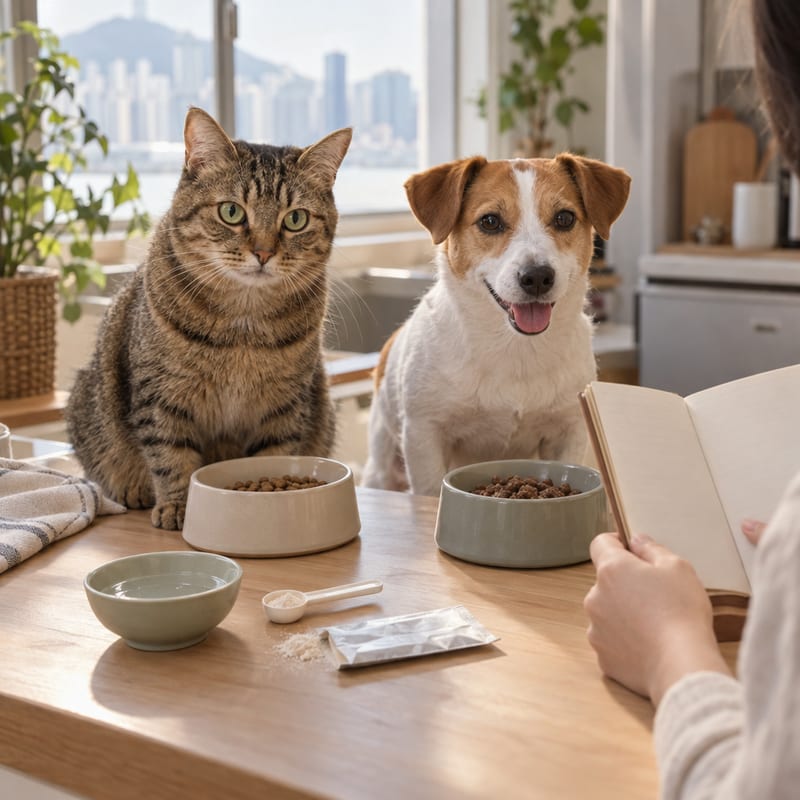
Pet Gut Health Probiotics and Diet Transition Bowel Issues (Part 2) Hong Kong Guide
Following Part 1, this article focuses on practical handling: the mechanism of action, selection and timing of probiotics, the red lines of the home medicine cabinet and the time limit for mixing medication into food, the correct use of supportive tools such as psyllium husk powder and montmorillonite powder, transition strategies for food refusal and soft stool during diet transition, diet during the diarrhoea recovery period, observation of antibiotic and painkiller side effects, dehydration and electrolyte supplementation, and when hairballs, mucous stool and coccidia must be handed over to a vet.
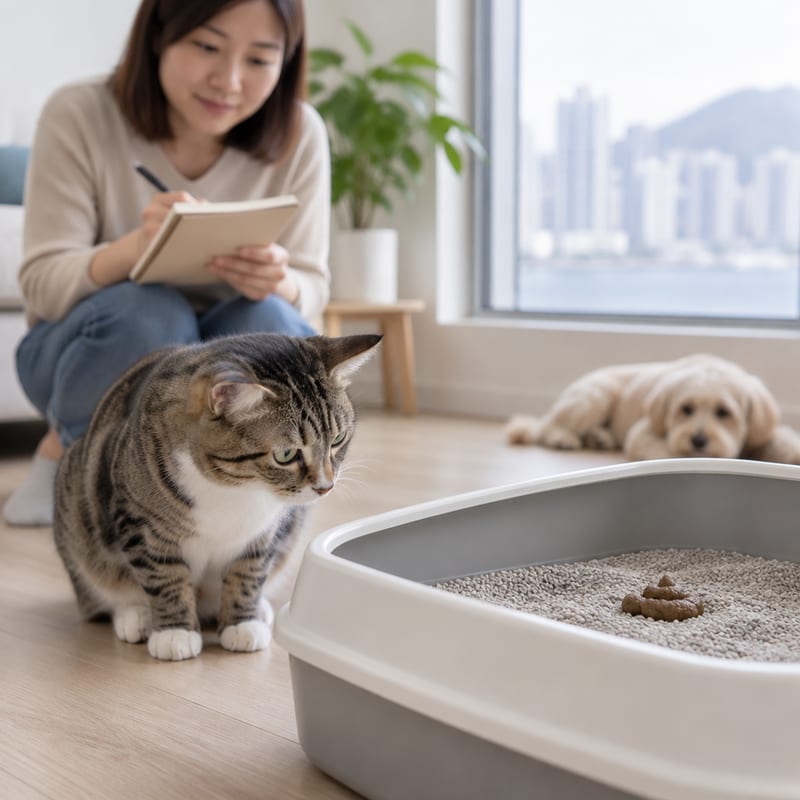
Pet Gut Health Probiotics & Food Transition Bowel Issues Complete Guide (Part 3)|Hong Kong Cat & Dog Gut Microbiota Imbalance, Diarrhoea & Constipation Management Guide
Following the previous two parts, this article focuses on gut microbiota imbalance and bowel issues during food transition: how stress and anxiety cause soft stool, vomiting and reduced appetite in cats and dogs, how to manage diarrhoea associated with tetracycline antibiotics (Doxycycline), penicillins and cephalosporins, the effects and side effects of appetite stimulants (Metoclopramide), principles of low-fat low-residue diet and mixing prescription food, suitability of probiotics (Pro Kolin Advanced), storage of Astkatta soup pouches and Tap Tap Pet Meal fresh food, and how to judge when to seek veterinary care in Hong Kong.
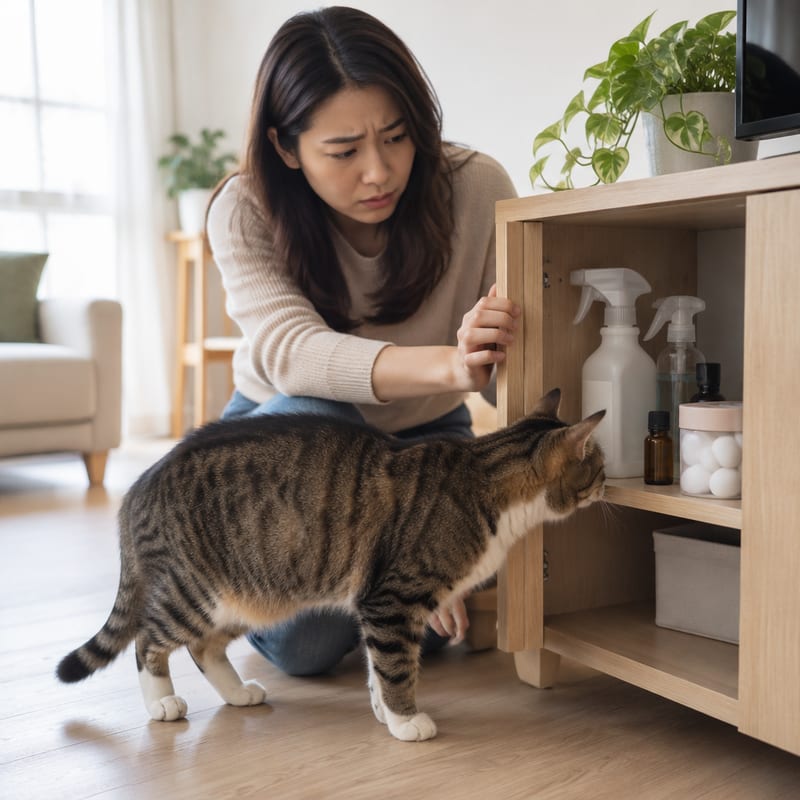
Cats and Dogs Eating Poison Part 2: Household Chemicals, Toxic Plants and Emergency Vomiting Decisions | Hong Kong Guide
Hong Kong flats are small and cluttered, and skincare, mothballs, essential oils and balcony plants are all high-risk sources of accidental ingestion for cats and dogs. Following Part 1, this article covers four things: when vomiting must NOT be induced (including after corrosive cleaners, sharp objects and uncontrolled bleeding), the risks of spices such as Sichuan pepper, garlic and onion plus sodium benzoate and salicylic acid skincare, the signs of poisoning from mothballs, insect repellents and eucalyptus or jasmine essential oils, and the dangers of plants such as fig and avocado, with a Hong Kong help-seeking flow. No doses or DIY treatment methods are given.
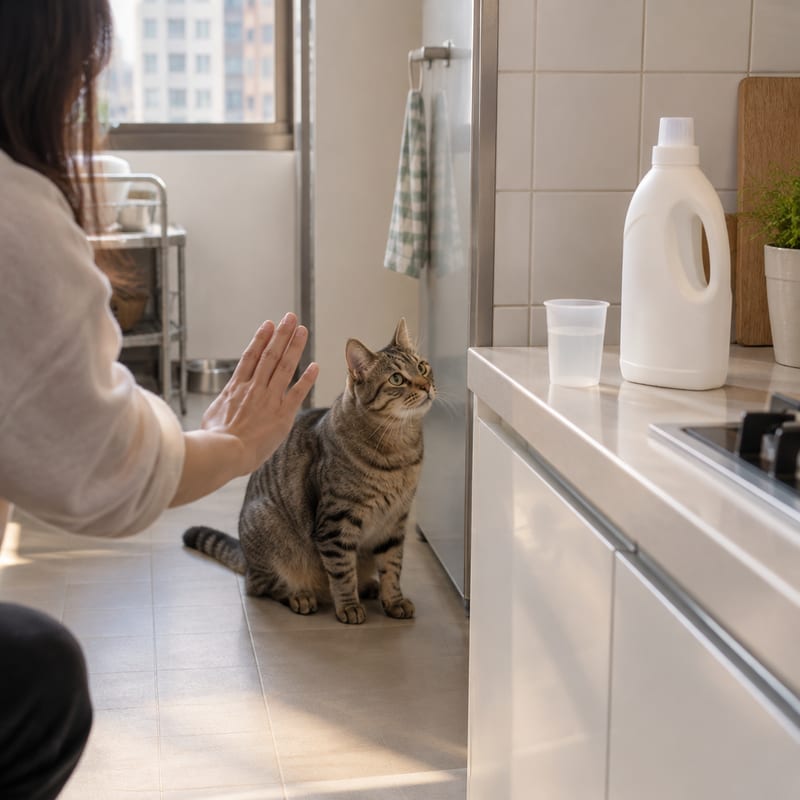
The three most common sources of pet poisoning in Hong Kong homes are chlorine-based bleach and cleaners, pesticides, and plants and foods such as jasmine, aloe and grapes. If you suspect ingestion or exposure, do not induce vomiting or give medication yourself; remove the pet from the scene, keep the packaging, and let a vet assess as soon as possible.
The three most common sources of pet poisoning in Hong Kong homes are chlorine-based bleach and cleaners, pesticides, and plants and foods such as jasmine, aloe and grapes. If you suspect ingestion or exposure, do not induce vomiting or give medication yourself; remove the pet from the scene, keep the packaging, and let a vet assess as soon as possible.
Senior Cat Care | Daily Routine from Age 7 + Home Care Checklist (Hong Kong)
Cats are considered senior from age 7. This guide covers daily routines, home adjustments, behavioural warning signs and check-up schedules for senior cats in Hong Kong.
How Much Should a Senior Cat Eat Daily? | Calorie Formula + Portion Table + Meal Schedule (Hong Kong)
How do you calculate a senior cat's daily calories? Use the RER formula commonly used in veterinary nutrition: 70 × body weight (kg)^0.75. For senior cats, maintenance is about RER × 1.0-1.2, split into 2-3 meals, and adjusted by weekly weigh-ins. Includes a portion table for 3/4/5 kg senior cats, dry-to-wet food conversion, warning signs for over- or under-eating, and a list of senior cat foods available in Hong Kong.
Dog Heartworm Prevention|Essential Guide for Hong Kong Dog Owners: Mosquito Season Calendar, Prevention Drug Types and Testing Schedule
Heartworm is spread by mosquitoes. Hong Kong's humid and warm climate means mosquitoes are active almost year-round, so vets generally recommend year-round monthly prevention. This article covers the Hong Kong mosquito season calendar, the difference between oral medication and spot-on treatments, when to do blood tests, home mosquito control practices and common mistakes, with a 12-month schedule dog owners can follow directly.
Dog Vaccine Schedule | A Must-Read for Hong Kong Dog Owners: When Puppies Get Their First Shot + Annual Booster Arrangements
Puppies generally start their first shot at 6-8 weeks old, then get a booster every 2-4 weeks, completing the primary course around 16 weeks, with annual boosters after 1 year. This article compiles the vaccine types commonly used in Hong Kong, a puppy age schedule, pre- and post-vaccination precautions, and reference fees, with coverage of vaccines for distemper, parvovirus, rabies and more.
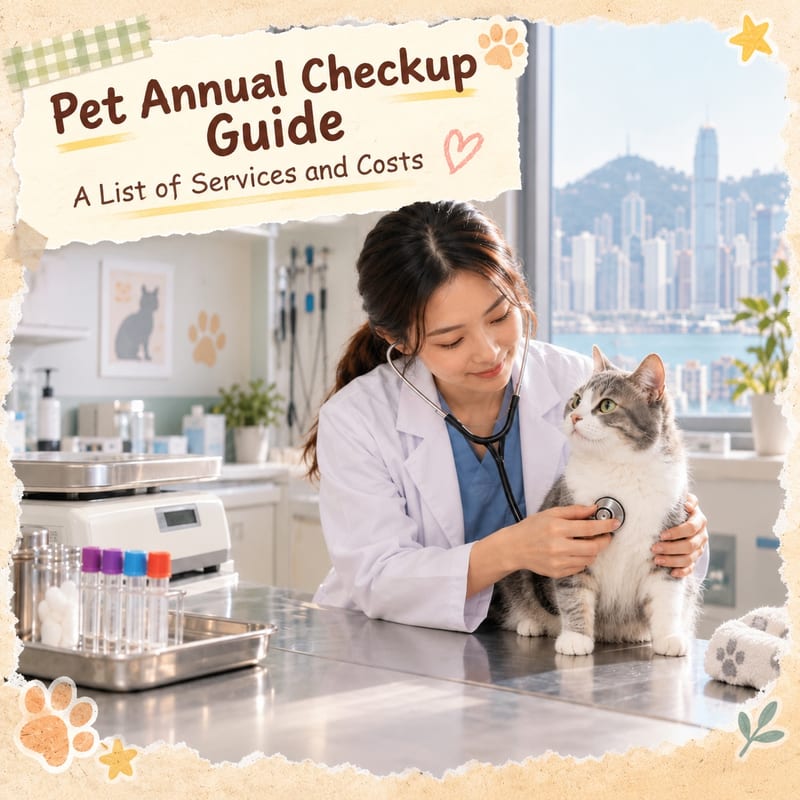
Pet Annual Health Checkup | A Must-Read for Hong Kong Cat and Dog Owners: When to Do It, What Gets Tested, and Cost Reference
Adult cats and dogs should have a health checkup once a year, and from age 7 this changes to once every six months. This article sets out an age × frequency table, a checklist of examination items (blood tests, urinalysis, weight and body condition, oral health), five at-home observation methods, signs of ageing, and Hong Kong cost references, plus an annual timetable that dog and cat owners can follow directly.
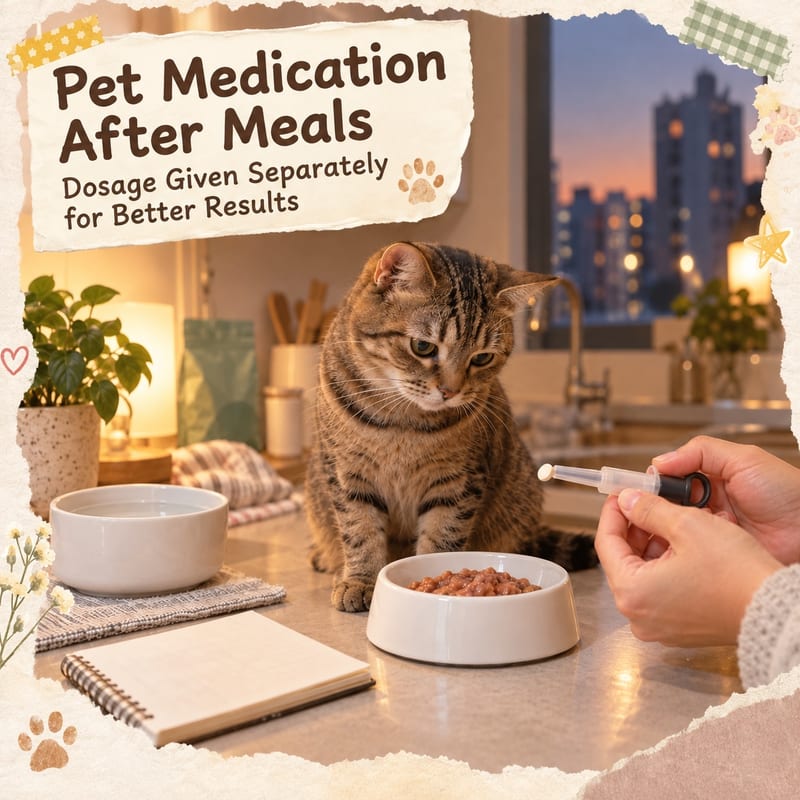
Will Cats Lose Appetite After Antibiotics? Vet Explains
Do cats lose appetite after antibiotics? Yes, but not every cat. The most common pattern in vet clinics is a 25% to 50% drop in food intake in the first 1 to 2 days of the course, gradual recovery from day 3, and near-normal by 3 to 7 days after stopping. The dividing line is not 'how much they drop' but when they drop and whether there are other signals: complete refusal to eat for over 24 hours, or 12 hours without drinking, is an emergency. This article provides a four-level appetite grading table, a day-by-day timeline, 5 numbers to record daily, 6 warning signs, and supportive measures during the course.

Apple Cider Vinegar for Pet Skin: Benefits, How to Use, and Safety
Apple cider vinegar is mainly 4% to 6% acetic acid with a pH of only 2 to 3, and people often wipe it on to stop itching, fight bacteria, and remove odours. Note: there is currently not enough clinical evidence to support apple cider vinegar treating fungal or parasite infections, and it cannot replace prescription medication from a veterinarian. This article uses an evidence-based approach to break down 6 common claims, safe dilution ratios (start at 1:10, never use it undiluted), a 5-step application process, 3 comparison tables, and 8 situations where it must not be used, and explains clearly when to stop immediately and seek medical help.

Why Is My Black Dog's Coat Turning Brown? Causes and How to Improve It
A black dog's coat turning brown is usually not dye damage but UV bleaching, saliva staining or a follicle metabolism issue. The key test is one: is the discolouration only at the tips, or does it go down to the roots? Tip-only discolouration points to external factors; root discolouration means skin and endocrine checks are needed. This article breaks down 6 common causes, teaches a two-week observation log, a 5-step improvement plan and 5 vet red flags, with a grooming frequency table and product references. Information last checked 2026-10-12.
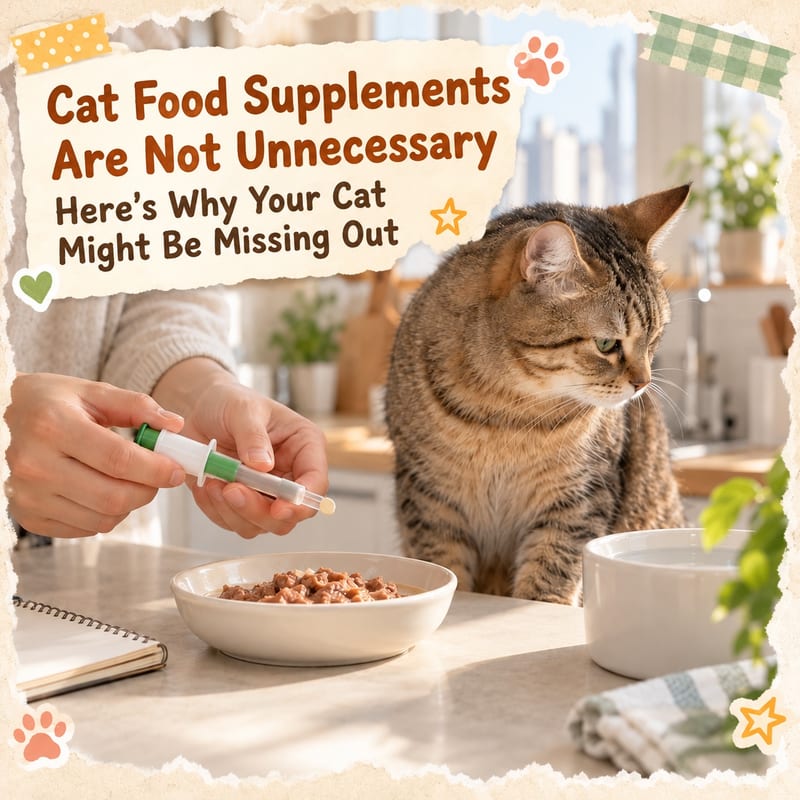
Why Does My Cat Lose Appetite on Antibiotics? A Vet Explains the Main Causes
When a cat's appetite drops during a course of antibiotics, there are three main causes: food aversion triggered by the pill's bitter taste, temporary gut flora imbalance causing soft stool and nausea, and direct irritation of the stomach and oesophagus by the drug. Most cases are most obvious in the first 1 to 2 days of the course, then gradually improve around day 3. But if the cat completely refuses food for more than 24 hours, or goes 12 hours without drinking, see a veterinarian immediately. This article breaks down 4 categories of causes, 6 steps a vet takes to investigate, a comparison table for drug-related vs disease-related signs, and supportive measures during the course.
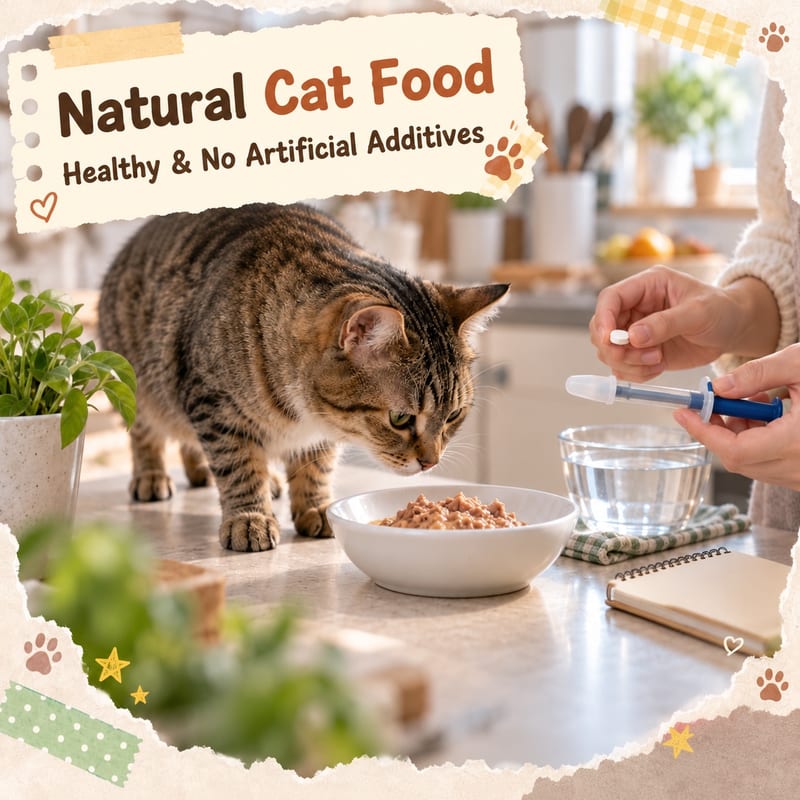
Why Does My Cat Lose Its Appetite After Antibiotics? Causes and What to Do
Loss of appetite after antibiotics is most often caused by the bitter taste of the pill, disruption of gut bacteria and mild nausea. It is usually most obvious in the first 1 to 2 days of the course, then gradually settles. But if your cat refuses food completely for more than 24 hours, or goes 12 hours without drinking, do not wait — contact your veterinarian immediately. This article covers 5 causes, an action comparison table, a fatty liver risk timeline, 7 ways to boost appetite, and 5 records to bring to the follow-up visit.
Diarrhoea or Constipation While Your Cat Is on Antibiotics: What to Do
If your cat has diarrhoea during a course of antibiotics, the first step is not to stop the medication: stopping on your own can leave the infection untreated or breed resistant bacteria, and any change to the course must be decided by your veterinarian. This article covers both diarrhoea and constipation, with 5 actionable steps, red-line timings (watery diarrhoea for more than 24 hours, no bowel movement for more than 48 hours means see the vet, more than 72 hours is an emergency), plus how to space probiotics about 2 hours apart from antibiotics, hydration and diet advice.
Can You Give Your Cat Anti-Vomiting or Anti-Diarrhoea Medicine Yourself? Common Drugs and Risks
If your cat is vomiting or has diarrhoea, you must never give human anti-vomiting or anti-diarrhoea medicine on your own: loperamide and salicylate-containing anti-diarrhoea liquids can be fatal to cats, while cat anti-vomiting drugs such as maropitant, ondansetron and metoclopramide are all veterinary prescription-only. This article covers the vet drug table, a risk comparison of human over-the-counter medicines, 3 key physiological limits in cats, a timeline for when to see a vet, and 5 steps of home care, so you can tell when 24-hour observation is okay and when to seek help immediately.
Cat Ate Grapes? Immediate Emergency Steps to Take
A cat eating grapes or raisins is an emergency: contact a veterinarian immediately even without symptoms, never induce vomiting yourself, and never give activated charcoal, milk or salt water. This article covers the immediate 5 steps, 8 pieces of information to prepare before calling the vet, a 0–72 hour timeline, 4 common mistakes, plus a 48–72 hour observation checklist and home storage tips after returning home.
Cat Won't Stop Licking a Wound? Anti-Lick Methods and Care Advice
If your cat keeps licking a wound, the immediate step is to put on an anti-lick cone to separate the wound from the tongue, and record changes in redness, swelling and discharge daily. A cone is generally worn for at least 2 to 3 days after stitch removal. If the licking is caused by itching, fleas, pain or anxiety, a cone alone will lead to repeated relapse, and a veterinarian must find the source. This article breaks down the 6 major causes of excessive licking, a comparison of 4 anti-lick methods, a five-step guide to putting on a cone, and a red-line list of when to seek veterinary care immediately.
Is Mucus in Cat Stool Normal? Causes, Danger Signs and What to Do
A thin layer of clear or pale yellow mucus around a formed stool is usually normal colonic mucus secretion and often clears within 1 to 2 days, provided your cat is eating and behaving normally. But if the mucus looks jelly-like, lasts more than 3 days, or comes with blood streaks, loose stool, vomiting or weight loss, take a fresh stool sample to the vet. This article breaks down 8 common causes, a stool consistency chart, 6 danger signs and 5 steps for home management, so you know when to observe and when to see a vet immediately.

What Home Medicines Can You Keep for a Cat with an Upset Stomach? Safety Rules
Short answer: when a cat has an upset stomach, there is no human medicine in the home kit you can give on your own. Ibuprofen, paracetamol, aspirin and loperamide are all zero-dose — not even a quarter tablet. What you can actually keep at home is 4 types of non-drug items: a feeding syringe, a record sheet, pet-specific probiotics and a sensitive-stomach complete food. Anti-vomiting and anti-diarrhoea drugs are all vet prescription only. This article covers the medicine-kit comparison table, 5 steps of care before the vet, what to do if a human drug is swallowed, and 6 red lines for seeking help.
Blood or Mucus in Cat Stool? Causes and When to See a Vet
Blood or mucus in your cat's stool is not something you can wait out. Bright red streaks usually come from the end of the large intestine, commonly caused by parasites, colitis and anal gland problems; see a vet within 24 hours. Black, tarry, foul-smelling stool means upper gastrointestinal bleeding and needs immediate medical attention. For kittens and senior cats the threshold is lower: if no improvement in 12 hours, go to the clinic. This article uses a stool colour chart to locate the bleeding, breaks down 8 common causes, lists 6 warning signs you cannot wait on, and tells you 5 things to prepare before seeing the vet.

Cat Swallowing Noises or Vomiting: Causes, Danger Signs and When to See a Vet
Swallowing noises in cats are usually linked to swallowed air, saliva or regurgitation, not necessarily vomiting. Two key checks: is the abdomen straining during swallowing, and is the vomit digested? Cats that eat too fast often regurgitate whole kibble 5 to 15 minutes after eating; a hairball 1 to 2 times a month is normal. This article breaks down 6 major causes, a normal vs danger sign comparison table, 4 home steps, feeding adjustments and 6 vet red lines. Information last checked 2026-10-12.
Does My Cat's Vomiting Need an Immediate Vet Visit? Colour, Frequency and Accompanying Signs Triage Chart
After your cat vomits, check three things first: the colour of the vomit, the number of times it has vomited within 12 hours, and whether there are any accompanying signs. If it brings up yellow-green bile, fresh blood or coffee-ground material, or vomits 3 or more times in 12 hours, or has diarrhoea and lethargy together, seek veterinary care immediately. The threshold is lower for kittens and cats over 7: vomiting 2 times in 24 hours, or not eating at all for more than 12 hours, means you should not wait any longer. This article provides a colour and accompanying-signs triage chart, a 24-hour home observation flow, and a checklist of records to prepare before seeing the vet.
Cat Vomiting, Seizures, Loss of Balance: When to See a Vet Immediately
If your cat is vomiting, seizing or suddenly loses balance, three lines decide urgency: a seizure lasting over 5 minutes, 2 or more seizures within 24 hours, or vomiting during a seizure with consciousness not returning. These are emergencies — leave immediately. The threshold is lower for a first seizure, kittens under 6 months and cats over 7 years: see a vet the same day. Vomiting with loss of balance, head tilt or nystagmus also needs immediate checks. This article gives 12 red flags, a table to tell 4 easily confused conditions apart, 5 essential actions during transport and 6 things you must never do.
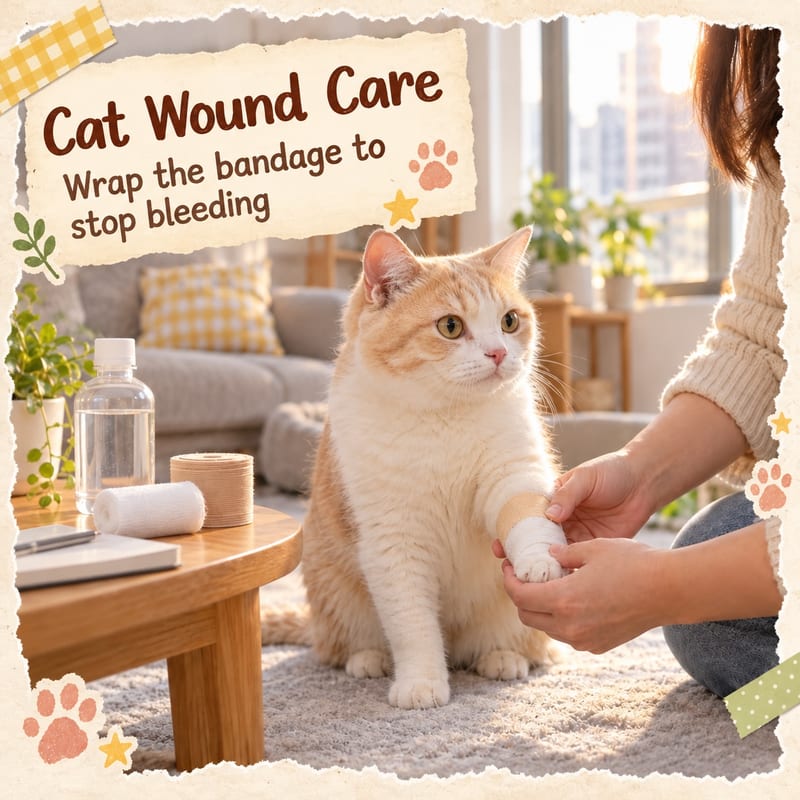
Does a Cat's Injury Need Bandaging? Correct Steps and Precautions
Does a cat's wound always need bandaging? It depends: superficial grazes just need cleaning and keeping dry, but uncontrolled bleeding, deep wounds exposing tissue, yellow-green pus or fever mean you must not bandage at home and should see a veterinarian the same day. This article lists 4 situations you cannot handle yourself, how to apply pressure to stop bleeding, the 6 bandaging steps under veterinary instruction, a materials comparison, 5 common mistakes, and the anaesthesia risks you must know before any procedure.
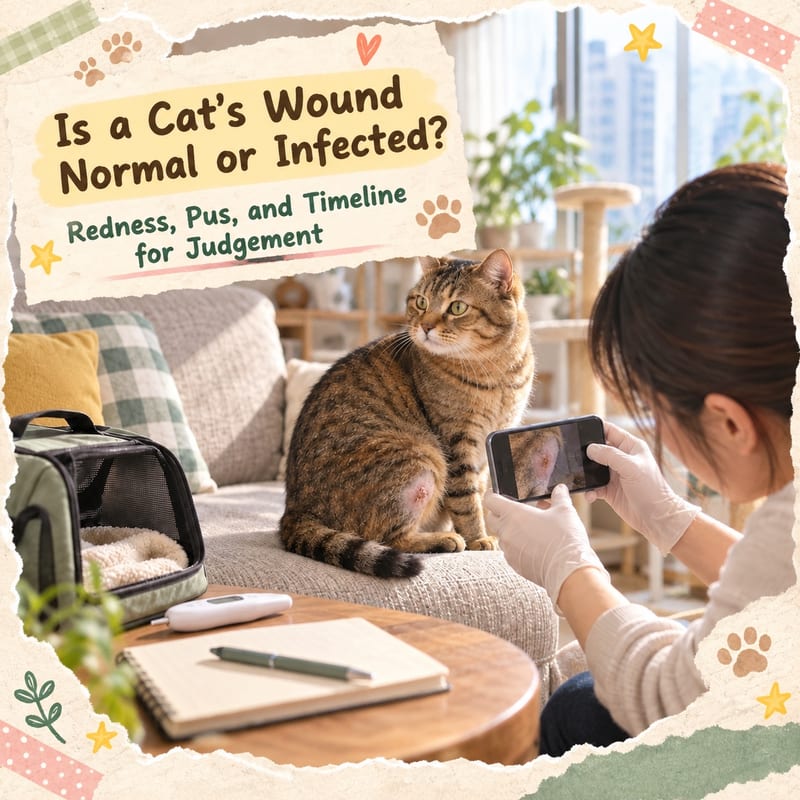
Normal Wound Healing vs Bacterial Infection in Cats: A Sign-by-Sign Comparison
The dividing line between normal wound healing and infection in cats is time: redness, swelling and pain peak in the first 1 to 3 days, then should ease day by day, with scabbing and edge contraction by days 3 to 5. If after day 3 the wound is redder and more swollen, oozes yellow-green pus, smells foul, feels hot, or the cat has a fever above 39.4°C, refuses food or hides, these are warning signs of bacterial infection and a veterinarian should be seen immediately. This article includes a three-stage normal healing timeline, a seven-sign infection comparison table, a daily five-step recording method and a red-line checklist.
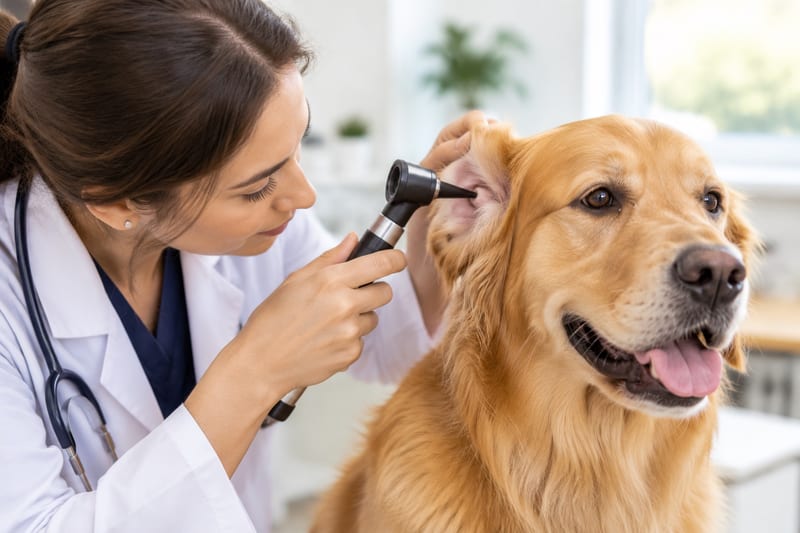
Dog Ear Infection Drops: How to Choose Between Cleaners and Prescription Medication
Ear infection drops fall into two categories: non-medicated ear cleaners and vet-prescription ear drops. Learn how to tell them apart, what 'gentle' really means, and when a vet visit is essential.
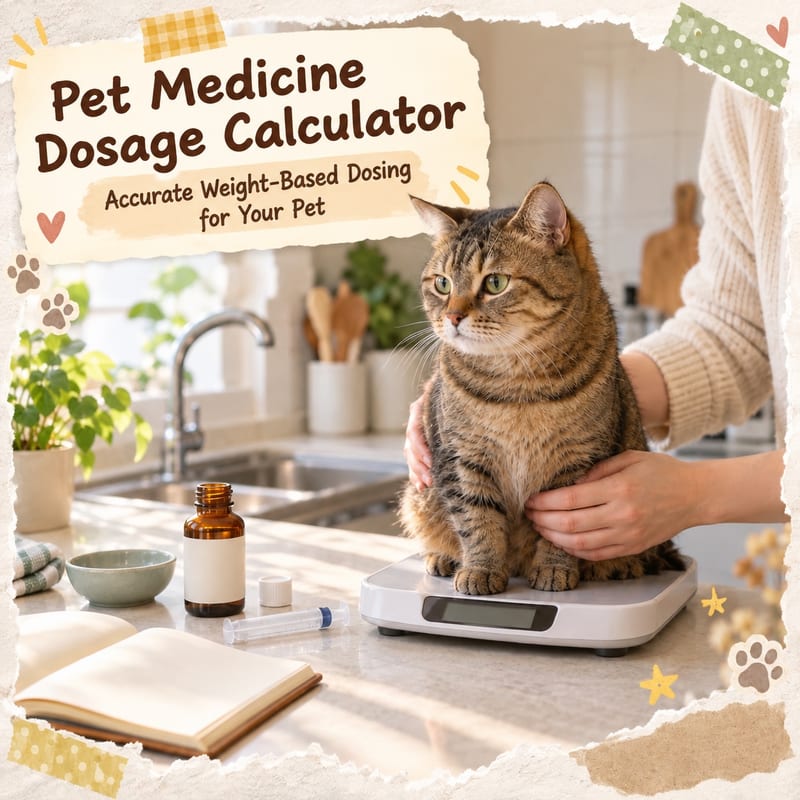
How to Calculate Emergency Pet Medication Doses Safely: Methods and Precautions
There is only one formula for pet medication dosage: body weight (kg) × the per-kg amount on the vet's prescription = one dose. What really determines safety is not the formula, but whether the weight is accurate and who provides the per-kg amount. Cats metabolise drugs very differently from dogs and humans; a 5 kg cat and a 5 kg dog cannot use the same numbers. This article explains the three input values, six weighing and measuring steps, unit conversion traps, and who to call and what to bring to the vet in an emergency.

Iodine Tincture vs Povidone-Iodine for Cleaning Pet Skin: What's the Difference and How to Use Them Correctly
The difference between iodine tincture and povidone-iodine is more than 'one has alcohol, one doesn't': iodine tincture is iodine dissolved in alcohol (commonly labelled 2% iodine, alcohol about 47% v/v), relying on alcohol to evaporate quickly; povidone-iodine is an aqueous povidone-iodine solution (labelled 10% w/v, i.e. about 1% available iodine), which relies on the carrier to slowly release free iodine and usually needs dilution first. This article uses 3 comparison tables to break down the 5 differences in how the two are used when cleaning pet skin, whether they can be used on 7 skin conditions, the difference in absorption between cats and dogs, and a 5-step safety procedure. All concentrations and usage are for information only; always follow your veterinarian's instructions.
Which Parasites Does Quantel Dewormer Cover? Efficacy and Usage
Quantel dewormer tablets contain 50 mg praziquantel and 500 mg fenbendazole per tablet. According to the manufacturer's product information, they cover 14 to 18 intestinal parasites at once, including roundworms, hookworms, whipworms and other nematodes, as well as tapeworms such as Dipylidium caninum, Taenia and Echinococcus. The label also lists use for cat lungworm and Giardia in dogs. Note that heartworm, coccidia, Toxoplasma and external parasites like fleas, ticks and mites are not covered; these require other products and veterinary plans, and one dewormer cannot do everything.
Quantel Dewormer Safety Review: Ingredients, Safety Advantages, and Usage Guide
Quantel dewormer uses praziquantel and fenbendazole, two well-established ingredients. This review breaks down its safety advantages, limitations, suitable pets, and lowest-risk usage steps.
Kitten Care Guide: 0-12 Month Feeding, Vaccination, Deworming and Growth Timeline (2026)
From birth to one year, kittens follow a schedule for milk volume, weaning, vaccination, deworming, neutering and socialisation. This guide lays out weight and resting respiratory rate references for each stage from 0-12 months, the mistakes new owners make most often, and the warning signs that mean see a veterinarian — all in one place for Hong Kong cat owners. Information checked to 2026-10-12.
Kitten Vaccination Schedule for Hong Kong Cat Owners: When to Give the First Jab and How to Plan Each Year After
Antibodies a kitten gets from its mother run out at around 2.5 to 3 months old — the first combined vaccine must be given within this window. This article sets out the Hong Kong kitten vaccination schedule, what to watch for before and after the jab, and what extra steps to take when you take in a stray kitten.
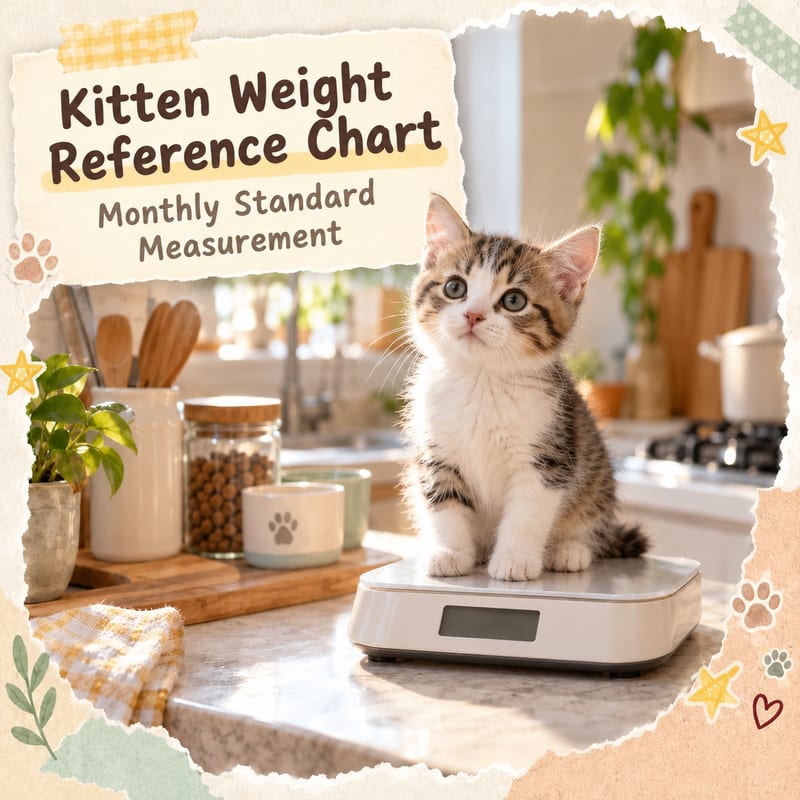
Kitten Weight Chart | A Must-Save for Hong Kong Cat Owners: Standards from Birth to 1 Year + How to Weigh Accurately
Kitten weight is the most honest health indicator: a healthy nursing kitten gains 10-20 grams per day, and if weight stalls for two days, see a veterinarian. This article compiles week-by-week weight standards from books, home weighing methods, and the obesity threshold (over 15% above ideal weight) — all in one for Hong Kong cat owners.
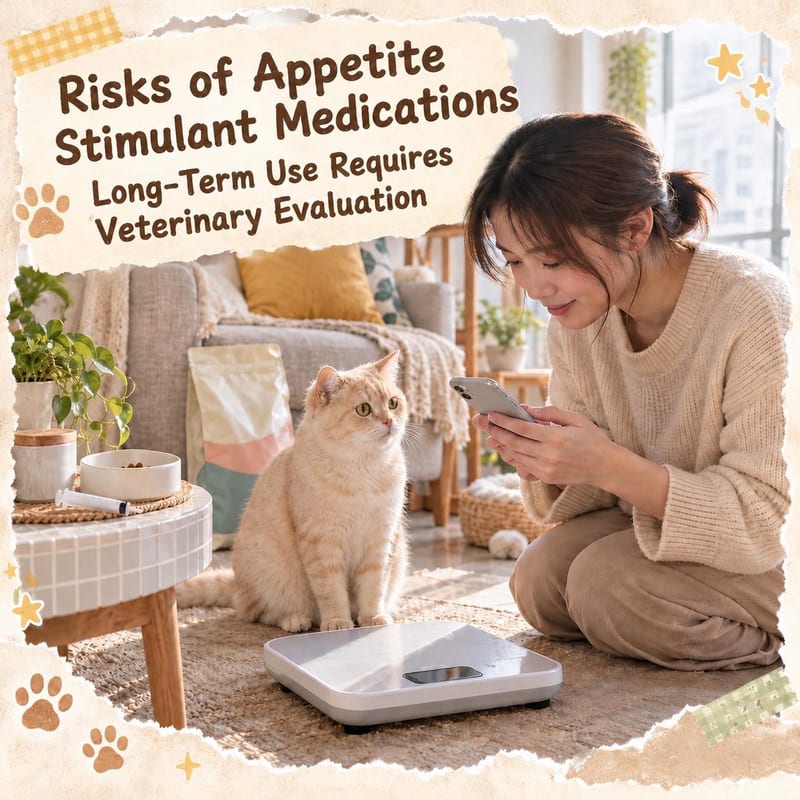
What Are the Risks of Long-Term Appetite Stimulants for Pets? Vet Warning
Long-term use of pet appetite stimulants carries 4 major risk categories: masking the underlying cause, cumulative side effects, liver and kidney metabolic burden, and delayed vet visits because the pet 'seems to be eating again'. Long-term use of hormonal drugs is also linked to diabetes and mammary tumour risk. All appetite stimulants are veterinary prescription-only and are positioned as short-term support tools; most cases need reassessment after 1 to 2 weeks. A cat that refuses food completely for 2 to 3 days is already at risk of fatty liver and must be assessed and monitored by a veterinarian — never bought or used on your own.

How to Choose a Brush for Long-Haired Cats: Pin Brush, Comb and Deshedding Tool Compared
The key to brushing a long-haired cat is "detangle first, then clear the undercoat": a metal comb (2 to 3 mm tooth spacing) works through mats layer by layer, a pin brush (1.5 to 2 cm pins with rounded tips) clears the undercoat, and a deshedding tool is used at most 1 to 2 times a week. Pulling a pin brush or deshedding tool through an unopened mat will tear hair and scrape the skin red. This article includes a comparison table of the three brush types, how to choose by coat type and body area, a daily five-step routine and a vet warning checklist.
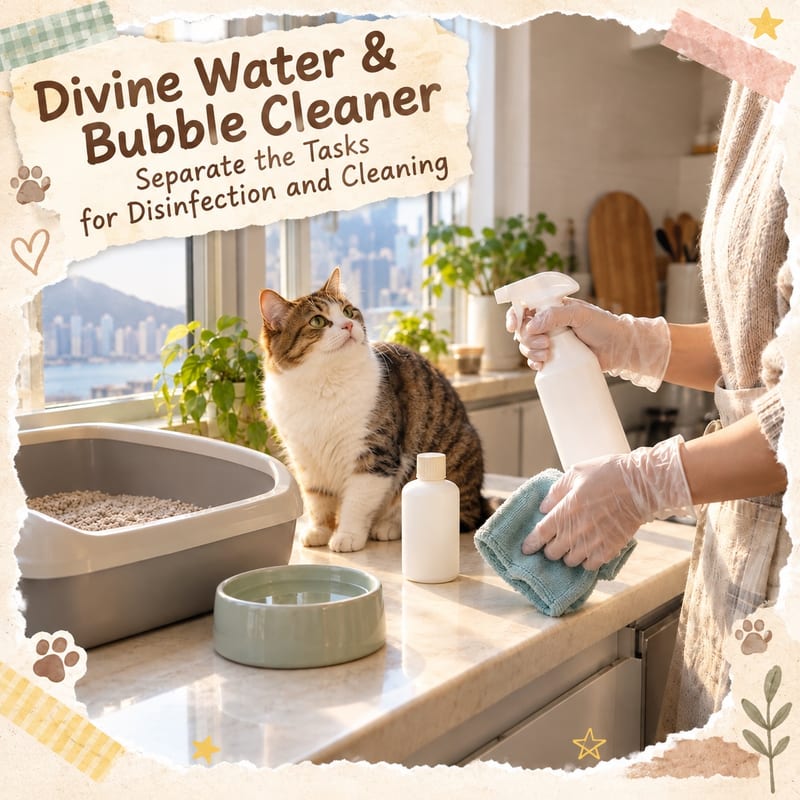
Bubble Ling vs 'Fairy Water': What's the Difference? A Comparison of Disinfection and Cleaning Uses
'Fairy Water' is actually a nickname in Hong Kong pet circles, not an ingredient name; 'Bubble Ling' (Positive Care) is a product series whose label lists the US patented ingredient Goldshield as its active ingredient. This article uses 3 comparison tables to break down the differences between the two in terms of ingredients, dosage forms, labelled uses, contact time and cleaning roles, and lists the usage differences in 8 scenarios including skin, ear canal, litter tray, household surfaces and feeding utensils, plus 5 common mistakes, mixing contraindications and red lines for seeking medical attention. Ingredient and labelling information is for reference only and cannot replace a veterinarian's diagnosis.
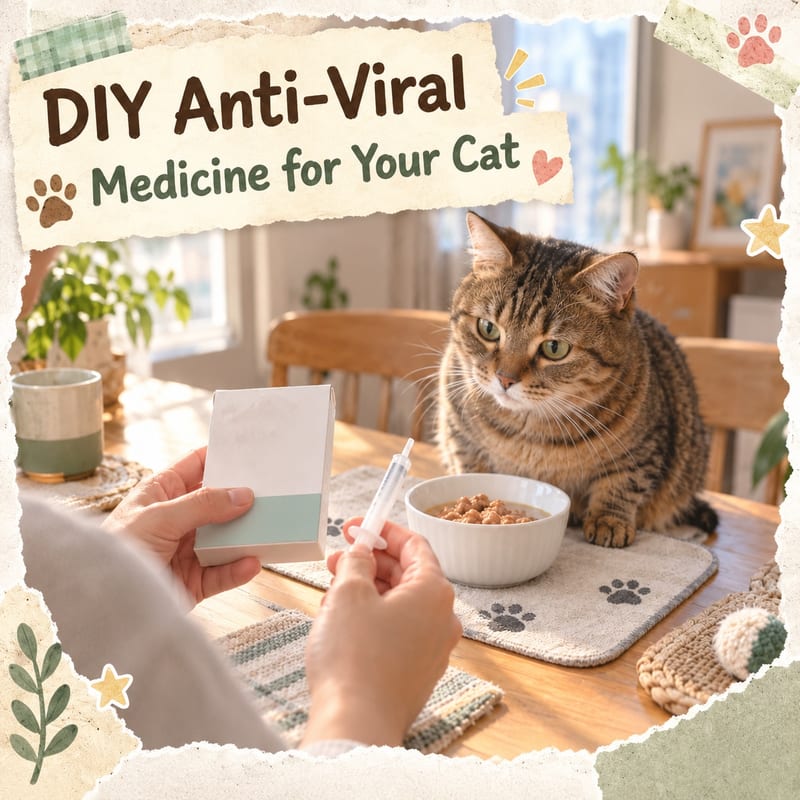
Pet Antibiotic Side Effects: Common Reactions and What to Do
If your pet shows side effects during a course of antibiotics, the first step is not to stop the medication: stopping or reducing the dose on your own can leave the infection untreated and may even select for resistant bacteria. Any change to the course must be decided by your veterinarian. This article lists 6 common reactions (soft stool/diarrhoea, vomiting, reduced appetite, lethargy, itchy skin, swelling or pain at the injection site), when each typically appears, 5 emergency signals that need immediate veterinary care, plus hydration, spacing probiotics about 2 hours apart, the 5 numbers to bring to a follow-up, and how to dispose of leftover medication.

Complete Daily Care Guide for Cats and Dogs | Brushing, Bathing, Nail Trimming, Ear and Eye Cleaning Schedule (2026)
The core of daily care is to fix brushing, nail trimming, ear cleaning, eye cleaning, toothbrushing and weight monitoring into a weekly schedule: for cats, brushing from daily to three times a week, nails about every two to four weeks, and toothbrushing ideally daily; disinfectants must be used at the correct dilution, with good ventilation, and surfaces wiped dry before pets return. If you have any doubts about concentration or usage, ask your veterinarian.
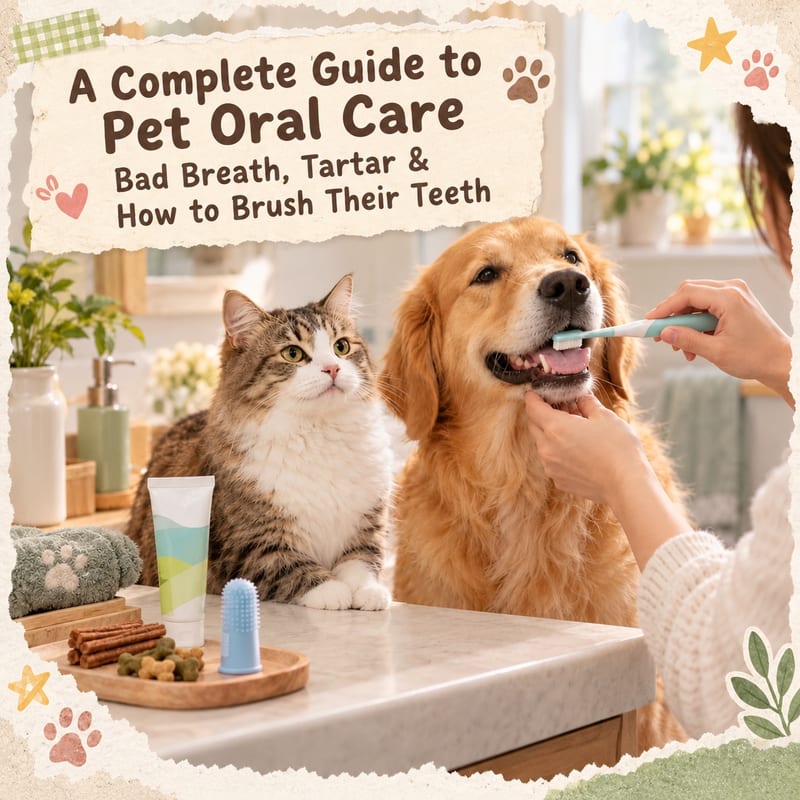
Cat & Dog Dental Care Guide 2026: Bad Breath, Tartar, Gingivitis Causes + Brushing Methods
A complete guide to cat and dog dental care: from plaque hardening into tartar, the 0 to 4 stages of periodontal disease, to home check steps, brushing methods for cats and dogs, dental tool comparison, anaesthetic scaling procedures and Hong Kong clinic price ranges — everything you need to protect your pet's teeth. Information checked as of 2026-10-12.
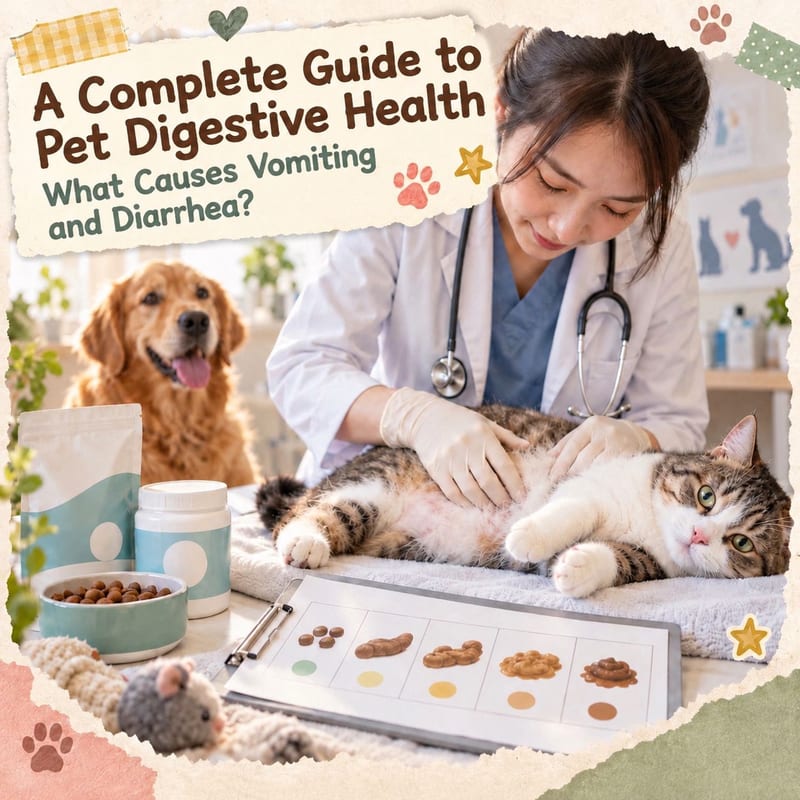
Cat & Dog Digestive Health Guide 2026: Causes of Vomiting, Diarrhoea, Soft Stool & Mucus, and How to Choose Probiotics
Most digestive problems in cats and dogs are short-lived, but "mucus in stool, persistent vomiting, bloody diarrhoea, or a simultaneous decline in energy and appetite" are warning signs. First-line action is to keep a fresh stool sample and record frequency and appearance; do not give human medication on your own. Probiotics are only supportive and cannot replace a veterinarian's diagnosis. When giving probiotics alongside antibiotics, it is generally advised to space them about two hours apart.
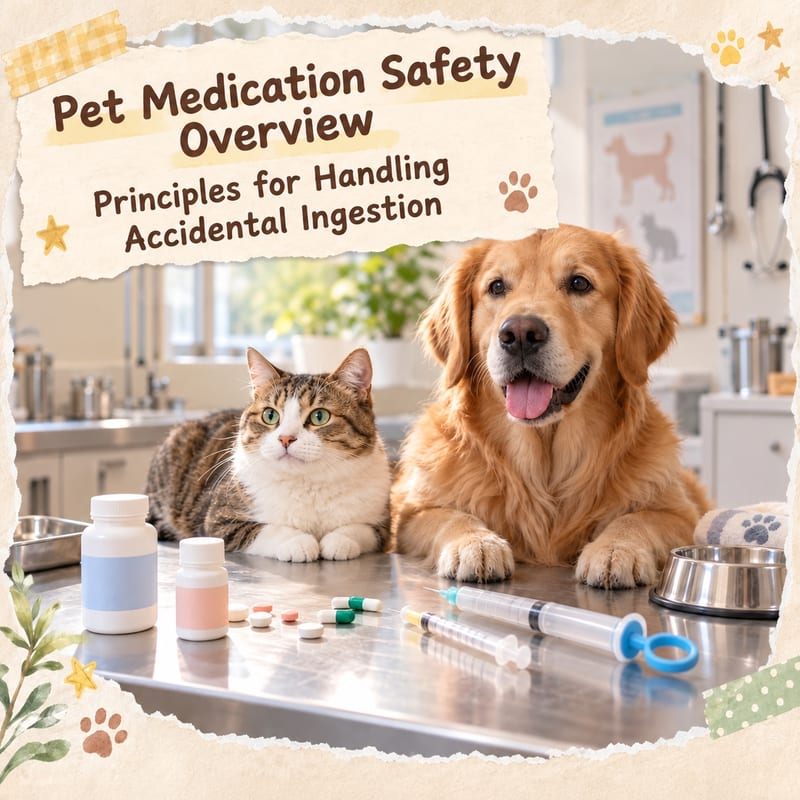
Pet Medication Safety Guide|Dosage, Antibiotic Side Effects, Deworming & Poisoning First Aid (2026)
There is only one iron rule in pet medication: every dosage and medication decision is made by the veterinarian. Common human drugs such as acetaminophen (paracetamol) and ibuprofen are clearly toxic to cats and dogs—never give them on your own. If a pet swallows something by mistake, immediately note the drug name, quantity and time, bring the packaging and contact your veterinarian, and do not induce vomiting yourself.
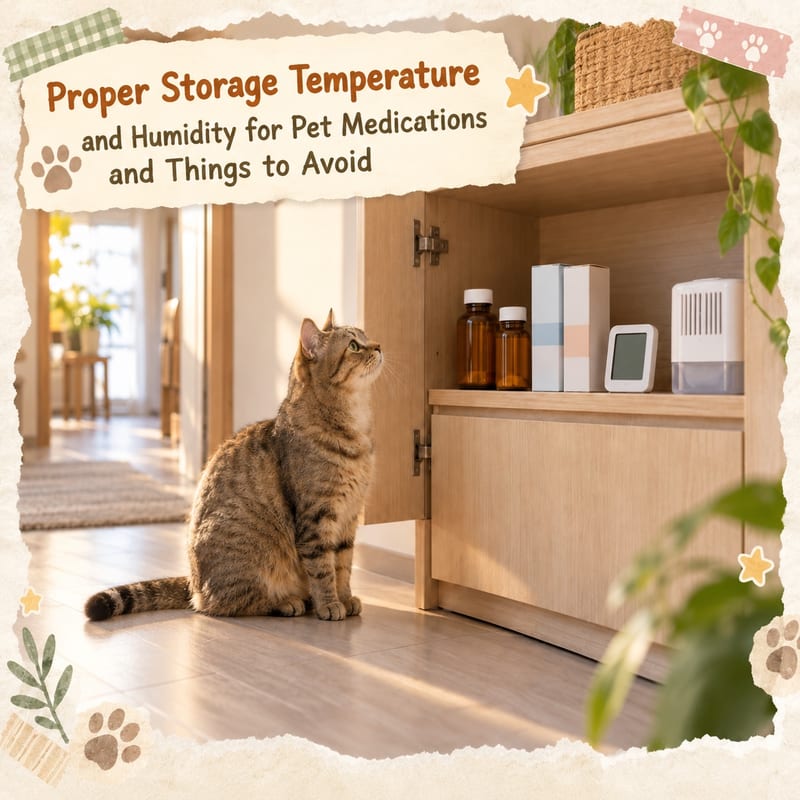
Pet Medication Storage Temperatures: A Hong Kong Guide
Most tablets and capsules are stored at room temperature 20–25°C, insulin and opened oral liquids require refrigeration at 2–8°C, and 'cool place' means 8–15°C. Always follow the label and veterinarian instructions.

Cat & Dog Nutrition Guide: Protein, Phosphorus, Calories, Weight Tracking + How to Choose Prescription Food (2026)
Choosing food isn't about price or big words on the packaging — it's about three numbers: protein percentage on a dry matter basis, phosphorus percentage on a dry matter basis, and calorie density per kilogram. With these three numbers you can calculate how many grams to feed per day, judge whether the food suits a kidney cat or sensitive stomach, and fine-tune using weight trends.
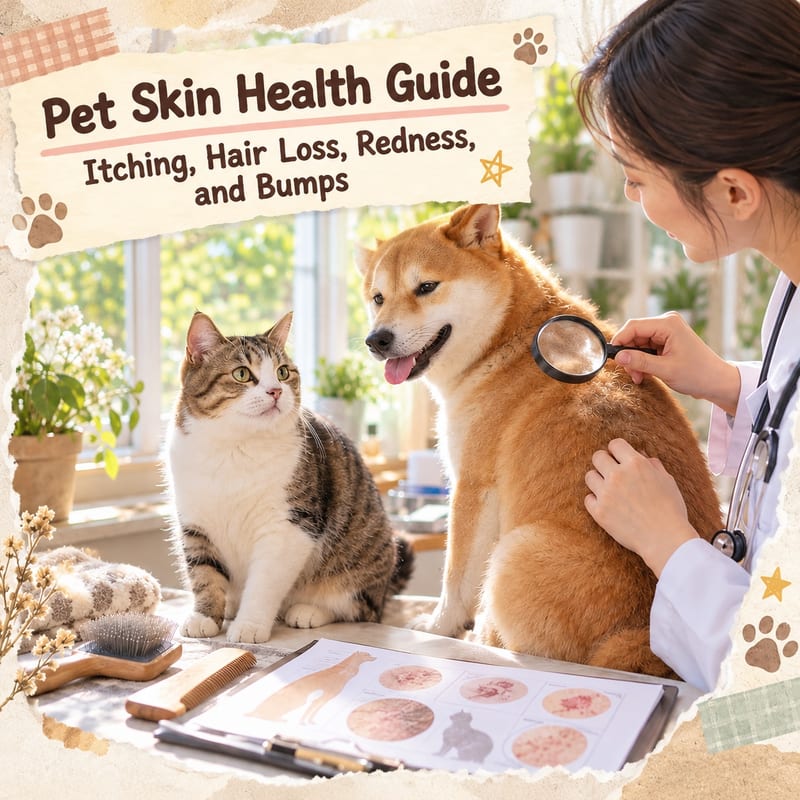
Pet Skin Health Guide: Itching, Hair Loss, Rashes and Fungal Infections Explained (2026)
Itching, hair loss, rashes and fungal infections that keep coming back? This guide uses a three-step method - location, appearance, timing - to tell apart fleas and mites, fungal infections, food allergies and environmental allergies, with a symptom comparison table, a care schedule, and guidance on coat colour changes and wound healing. Information checked up to 2026-10-12.

Petsmile Toothpaste Long-Term Benefits: What It Can and Cannot Do
Plaque matures in 1-2 days; daily cleaning with Petsmile (VOHC-recognised for plaque in dogs since 2011) helps interrupt accumulation. Brand data: 62% plaque reduction, 28% gingivitis reduction. Cannot remove tartar or treat periodontal pockets—only vet scaling can. Clean once daily, check weekly, see a vet every 6-12 months.
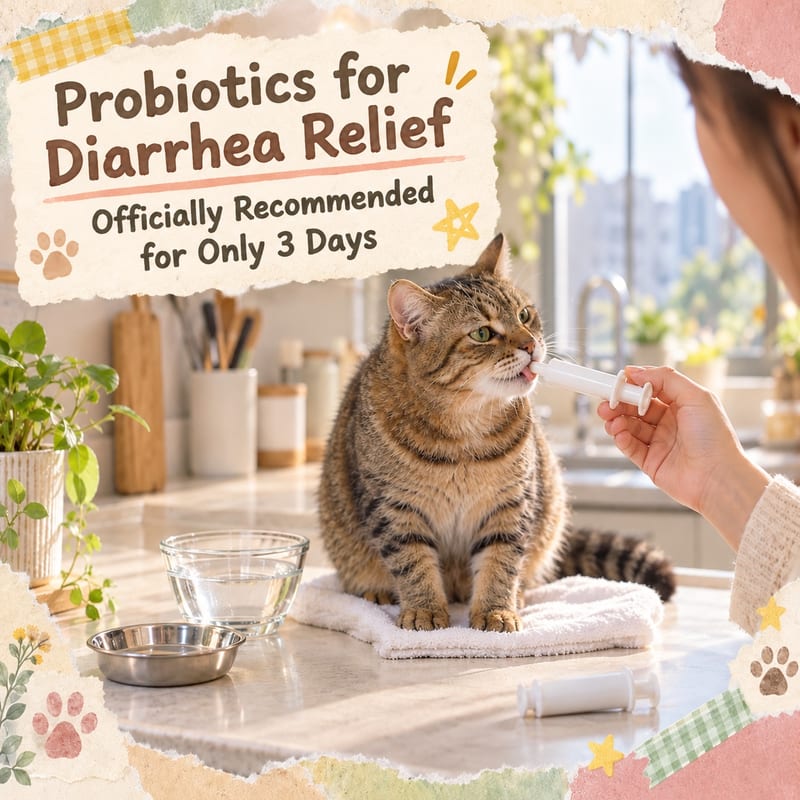
Does Pro Kolin Advanced Have Side Effects With Long-Term Use?
Pro-Kolin Advanced's official guidance is 2 to 3 consecutive days, and diarrhoea lasting more than 2 to 3 days requires a vet check, so it is not designed as a daily supplement. This article breaks down the strength of evidence for each ingredient using the official composition and labelled amounts (probiotics 2 × 10^8 CFU/g, kaolin + montmorillonite, pectin, psyllium), and explains the 4 practical risks of long-term use: clay binds other oral medicines so doses must be spaced 2 hours apart, soy oil sensitivity, high-dose clay can cause constipation, and probiotics are only transient gut 'visitors' whose effects fade after stopping.

Senior Cat Poor Appetite | A Must-Read for Hong Kong Cat Owners: 8 Causes to Check + Practical Tips to Boost Appetite
When an older cat stops eating, the common causes listed in the books are: food pieces too big to chew, reduced sense of smell, inflamed gums, oral problems, plus diseases such as kidney disease, hyperthyroidism and tumours. This article walks you through 8 causes one by one, when to see a vet immediately, and practical tips to boost a senior cat's appetite.
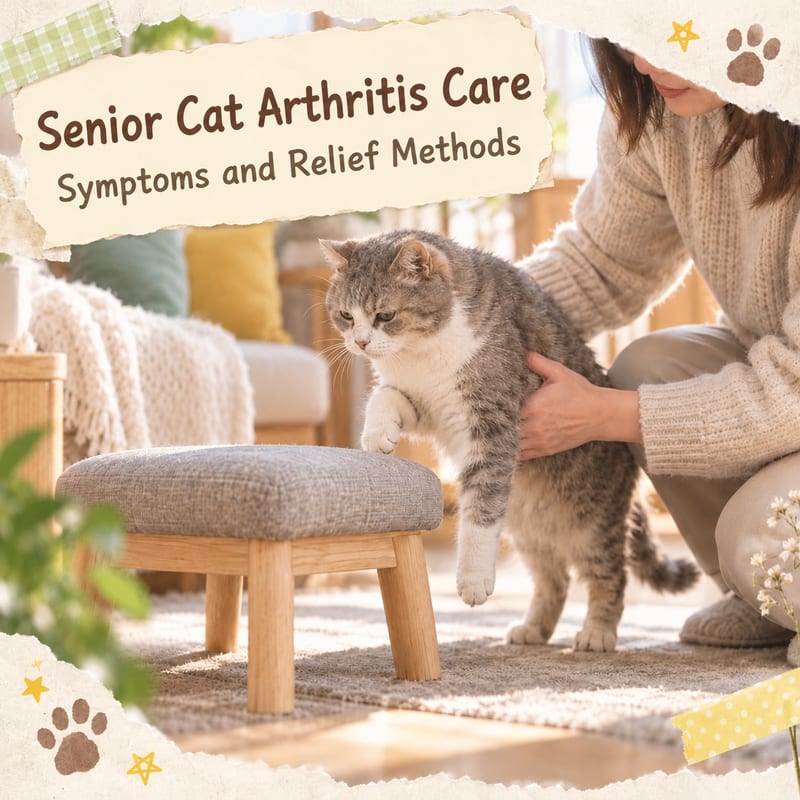
Senior Cat Joint Degeneration | Essential Guide for Hong Kong Cat Owners: Daily Care + How to Choose Supplements (Not Medication)
Books note that arthritis is less common in cats than in dogs, but senior cats lose cartilage with age, and overweight cats are at higher risk. This article covers daily care for senior cat joint degeneration: weight loss, environmental modification, what to watch for, and the real role and limitations of joint supplements (glucosamine, chondroitin)—supplements are not medication; treatment requires a veterinarian.
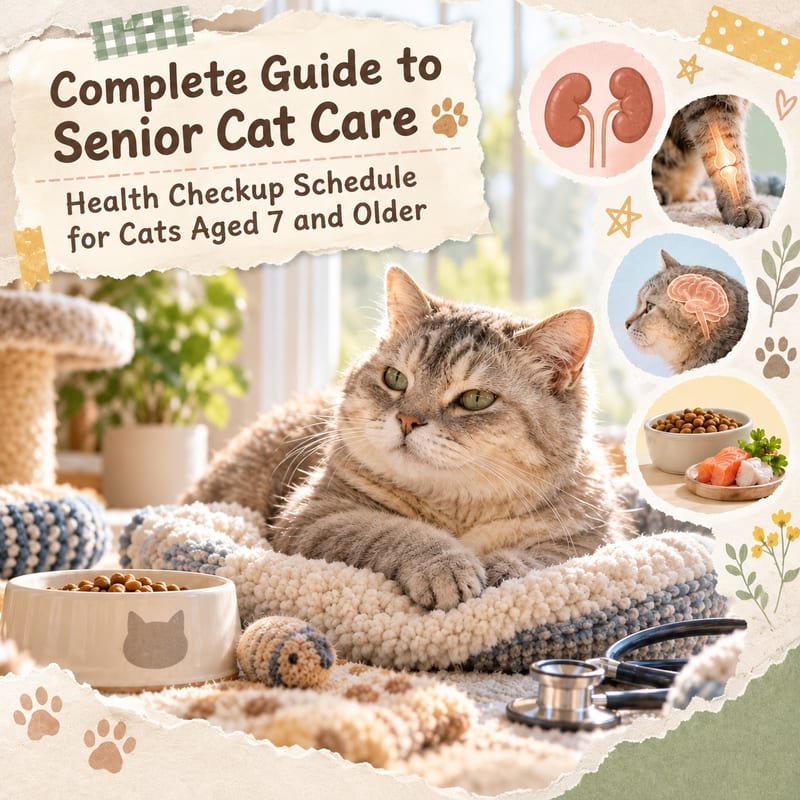
Senior Cat Care: Complete Guide for Cats 7+ — Kidneys, Joints, Cognition, Diet and Check-up Schedule (2026)
Senior cat care is not about one organ: from age 7, a cat's whole body ages in sync, and the kidneys, joints, teeth, thyroid and cognitive function all change gradually. This guide brings together the warning signs for each system, a check-up schedule for ages 7/10/14, a caregiver checklist, Hong Kong cost estimates and a quality-of-life assessment for palliative care, so Hong Kong cat owners can put together a care plan they can actually follow. Information checked to 2026-10-12.
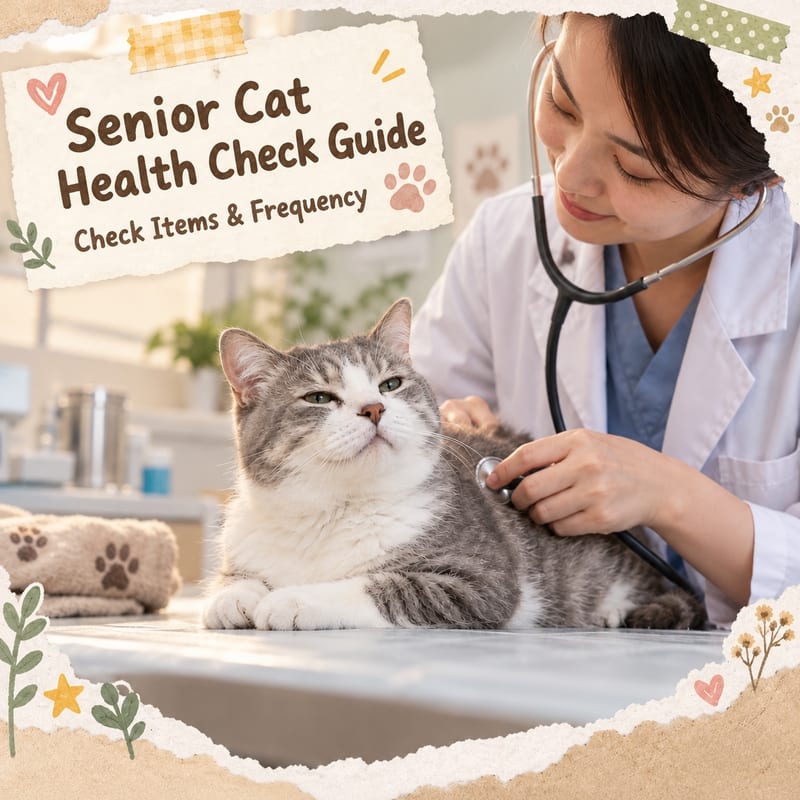
Senior Cat Checkup Guide | What Hong Kong Cat Owners Must Know: Every 6 Months from Age 7 + Full Breakdown of Blood Test Items
A cat at 3 months is roughly equivalent to a 1-year-old human. From age 7, checkups every 6 months; over 10, every 3-6 months, to keep up with ageing. This article breaks down senior cat checkup items (blood count, biochemistry, thyroid, blood pressure, X-ray, ultrasound), what a vet's palpation can find, a home observation checklist, and practical arrangements for checkups in Hong Kong.
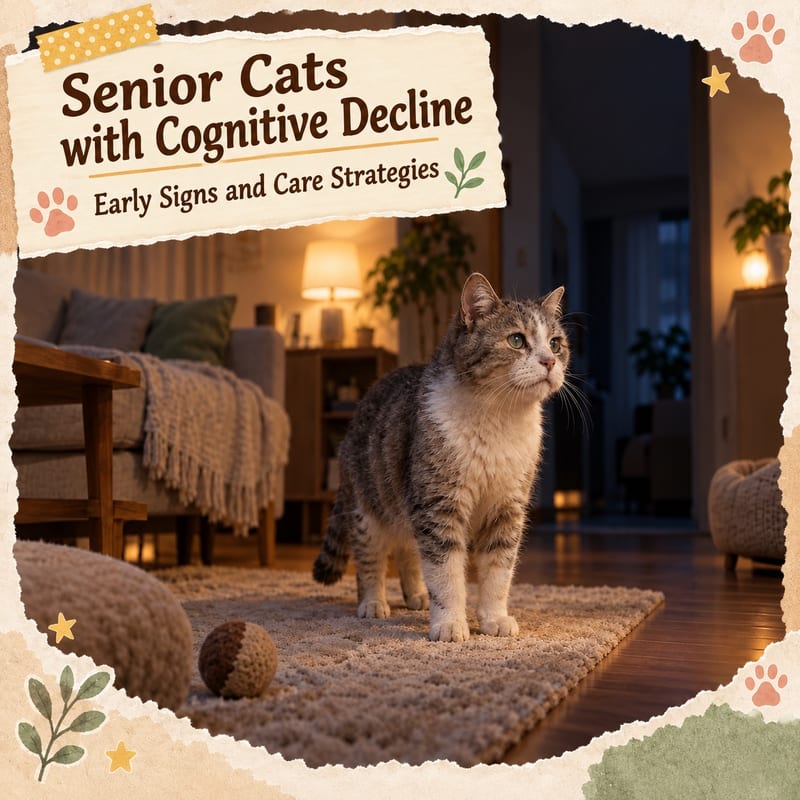
Senior Cat Cognitive Dysfunction | What Hong Kong Cat Owners Must Know: The Truth About Night Crying, Wandering and Inappropriate Urination
Night crying, aimless wandering, missing the litter box, forgetting whether they've eaten — books suggest these could be cognitive dysfunction (feline dementia), or they could be treatable conditions like hyperthyroidism. This article shows you how to tell the difference, how to use environment and interaction to slow decline, and when blood tests are needed.
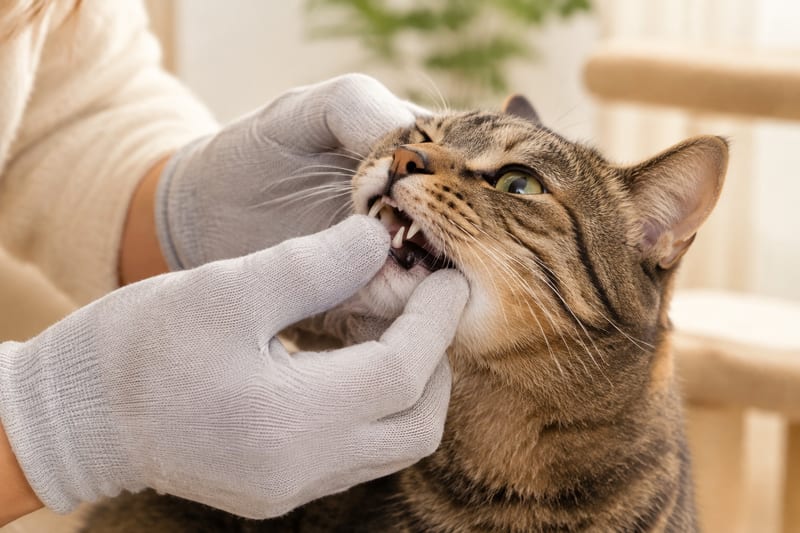
Senior Cat Dental Care | A Must-Read for Hong Kong Cat Owners: Anaesthesia Risk for Teeth Cleaning, Periodontal Disease, and What to Do About Loose Teeth
Book data: 85% of cats over 3 have periodontal disease. Senior cats have weaker immunity, so oral bacteria multiply more easily—and can travel through the bloodstream to attack the heart, kidneys and liver. This article covers how to arrange teeth cleaning for senior cats (how sedation and anaesthesia are assessed), the progression of periodontal disease, what to do about loose teeth, the difficulties of stomatitis, and realistic ways to brush daily.
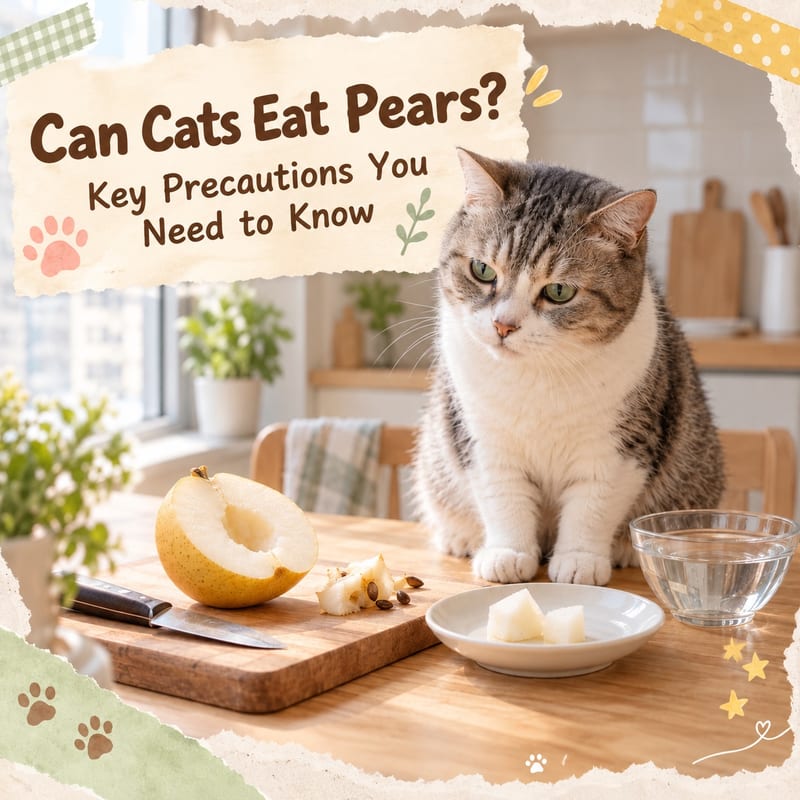
Can Senior Cats Eat Pear? Portions, Benefits and When to Avoid
Senior cats can eat pear, but only a small amount of peeled, cored flesh: about 10 g per 4.5 kg body weight per day (roughly 1 to 2 one-centimetre cubes), no more than 2 to 3 times a week. Pear seeds and core contain cyanogenic glycosides, which pose a risk if chewed and swallowed, so they must be removed completely; never feed pear juice, canned pears in syrup or dried pear. Diabetic cats, obese cats and cats with a history of pancreatitis should not be fed pear, and cats with kidney disease should be checked with a veterinarian first. This article provides a portion table, 5 preparation steps, 8 situations to avoid, and a 48-hour observation checklist after feeding.
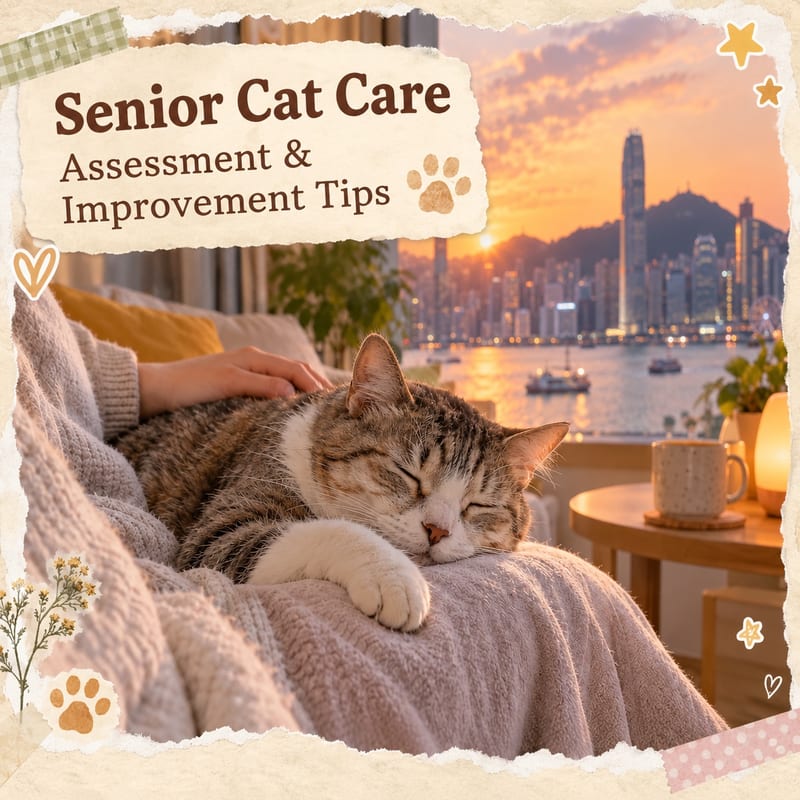
Senior Cat Quality of Life | A Must-Read for Hong Kong Cat Owners: Palliative Care, Assessment Chart and Difficult Decisions
When an old cat reaches a certain stage of illness, the most important question shifts from 'how to treat' to 'is she doing okay?'. This article covers how to assess quality of life (five dimensions: eating, drinking, mobility, pain, happiness), daily practices for palliative care, and the principles from books and veterinarians when facing the hardest decision.
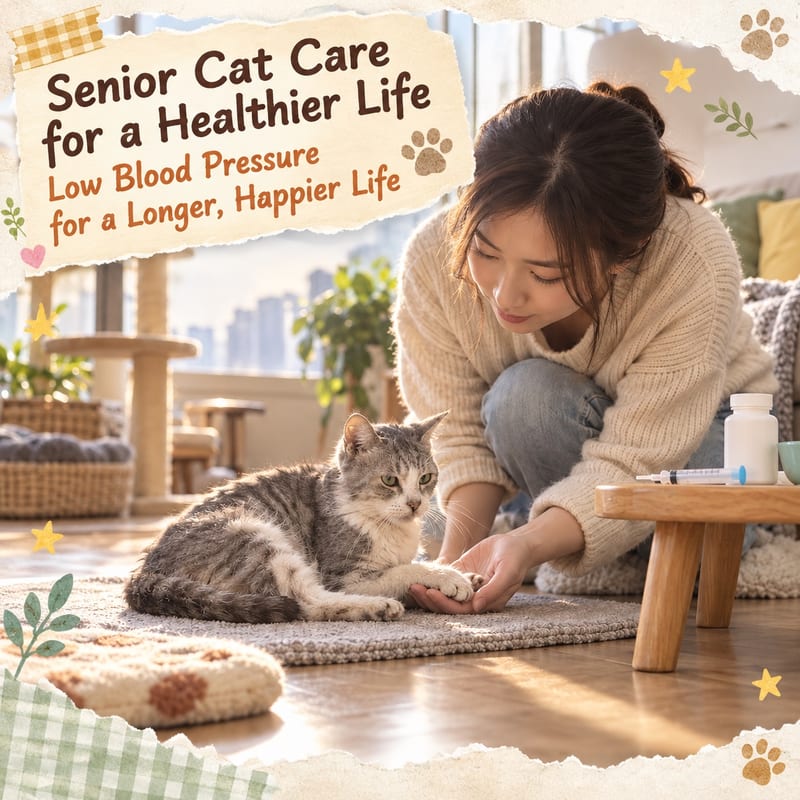
Old Cat on Steroids with Weak Legs? The Link to Low Potassium
When an older cat on steroids (e.g. prednisolone) develops weak legs and tires easily, it's not necessarily 'just old age'. It could be steroid myopathy, low blood potassium, chronic kidney disease, joint pain, or steroid-induced blood sugar problems — only blood tests can tell. Typical lab reference for blood potassium is about 3.5–5.5 mmol/L; when clearly low, cats more often show hind-limb and neck weakness. This article lists 4 possible pathways, a 7-day home observation method, 4 red lines for immediate vet care, and why you must not stop or reduce the medication or supplement potassium on your own.

White Dog Coat Turning Yellow: Solutions, Brightening Care and Shampoo
A white dog's coat turning yellow is mostly pigment from tears, saliva and urine that oxidises and stains the coat after staying damp, plus sebum oxidation and UV. The hair isn't damaged. The core of home care is keeping the coat dry: spend 5 minutes daily wiping eyes, mouth and paws, bathe every 4 to 6 weeks with thorough rinsing and drying, and trim already-stained tips. This article breaks down five causes, a 3-minute self-check and how to choose a brightening shampoo. If there's also odour, itching, hair loss, or yellowing of the whites of the eyes or gums, see a veterinarian promptly.
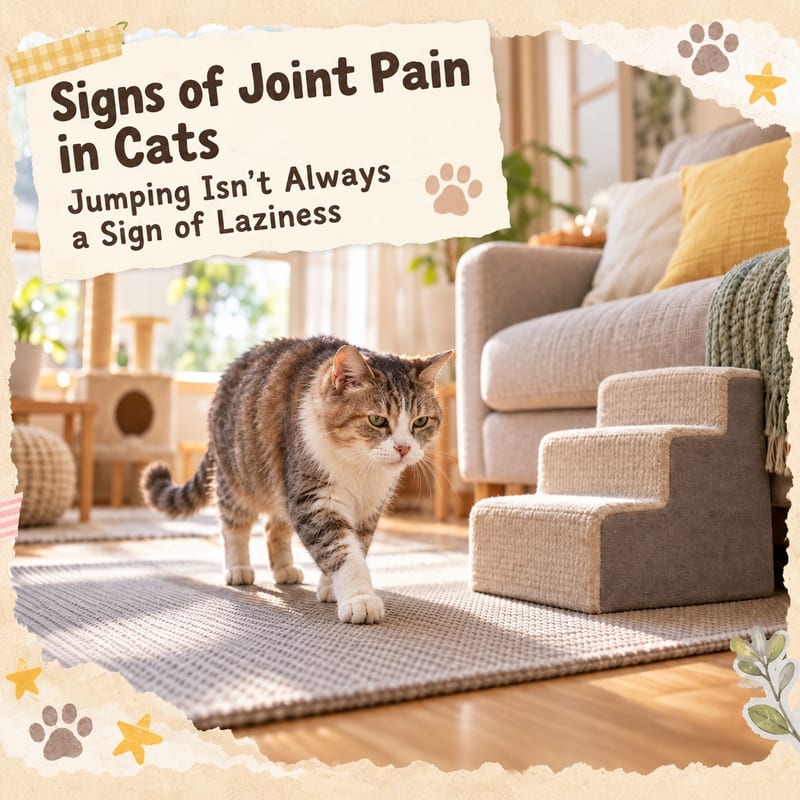
Cat Arthritis Guide: What Every Hong Kong Cat Owner Should Know — Not Jumping High Doesn't Mean Lazy, 5 Signs + Home Modifications
Cat arthritis is more common than you think, but cats hide pain by instinct — it often shows up only as not jumping high, less grooming, or a grumpier mood. This guide covers the 5 signs, how to tell joint pain from genuine laziness, and anti-slip and climbing modifications that work even in small Hong Kong flats.
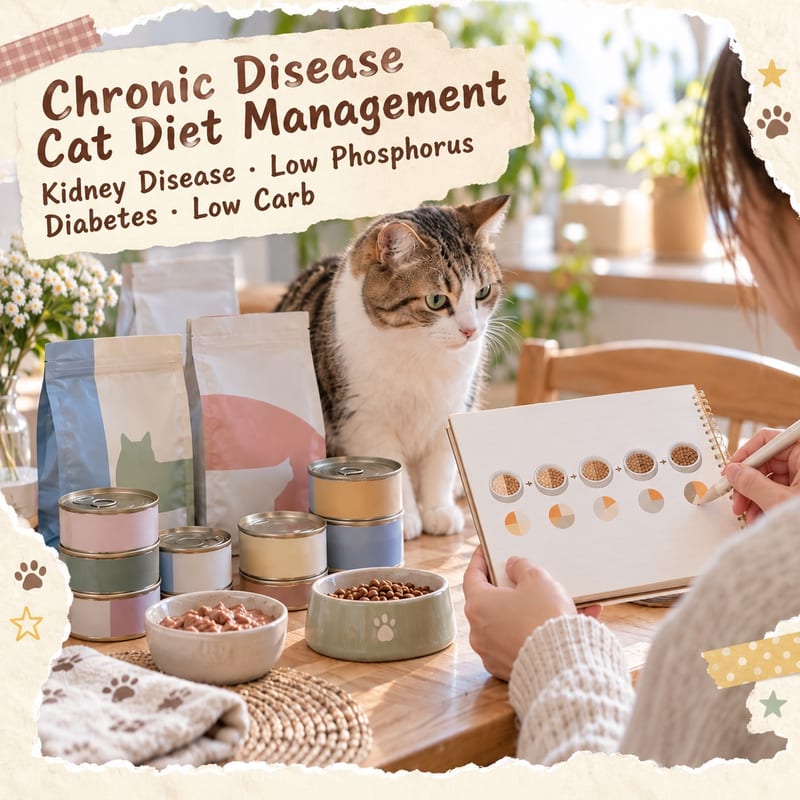
Chronic Disease Diets for Cats: Kidney, Diabetes, Heart, and Pancreatitis
For cats with chronic diseases, the question isn't whether a diet is "good" but whether it "matches the condition": kidney disease requires phosphorus control, diabetes requires carbohydrate control, heart disease requires attention to taurine and salt, and pancreatitis requires low fat. Always transition food gradually over 7 to 10 days; a sudden switch will only cause food refusal. Prescription diets generally require veterinary confirmation before purchase, and any supplements need veterinary approval—do not add them yourself.
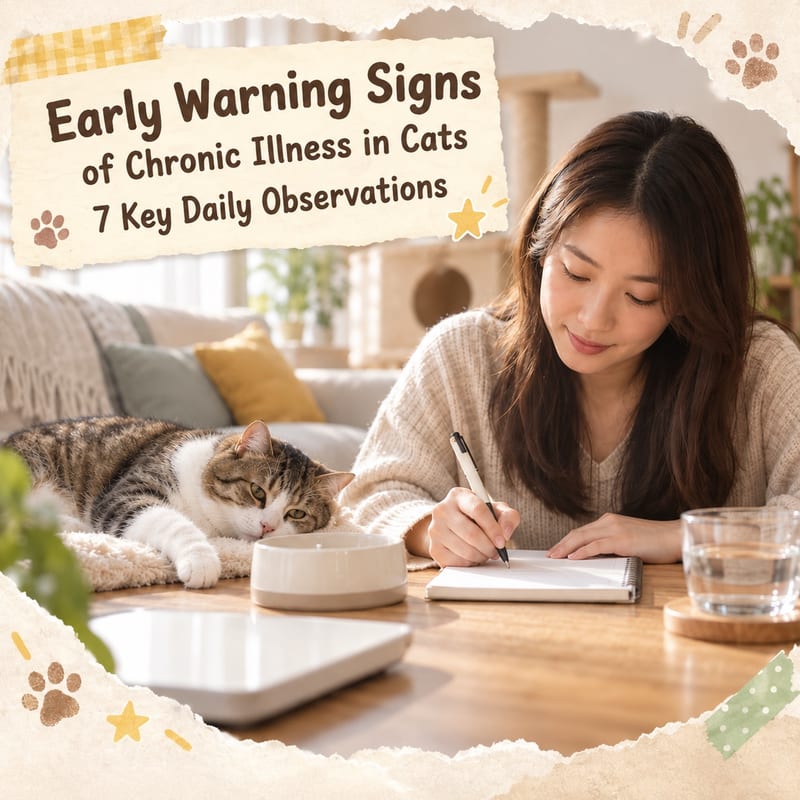
Early Warning Signs of Chronic Disease in Cats | 7 Daily Observations for Hong Kong Cat Owners + 4-Week Record Sheet (with Blood Test Items)
The tricky thing about chronic disease in cats is that it creeps up slowly. By the time obvious symptoms appear, the disease has often been progressing for a while. This article compiles 7 signals Hong Kong cat owners can see every day, a 4-week record sheet, and which blood test items to check, helping you turn invisible decline into trackable numbers.
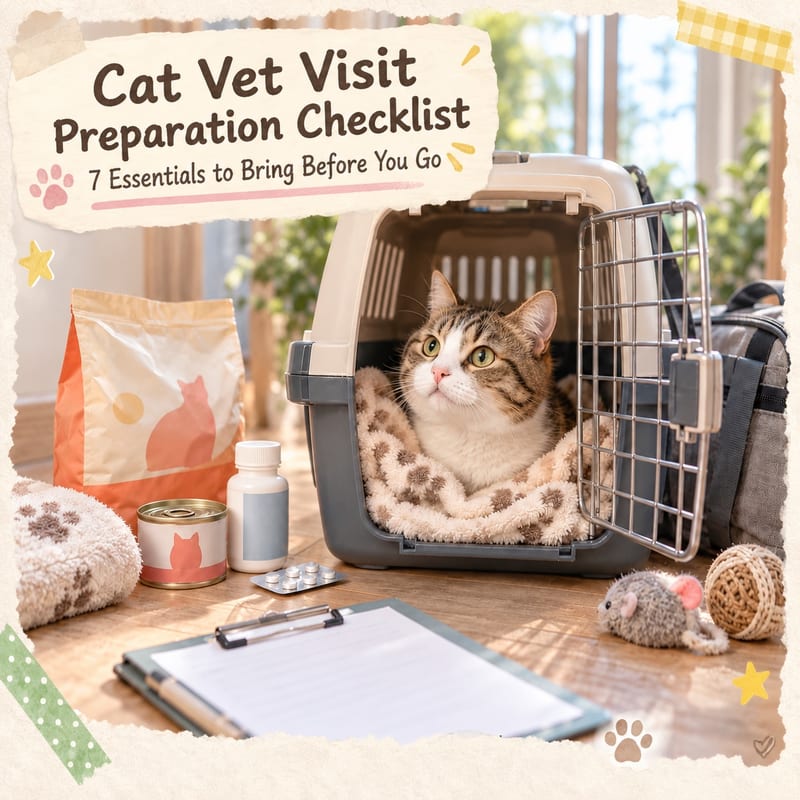
Cat Vet Follow-Up Visit Checklist for Hong Kong Cat Owners: 7 Things to Bring Before You Leave Home, and How to Read Blood Test Results
Cats with chronic conditions need regular follow-up visits, but many owners only realise at the clinic that they forgot the records or don't know how to answer the vet. This article gives you a follow-up checklist you can actually use: 7 things to prepare before leaving home, 4 things to tell the vet, which blood test values to look at, and what to watch in the 24 hours after you get home.
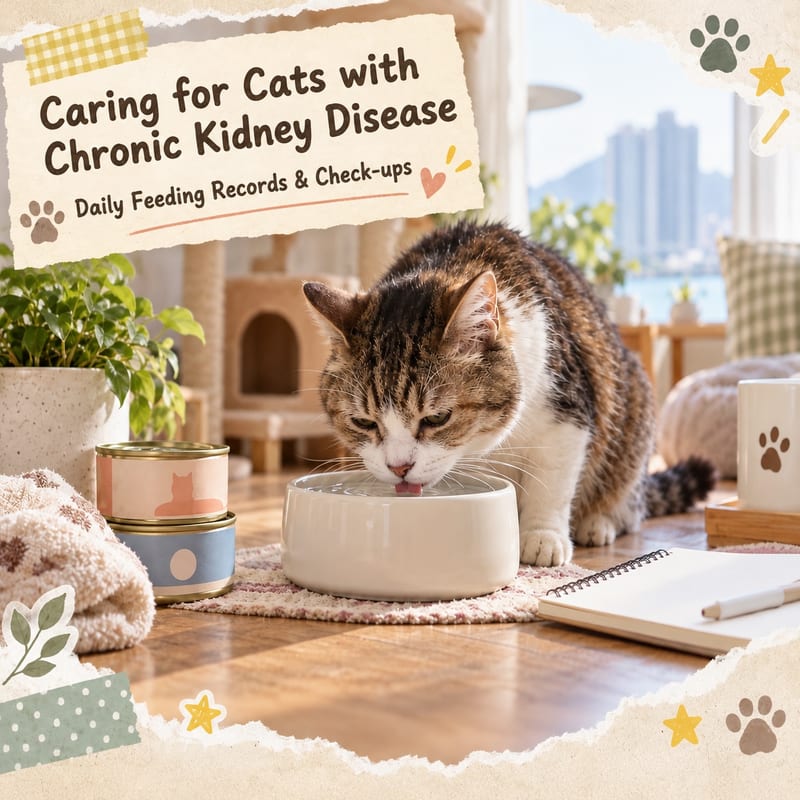
Feline Chronic Kidney Disease Care in Hong Kong: Diet, Monitoring, and Vet Follow-ups
Feline chronic kidney disease (CKD) is irreversible, but good care can help manage progression and maintain appetite and weight. The three most practical things Hong Kong cat owners should do: ① Switch to a low-phosphorus diet and increase water intake; ② Weigh your cat on the same day each week and count urine clumps daily; ③ Once stable, blood and urine tests every 3 to 6 months. If your cat refuses food, vomits, or is extremely lethargic, don't wait for an appointment—see a veterinarian immediately.
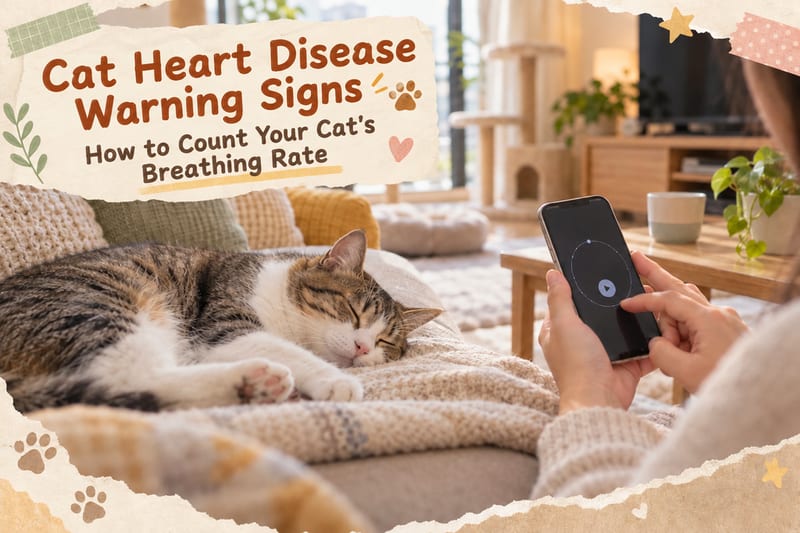
Cat Heart Disease Guide: Early Signs, Home Monitoring & Care
Learn about the most common heart disease in cats, how to monitor sleeping respiratory rate at home, early warning signs, and daily care tips for Hong Kong cat owners.
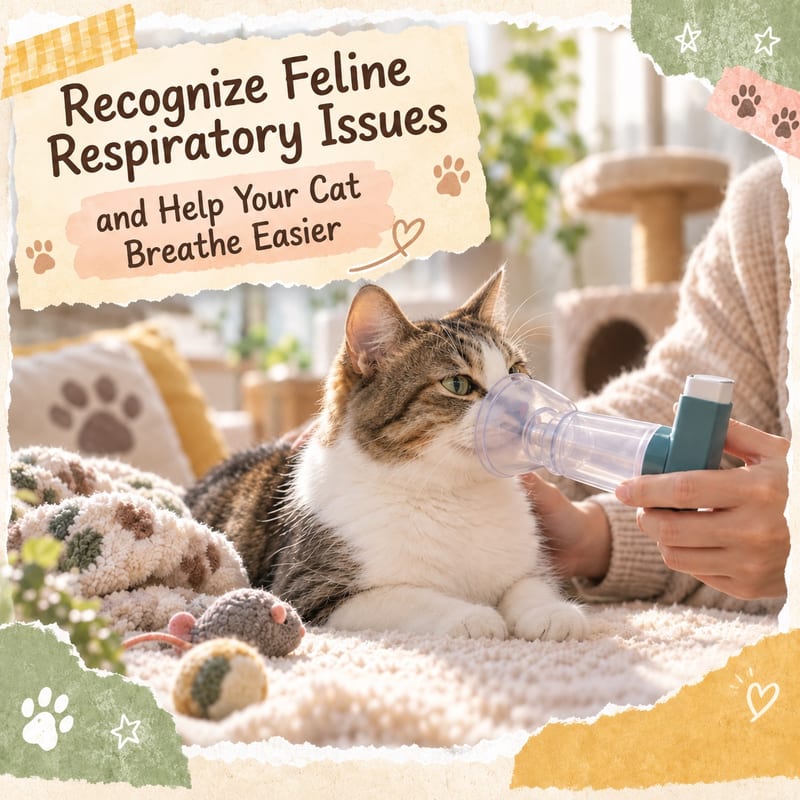
Cat Asthma Guide: Symptoms, Triggers, and Home Management in Hong Kong
Learn to recognise cat asthma symptoms, distinguish them from hairballs, and manage triggers in Hong Kong homes. Includes emergency signs, veterinary diagnosis, treatment options, and fee references.
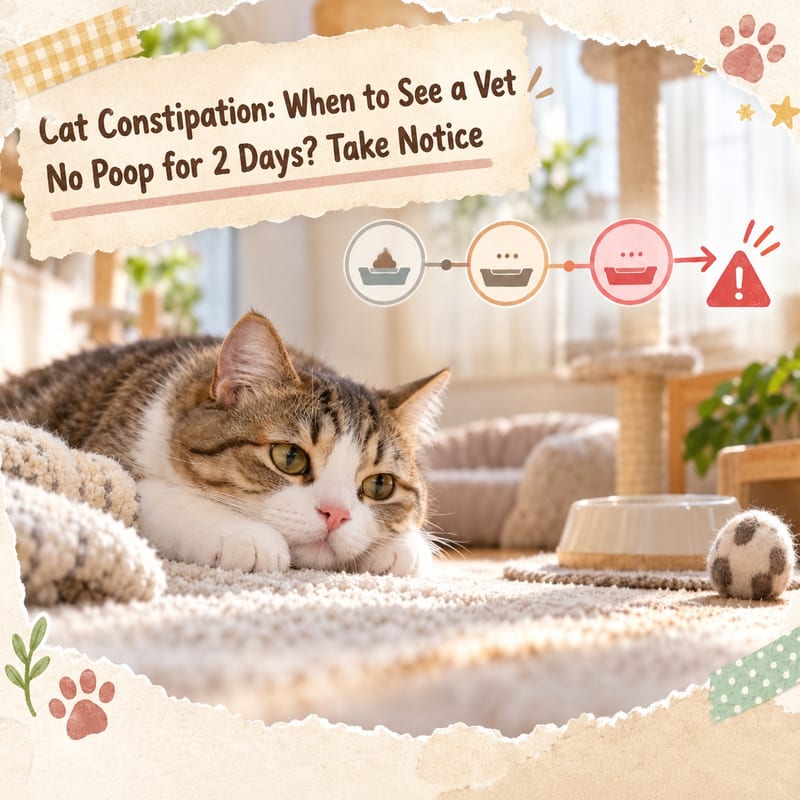
Cat Constipation | A Must-Read for Hong Kong Cat Owners: How Many Days Without Pooping Before Seeing a Vet? Symptoms, Causes and the Red-Line Timeline
What to do about cat constipation? Senior cats especially need attention: more than 48 hours without a bowel movement means seeing a vet within 24 hours. This article covers the traffic-light grading, 9 major causes, 7 emergency warning signs and the risk of megacolon, plus how to tell 'can't poop' from 'can't pee', with Hong Kong vet fee references.
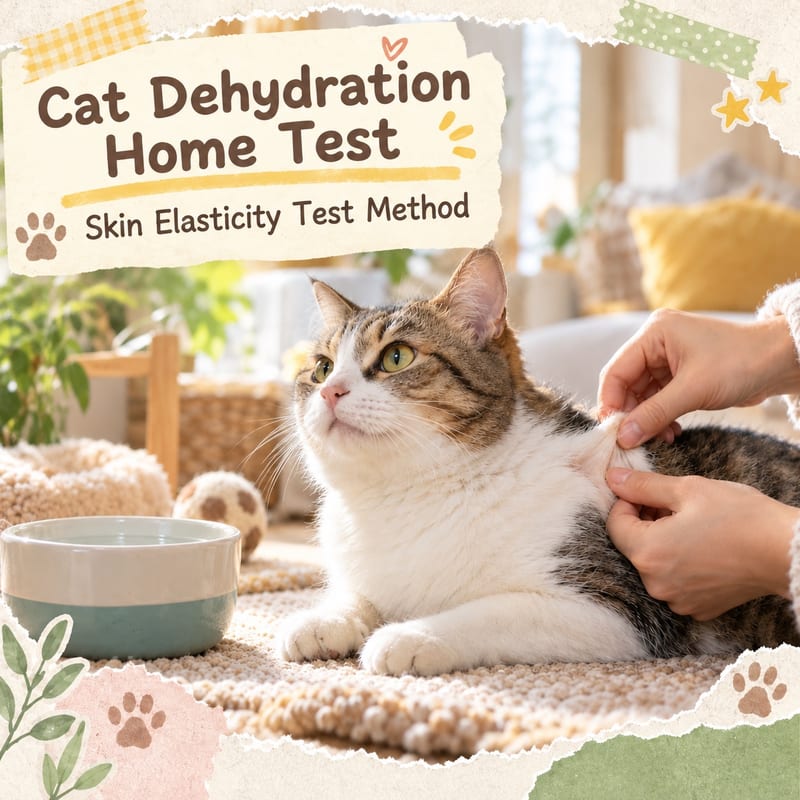
Cat Dehydration: Home Skin Turgor Test + 7 Major Causes & When to See a Vet Immediately (Hong Kong)
Cat dehydration can be fatal, and often there are no obvious signs. This article teaches you three home methods — the skin turgor test, gum check and urine output — to assess quickly, explains the 7 major causes, the difference between dry and wet food, subcutaneous fluid therapy, and the special risks of Hong Kong's hot summers.
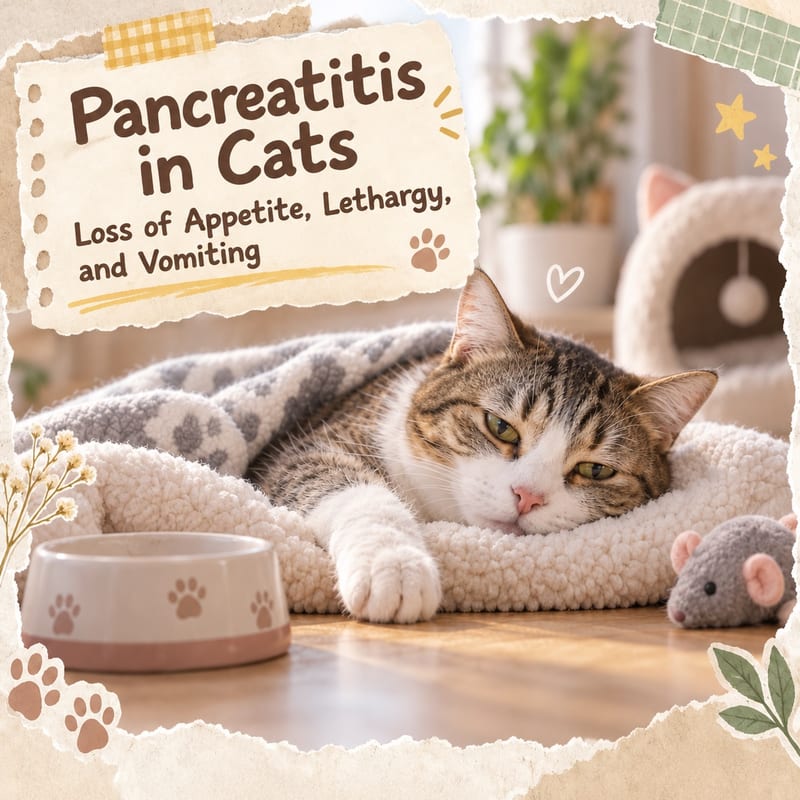
Cat Pancreatitis: A Complete Guide | Poor Appetite, Low Energy, Intermittent Vomiting? Symptoms, fPLI Diagnosis & Treatment (Hong Kong)
Cat pancreatitis symptoms are extremely subtle. The most common triad is poor appetite + low energy + intermittent vomiting, which is harder to spot than in dogs. This article explains the symptom distribution, fPLI/Spec fPL blood diagnosis, the link to triaditis, treatment approaches and red-line timeline, with Hong Kong vet fees listed publicly.
Cat Symptom Self-Check Guide | 12 Common Symptoms Quick Reference + 🟢🟡🔴 Red-Line Triage Table (with Hong Kong Vet Fees)
Your cat can't tell you what's wrong. This guide brings together 12 common symptom quick-reference cards and a 🟢🟡🔴 red-line triage table to help you decide within minutes whether to observe at home or see a vet right away, plus real published fees from Hong Kong vet clinics and a pre-visit checklist every Hong Kong cat owner should save.
Can Indoor Cats Get Feline Panleukopenia? 5 Warning Signs + Vaccination Schedule
Think your cat can't catch feline panleukopenia because it never goes outside? Wrong! The feline parvovirus can be brought indoors on shoe soles and in faeces, survives for over 40 days, and has a mortality rate of up to 90% in unvaccinated kittens. Based on veterinary textbook chapters, PetChill breaks down how it spreads, the 5 early warning signs, supportive treatment and the vaccination schedule, plus the correct way to disinfect with bleach and rules for isolating a new cat. A must-read for Hong Kong cat owners.
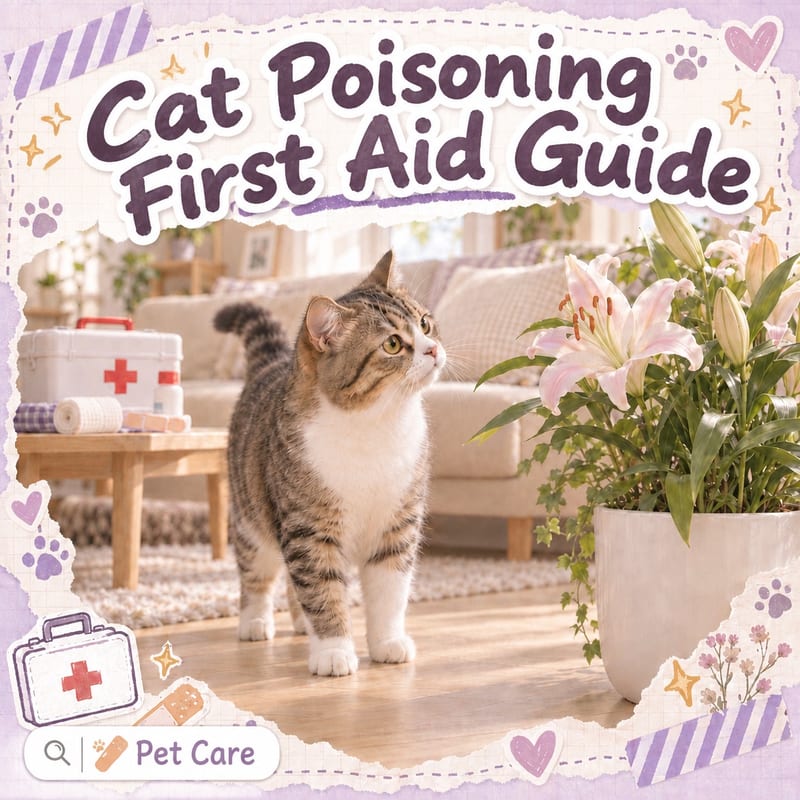
Cat Poisoning First Aid: The Golden 2 Hours and 6 Hidden Household Toxins
The golden window for saving a poisoned cat is only 1 to 2 hours. Call your vet immediately, save the vomit and packaging, and never induce vomiting on your own—corrosive substances like bleach can cause second-degree burns to the oesophagus. Lilies, including pollen and vase water, can cause kidney failure within 72 hours.

Cat Teething Guide: Kitten Teething Timeline, Retained Teeth and Care Essentials
Cat teething usually starts at 3 to 4 months and finishes by 7 to 8 months. At 6 weeks old, kittens first grow 26 baby teeth, and they end up with 30 permanent teeth (16 upper, 14 lower). This article covers the kitten teething timeline, why swallowed baby teeth are normal, how to handle bleeding gums and a drop in appetite, what to do about retained baby teeth (double teeth), and 4 warning signs that mean you should see a veterinarian immediately.
Cat Can't Pee? It's an Emergency! 5 Warning Signs of FLUTD + 24-Hour First Aid Guide | Must-Read for Hong Kong Cat Owners
Cat running to the litter box a dozen times a day but no urine clumps? Many Hong Kong cat owners mistake this for constipation or sulking, but it's a classic warning sign of Feline Lower Urinary Tract Disease (FLUTD). Male cats have a narrow, long urethra; if completely blocked by stones or plugs, it can be fatal within 24 to 48 hours due to acute uremia. This article covers the 5 warning signs, 5 causes, the golden 24-hour response, and 6 daily prevention tips to help you spot problems early and protect your cat's urinary health. Remember: no urine at all is an emergency—don't wait until morning.
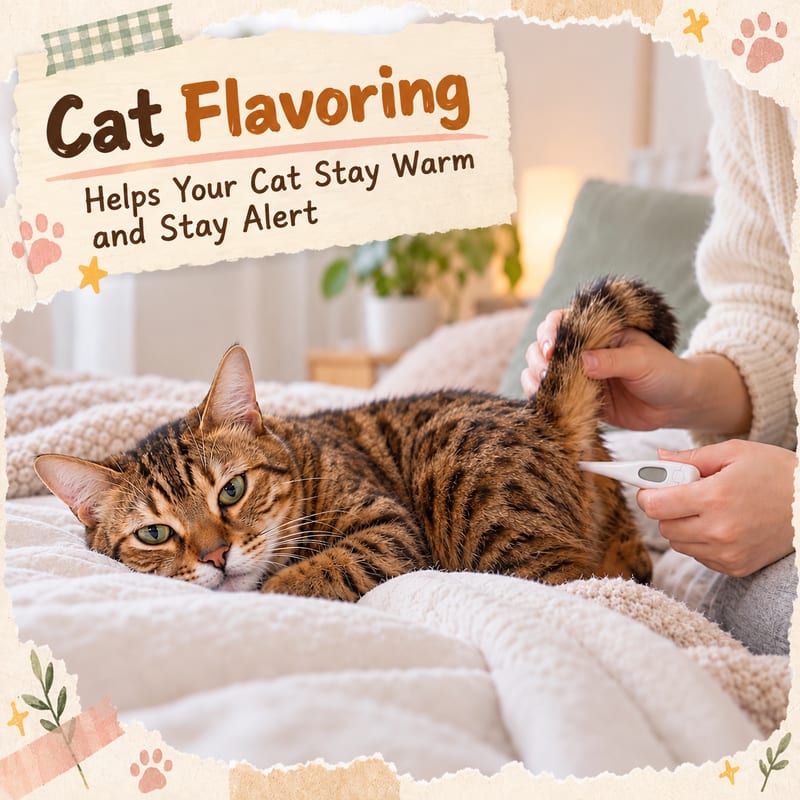
Cat Fever Guide | What Temperature Counts as a Fever? 3 Steps to Take a Temperature Correctly + 4 Major Danger Signs (Must-Read for Hong Kong Cat Owners)
Is a warm ear a fever? A cat's normal body temperature is 38–39°C, over 1°C higher than humans. This article teaches you 3 steps to take a temperature correctly, 4 major danger signs that mean see a vet immediately, the right way to cool a cat down and what to avoid, plus common causes of fever. A must-read for Hong Kong cat owners—it could save your cat's life!

5 Warning Signs Your Dog's Gut Is Off + 4 Ways to Build a Healthy Microbiome
Loose stools, smelly farts, and a nervous dog may not be about the food. Research shows 70% to 80% of a dog's immune system sits in the gut wall, and gut bacteria influence mood and behaviour via the gut-brain axis. Here are 5 warning signs of an imbalanced microbiome, 3 criteria for choosing a probiotic (CFU, multi-strain, third-party verification), and 4 daily habits to support gut health.

Mid-Autumn Festival Pet Safety Guide: Mooncakes, Candles and Fireworks — What Hong Kong Cat and Dog Owners Must Know
Mid-Autumn is a high-risk day for cats and dogs: human mooncakes are high in oil and sugar, raisins can cause acute kidney failure, real candles can singe fur and start fires, and firework bangs are the top cause of frightened pets going missing. Drawing on veterinary knowledge, this guide breaks down the festive hazards one by one — mooncakes, candles, lanterns, aromatherapy, mosquito coils and loud bangs — plus the golden three-step response to ingestion, four things to do to prevent your pet going missing, and five common Q&As, so Hong Kong cat and dog parents can guard against everything from food to sound and light, and enjoy a safe, reunited Mid-Autumn with their pets.

The Complete Guide to Deworming Your Dog: Internal & External Parasites, Frequency and Safety
Deworming your dog isn't something you do only after you spot worms! This guide brings together veterinary deworming plans: the difference between internal and external parasites, deworming frequency for puppies and adult dogs, safety notes on isoxazoline side effects, a four-step home check and four common questions — the whole deworming picture in one read.

Best Time to Neuter Your Dog? 5 Key Benefits + Post-Surgery Care Guide
The best time to neuter your dog depends on sex, breed and health. This article covers 5 key benefits (unneutered female dogs have up to a 25% risk of pyometra), the right timing for males and females, care during a female dog's heat cycle, and 4 post-surgery recovery steps to help you make a sound health decision for your pet.

Dog Tear Stains: 4-Step Eye Cleaning Method
Red-brown tear stains at the corners of your dog's eyes aren't just an appearance issue—they can be an early sign of eye disease. This article explains the causes of tear stains, the correct 4-step cleaning method, the cotton trap, how to use boric acid solution, and when to see a vet. Essential reading for Poodle, Maltese and Shih Tzu owners.
Dog Vaccination Guide: 8 Common Infectious Diseases and Puppy Vaccination Schedule
Canine distemper has a mortality rate of over 50% in adult dogs, and even higher in puppies. Learn about 8 major canine infectious diseases, the puppy vaccination schedule, and why dogs that don't go out still need shots.
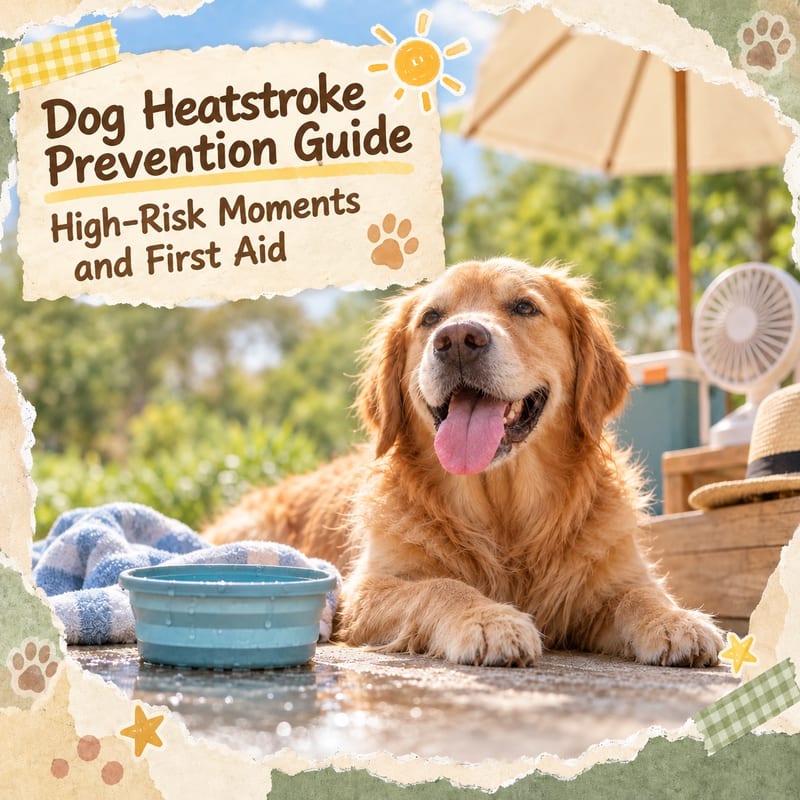
Dog Heatstroke Prevention Guide: 5 High-Risk Moments in Hong Kong + 6-Step First Aid to Keep Your Pet Safe Through Summer
Dog heatstroke prevention guide: why dogs overheat so easily, the 5 high-risk moments (parked car, midday walks, intense exercise and more), how to recognise the 3 stages of heatstroke, plus a 6-step first aid method and practical summer cooling tips. Essential reading for flat-faced and thick-coated dog owners.

Dog Weight Loss BCS Self-Check Chart | Is Your Hong Kong Dog Overweight? BCS Body Condition Score Self-Assessment Chart
Is your dog overweight? Don't rely on looks alone—use the BCS (Body Condition Score) self-check chart. BCS is an internationally recognised dog body condition scoring system—9 levels: 1 is thinnest + 9 is fattest. Ideal body condition is level 4 to 5. Weight loss methods: portion control + scheduled, measured meals + more exercise + choose low-calorie dog food.
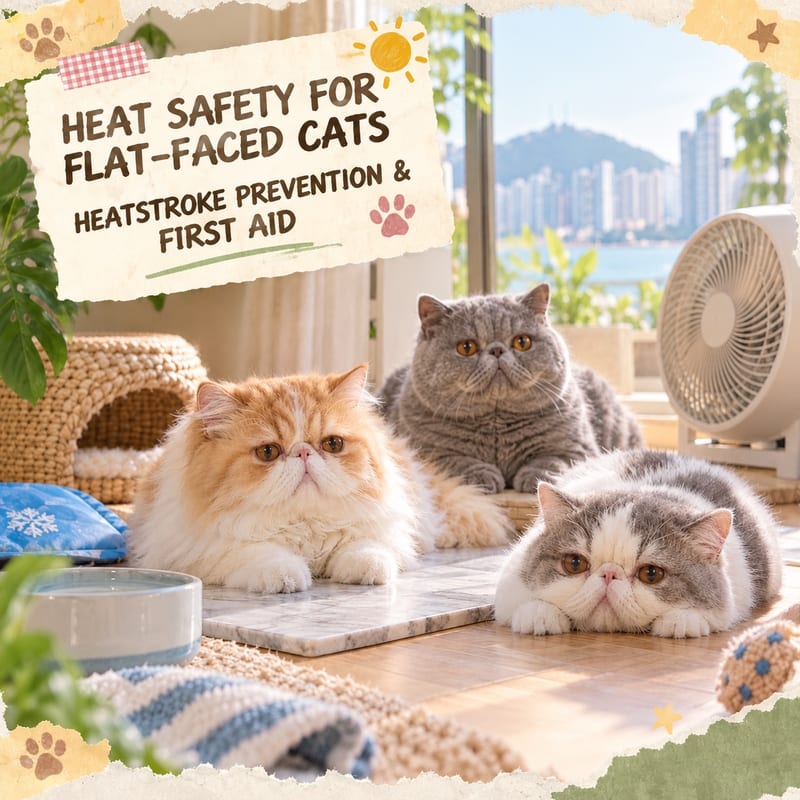
Flat-Faced Cats at High Risk of Heatstroke in Hong Kong Summer | Persian, Exotic Shorthair & British Shorthair Prevention and First Aid Guide
Hong Kong summer temperatures often exceed 32°C. Flat-faced breeds (Persian, Exotic Shorthair, some British Shorthair lines) are at high risk of heatstroke due to their short respiratory tracts and poor heat dissipation. This article explains the causes, symptoms, home prevention methods and emergency steps to help you keep your cat safe through summer.

Humid Weather × Sensitive Skin Breeds Care | Hong Kong's 80% Humidity Skin Battle
Hong Kong's humidity stays above 80% year-round, making sensitive-skin breeds (Persian, Exotic Shorthair, Scottish Fold) prone to ringworm, eczema, and ear infections. High-risk breeds at a glance + 5 prevention tips (dehumidify, brush, keep dry, regular checks, boost immunity) + what to do when problems arise.
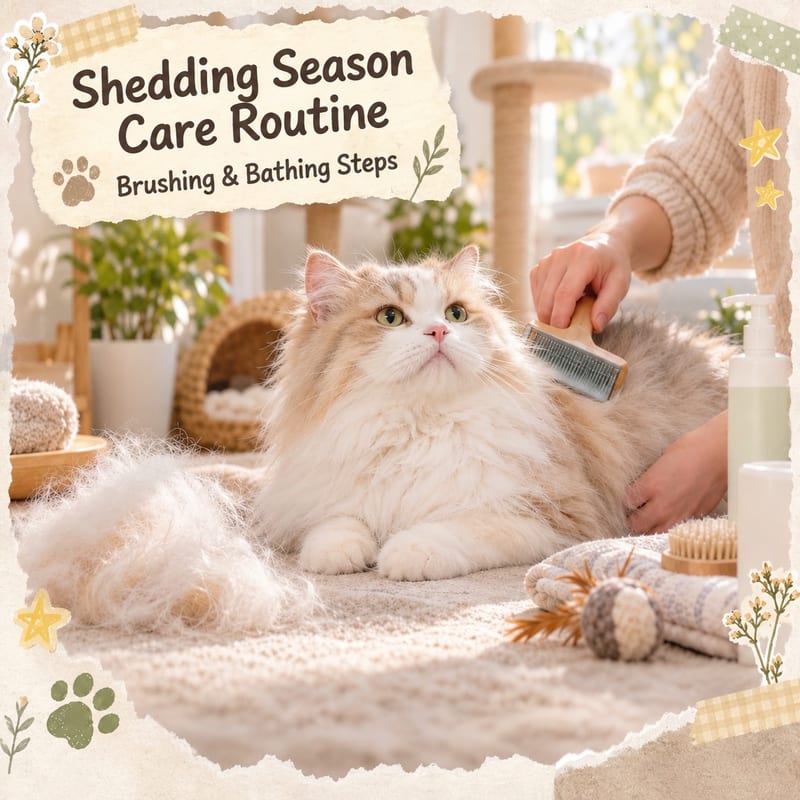
Shedding Season × Long-Haired Cats: Grooming SOP — 10 Minutes a Day to Beat Hairballs in Hong Kong
Long-haired cat grooming SOP for shedding season: spring and autumn are peak shedding times. A daily 10-minute routine — pin brush to loosen knots → metal comb to smooth → check behind ears and armpits — plus hairball gel and plenty of water helps prevent hairballs. See a veterinarian if your cat vomits hairballs frequently. Includes a tool selection table.
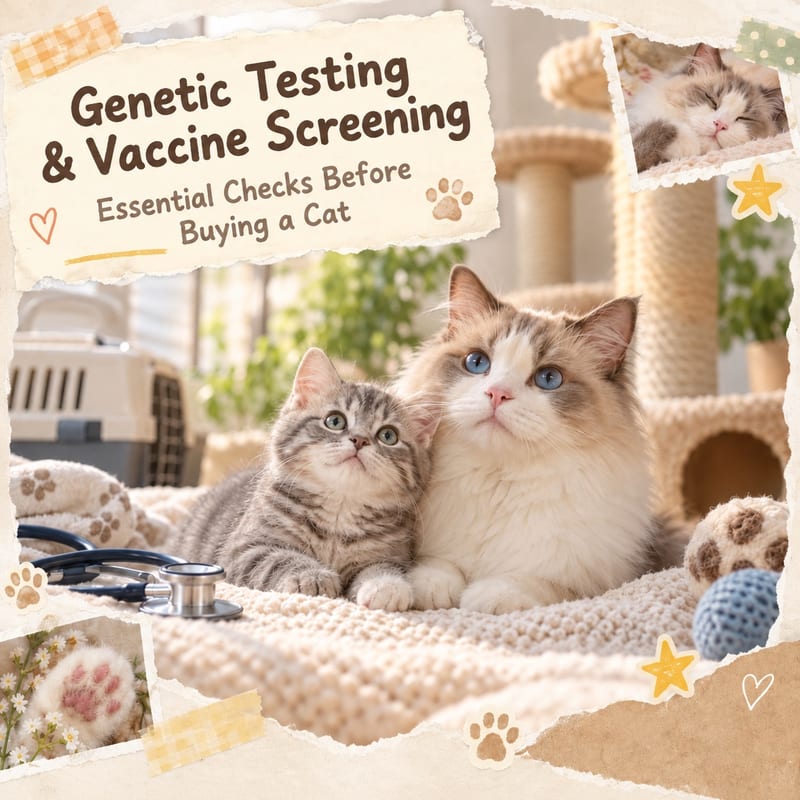
Vaccines × Breed Genetic Screening Guide | Double Health Insurance for Pedigree Cats in Hong Kong
Double health insurance for pedigree cats: F3 core vaccines prevent feline panleukopenia, herpesvirus and calicivirus; breed genetic screening (HCM for Ragdolls/Maine Coons, PKD for Persians, osteochondrodysplasia for Scottish Folds). Before buying a cat, ask about parents' screening records, number of vaccine doses and health certificates.

Can Cats Eat Apples? Safe Parts, Risks, and Feeding Guide
Apples are a safe fruit for cats when deseeded, peeled, and sliced thin. Learn which parts are safe, portion limits, and what to do if your cat eats seeds or core.
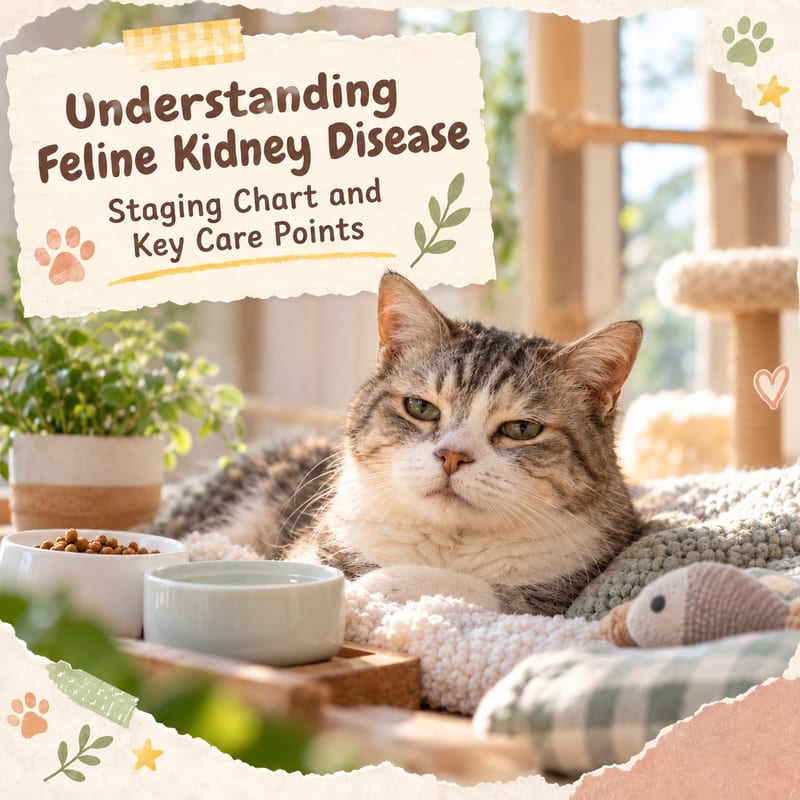
Chronic Kidney Disease in Senior Cats: IRIS Staging and Management
Chronic kidney disease (CKD) is the number one chronic illness in senior cats: incidence rises sharply from age 7, and "nine out of ten cats have kidney issues" isn't just a scare tactic. Kidneys don't regenerate, and by the time symptoms appear, most function is often already lost — so the key is test early, stage early, manage early.
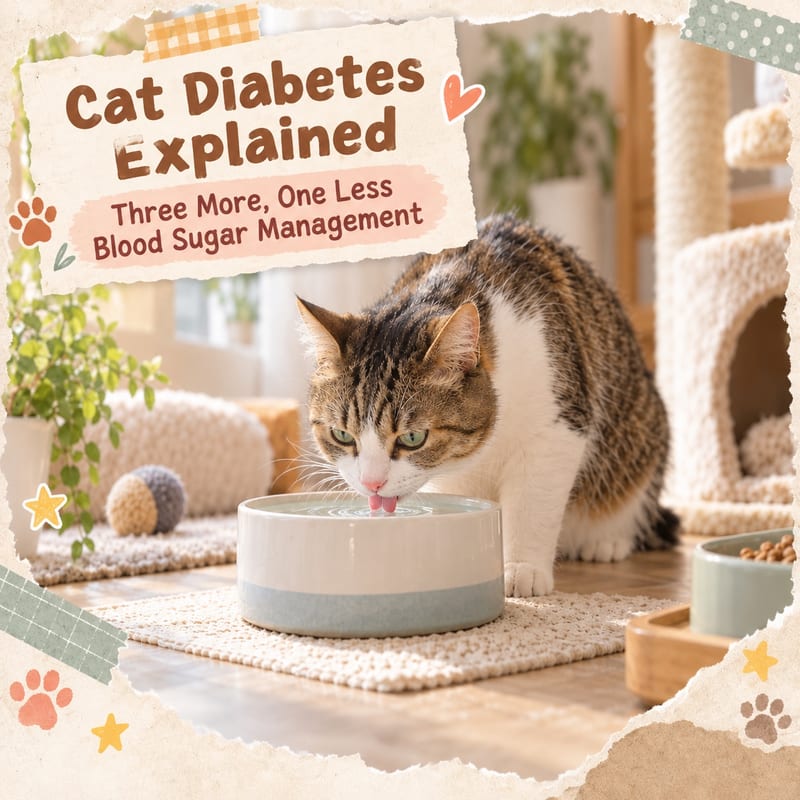
Feline Diabetes Guide: Warning Signs, Diagnosis, Treatment and Remission
Feline diabetes is one of the most common endocrine diseases in cats, affecting about 1 in 200 to 300 cats. Obesity and high-carb diets are the biggest drivers. The good news: feline diabetes (mostly type 2) is one of the few chronic diseases that can go into remission—with early detection, weight loss, a low-carb diet, and insulin therapy, some cats can achieve clinical remission.
Cat Eczema in Hong Kong's Humid Weather: Nursing Through the Wet Season + Hot Spot Solutions — What to Do When Your Cat Itches All Night
Hong Kong's spring wet season and muggy summers are peak cat eczema season. Five common hotspots (belly, armpits and more), a table to tell eczema vs ringworm vs allergy apart, red-line warning signs, treatment flow + five-step home care, and three preventions (moisture, fleas, licking).
FIP in Cats: Full Guide — Dry & Wet Symptoms, GS-441524 Hope, and Getting Treatment in Hong Kong
FIP was once a death sentence for cats, but GS-441524 has rewritten the story: treatment success rates are 80–90%. Here's how FCoV mutates, how dry and wet FIP symptoms compare, the five red flags (stubborn fever, weight loss, bloated belly), why diagnosis is so hard, a four-step guide to getting care in Hong Kong, a cost overview (for reference only), and prevention tips.
Cats and Grapes: Acute Kidney Failure | A Must-Read for Hong Kong Cat Owners: How Many Grapes Are Fatal + Emergency SOP
Grapes/raisins are absolutely off-limits for cats — there is no safe dose, and 1 to 2 grapes can cause acute kidney failure. Hong Kong vets warn: all forms (fresh, raisins, raisin bread, red wine) are dangerous. Master the poisoning timeline, emergency SOP for accidental ingestion, and prevention strategies. A must-read for Hong Kong cat owners — bookmark it!

The Complete Cat Grooming Guide: 5 Minutes a Day to Keep Your Cat Healthy | A Must-Read for Hong Kong Cat Owners
Just 5 minutes of brushing a day effectively reduces hairballs, skin problems and shedding, while strengthening your bond. PetChill's Hong Kong Pet Encyclopedia explains grooming tools, steps and pitfalls in one go. A must-read for Hong Kong cat owners — save it now!
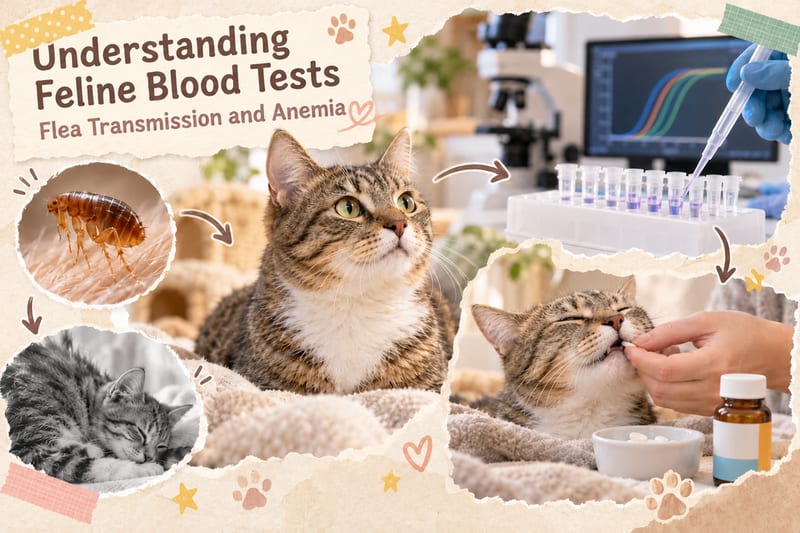
Feline Haemoplasmosis Explained | Infectious Anaemia in Hong Kong Cats: Flea Transmission, PCR Diagnosis & Antibiotic Course
Haemoplasmas (formerly Haemobartonella) sit on the surface of red blood cells and cause haemolytic anaemia: M. haemofelis is the worst and can hit even healthy cats. Fleas are considered an important transmission route — flea control is the most practical prevention. Signs: pale gums, lethargy, panting. Diagnose by PCR; doxycycline for 2 to 4 weeks (follow pills with water to prevent oesophagitis).

Can Cats Eat Papaya? Safe Feeding Guide for Hong Kong Pet Owners
Papaya is a safe fruit for cats once deseeded, peeled and finely diced, and can be given occasionally as a treat. It is rich in vitamins A and C and enzymes (papain) that aid digestion. However, papaya seeds and skin are not edible, and the fruit is high in sugar, so portion control is essential.
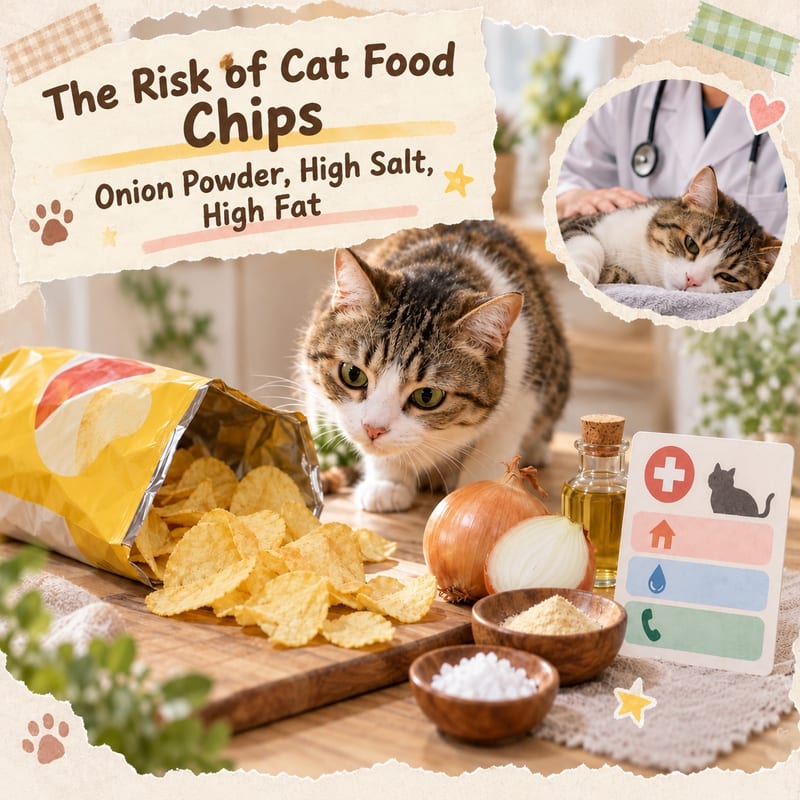
Zero Tolerance for Potato Chips | Must-Read for Hong Kong Cat Owners: Onion Powder, High Salt, High Fat – Deadly Risks + First-Aid Card
Potato chips are absolutely off-limits for cats! Onion powder can cause haemolytic anaemia, high salt can lead to sodium poisoning, and high fat can trigger pancreatitis – any flavour or brand is deadly. A must-read for Hong Kong cat owners: full poisoning timeline + first-aid SOP. Save and share to protect your cat's life!

Cat Fruit Safety Chart | 8 Common Fruits in Hong Kong + Poisoning First-Aid Card
Cats are carnivores — fruit is only an occasional treat. 6 safe options (blueberries, watermelon, cantaloupe, apple, papaya, banana) and 2 red lines (grapes/raisins = acute kidney failure, zero tolerance; cherry pits contain cyanogenic glycosides). Portion table + five-step safety method + poisoning first-aid card.
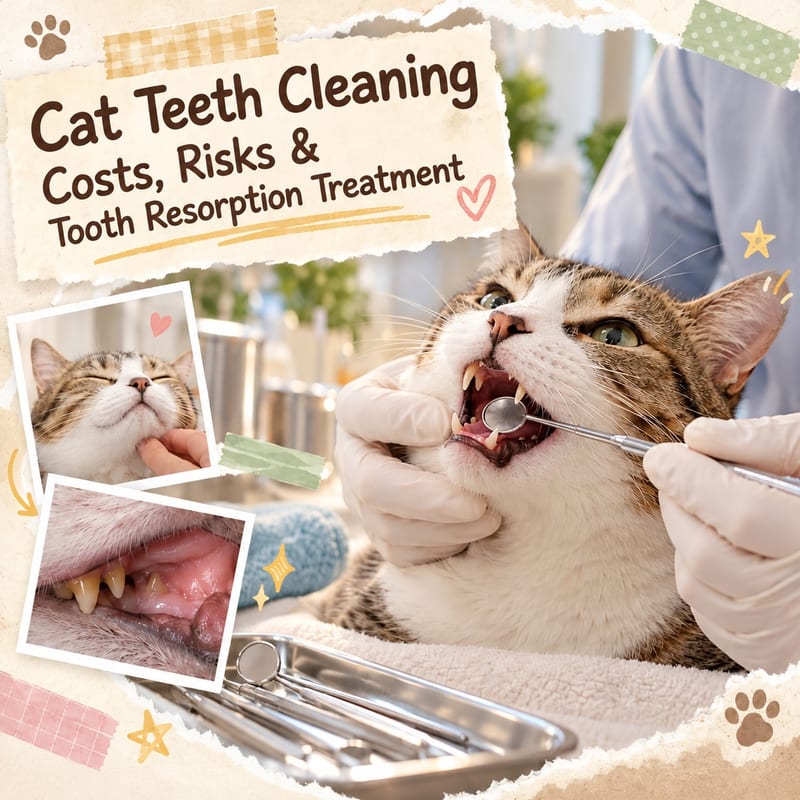
Cat Teeth Cleaning Cost: HK$2,000-6,000+ Plus Anaesthesia and Resorption Risks
Cat teeth cleaning in Hong Kong costs around HK$2,000 to 6,000 for a basic procedure (anaesthesia + ultrasonic scaling + polishing). Pre-op blood tests, dental X-rays and extractions are usually charged separately, so always ask for an all-inclusive quote. Tartar can't be brushed away—it needs ultrasonic scaling. Tooth resorption (TR) can look normal on the outside while the root rots underneath, and it's invisible without dental X-rays. This article covers the six-step COHAT process, anaesthesia risks, cost factors and daily tartar prevention.
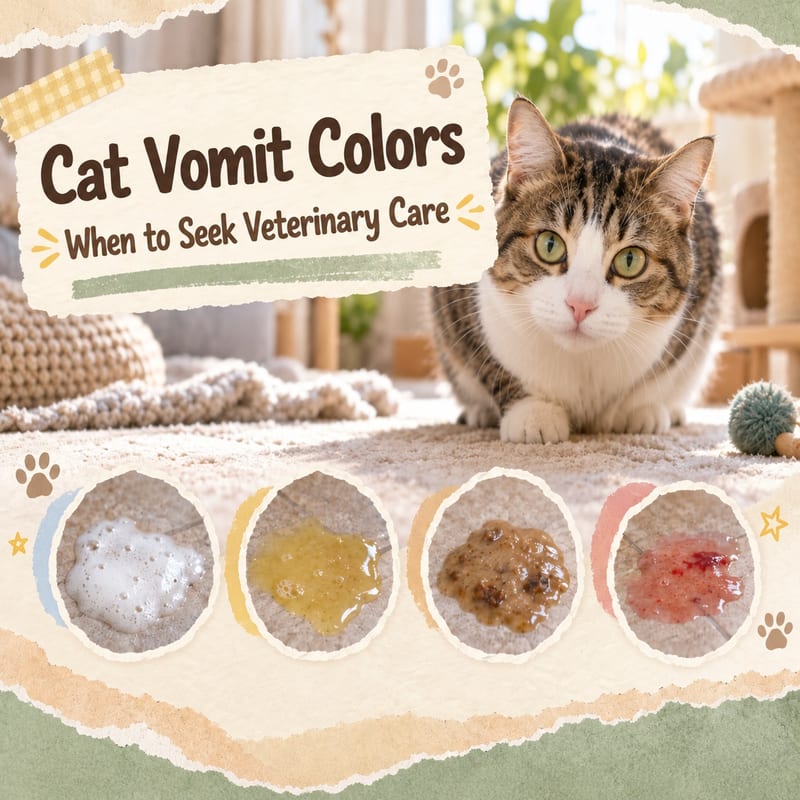
Cat Vomit Colour Chart | A Must-Read for Hong Kong Cat Owners: White Foam, Yellow Fluid, Coffee-Ground, Red — When to See a Vet
Two yardsticks for reading cat vomit: colour + frequency. A six-category chart (undigested food / hairball / white foam / yellow fluid / coffee-ground / red) breaking down causes and action levels, frequency red-green lines, the three observation essentials for a vet visit, and how to tell vomiting vs regurgitation vs retching.

Canine Atopic Dermatitis (CAD): A Practical Guide for Hong Kong Dog Owners
Atopic dermatitis (CAD) is one of the most common chronic skin diseases in dogs: the immune system overreacts to environmental allergens (dust mites, pollen, mould), causing chronic itching and recurrent flare-ups. Hong Kong's hot and humid climate is the biggest amplifier—dust mites and mould are active year-round. CAD cannot be cured, but a three-pronged management approach of 'medical treatment + environment + skin barrier' can make your dog more comfortable in daily life.

Dog Cataracts: Surgery, Costs & Care in Hong Kong
Dogs are one of the species most prone to cataracts worldwide: lens protein degenerates and becomes opaque, it's irreversible and keeps worsening, and surgery (phacoemulsification + artificial lens) is the only way to restore vision. Many owners misunderstand: a blue, hazy pupil in an old dog is often just 'nuclear sclerosis' — normal ageing, no treatment needed. Left untreated for too long, cataracts cause lens-induced uveitis and glaucoma, which hurt more than they affect vision.

Dogs and Cherries in Hong Kong | Cyanogenic Glycosides in Pits = Don't Feed: Flesh vs Pit + First-Aid SOP
Cherries are not recommended for dogs — the flesh itself is very low in toxicity, but the pit, stem and leaves contain cyanogenic glycosides, which release hydrogen cyanide when chewed. It is very hard to separate the pit completely, so the risks far outweigh the benefits. Flesh vs pit comparison table + poisoning symptoms + first-aid SOP + prevention strategies.

Can Dogs Eat Cantaloupe? Safe Feeding Guide for Hong Kong Pet Owners
Cantaloupe is a safe fruit for dogs — after removing seeds and peel and cutting into small cubes, it can be given occasionally as a treat. Cantaloupe is rich in vitamins A, C and potassium, and has high water content; making ice pops in summer is a good cooling choice for dogs. But note: it's a high-sugar fruit, so diabetic/obese dogs need portion control or should avoid it; cantaloupe peel is not edible (gastrointestinal irritation + obstruction risk); seeds must be completely removed (intestinal obstruction). The upper limit is ≤10% of daily total calories.

Dog Heart Disease Explained: Hong Kong MMVD Staging Table + Symptom Checklist + Senior Dog Cough Warning Signs
The two main causes of heart disease in dogs: MMVD in small senior dogs (over 50% affected) and DCM in large dogs. A-to-D staging table (B1/B2 with zero symptoms still need monitoring), six key signals, resting respiratory rate (RRR) home monitoring tool (see a vet if over 40 breaths/min), four care principles + three emergency red lines.
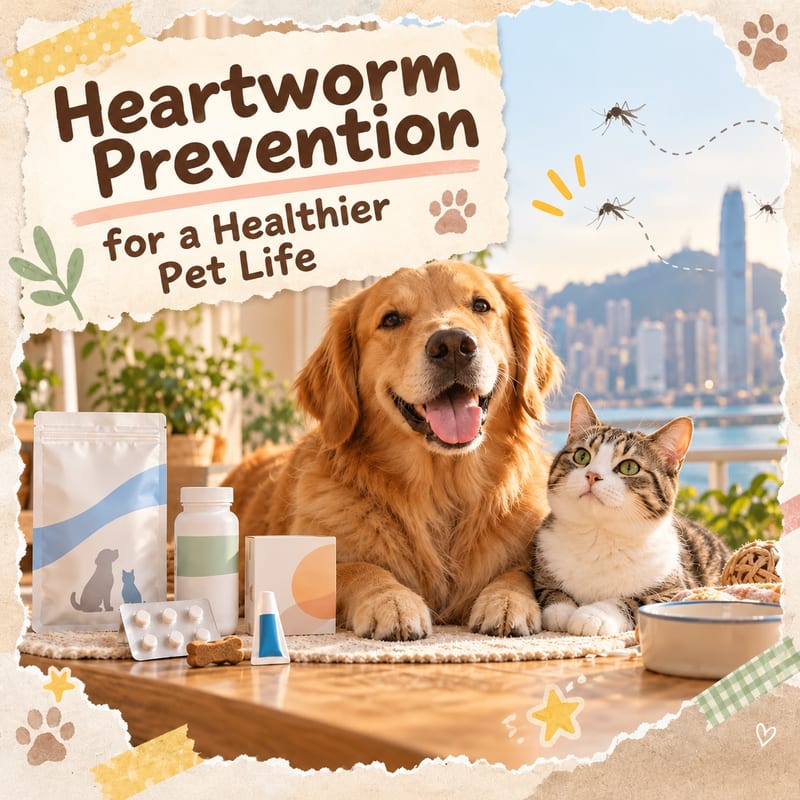
Heartworm in Dogs and Cats: Transmission, Symptoms, Treatment, and Prevention in Hong Kong
Heartworm spreads through mosquito bites and lives in the heart-lung arteries. Dogs show coughing, exercise intolerance, and ascites; cats may have asthma-like attacks or sudden death. There is no approved helps manage for feline heartworm—prevention is essential. Hong Kong mosquito season is roughly April to November, so year-round monthly prevention is recommended.
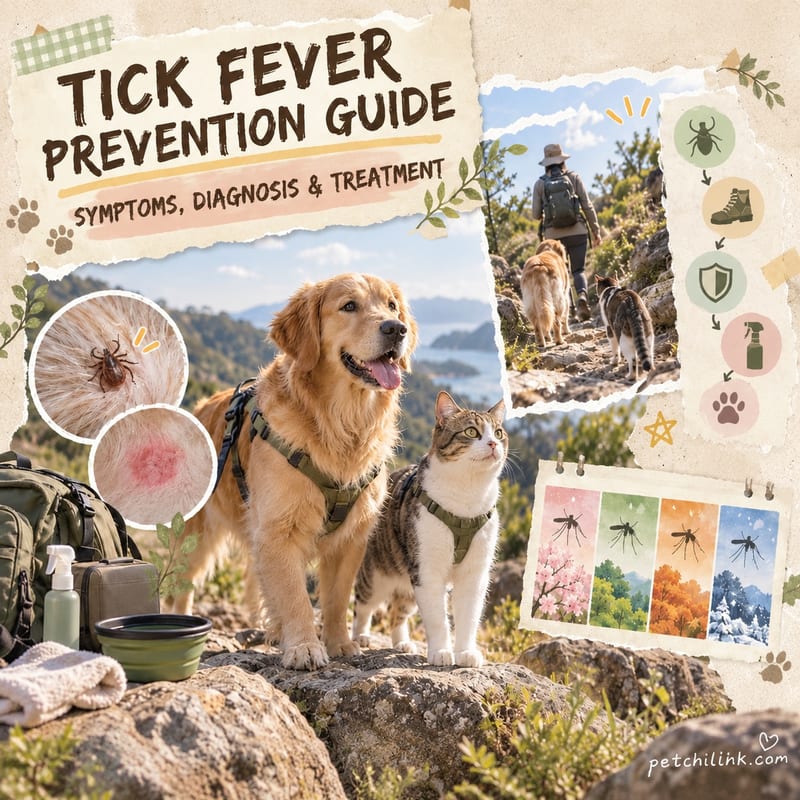
Dog Tick Fever Full Guide|Hong Kong Hiking Dogs Must-Read: Tick-Borne Disease Table + Hiking Protection SOP + Mosquito & Bug Calendar
Tick fever = collective term for blood-borne pathogen diseases transmitted through tick bites: Ehrlichia, Babesia, Anaplasma. Ticks are present in Hong Kong country parks year-round, with hiking dogs at highest risk. Acute window 1 to 2 weeks after hiking: fever, pale gums, dark urine. Prevention iron triangle: monthly tick-killing medication + immediate check after hiking + avoid grassy bushes.

Toxoplasmosis and Pregnancy: Debunking Hong Kong Myths and a Science-Based SOP for Cat Owners
"Give up your cat when pregnant" is the most persistent pet myth: Toxoplasma spreads via the faecal-oral route, and oocysts need 1 to 5 days to become infectious—daily litter scooping breaks the chain. The main route of human infection is undercooked meat and soil, not cats. We break down pre-pregnancy IgG testing and a full SOP for pregnant cat owners.
Cat Gastroenteritis: Causes, Home Care and Probiotic Evidence
Cat gastroenteritis means the stomach and intestines are inflamed at the same time, typically with vomiting and diarrhoea together. Common causes: switching food too fast, eating something wrong, parasites, viral infection, stress. Most mild cases improve in 2 to 3 days, but persistent vomiting, bloody diarrhoea and poor demeanour are red lines for a vet visit.
Cat Fatty Liver Explained | A Fat Cat in Hong Kong Can Die After 48 Hours of Not Eating! Weight-Loss Taboos + Jaundice Red Lines
Feline fatty liver is a fatal liver disease triggered by not eating: continuous anorexia causes fat to flood the liver until it shuts down. Timeline (12 hours coax eating → 24 hours intervene → jaundice critical), 3 spots to self-check for jaundice, weight-loss taboos for fat cats, and the core of treatment is to get the cat eating again as soon as possible.
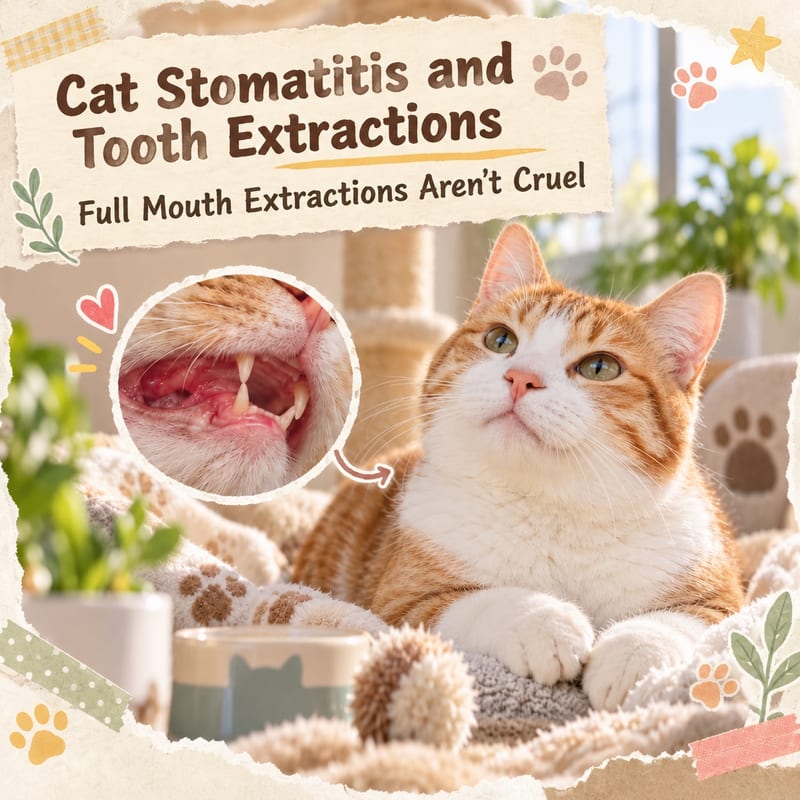
Cat Stomatitis (FCGS): Causes, Symptoms, Treatment and Home Care
Cat stomatitis (FCGS) is a chronic oral inflammation in which the immune system overreacts to dental plaque: the oral mucosa becomes red, swollen and ulcerated, and the pain is so severe the cat refuses to eat. Unlike ordinary periodontal disease, brushing and medication alone usually cannot control it.
Cat Stress Response: Three-Level Stress Scale, 4-Step First Aid and Stressors
Cat stress response is a whole-body physiological reaction to pressure: mild cases hide and lose appetite; moderate cases over-groom or urinate inappropriately; severe cases hiss and puff up all day and stop eating completely. Ongoing stressors weaken immunity and trigger cystitis and gastroenteritis, so 24 hours without food, or 24 hours with no urine in the litter box (especially in male cats), cannot wait. This article includes a three-level symptom comparison table, a stress-sign × action quick-reference table, 4 first-aid steps and vet-visit red lines.
Cat Cold Full Guide|Hong Kong URI Upper Respiratory Infection: The Truth About Cat Flu (FHV) + When It Resolves on Its Own
Cat cold = viral upper respiratory infection (URI), caused mainly by feline herpesvirus (cat flu/FHV) + calicivirus. Mild cases self-resolve in 7-10 days; red lines: not eating or drinking, yellow-green thick nasal discharge, open-mouth breathing. Herpesvirus lies dormant for life, no cat-human transmission, FVRCP vaccine is the core of prevention.
Cat Urinary Stones & Blood in Urine: The Complete Guide — Hong Kong Male Cat Blockage 8–12 Hour Red Line & Emergency Timeline
Blood in urine, frequent urination, crying while peeing = warning signs of feline lower urinary tract disease (FLUTD). The three main causes (FIC / crystals & stones / infection), the male cat blockage emergency timeline (fatal in 24–48 hr, 8–12 hr red line), the two main prevention lines of drinking water + stress reduction, and three life-saving habits.
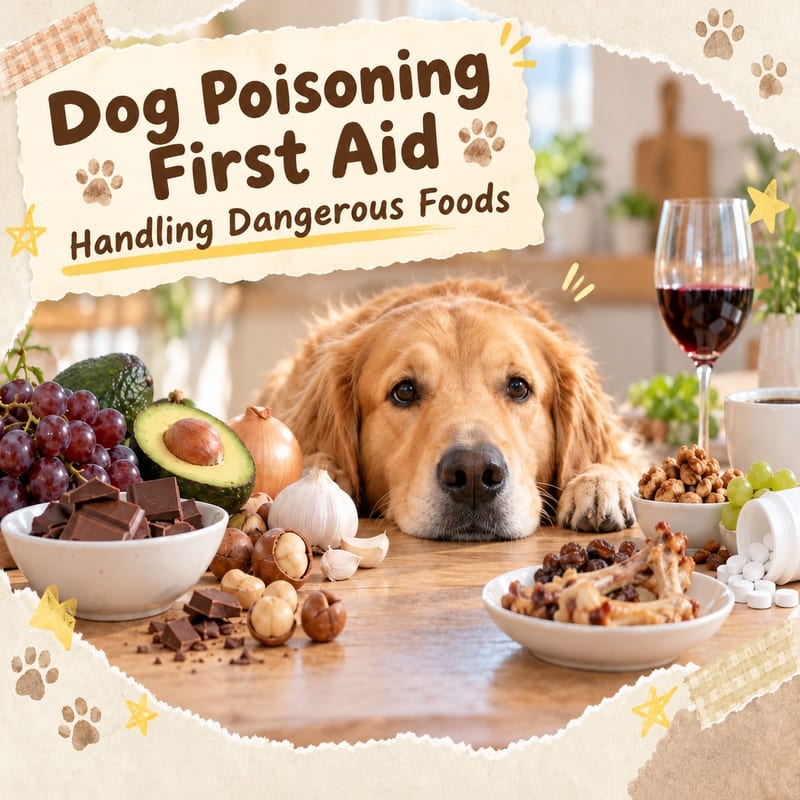
10 Dangerous Foods Dogs Can't Eat | 3 Emergency Steps to Protect Your Furry Kid After Poisoning
Dogs absolutely must not eat chocolate, grapes, onions, xylitol, alcohol, macadamia nuts, sharp bones, high-salt/high-spice foods, fried foods, or leftovers of unknown origin. If accidental ingestion occurs, immediately stop feeding, record the food type, amount, time, and your dog's weight, then contact a veterinarian right away. Never induce vomiting yourself.
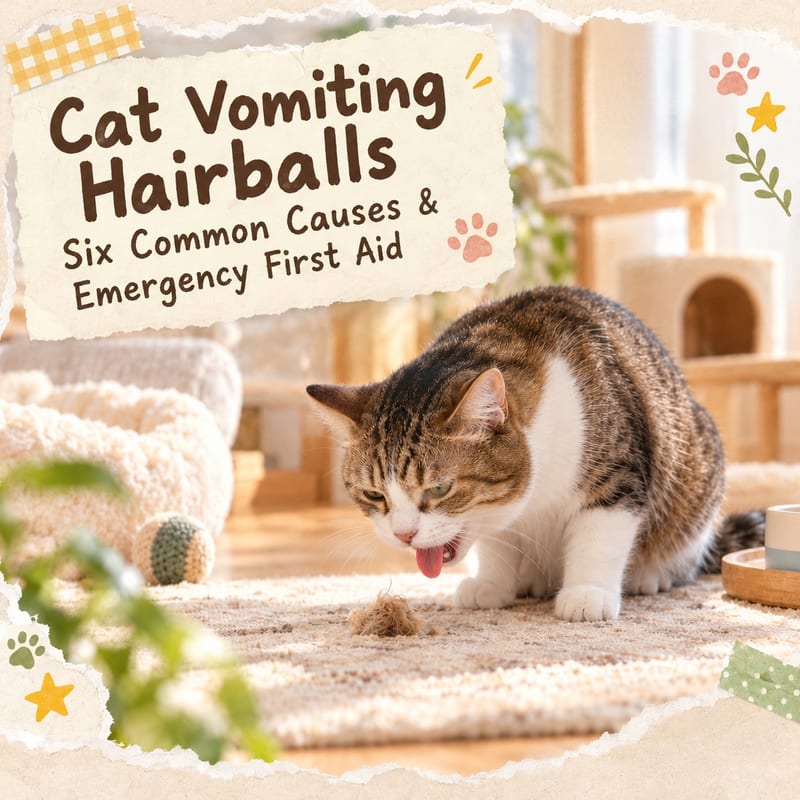
Cat Vomiting: Complete Guide | Hairball or Illness? 6 Major Causes + First Aid Every Hong Kong Cat Owner Must Read
Cat vomiting is something every cat owner has experienced—sometimes it's just a hairball, but other times it can be a distress signal from the body. This article explains the 6 common causes of cat vomiting, teaches you when to seek immediate veterinary care, and covers daily care tips to prevent vomiting.

Spring Dog Skin Care Guide: Shedding, Eczema, Dermatitis and Flea & Tick Control
Spring shedding is normal, but redness and itching are warning signs of skin disease. With regular brushing, balanced nutrition, monthly deworming, a dry environment and daily checks, you can help manage shedding-season skin problems and flea and tick issues.
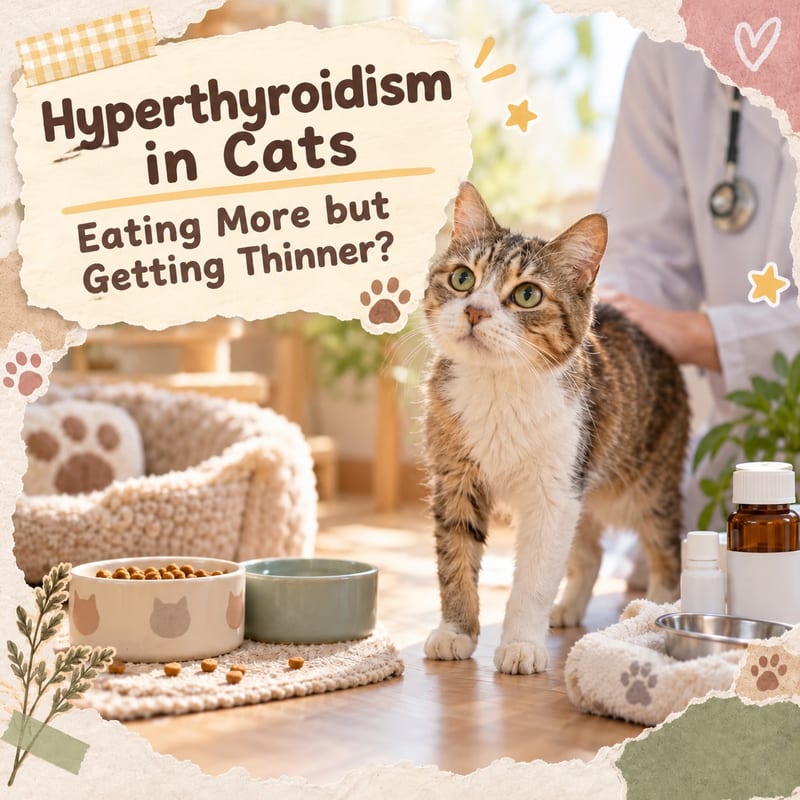
Cat Eating a Lot but Getting Thinner? Watch Out for Hyperthyroidism! Early Symptoms and Treatment Guide for Hong Kong Cat Owners
A cat that 'eats more but gets thinner' is the most typical warning sign of hyperthyroidism, commonly seen in middle-aged to senior cats over 8 years old; about 10% of senior cats may develop related problems. Hyperthyroidism is caused by excessive thyroid hormone secretion, which speeds up the whole body's metabolism. Besides increased appetite and weight loss, it also comes with increased drinking and urination, hyperactivity, rough coat, vomiting, and diarrhea. Diagnosis mainly relies on blood T4 testing. Treatment options include medication, surgical removal, radioactive iodine therapy, and low-iodine prescription food. With early detection and regular follow-ups, cats can still maintain a good quality of life.

Dog Nail Trimming Guide for Hong Kong Small Flats: Correct Trimming, Dewclaw Care, and 5 Fear-Free Tips
Long dog nails cause slipping, deformity, and even joint problems! No matter how small your Hong Kong flat is, master the correct trimming method and dewclaw care, plus 5 fear-free tips to keep your pet calm during nail trims. Save this must-read guide for Hong Kong dog owners and say goodbye to the bloodline scare!

The Complete Guide to Stopping Itchy Skin Allergies in Cats and Dogs | Hong Kong Allergens, Symptoms and Treatment
In Hong Kong, 90% of cat and dog skin allergies stem from fleas, food or environmental allergens. The key to stopping the itch is to first pinpoint the root cause and then treat it accordingly: flea control, food elimination, humidity and dust mite control, combined with vet medication and gentle bathing. Never rely on ointments alone to treat the symptoms.

Pet Arthritis Care Guide | Joint Care, Supplements and Home Modifications for Cats and Dogs in Hong Kong
The most important aspects of arthritis care are weight control, low-impact exercise, glucosamine and fish oil supplementation, and immediately laying non-slip mats and adding ramps so senior cats and dogs experience less pain and move more steadily every day.

Cat Bathing Myths | Do Hong Kong Cats Need Baths? How Often & What to Watch Out For
Do cats need baths? The answer is mostly no. This article breaks down how cats self-clean by grooming, the four situations where a bath is truly needed, bathing precautions, and how to keep your cat clean without bathing — so you don't rush in and damage your cat's skin. A must-read for Hong Kong cat owners.

Cat Brushing Guide: Methods, Frequency & Tools for Hong Kong Cats
Brushing your cat is more than just tidying fur: it removes dead hair, prevents mats, reduces hairballs and lets you check the skin. This guide covers the five brushing steps, how to choose between a comb and slicker brush, how often to brush short- and long-haired cats, and practical fixes for cats that hate being brushed. A must-read for Hong Kong cat owners.
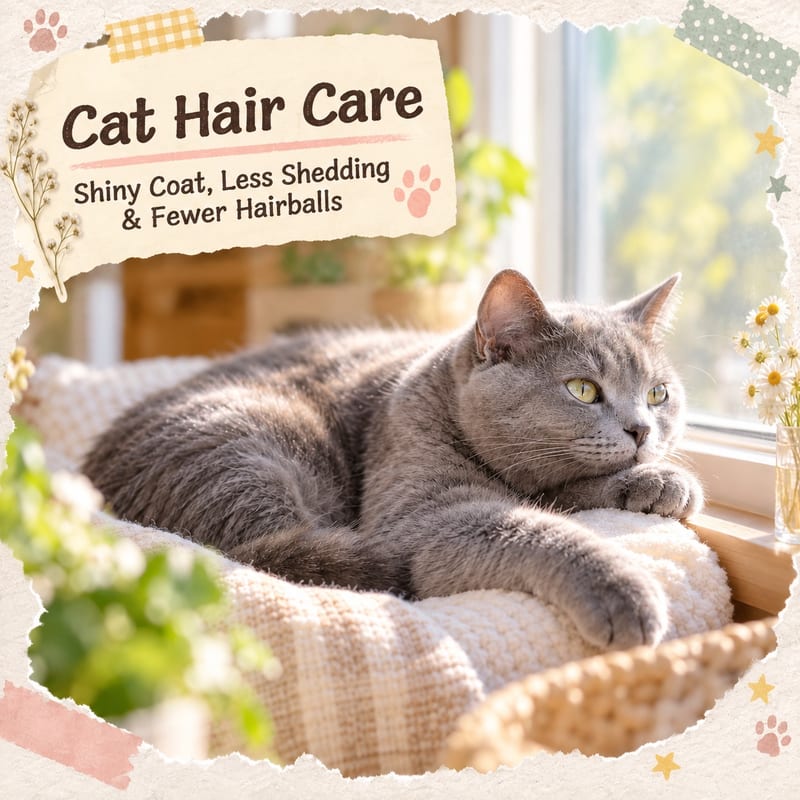
Cat Coat Care | A Must-Read Guide for Hong Kong Cat Owners on Shine, Shedding and Hairballs
A cat's coat is a health barometer: shine comes from a high-protein diet plus fish oil, shedding is managed by regular brushing, and hairballs are controlled with hairball gel and cat grass. This article teaches you to tell normal from abnormal shedding, explains the four pillars of coat care, breed-specific grooming priorities, and when to see a vet. A must-read for Hong Kong cat owners.
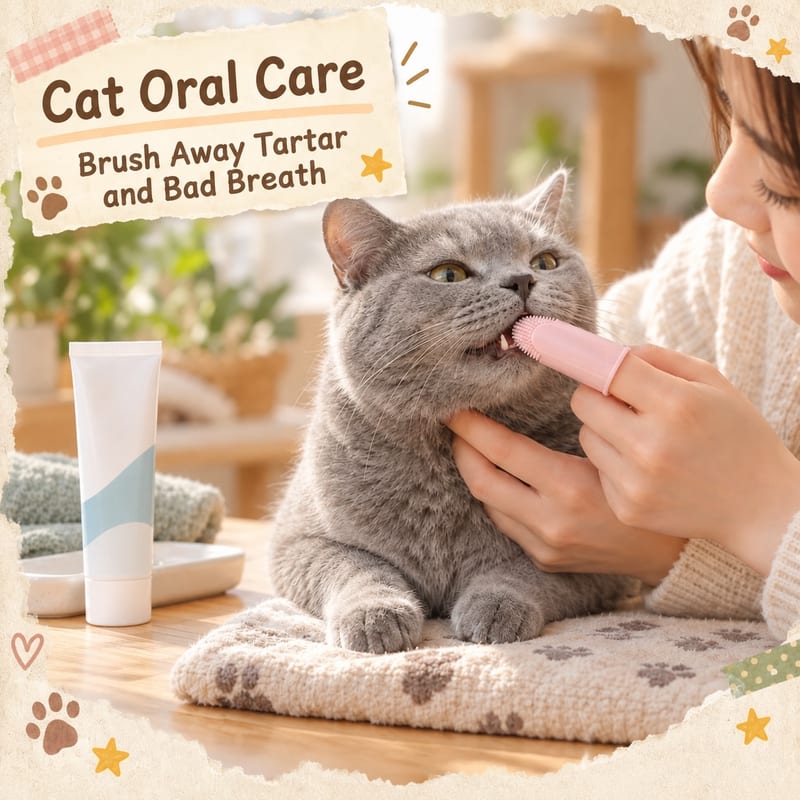
Cat Dental Care | Brushing, Tartar, Bad Breath & Gum Disease Guide (Must-Read for Hong Kong Cat Owners)
Like humans, cats that don't get their teeth brushed build up tartar and develop gum disease, leading to bad breath, pain when eating, and tooth loss. Bacteria can even affect the kidneys and heart. This article covers the correct way to brush a cat's teeth, dealing with tartar and bad breath, when to see the vet for a dental cleaning, and daily dental care options—essential reading for Hong Kong cat owners.
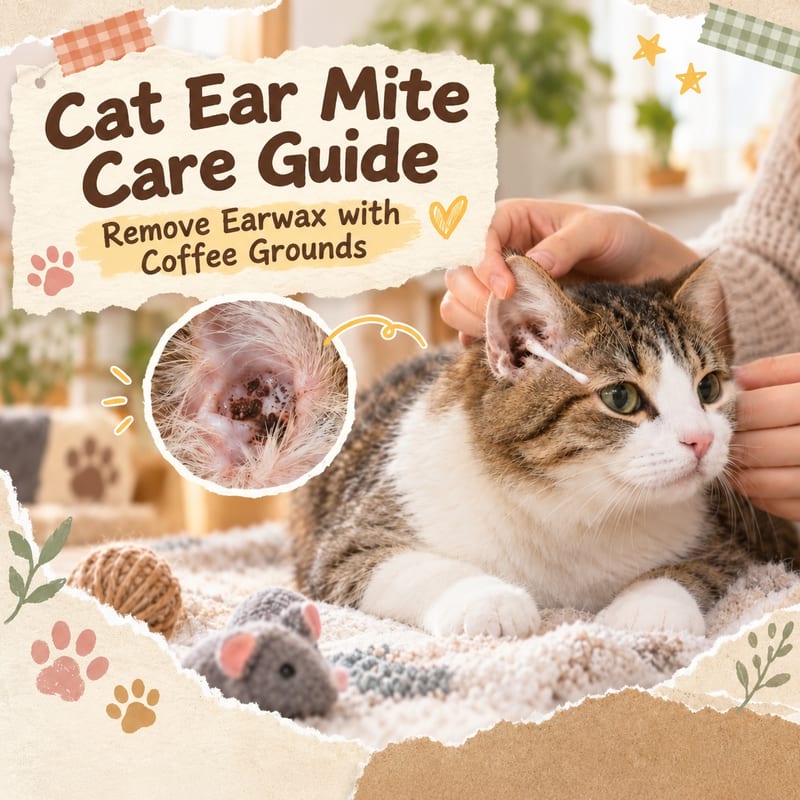
Cat Ear Mites Guide|Coffee-Ground Earwax, Frantic Ear Scratching & Prevention (Must-Read for Hong Kong Cat Owners)
Cat ear mites are a common ear canal parasite in Hong Kong cats, typically marked by dark brown 'coffee-ground' earwax plus frantic ear scratching and head shaking. This article explains how ear mites spread, how they are diagnosed, how long treatment takes and how to prevent them. Multi-cat households need to be extra careful — a must-read for Hong Kong cat owners.
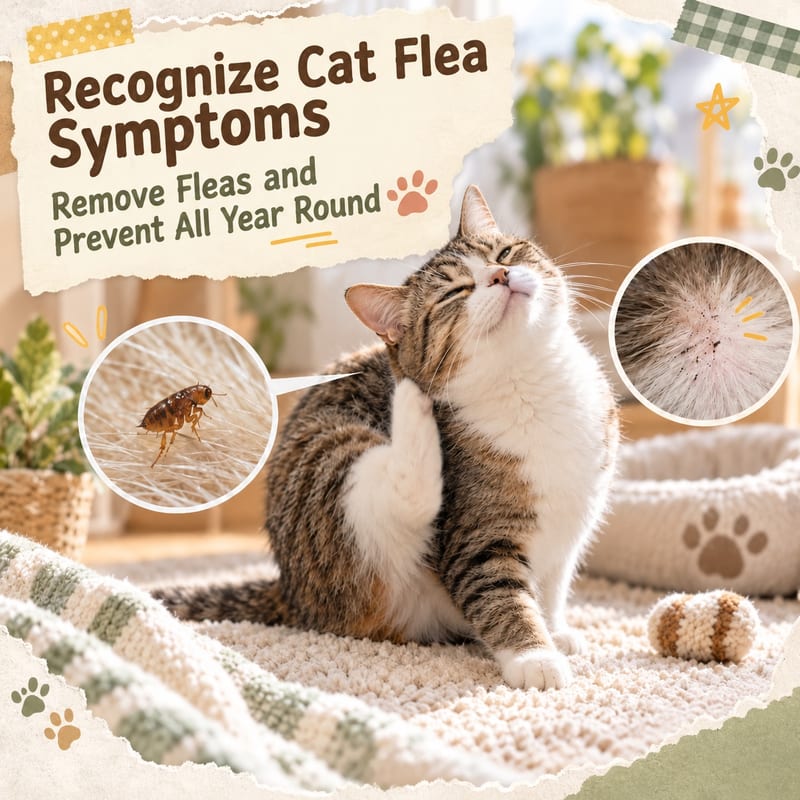
Cat Flea Guide: Spotting Symptoms, Getting Rid of Fleas, and Year-Round Prevention (A Must-Read for Hong Kong Cat Owners)
Hong Kong's warm, humid climate keeps fleas active all year. The classic signs of cat fleas are frantic scratching, tiny black specks (flea dirt), and red skin rashes—a single flea is enough to trigger an allergy. This guide shows you how to identify them, how to use prescription flea treatment plus environmental cleaning to break the cycle, and how to prevent them year-round. A must-read for Hong Kong cat owners.
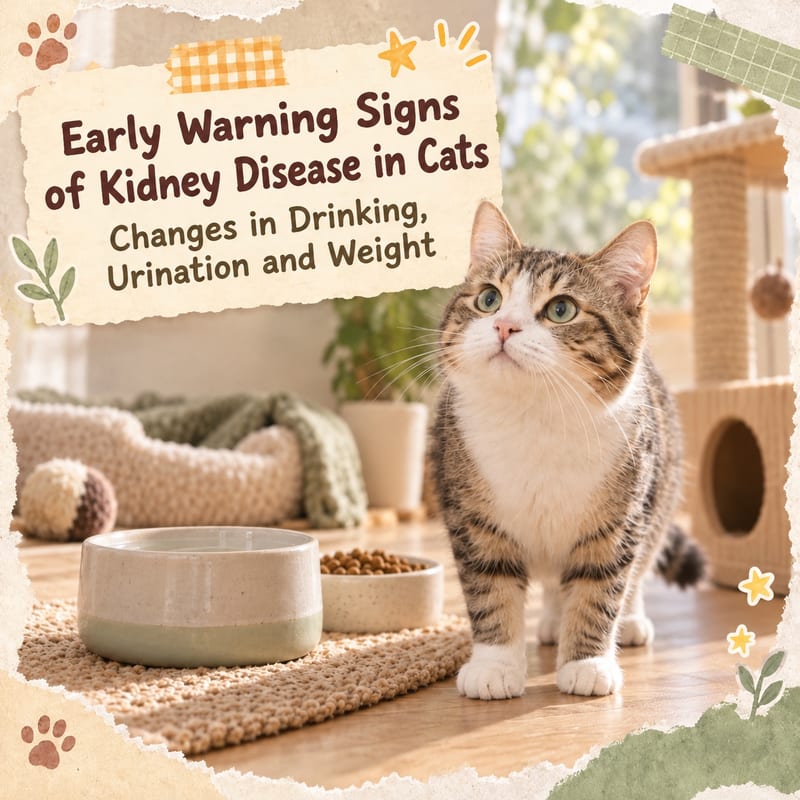
Cat Kidney Disease: Early Symptoms, Prevention & Care Guide for Hong Kong Senior Cats
Cat kidney disease is the most common silent killer of senior cats in Hong Kong. Recognising early signs like increased thirst and weight loss, plus dietary adjustments and regular blood tests, can greatly slow progression. This guide combines local vet advice and practical care tips every Hong Kong cat owner should save.
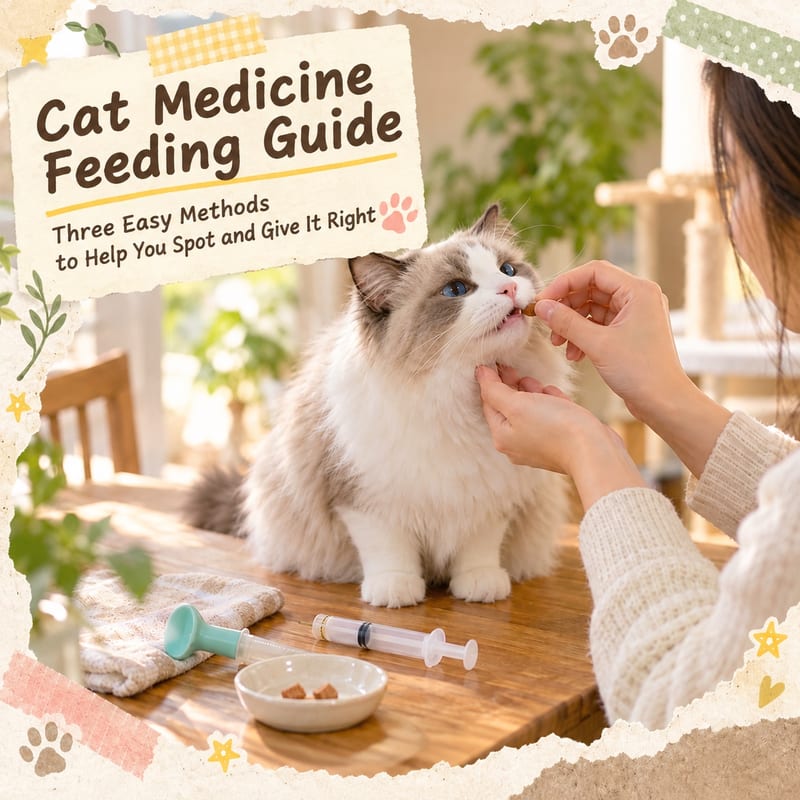
Cat Medication Guide: 3 Essential Methods and Common Mistakes Every Hong Kong Cat Owner Should Know
Giving your cat medicine shouldn't be a battle. This guide covers 3 methods—manual pill giving, hiding pills in treats, and using a pill popper—plus 5 common mistakes and daily touch training tips. A must-read for Hong Kong cat owners to turn medication time from torture into a 30-second task.
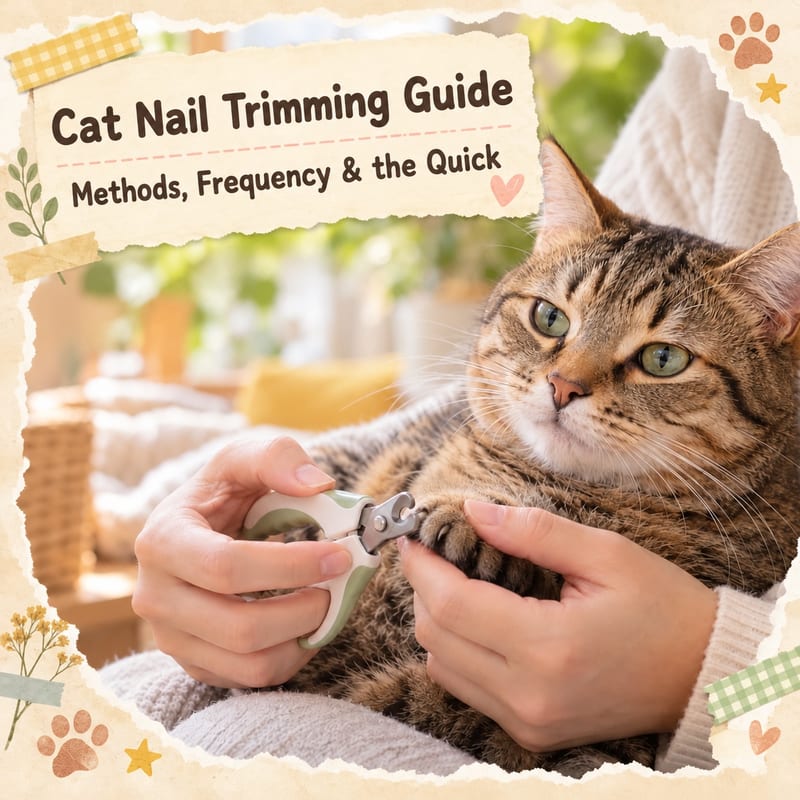
Cat Nail Trimming in Hong Kong | Methods, Frequency & Blood Line First Aid Guide
Indoor cats don't wear down their claws, and nails can curl into the paw pads and cause pain. This guide shows you how to find the blood line, trim just the white tip with cat-specific clippers, keep a 2-4 week rhythm, and stop bleeding if you cut too deep. Includes training tips to get kittens used to it early. A must-read for Hong Kong cat owners.
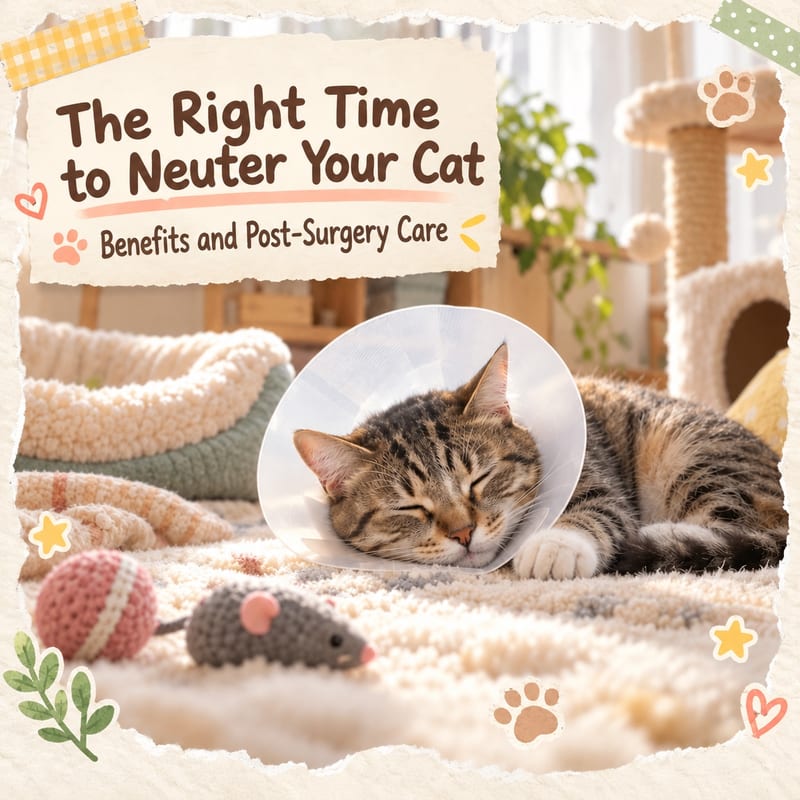
Cat Neutering in Hong Kong: Timing for Female Cats, Pre- and Post-Surgery Care, and What to Watch For
When should you neuter your cat? For female cats, around 6 months and before the first heat is generally recommended; for male cats, 6–9 months. Neutering before the first heat is key to lowering breast cancer risk, but the exact timing should be assessed by your veterinarian based on weight and development. This article covers kitten neutering assessment, pre-op preparation, a 7-day post-op care table, triage guidance for same-day vet visits, Hong Kong price ranges, common myths, and FAQs.
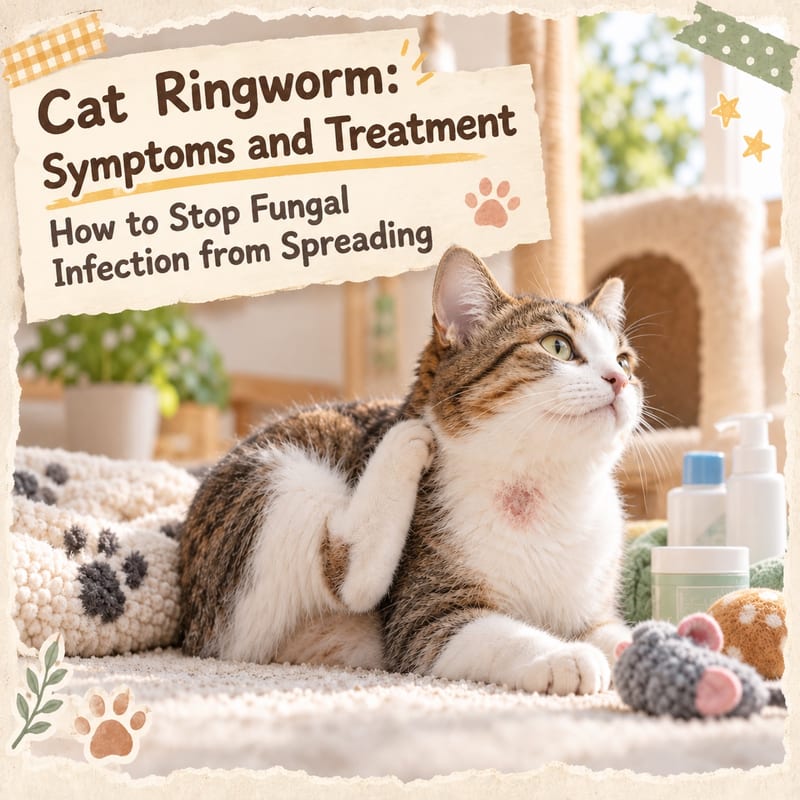
Cat Ringworm|Hong Kong Complete Guide to Symptoms, Treatment & Prevention
Cat ringworm is a common fungal infection in Hong Kong's humid environment and can spread to humans. If you see circular bald patches, put on gloves and isolate the cat immediately, see a veterinarian as soon as possible for confirmation, and treat with medication while disinfecting the environment with high heat. Do not stop medication midway if you want to eradicate it.
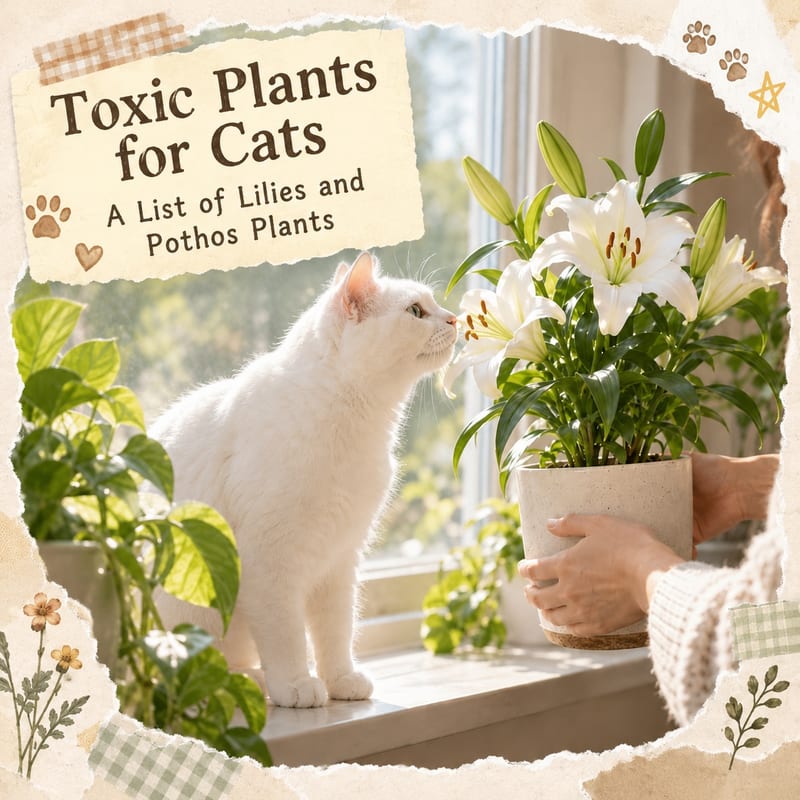
Toxic Plants for Cats | Common Lily & Pothos Poisoning List in Hong Kong · Emergency Hotline
Lilies, pothos, daffodils and other common plants are extremely toxic to cats—causing vomiting at best, kidney failure at worst. This article compiles a list of high-risk household plants in Hong Kong, poisoning symptoms, three emergency steps, and a 24-hour helpline. Cat owners, save this now—a must-read for Hong Kong cat parents!

Dog Ear Cleaning Guide | Master Ear Hair, Wax and Mite Control
Every 2 to 4 weeks, pluck ear hair with ear powder, clean the visible ear canal with ear cleaner, check discharge colour and odour, and follow the 7+10+7 day ear mite treatment. Drop-eared dogs need it every 1 to 2 weeks. This tackles ear hair, wax and mites all at once.

Hong Kong Vet Fees Guide | Public vs Private · Vaccines · Medical Reserve
How much does a vet visit cost in Hong Kong? This article breaks down the differences between public and private clinics, consultation fees, vaccines, neutering and hospitalisation cost ranges, teaches you to choose a regular family vet, recognise red-flag signs that need immediate medical attention, and build a medical reserve so you won't be caught off guard when your pet gets sick. A must-read for Hong Kong cat and dog owners.
Toxic Items at Home | Emergency First Aid and Helpline Guide for Cats and Dogs in Hong Kong
Chocolate, grapes, xylitol, painkillers, bleach — common household poisons in Hong Kong can kill. This guide covers the top 10 poison sources, the three-step first aid for ingestion, why you should not induce vomiting, and includes 24-hour Hong Kong vet hotlines. A must-read for Hong Kong cat and dog owners — save and share now!

Pet Insurance Claims in Hong Kong: A Guide to the Process, Documents and Reasons for Rejection
Buying pet insurance doesn't mean automatic payouts! This guide breaks down the six steps to claiming in Hong Kong, the documents you need, common pitfalls that lead to rejection, and how deductibles and deadlines are calculated. A must-read for Hong Kong cat and dog owners who want to submit everything at once and get paid fast.
Deworming Schedule Hong Kong: How Often Should Cats and Dogs Take Deworming Medicine?
How often should deworming medicine be given? Puppies and kittens monthly until 6 months old, 6 to 12 months every 2 to 3 months, indoor adult cats every 6 months, adult dogs or those frequently outdoors every 3 to 6 months, and those eating raw meat or with hunting habits every 3 months or as advised by a veterinarian. Oral medicine, spot-on treatments, and collars cover different parasites; dosage must be calculated by weight; deworming and flea treatment should be done together; dog medicine ingredients are toxic to cats and must not be given to cats on your own.

Pet Disaster Preparedness|Hong Kong Typhoon Emergency Kit & Evacuation Checklist
Hong Kong typhoons and rainstorms can strike suddenly—don't wait to prepare your pet! This guide covers packing 3 days of food and water, medication, microchip and vaccination records, plus practical steps for staying home under Typhoon Signal No. 8 or evacuating. Save this now—essential reading for Hong Kong cat and dog owners!

Pet Insurance Comparison | How to Compare Hong Kong Pet Insurance Plans, Premiums and Coverage
How do you compare pet insurance in Hong Kong? Go through eight items cell by cell: coverage, annual benefit limit, excess, waiting period, exclusions, renewal terms, entry age and claims process, plus a 10-point pre-signing checklist, a practical comparison workflow and common pitfalls. A must-read for cat and dog owners.

Pet Insurance Guide | How Cat and Dog Insurance Works in Hong Kong, Coverage, and How to Choose
A beginner's guide to pet insurance: how it works, how premiums and excess are calculated, what accidents and illnesses are covered, how to read waiting periods and exclusions, plus six key points to help you choose the right policy step by step. All coverage is subject to policy terms. Essential reading for Hong Kong cat and dog owners.
Pet Neutering Guide | Hong Kong Cats & Dogs: Benefits, Best Timing, Post-Surgery Care
Wondering when to neuter your cat or dog in Hong Kong? This guide covers the three big benefits of neutering for health, behaviour and society, the best timing (cats 6-9 months, dogs by size), pre-surgery prep, key post-surgery care points, and warning signs that need immediate veterinary attention. A must-read for Hong Kong cat and dog owners!

Pet Probiotics Guide | Cat & Dog Gut Health · When to Use · How to Choose
Probiotics are good bacteria for cats' and dogs' guts, specifically helping to balance the flora during food transitions, after antibiotics, and with mild soft stools. But they are only a health supplement; persistent diarrhea or bloody stool requires immediate veterinary attention.

Hong Kong Rainy Season Pet Moisture Guide|Cat & Dog Dermatitis, Dehumidifying, Ear Care
Hong Kong's humidity soars during the muggy spring, triggering dermatitis, mould, ear infections and fleas in cats and dogs! PetChill shares 5 moisture-proof care tips, from dehumidifying to ear cleaning, all in one go. A must-read for Hong Kong cat and dog owners—save it now!

Shedding Season: What To Do? Hong Kong Cat & Dog Shedding Timeline|BrushingNutritionDe-shedding Full Guide
During Hong Kong's spring and autumn shedding seasons, cats and dogs shedding is normal, but localised bald patches, redness, swelling and itching mean you should see a vet. This article compiles a shedding timeline for Hong Kong's climate, daily brushing steps, fish oil nutritional supplements, and home de-shedding tools, teaching you to tell normal from abnormal shedding at a glance. A must-read for Hong Kong pet owners — save it now!
Pet Heatstroke First Aid Guide | Hong Kong Cat & Dog Heatstroke Symptoms and Dangerous Temperature Numbers
Hong Kong's hot and humid summers can make heatstroke fatal for cats and dogs within 15 minutes. This article breaks down dangerous temperatures, warning signs, 4-step first aid, prevention tips and a 'see a vet immediately' checklist — essential for flat-faced dogs and long-haired cats. Hong Kong cat and dog owners should save this now; it could save your pet's life in a critical moment!
Urinary & Kidney Care for Cats and Dogs: Hong Kong Prevention and Warning Signs Guide
Urinary and kidney problems are among the biggest killers of older cats and dogs in Hong Kong: a blocked urethra in a male cat can be fatal within hours, while chronic kidney disease often shows no early signs. This guide covers symptom checklists, water and diet prevention, check-up frequency and local resources so you can protect your pet early. A must-read for Hong Kong cat and dog owners — save it now!

Winter Warmth Guide for Cats and Dogs | Heat Pad Safety in Hong Kong · Essential for Senior Cats and Puppies
Hong Kong winters are damp and cold, and keeping cats and dogs warm takes more than fur! This article breaks down which breeds feel the cold most, how to use warm blankets and heat pads correctly, the warning signs of low-temperature burns, plus warmth tips for senior cats and puppies. Save this now — a must-read for Hong Kong cat and dog owners!
What's a Normal Breathing Rate for Cats? | Essential Observation Guide and 6 Warning Signs for Hong Kong Cat Owners
A must-read for Hong Kong cat owners! Learn your cat's normal breathing rate of 16–30 breaths per minute, how to measure it correctly, and 6 major warning signs. A daily check of just over ten seconds helps you spot problems early and protect your cat's health.
Cat Pregnancy and Birth: A Complete Guide for Hong Kong Cat Owners
Not sure what to do when your cat is pregnant? From pregnancy signs and birth preparation to postpartum care for mother and kittens, PetChill brings together professional vet advice and practical experience to help you welcome new life with confidence. A must-read for Hong Kong cat owners — save it now!
What to Do When Your Cat Gets Old? Senior Cat Care Guide | 10 Ageing Warning Signs + Daily Care Guide
Have you noticed that your cat has been drinking more water lately, sleeping longer, or walking less agilely than before? When cats enter their senior years, their physical and psychological needs change dramatically. As a responsible cat owner, recognising the signs of ageing early and mastering proper care methods is the key to helping your cat enjoy their later years. This article takes you through the 10 key warning signs of cat ageing and practical daily care tips!
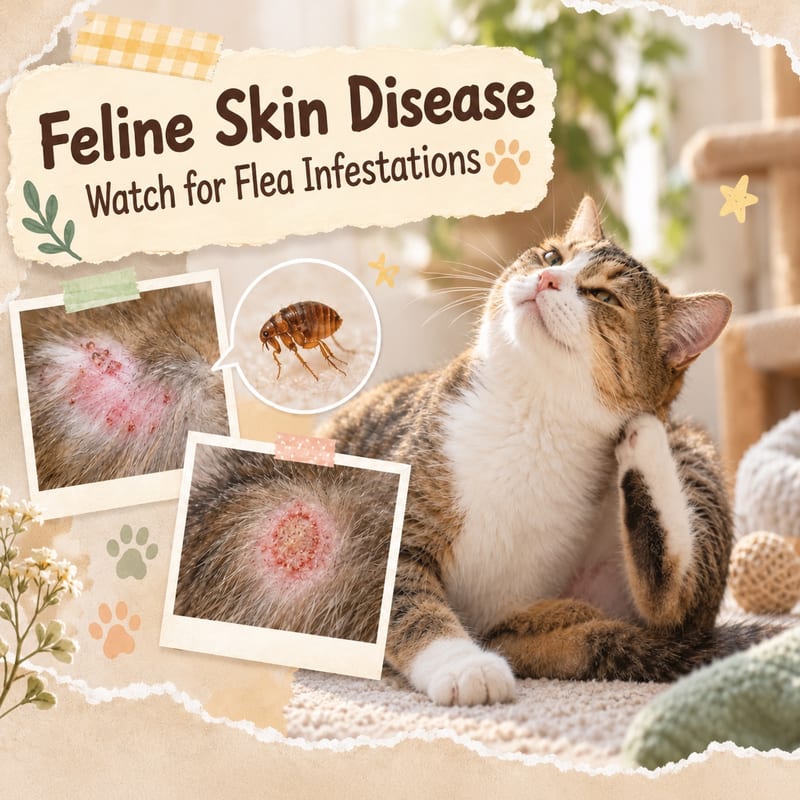
Cat Skin Problems: A Complete Guide to Flea Allergy, Scabies and Ringworm in Hong Kong
Is your cat scratching non-stop, losing fur or breaking out in a rash? These could be warning signs of skin disease. This guide breaks down the symptoms, treatment and prevention of the three most common cat skin problems — flea allergy dermatitis, scabies and ringworm — so you can spot problems early and protect your cat's skin health.

The Complete Dog Bathing Guide: 36°C Water, 10 Steps and Blow-Dry Secrets
A must-read for Hong Kong dog owners! This complete dog bathing guide shows you how to use 36°C water, follow 10 key steps and master the right blow-drying technique, so you can say goodbye to bath-time battles and turn every wash into a happy bonding session. Save it now!
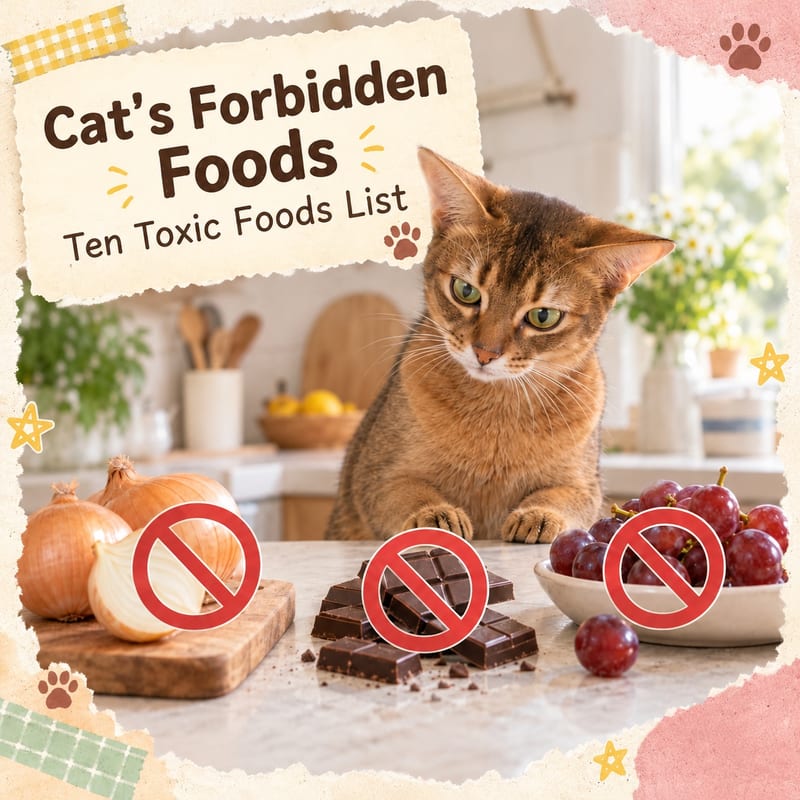
Cat Toxic Food List: 10 Common Foods Poisonous to Cats – A Must-Read for Hong Kong Cat Owners
Onions, chocolate, grapes, alcohol—these everyday human foods can be toxic to cats. This article covers 10 foods cats must avoid, poisoning symptoms, correct steps after accidental ingestion, and daily prevention tips. A must-read safety guide for Hong Kong cat owners.
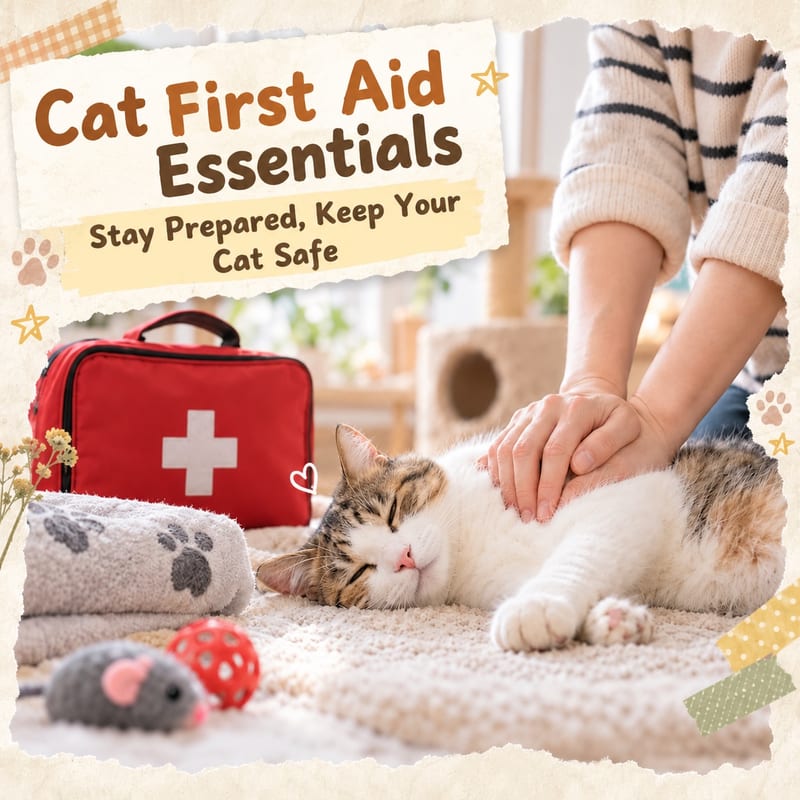
Cat Emergency First Aid Guide | 8 Major Crisis Responses in Hong Kong + CPR Techniques to Save Your Cat's Life
Seizures, poisoning, heatstroke, electric shock, bleeding, burns, fractures, fever — do you know how to handle the 8 most dangerous emergencies for cats? The golden first aid before reaching the vet can save a life! This article teaches you the correct first aid steps, including CPR techniques — essential knowledge for every cat owner.
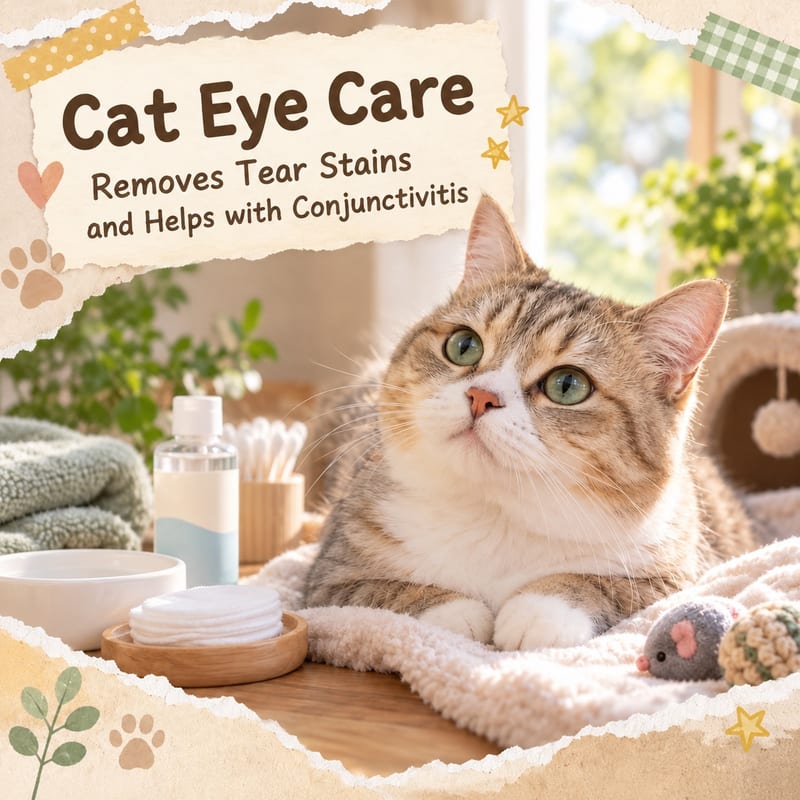
Cat Eye Care Complete Guide: Tear Stain Cleaning, Conjunctivitis Prevention, and 5-Step Daily Care
The core of cat eye care is daily observation, cleaning with a warm damp cloth, and wiping from the inner corner outwards. Flat-faced breeds (Persians, Exotic Shorthairs) have a special tear duct structure and need their tear stains cleaned daily. If you see yellow-green discharge, persistent redness and swelling, or a visible third eyelid, see a veterinarian promptly. Conjunctivitis, keratitis and feline viral rhinotracheitis are the three most common eye diseases; vaccinating on schedule and keeping the environment clean are the most effective preventive measures.
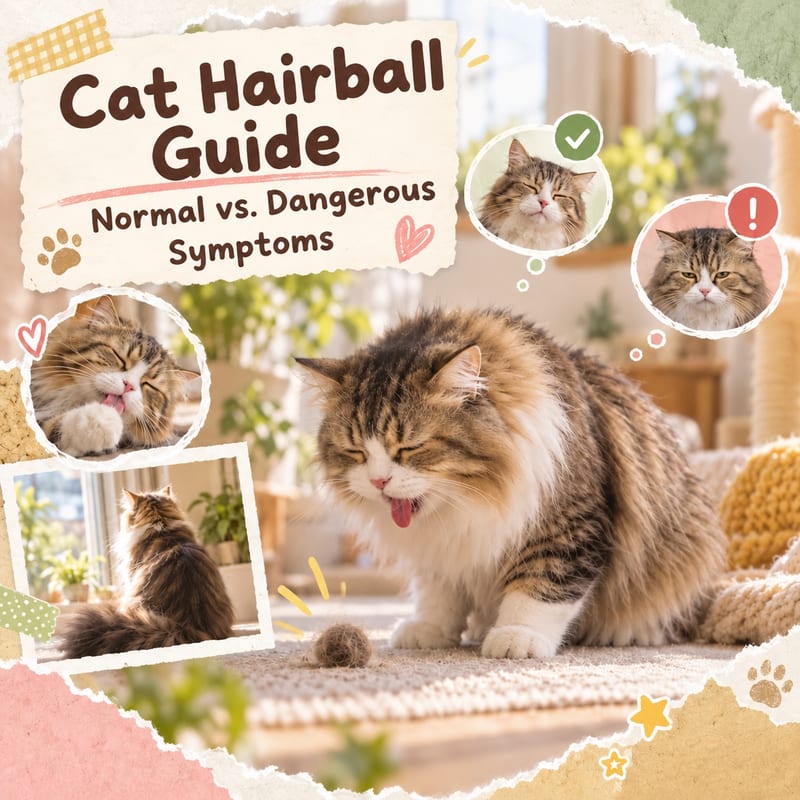
Cat Hairballs: A Complete Guide for Hong Kong | Long-Haired Cat Care, Hairball Prevention and Danger Signs
Did you know? Cats spend about 30% of their day grooming, and the hair they swallow in a year could knit a scarf! The occasional hairball is normal, but retching without bringing anything up, loss of appetite or constipation are warning signs of hairball disease. This article helps you tell normal hairballs from danger signs, covers 5 key prevention methods and special care for long-haired cats, so your cat can steer clear of hairball trouble.
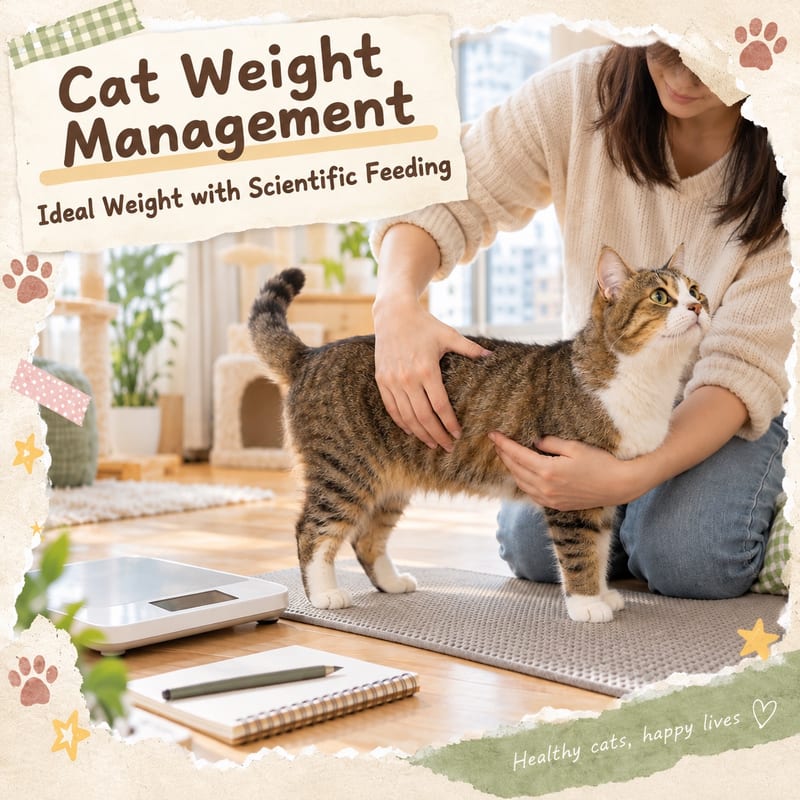
Cat Weight Management Guide: Ideal Weight, Calorie Needs, and Scientific Weight Loss
Ideal weight varies by breed (3-8 kg), with a Body Condition Score (BCS) of 4-5 being the standard. Check ribs and waistline to judge if your cat is overweight. Feeding at set times and amounts, plus 15-20 minutes of interactive play daily, can effectively manage weight.

Dog Teeth Brushing Guide: Why It Matters and How to Do It Right
Dogs have 42 teeth just like humans. To avoid bad breath, tartar and tooth loss, use pet-specific toothpaste and a soft-bristled toothbrush, brushing at least once a week. If your dog resists, wipe with gauze wrapped around your finger, and supplement with dental toys—that's proper care.
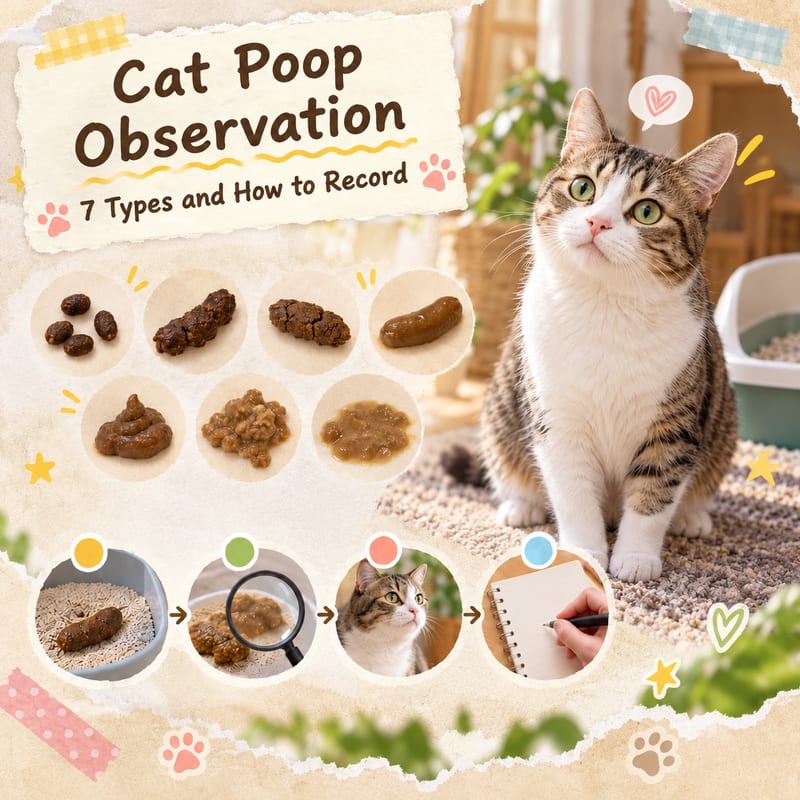
Cat Poop Observation Guide: 7 Stool Types and 4-Step Recording Method to Judge Cat Health
Observe your cat's poop across 7 types and use the 4-step 'pick, look, sniff, record' method. A few minutes a day builds a systematic health-monitoring habit. Normal poop should be banana-shaped or firm segments, and consistent records are more useful than a single observation.
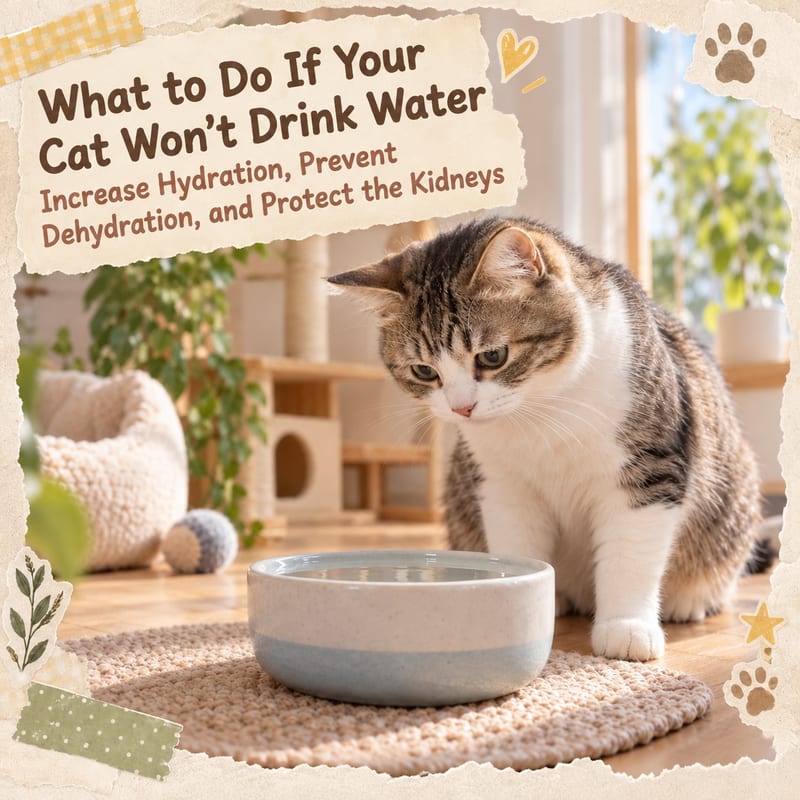
Cat Hydration Guide: How Much Water Does Your Cat Need? 7 Practical Tips to Help Your Cat Drink More
The recommended daily water intake for cats is about body weight (kg) × 40-60ml. A 4kg cat needs about 160-240ml of water per day. Cats naturally have a low thirst drive, and long-term insufficient drinking can lead to dehydration, urinary stones and chronic kidney disease — kidney disease is one of the most common causes of death in Hong Kong cats. The most effective ways to increase water intake include: switching to wet food, using a running water fountain, setting up multiple drinking stations at home, keeping water bowls clean, and using wide, shallow bowls.
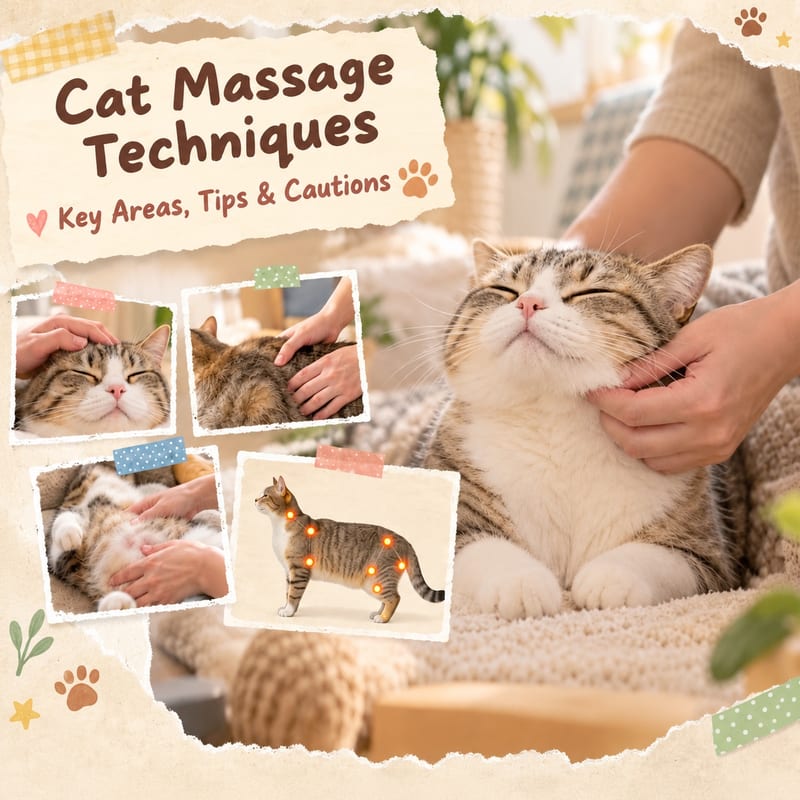
Cat Massage Complete Guide|4 Essential Techniques for Hong Kong Cat Owners, Constipation Acupressure Illustrated
Living in a small space in Hong Kong with a cat means you need to know how to massage! Learn 4 key techniques, constipation abdominal pressure, senior joint relief, contraindications, and veterinary warnings all in one go. Save it now, a must-read for Hong Kong cat owners!
Cats are good at hiding illness: 5 early warning signs owners should not miss
Cats instinctively hide discomfort. Spending 5 minutes a day stroking and observing your cat can help detect early warning signs such as lumps, dehydration and weight changes. Taking your cat to the vet early makes treatment much more effective.
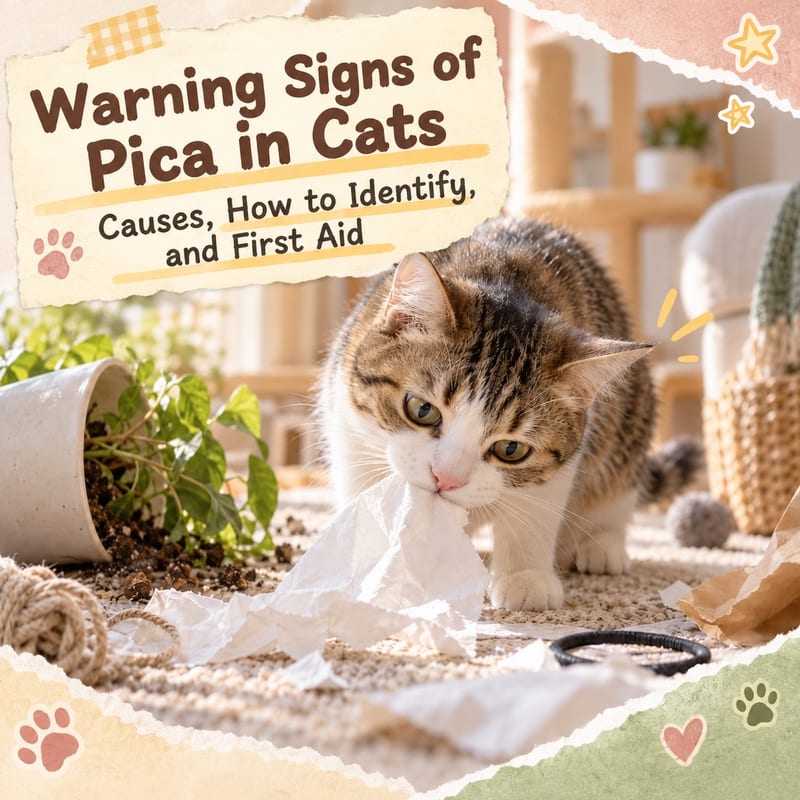
Cat Pica Alert | Essential Causes, Identification and First-Aid Guide for Hong Kong Cat Owners
A must-read for Hong Kong cat owners! This article breaks down the real causes of cat pica, teaches you to instantly tell curiosity from pathological pica, and covers immediate first-aid steps for swallowed foreign objects plus blockage warning signs. Help protect your cat's health — save this for later!

Pet Health Guide Hong Kong 2026: Prevention, Vaccines, Insurance & 24-Hour Clinics
A practical guide to keeping pets healthy in Hong Kong in 2026: vaccination schedules, parasite prevention, common diseases, pet insurance comparison, and 24-hour vet clinics. Early detection and treatment is the most practical way to save money.

Can You Keep a Cat If You're Allergic? Busting Allergy Myths and Low-Allergen Breed Recommendations
The real culprit behind cat allergy is not cat hair but Fel d 1 protein in cat saliva and sebaceous glands. Even if you have an allergic constitution, most allergy sufferers can keep a cat by choosing a breed with lower Fel d 1 secretion (such as Siberian or Balinese), using a HEPA air purifier and cleaning the environment regularly. We recommend getting a cat allergy test (skin prick or IgE blood test) to confirm the allergen before deciding on a cat-keeping plan.
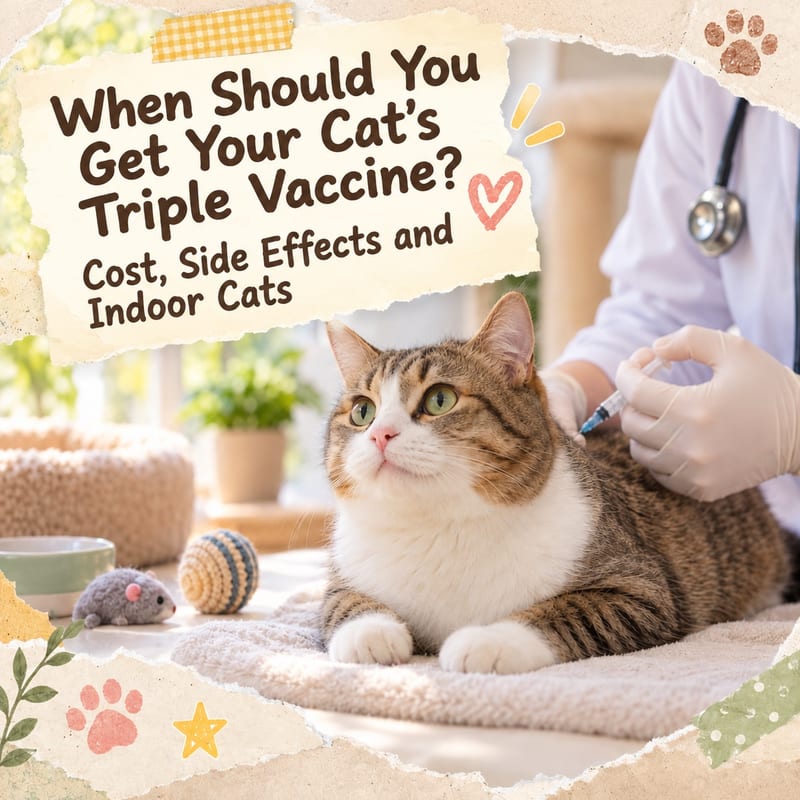
Cat Vaccination Guide: Schedule, Core Vaccines, and Hong Kong Costs
A complete guide to cat vaccines: FVRCP core vaccine, kitten schedule, adult boosters, rabies, side effects, and Hong Kong cost reference.

Complete Cat Grooming Guide | Essential for Hong Kong Cat Owners: Daily Brushing Protects Skin Health
A must-read for Hong Kong cat owners! Daily brushing reduces hairballs and prevents skin problems, and it's the perfect chance to check for fleas and parasites. PetChill shows you how to choose the right brush for your cat's coat, the correct technique and precautions. Learn now to keep your cat healthier and shinier.
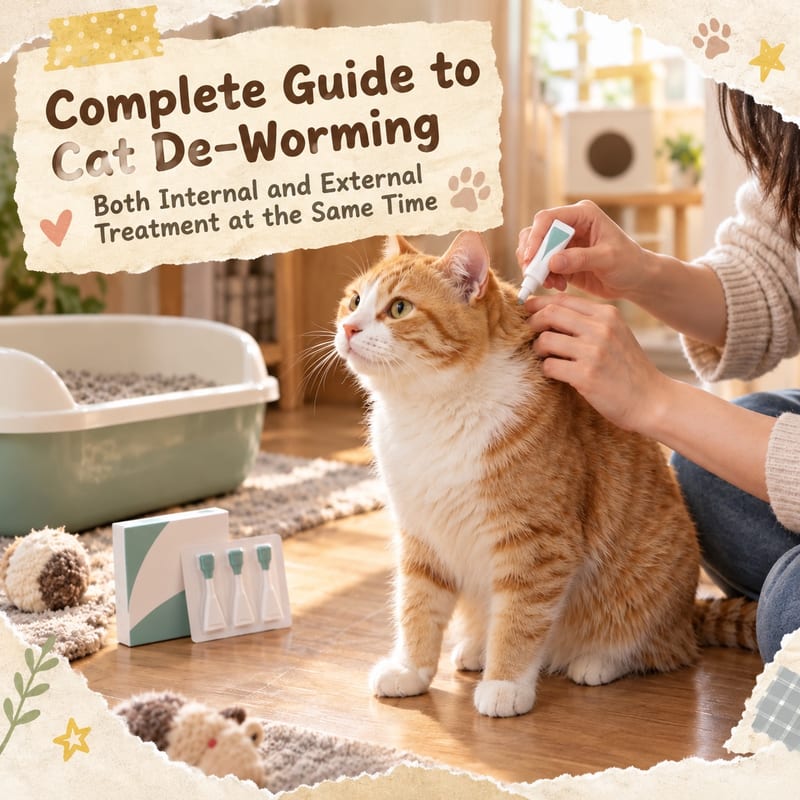
Cat Deworming Guide: Schedule, Products and Hong Kong Practical Tips
Whether your cat is indoor or outdoor, apply FRONTLINE spot-on to the back of the neck once a month, and deworm internally every 3–6 months. This protects against common parasites such as fleas, ticks, roundworms and heartworms.
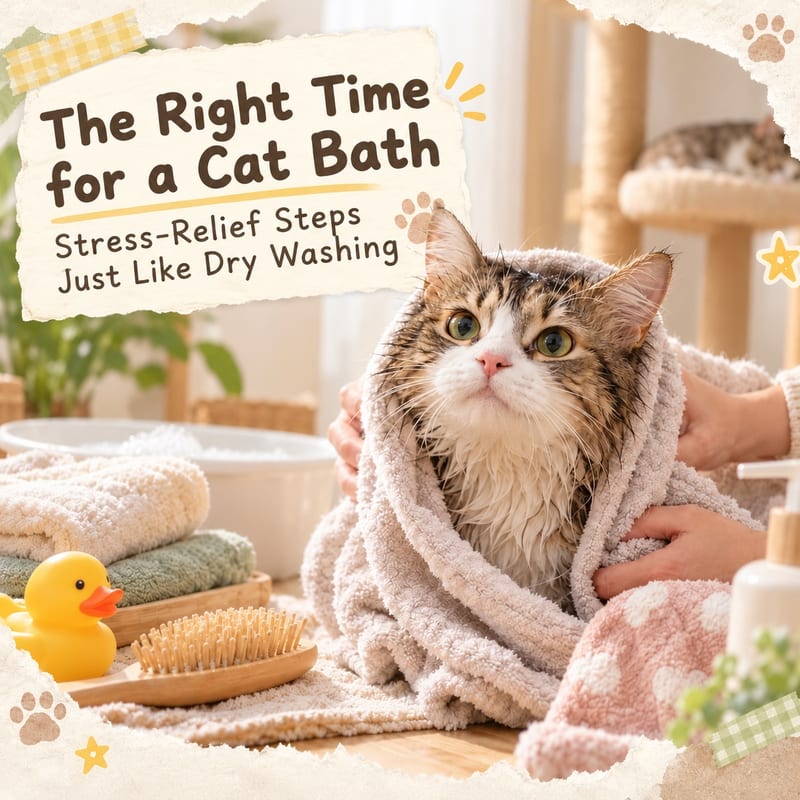
Do Cats Need Baths? A Must-Read for Hong Kong Cat Owners: Busting Bath Myths + Proper Cleaning Guide
A must-read for Hong Kong cat owners! Most indoor cats don't actually need baths, but exceptions include oily tail, fleas, or matted long fur. PetChill shows you how to identify when a bath is truly needed, stress-reducing steps, and dry-cleaning alternatives to keep your cat clean and calm. Save this complete guide now!
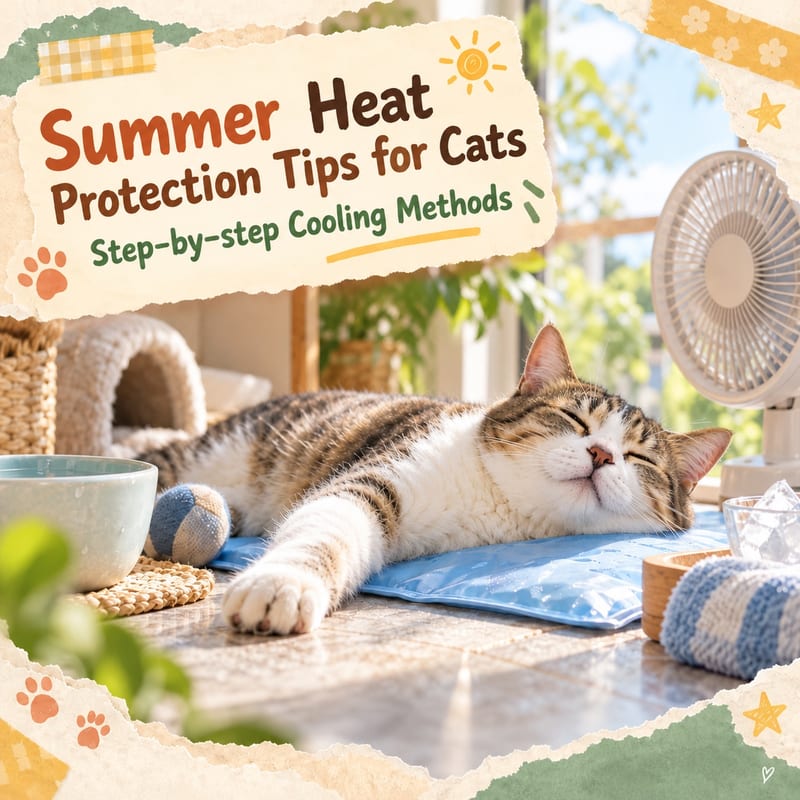
Summer Heat Protection for Cats: 5 Cooling Tips and 3 Fatal Mistakes to Avoid
Cats can get heatstroke too. Learn how to keep your cat cool with multiple water sources, cool corners, ice toys, and more—plus the three fatal mistakes to avoid.
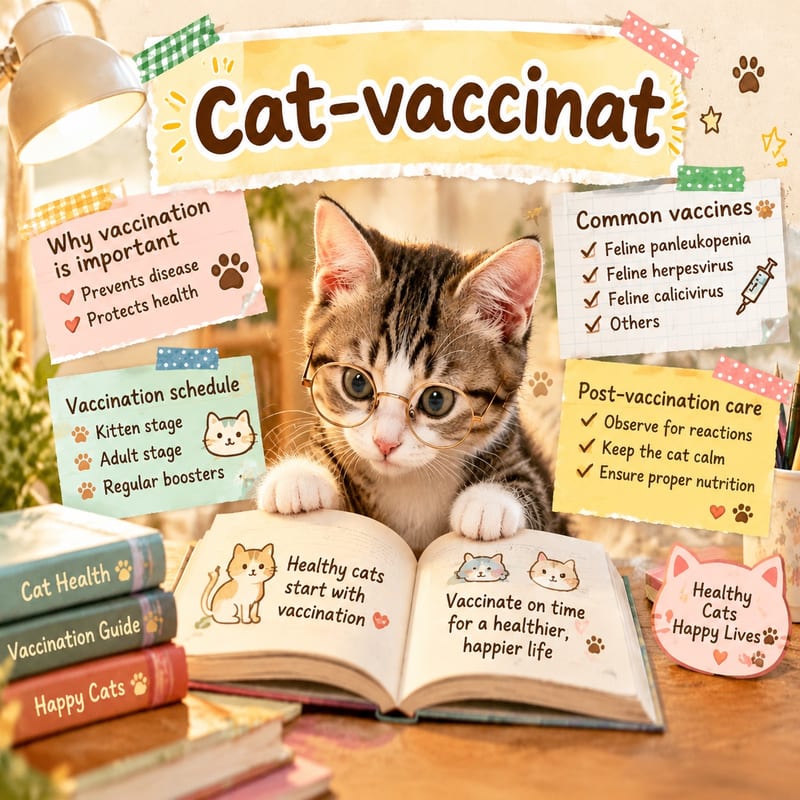
Complete Cat Vaccination Guide | How to Choose Between FVRCP and 5-in-1 in Hong Kong? Full Schedule Explained
A must-read for Hong Kong cat owners! This article breaks down the differences between FVRCP and 5-in-1 vaccines, shows you how to plan the vaccination schedule according to Hong Kong Veterinary Association recommendations, avoid common side effects, and protect your cat's health. Save it now and stop feeling confused about taking your cat for shots!
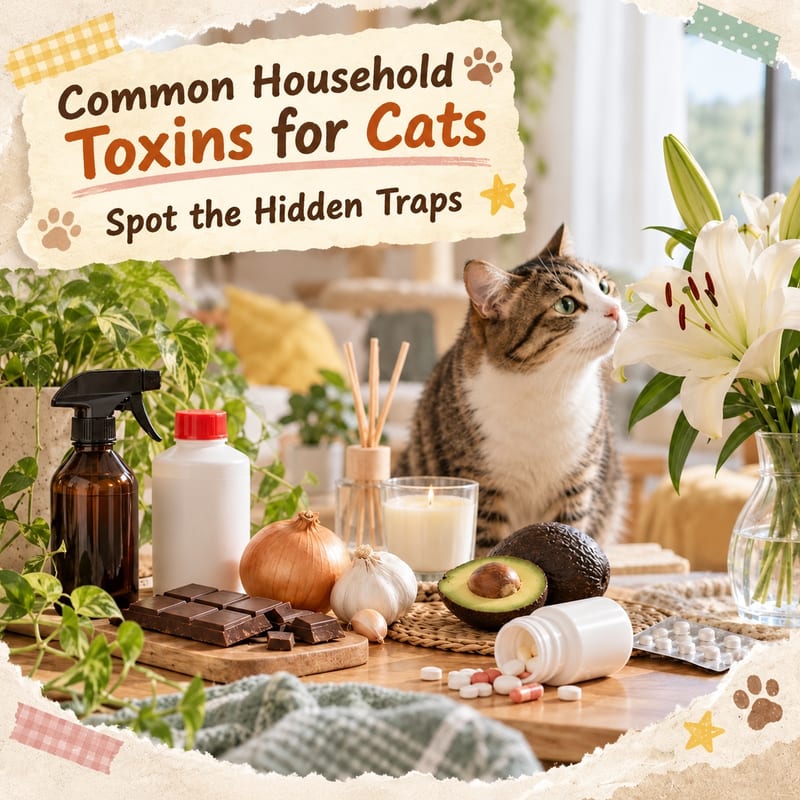
Cat Owners Must Know | Top 10 Cat Poisons in Hong Kong: Lilies are Number 1
A must-read for cat owners in Hong Kong! Lilies, bleach, essential oils, and other common items can be deadly for cats. This article teaches you to identify poisons, immediately check your home, and protect your furry friend’s safety. Save and share now!
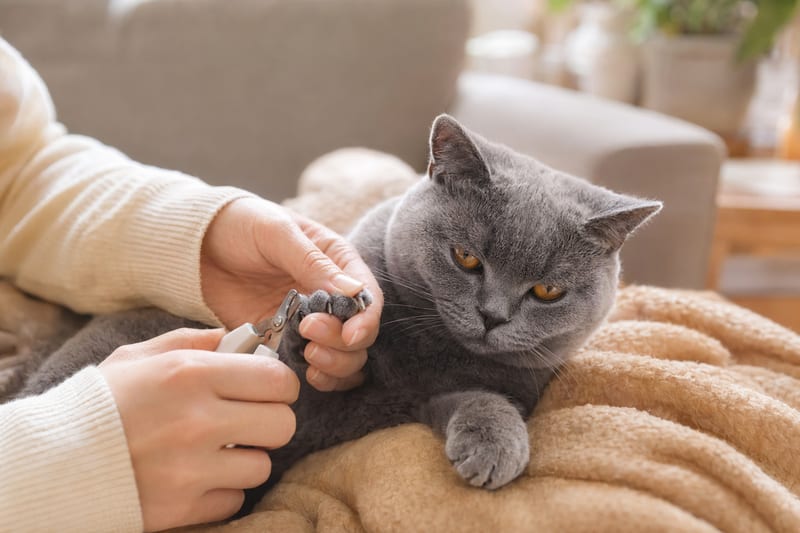
Trim Your Cat's Nails Without Help|Hong Kong Cat Owners' 5-Step Stress-Free Nail Trimming Guide
A must-read for Hong Kong cat owners! Master these 5 nail-trimming steps and calming techniques to easily trim your cat's nails at home, avoid scratches on furniture and skin, and say goodbye to 'human-cat battles'. Save this now and turn nail trimming into a daily little joy!