
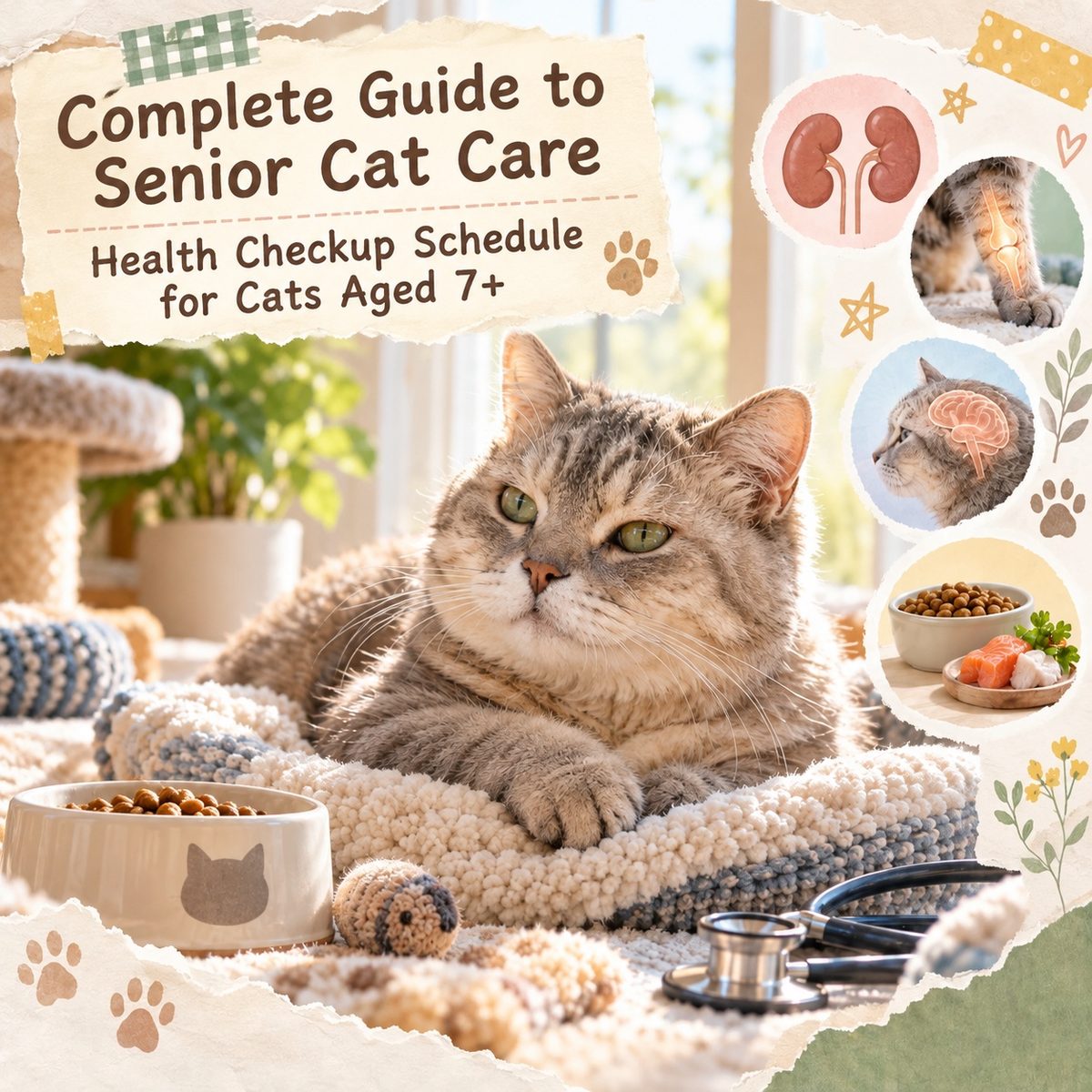
Quick answer: Cats enter the mature stage from age 7, and are considered senior from age 10. The three most effective things in senior cat care are: blood and urine tests every 6 months, regular weight and blood pressure checks, and early treatment of pain and dental problems. The five most common ageing problems are chronic kidney disease, osteoarthritis, periodontal disease, hyperthyroidism and cognitive dysfunction — all of which can be caught early through regular check-ups.
Information checked to 2026-10-12 · Sources: AAFP/AAHA feline life stage guidelines, ISFM senior cat care recommendations, IRIS chronic kidney disease staging framework, publicly available Hong Kong veterinary clinic fee ranges
Many cat owners ask the same question: "Is there no point treating an old cat?" The answer is no. The real difficulty in senior cat care is not that there are no methods, but that "changes are too quiet". Cats are born to hide pain and illness; a 12-year-old cat can still eat and jump while its blood tests already show clear abnormalities, until one day it suddenly stops eating and the owner realises something is wrong.
This article takes a "whole-picture pillars" approach: rather than teaching you how to treat each disease, it helps you build a framework you can follow — which nine systems age in sync, what to test at ages 7/10/14, the daily and weekly checklist at home, roughly how much a senior cat costs per year in Hong Kong, and how to assess quality of life in the final stage. In-depth details on individual diseases (such as kidney diets, joint supplements, dental cleaning risks) link to existing PetChill Blog articles so you can go deeper as needed.
What happens to a cat's body after age 7?
Veterinary medicine uses "life stages" to describe feline ageing: from age 7 cats are in the mature stage, and from age 10 they are senior. This dividing line does not mean "nothing to do before 7"; it means that from age 7 you should shift from "see the vet when sick" to "regular monitoring".
The core concept of senior cat care is: ageing happens in sync, not one organ at a time. Falling kidney function makes a cat drink more and urinate more, while increasing the load on the heart; joint pain makes a cat less willing to walk to water and the litter tray, which in turn worsens kidney and urinary problems; dental pain makes a cat eat less, so muscle and weight drop together, and then immunity falls. So a senior cat's care plan must be looked at as a whole — you cannot treat each symptom in isolation.
| System | Age when commonly seen | Early warning signs owners can observe | First step |
|---|---|---|---|
| Kidneys/urinary | 7 to 10 years | Increased drinking and urine volume, weaker urine smell, gradual weight loss | Blood tests (creatinine, SDMA), urine specific gravity |
| Joints/muscles | From 8 years | Cannot jump to previous heights, stiff walking, less grooming | Veterinary palpation and gait assessment, X-ray, home modification |
| Mouth/teeth | Any age, more common in seniors | Bad breath, drooling, dropping food, chewing on one side | Oral examination under anaesthesia, dental cleaning assessment |
| Thyroid | Over 8 years | Eats a lot but loses weight, messy coat, night crying, fast heartbeat | Blood test T4 |
| Diabetes | Over 7 years | Drinks and urinates a lot, walks on hocks, weight loss | Blood glucose, fructosamine, urine test |
| Cognitive function | From 10 years | Night crying, staring at walls, getting lost, inappropriate toileting | Rule out other diseases first, then behaviour and environmental management |
| Heart/blood pressure | Over 8 years | Fast breathing at rest, unwilling to move, sudden hind leg weakness | Auscultation, blood pressure, cardiac ultrasound |
| Vision/hearing | From 10 years | Bumping into furniture, no response when called, easily startled | Eye examination, home lighting and sound cues |
| Digestion/weight | Over 7 years | Fluctuating appetite, intermittent soft stool, muscle loss | Establish a weight curve, diet and gastrointestinal assessment |
The best way to use this table is to "match your cat": if your cat already shows any item on the right, even if it still eats and walks, it is worth raising proactively with the veterinarian at the next check-up. Cats are extremely good at hiding symptoms; what owners observe is usually already the second or third stage.
A system-by-system look at ageing
Kidneys and urinary system
Chronic kidney disease is one of the most common chronic diseases in senior cats, and the "quietest". By the time kidney function is down to about 30%, blood test values only then rise clearly, so screening with creatinine alone is late; SDMA and urine specific gravity are earlier indicators. Daily management focuses on three things: enough water (wet food, water fountain, several water bowls), controlling phosphorus intake, and avoiding nephrotoxic substances (lilies, some human painkillers, certain disinfectants and preservatives). If diagnosed, diet and recheck frequency should be adjusted according to disease stage — do not just buy "kidney cat food" online and try it randomly. For detailed early symptoms and the blood and urine testing process, see the complete guide to cat kidney disease.
Joints, muscles and mobility
Osteoarthritis is not just a dog problem. The veterinary field generally believes that the proportion of senior cats with joint degeneration visible on X-ray is far higher than the number owners notice — because cats show pain not by whining but by "not jumping", "not playing", "hesitating before jumping", "sleeping longer after jumping". If you notice your cat used to jump onto the table in one go but now needs two steps, or lands front paws first, treat it as already having a joint problem. Weight control is the most effective measure, followed by environmental modification (ramps, steps, non-slip mats), and only then supplements or pain relief under veterinary assessment. For detailed care and supplement comparisons, see the pet arthritis care guide.
Mouth and teeth
The frightening thing about dental problems in senior cats is that they drag down nutrition and kidneys at the same time. The chronic inflammation and bacteria from periodontal disease affect the kidneys and heart through the bloodstream; dental pain makes cats unwilling to chew hard food, so intake drops and muscle is lost. Commonly overlooked is tooth resorption: cats may eat using their tongue or one side of the teeth, drool, suddenly accept only soft food, and in severe cases paw at their face. Dental cleaning in senior cats must include pre-anaesthetic assessment (blood tests, heart and blood pressure), but leaving inflammation untreated long-term is often riskier. For related costs and risk considerations, see the analysis of cat dental cleaning costs and risks.
Cognition and behaviour (feline cognitive dysfunction)
After age 10, some cats show changes similar to human cognitive decline: night-time yowling, staring at walls or corners, getting stuck behind furniture and unable to back out, toileting outside the litter tray, changed responses to family interaction. These behaviours are not "being naughty" or "revenge", and are not necessarily cognitive dysfunction — pain, hyperthyroidism, high blood pressure and reduced vision can all cause similar signs, so blood tests must first rule out physical problems. Once cognitive problems are confirmed, management focuses on a fixed routine, a small night light at night, not moving furniture, increasing low-intensity environmental enrichment, and behavioural medication if assessed by a veterinarian. The existing article senior cat care guide breaks down ageing warning signs item by item in more detail.
Vision and hearing
Senior cats commonly develop cataracts and retinal degeneration, and retinal bleeding caused by high blood pressure can cause vision to drop sharply within days — this is an emergency. Hearing loss is even more subtle; owners often think the cat is "ignoring them" when it simply cannot hear. Practical approaches: before calling the cat, use a hand gesture or tap the table lightly to create vibration, and never pick it up suddenly from behind; leave a low-brightness light on at night; do not move the positions of food bowls, water bowls and the litter tray. These small changes can greatly reduce injuries and startle in senior cats.
Endocrine: thyroid and diabetes
Hyperthyroidism is the classic senior cat "eats a lot but loses weight": greatly increased appetite, weight loss, messy greasy coat, night crying, fast heartbeat, vomiting or diarrhoea. Left untreated, it increases cardiac load and raises blood pressure. Diabetes is also common; besides drinking and urinating a lot, there is a very characteristic sign — walking on the hocks (because of neuropathy), which owners often think is just "walking strangely". Both diseases are screened by blood tests and both need regular rechecks and medication adjustments.
Heart and blood pressure
Early heart disease in cats can have no coughing or panting at all, only a heart murmur or changed heart rhythm on auscultation. For senior cats, blood pressure measurement should be a standard part of every check, because high blood pressure can both worsen kidney function and cause blindness, and usually has no outward symptoms. If the veterinarian finds a murmur, a cardiac ultrasound is usually recommended to confirm the type and severity, and then decide whether to start medication.
Digestion and weight
Weight is the most honest health indicator in senior cats. "Gradual" weight loss in old cats is often mistaken for normal ageing, but continued decline usually means something is happening: dental pain, chronic kidney disease, hyperthyroidism, diabetes, chronic gastrointestinal disease or tumours. Besides weight, watch muscle mass too — a bony feel along the spine and thinning hind legs are signs of muscle loss, which needs enough high-quality protein and moderate activity to slow down. Loss of appetite should not be met with "appetite stimulants" straight away; first rule out dental pain, nausea, oral ulcers and dehydration.
Skin, coat and immunity
Senior cats groom themselves less, leading to matted fur, more dandruff and imbalanced oil production; nails also become thicker and more brittle, sometimes growing into the paw pads and causing pain and infection. In advanced old age, immunity is generally weaker, and a small wound or one upper respiratory infection can drag on for a long time. Weekly grooming and skin checks are actually a full-body palpation at the same time: feel for abnormal lumps, pain reactions, and smell in the ear canals.
Six-monthly check-up schedule: what to test at 7, 10 and 14
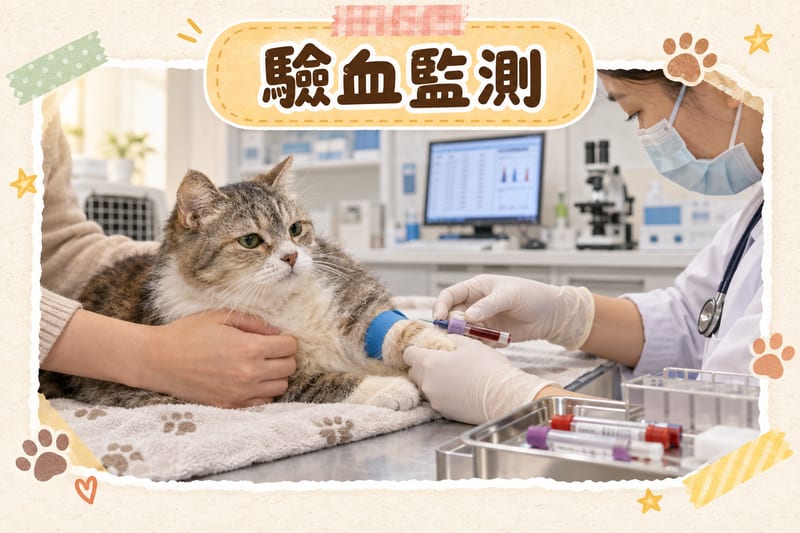
Veterinarians recommend senior cats be checked every 6 months, not to make money but because cats age quickly — within half a year, kidney values can go from normal to clearly abnormal. Here is a practical schedule by age stage:
| Age stage | Recommended frequency | Essential items each time | Add as needed |
|---|---|---|---|
| 7 to 9 years (mature) | Once a year | History and weight, body condition score, auscultation, oral examination, blood biochemistry plus complete blood count, urine test | Thyroid T4, blood pressure, SDMA |
| 10 to 13 years (senior) | Once every 6 months | All of the above, plus blood pressure, T4, urine specific gravity, weight curve review | X-ray, cardiac ultrasound, eye examination |
| Over 14 years (geriatric) | Every 4 to 6 months | All of the above, plus quality-of-life and pain assessment | Electrolytes, phosphorus, systolic pressure, cardiac ultrasound |
| Diagnosed chronic disease | Every 1 to 3 months, per veterinary plan | Specific indicators for that disease | Drug levels, electrolytes, blood pressure |
A little preparation before going to the clinic makes the check-up much more useful: record the past week's food intake, water intake, urine volume and number of bowel and bladder movements; bring a fresh urine sample (in a clean container, delivered as soon as possible after collection); weigh the cat; write down the three questions you most want to ask the veterinarian. Because senior cats get anxious easily, use a carrier with a lid and put in a cloth with your scent.
Caregiver checklist: daily, weekly, monthly, every six months
You do not need to memorise medical terms; just follow this checklist and you will avoid most "found too late" situations:
- Daily: observe food intake (not whether it eats, but how much is left), drinking and urination frequency, stool and urine appearance, and any change in energy or movement. For senior cats, a short interaction at the same time each day is best, and you can check its responses at the same time.
- Weekly: weigh once (same scale, same time, preferably empty stomach), groom once or twice, check gum colour and breath, feel for new lumps.
- Monthly: trim nails (senior cat nails easily overgrow), check ears and eyes, record weight on a chart to see the trend, check home safety (non-slip mats moved, new clutter in walkways).
- Every six months: blood and urine tests, blood pressure, review weight and diet changes with the veterinarian, review whether the supplement list needs adjusting.
- Every year: update the overall care plan with the veterinarian, including which 24-hour clinic you would go to in an emergency. The existing article senior cat care in practice by breed has a daily routine and emergency route map for Hong Kong settings, worth reading in advance.
- Ongoing: photo records — one full-body photo each month to see body shape and coat changes, which is far more reliable than memory.
Three key points of senior cat diet: phosphorus, protein and calories
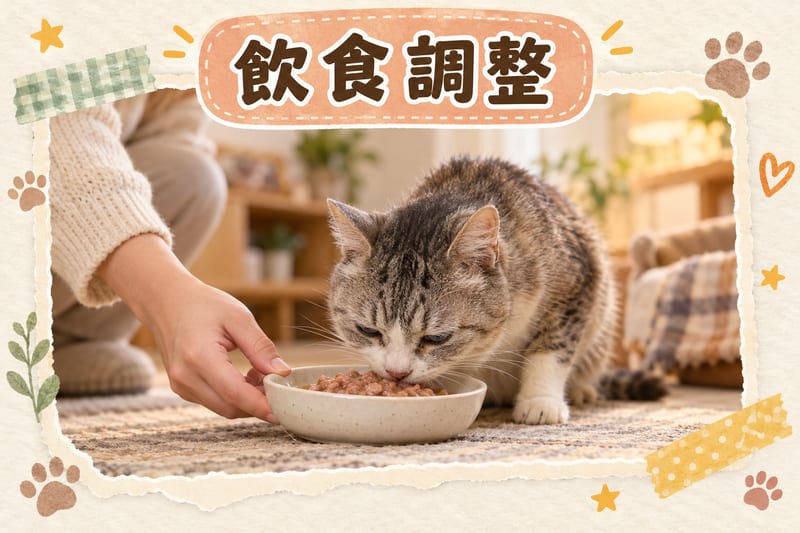
The most common mistake in senior cat diets is "old cats need less protein". The truth is the opposite: senior cats lose muscle quickly and actually need enough high-quality animal protein to maintain muscle. What really needs controlling is phosphorus. When kidney function declines, phosphorus cannot be excreted and accelerates kidney deterioration, so a low-phosphorus diet is central to kidney cat management. The third key is calories — senior cats have reduced smell and taste and poor teeth, and once they do not eat enough calories, weight and immunity fall together.
Some practical approaches:
- Add wet food or soak dry food in water, increasing both moisture and aroma, especially effective for cats with reduced smell.
- Warm food slightly (about room temperature to lukewarm) is more appealing than cold food from the fridge; but do not leave it out for more than half an hour.
- Transition foods over 7 to 10 days, changing only 20% at a time; senior cats adapt slowly.
- Feed small meals more often, 3 to 5 times a day, which suits senior cats better than one large bowl.
- If the veterinarian decides prescription food is needed, follow the specified amount and stage, and do not mix with regular food long-term without rechecking.
Some senior cats also have food sensitivities or gastrointestinal problems, and the veterinarian may consider a prescription food with a limited protein source or hydrolysed protein formula, such as Hills Prescription Diet Cat Food d/d Venison and Pea 8.5lbs, priced at HK$923 (price subject to the online store's current listed price). Note: prescription food is a therapeutic diet and must be chosen by a veterinarian based on your cat's diagnosis, including which formula and for how long; it is not recommended to choose it yourself.
Cost estimate: roughly how much does a senior cat cost per year
Medical expenses for senior cats rise with age, and budgeting ahead avoids "not going to the vet because of money". The table below shows common fee ranges at Hong Kong veterinary clinics in 2026, for budgeting reference only, not a quote from any clinic; actual fees vary greatly by clinic, district, anaesthetic method and complexity of the condition, so ask your regular clinic directly for a fee list.
| Item | Common range in Hong Kong | Recommended frequency for over 10 years |
|---|---|---|
| Consultation and physical examination | About HK$300 to 600 per visit | Every 6 months |
| Blood biochemistry plus complete blood count | About HK$800 to 1,600 per visit | Every 6 months |
| Urine test (including specific gravity) | About HK$300 to 600 per visit | Every 6 months |
| Thyroid T4 | About HK$400 to 700 per visit | Every 6 to 12 months |
| Blood pressure | About HK$200 to 400 per visit | Every 6 months |
| X-ray (per body part) | About HK$700 to 1,500 per visit | As needed |
| Abdominal or cardiac ultrasound | About HK$1,000 to 2,500 per visit | As needed |
| Dental cleaning under anaesthesia (excluding extractions) | About HK$3,000 to 8,000 per visit | Depending on oral condition |
| Chronic disease prescription food | About HK$400 to 900 per month | Ongoing |
| Supplements (joint, fish oil, etc.) | About HK$150 to 500 per month | Ongoing, as advised by veterinarian |
Using the midpoints above as a rough calculation, a cat over 10 with no major illness currently costs roughly a few thousand Hong Kong dollars a year in basic checks; if chronic kidney disease, hyperthyroidism or diabetes is already diagnosed, plus prescription food and rechecks, the annual cost rises noticeably. Some practical ways to save: do all necessary items in one visit (avoid paying consultation fees several times); ask clearly which items are "recommended" and which are "essential"; buy supplements as advised by the veterinarian, not because the packaging says "senior cat formula"; treat dental problems regularly to reduce the chance of major surgery and complications later.
Home modification checklist: less pain, fewer falls for senior cats
Senior cats are most often injured because of "jumping", and most often give up using the litter tray because they "cannot get in". The principle of home modification is: turn actions that require jumping into actions that can be done in steps.
- Litter tray: switch to a low-sided design or one with a notch at the front, at least two trays, placed where no jumping up or down is needed, away from the cat's main walkways.
- Walkways: add steps or low stools beside the sofa and bed to form a "staircase", so the cat can choose to go up in two steps.
- Floor: place non-slip mats where the cat lands from the sofa, in corridors and in front of the litter tray to reduce hind leg slipping.
- Bed: choose a supportive, fully washable soft pad; in winter a heat pad can be added but leave space for the cat to leave on its own.
- Food and water: raise slightly (about 5 to 10 cm off the floor) to reduce neck strain, but not so high that the cat has to stretch its neck.
- Lighting: leave a low-brightness night light on at night, which greatly helps cats with reduced vision or cognitive decline.
- Cleaning products: follow dilution ratios, let surfaces dry after cleaning, and avoid strong-smelling disinfectants near food and water bowls; ask the veterinarian if unsure.
- Stability: do not suddenly move furniture or change the litter tray position; senior cats are much weaker than younger ones at rebuilding their "map".
Medication and supplement safety: steroids, painkillers, supplements
There are several principles that must be followed for medication in senior cats.
First, any dosage question must be decided by a veterinarian. Cats have different liver metabolic pathways from dogs, and many human or dog medications (such as painkillers containing ibuprofen or paracetamol) are toxic to cats and must never be given on your own.
Second, steroids (such as prednisolone) are commonly used in senior cats for inflammatory bowel disease, asthma or certain tumours, and can be very effective, but long-term use has a cost: blood sugar and blood pressure rise, water intake and urine output increase (adding load on the kidneys and heart), liver enzymes rise and fat deposits in the liver, muscle loss (especially hind limbs), and reduced immunity increasing infection risk. So cats on long-term medication must have regular blood and urine monitoring, and stopping must be tapered — sudden withdrawal can trigger an adrenal crisis.
Third, supplements are not medicines. Fish oil, glucosamine, antioxidants and others may have supportive effects in some cats, but dosage, quality and safety vary greatly; it is best to have a veterinarian assess them together with your cat's blood test results and medications to avoid interactions with prescription drugs.
Palliative care: quality-of-life assessment and the hardest decision
In the final stage of senior cat care, the focus shifts from "curing" to "living comfortably". The most useful tool at this time is a quality-of-life assessment: not asking "is there still a treatment", but "is today a good day or a bad day for him". The following five areas help you record objectively:
| Assessment item | Ideal | Needs attention | Ask the veterinarian immediately |
|---|---|---|---|
| Appetite | Eats willingly, stable intake | Needs coaxing, fussy, weight loss | Not eating at all for over 24 hours |
| Drinking and urination | Normal frequency and amount | Clearly increased or clearly decreased | Cannot urinate, straining in the tray, vomiting |
| Activity and interaction | Greets you, willing to play | Sleeps most of the time, ignores people | Unwilling to get up, crying in pain, laboured breathing |
| Coat and body | Clean coat, intact skin | Messy coat, no longer grooming | Ulcerated wounds, abnormal lumps, continuous bleeding |
| Breathing and comfort | Calm, steady breathing at rest | Breathing fast at rest | Open-mouth breathing, laboured breathing, sudden hind leg paralysis |
The method can be simple: score each day using the same set of criteria, record for two weeks, then review the trend with the veterinarian. Key points of palliative care include: pain relief first, no force-feeding, keeping warm and clean, allowing reduced interaction without forcing it, and spending the final time in a familiar environment. If the veterinarian discusses euthanasia with you, please understand that this is a decision about "avoiding meaningless suffering", not giving up; before deciding, you have the right to ask for a second veterinary opinion and to ask clearly about the assessment criteria.
When to see a veterinarian immediately
The following situations cannot wait for a recheck and need same-day or immediate attention: completely unable to urinate or repeatedly going in and out of the litter tray with no urine, not eating at all for over 24 hours, persistent vomiting or diarrhoea with poor energy, open-mouth breathing or clearly laboured breathing, sudden hind leg weakness or paralysis, seizures, abnormal body temperature, heavy bleeding, eating medication or toxic plants by mistake.
For emergencies, contact a veterinarian immediately; this article is for reference only and cannot replace veterinary diagnosis. If you are unsure whether it is an emergency, the safest approach is to call the veterinary clinic and describe the symptoms clearly, and let the professionals decide whether you need to go in immediately. Hong Kong has 24-hour emergency clinics; it is worth checking the route and contact details in advance.
Key points summary
- From age 7, switch to "regular monitoring"; from age 10, check every 6 months; over 14, every 4 to 6 months.
- Ageing in senior cats happens in sync: kidneys, joints, teeth, thyroid, cognition, heart and senses all affect each other.
- Essential items at every check: weight and body condition score, blood biochemistry plus complete blood count, urine test, blood pressure; add T4 from age 10.
- Continued weight loss is the single warning sign most worth investigating; do not dismiss it as normal ageing.
- The focus of home modification is to turn "needs to jump" into "can get there in steps", and to keep the environment and routine stable.
- Senior cats need enough high-quality protein; what needs controlling is phosphorus, not protein.
- Any medication dose and withdrawal plan must be decided by a veterinarian; steroids must not be stopped suddenly.
- In the final stage, use a quality-of-life assessment to record good days and bad days, and make decisions together with the veterinarian.
To read more about breed-level differences in ageing (such as special considerations for long-haired cats and flat-faced cats), you can read the cat breed lifespan ranking and the four extended articles mentioned above. There is no miracle formula for senior cat care, only early monitoring, early treatment, and careful daily observation — these are what give your cat the most good days.