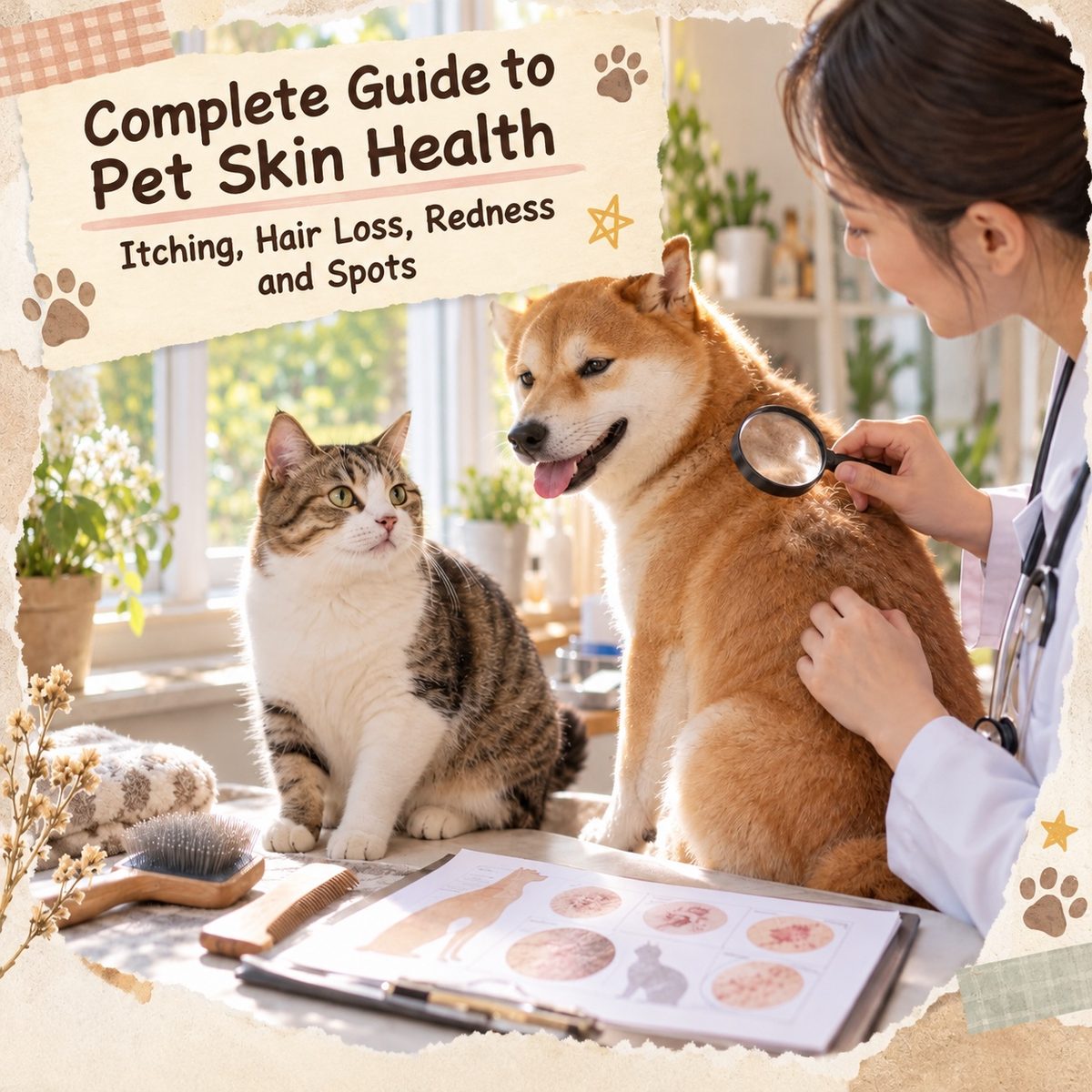
Quick answer: Nine out of ten cases of itching, hair loss and rashes in cats and dogs come down to five causes: parasites (fleas, mites), fungal infection, environmental allergy, food allergy, and a damaged skin barrier. The key is to first pin things down with the three-step method - location, appearance, timing - then work on the environment and diet. If a problem spreads rapidly within 24 hours, a wound oozes pus or feels hot, or your pet's mood and appetite clearly decline, stop observing and see a veterinarian immediately.
Information checked up to 2026-10-12. Source: compiled by the PetChill database team, drawing on general international veterinary diagnostic principles, official product labels, and common observations from local veterinary clinics in Hong Kong
Have you noticed your pet scratching non-stop at night, losing a handful of fur when you brush them, or feeling little red bumps on the belly or behind the ears? Skin problems are one of the most common reasons pets are brought to the clinic, and Hong Kong's climate is the perfect accomplice: humidity stays high through spring and summer, indoor air-conditioning alternates with muggy outdoor heat, and ventilation in apartment units is limited, so fungi, mites and bacteria all thrive. The trouble is that many skin conditions start with just a little itching or a little dandruff, and owners assume "it'll be fine in a couple of days" - until the pet has scratched itself bloody and the skin has turned black and thickened, and treatment then takes months.
This is the overview pillar article in our skin health series. We go from classifying causes to practical judgement, then cover coat colour changes, wound healing, cat litter allergy and apple cider vinegar and other common questions, and finish with a care schedule and product references. For in-depth coverage of individual conditions, we link to other articles in the series so you can jump to the details you need.
Skin problems are not all one thing: first tell apart the five main causes
Skin conditions in pets look similar but can have completely different causes, and the approach can be the opposite. For example, a fungal infection spreads more the wetter it gets, whereas an over-production of sebum needs appropriate cleaning; parasites need the right deworming product, while food allergy must be tackled through diet. In practice, the most common cases fall into five groups:
- Parasites: fleas, ticks, sarcoptic mange mites, ear mites, Demodex mites. The shared features are "intense itching" and "contagious", and the environment must be treated at the same time.
- Fungi: most typically fungal infection (commonly called cat ringworm / ringworm). Round patches of hair loss with scaly edges appear, and it can also spread to people.
- Bacteria: mostly "secondary infections". Once the skin barrier is damaged, opportunistic bacteria such as Staphylococcus epidermidis move in, causing pustules, oozing and worsening redness and swelling.
- Allergies: environmental allergy (dust mites, pollen, fungal spores), food allergy, flea bite allergy. These are usually generalised or symmetrical, and follow a seasonal or feeding-related pattern.
- Medical / metabolic: hormonal imbalance, nutritional deficiency, internal parasites, chronic disease and so on all show up in the coat and skin, for example faded coat colour, symmetrical hair loss on both sides, and dry, brittle hair.
Once you understand these five groups, you'll see why veterinarians so often need to "test" rather than "guess" - because the same patch of rash can call for completely opposite treatments.
The three-step method: location, appearance, timing
Before seeing the veterinarian, the most valuable thing an owner can do is photograph the affected area and record the changes. These three dimensions are almost the core of the veterinary consultation:
Step one, location. Flea allergy usually concentrates on the back near the tail, the flanks and the inner thighs; mite infections often start around the ears and face; problems on the paws and lower abdomen should make you think about cat litter, floor cleaner and contact with grass; symmetrical hair loss on both sides should raise suspicion of endocrine or metabolic causes.
Step two, appearance. Is it a rash, papules, pustules, dandruff, scabs, or thickened, blackened skin (hyperpigmentation)? Round bald patches with clear edges point to fungus; tiny red dots and dandruff point to mites; greasy and smelly to the touch may relate to sebum and bacteria.
Step three, timing. When did it start? Does it coincide with a change of season, food, cat litter, or a visit to the groomer? Did it improve or worsen after medication or a bath? The "timeline" often reveals the direction at a single question - for example, itching starting two weeks after a food change makes food allergy much more likely.

Symptom comparison table for common skin problems
The table below compares the most common situations side by side. Note the "itching level" and "contagious" columns - they are the fastest clues to narrow things down. The table is for guidance only and cannot replace a veterinary diagnosis.
| Common problem | Typical location | Appearance | Itching level | Contagious | Initial approach |
|---|---|---|---|---|---|
| Flea bite allergy | Back near tail, flanks, inner thighs | Tiny red dots, scabs, localised hair loss | Very high | Fleas can spread to other pets | Whole-body flea treatment + environmental cleaning (vacuum, wash bedding) |
| Mites (sarcoptic / Demodex) | Around ears, face, limbs | Dandruff, thickened skin, wrinkles | Sarcoptic very high, Demodex moderate | Sarcoptic highly contagious | Appropriate deworming product after veterinary diagnosis |
| Fungal infection (cat ringworm / ringworm) | Face, ears, limbs, trunk | Round bald patches, scaly edges, broken hairs | Mild to moderate | Can spread to people and other pets | Prescription antifungal medication + environmental disinfection |
| Bacterial secondary infection | Any damaged skin | Pustules, oozing, odour, spreading redness | Moderate to high | Generally not directly contagious | Veterinarian to assess whether antibiotics are needed |
| Environmental allergy (atopic dermatitis) | Face, paws, armpits, groin | Redness, itching, recurring flare-ups | High | Not contagious | Reduce allergens + veterinary medication to control |
| Food allergy | Face, ear canals, paws, trunk | Redness, recurring ear inflammation, hair loss | Moderate to high | Not contagious | Dietary elimination trial under veterinary guidance |
| Excess sebum / seborrhoeic skin | Back, ear canals, chin | Greasy, yellowish-brown dandruff, odour | Moderate | Not contagious | Appropriate cleaning frequency + nutritional adjustment |
Itching: where your pet itches tells you where the problem is
Itching is the most direct signal of a skin problem, but pets can't say where it itches, so owners must watch the scratching behaviour: scratching the ears and neck with the hind legs usually relates to ear mites or an ear canal infection; biting and licking the lower back and tail base is most likely flea allergy; constantly licking the paws and between the front pads usually points to environmental allergy, floor cleaner residue or a foreign object; rubbing the face on the sofa and wall corners may mean discomfort on the face or around the eyes.
Watch out for whether "the itching gets worse at night". Many pets itch especially at night and early morning, which may relate to indoor dust mite levels, bedding and body temperature changes. If the itching already wakes your pet at night, reduces appetite or makes them unwilling to be touched, see a veterinarian promptly even if the skin surface looks fine.
For a deeper look at individual skin conditions in cats, their symptoms and prevention details, see our other article Cat Skin Diseases Guide; for dogs, the key points of coat-shedding season care and flea and tick control, see Dog Skin Care Guide.
Hair loss: the "shape" of the shedding tells you the direction
Normal shedding is evenly distributed over the body, with no redness or dandruff on the skin itself, just a short-term increase in the amount of hair. Abnormal hair loss needs to be judged by shape:
- Round bald patches with clear edges: points to fungal infection, common on the face, ears and limbs, with broken hairs and dandruff at the edges.
- Symmetrical hair loss on both sides: less likely to be infectious; consider endocrine or metabolic factors, and a veterinarian should run blood tests.
- Hair loss along scratch or lick marks: usually self-trauma caused by itching; treating the source of the itching matters more than applying ointment.
- A small localised bald spot with smooth, flake-free skin: may be a hair follicle cycle abnormality or a post-injection reaction, and usually recovers on its own within a few weeks of observation.
Many owners respond to shedding by frantically changing shampoos, but if the underlying cause is parasites, fungus or allergy, no amount of washing will stop it, and washing too often may damage the skin barrier.
Rashes, dandruff and scabs: telling apart fungus, eczema and sebum problems
Fungal infection is characterised by "round + broken hairs + scaly edges", especially common in cats, with higher risk in kittens and seniors with weaker immunity. Fungal spores can survive in the environment for a long time, so during treatment you must also clean the cat bed, bedding, combs and toys, otherwise it easily comes back. This type of infection can also spread to people, so it's best to wear gloves when handling the affected area and wash your hands thoroughly afterwards.
Eczema (dermatitis) tends to be red, oozing and intensely itchy, usually related to environmental allergens, damp, friction or cleaner residue. It flares up especially easily in Hong Kong's humid season and is a type that needs long-term management.
Excess sebum / seborrhoeic problems feel greasy to the touch, with yellowish-brown dandruff and odour, and dark earwax also builds up in the ear canals. These problems don't need "more and more washing"; instead, choose the right cleaning frequency and suitable cleaning products, and at the same time review the fatty acid balance in the diet.
Fleas, ticks and mites: prevention is needed almost all year round in Hong Kong
Hong Kong's winters are short and indoor temperatures are not low, so fleas and ticks can actually be active all year round. The real trouble with fleas is not the adults but the eggs, larvae and pupae in the environment - pupae can survive for quite a long time without a host, so treating your pet alone is not enough; you must also clean the environment at the same time: wash bedding in hot water, vacuum frequently, and clean carpets and sofa crevices.
Ticks need even more care because they can transmit several pathogens. Every time you come home from grass or a hiking trail, run your hands over your pet from head to tail, paying special attention to inside the ears, the armpits, between the toes and the groin. If you find a tick, don't pull hard; have a veterinarian remove it completely or use a suitable tool.
As for mites, ear mites make pets shake their heads and scratch their ears frequently, with dark debris in the ear canal; sarcoptic mange causes intense itching and is highly contagious, and needs a veterinary diagnosis before using the appropriate medication. Note that flea products on the market vary widely in ingredients and range of action, and pets of different ages, weights and health conditions suit different products, so consult a veterinarian before choosing.
How do food allergy and environmental allergy differ?
This question comes up almost every day. Both can cause itching, rashes and ear canal inflammation, but the clues differ:
- Timing: food allergy is usually persistent all year round and unrelated to season; environmental allergy is often seasonal or related to a specific place (for example a certain room or a certain carpet).
- Distribution: food allergy tends to affect the face, ear canals, paws and around the anus; environmental allergy tends to affect the abdomen, armpits, groin and paws.
- Pattern: food allergy has a regular relationship with eating and may only show up weeks after a food change; environmental allergy usually means "itch on contact".
- Gastrointestinal signs: food allergy is sometimes accompanied by vomiting, soft stool or gas; environmental allergy alone less often.
To truly tell them apart, you need a dietary elimination trial under veterinary guidance: switch to a single-protein or hydrolysed-protein formula, observe for a sufficient period, then gradually challenge with the original food. This process should not be attempted on your own, and you should not sneak treats in midway, otherwise the results are meaningless.
If itching and ear canal problems are the main complaint in a cat, read it together with the Cat Allergy Guide; to learn about coat quality and care methods, see the Cat Coat Care Guide.
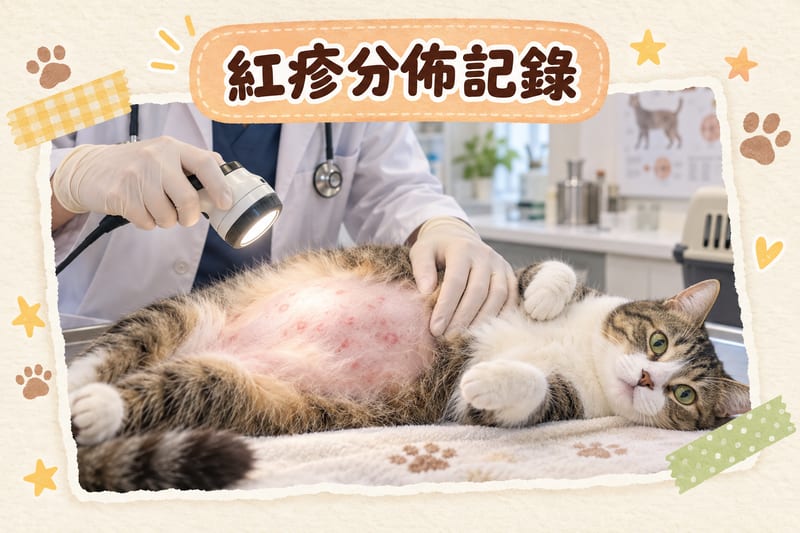
Quick comparison table of allergy types
| Comparison | Food allergy | Environmental allergy | Flea bite allergy |
|---|---|---|---|
| Main itchy areas | Face, ear canals, paws, around the anus | Abdomen, armpits, groin, paws | Back near tail, flanks, inner thighs |
| Seasonality | No clear seasonality | Often seasonal or place-related | Worse in warm, humid seasons |
| Speed of onset | Gradually appears over weeks | Appears relatively quickly after contact | Worsens rapidly after bites |
| Common accompanying signs | Vomiting, soft stool, ear inflammation | Redness, dandruff, recurring flare-ups | Red dots, scabs, localised hair loss |
| Diagnosis | Dietary elimination trial | History + veterinary examination to rule out other causes | Skin examination + observation of response to flea treatment |
| Main management | Change protein source or hydrolysed formula | Reduce allergens, control environmental humidity | Whole-body flea treatment + thorough environmental cleaning |
Coat colour changes: black dogs turning brown, white dogs turning yellow
Coat colour changes aren't strictly an "illness", but many people care about them, and they are often a side signal of skin health.
Black dog coats turning brown / reddish-brown is most often caused not by "natural colour" but by over-grooming and saliva oxidation. When a pet repeatedly licks the same spot because of itching, joint pain or anxiety, components in the saliva damage the melanin and the coat turns reddish-brown, usually concentrated on the paws, forelimbs and flanks. Next come sun bleaching (long-term outdoor activity lightens the tips of black fur), differences in trace-mineral metabolism, and shampoo or water residue.
The way to improve it is to start at the source: check for hidden itching or joint discomfort, keep the affected area dry, brush gently, and avoid bathing too frequently. In the diet, make sure quality protein and fatty acid levels are sufficient - hair is itself a protein structure, and pets short on protein long-term will show clearly worse coat colour and texture. Never rely on dyeing the coat or colour-protecting shampoo, which only hides the problem.
White dogs turning yellow needs to be broken down by location. Yellow-brown under the eyes is mostly tear staining, related to tear duct drainage, damp around the eyes, diet or environmental irritation; yellowing around the mouth and front paws may be pigment deposition after long-term dampness from drool or food; yellowing on the abdomen and inner hind legs should rule out urine staining, especially in older pets or those with urinary problems.
To deal with yellowing on white coats, the key is "keep it dry" plus "trim away the already-stained tips". Deposited pigment usually can't be washed out, and scrubbing hard only irritates the skin. Clean around the eyes with water or pet-specific eye cleaner, gently once a day, without rubbing hard; after meals, wipe around the mouth with a wet wipe and then dry it. If the yellowing keeps spreading or is accompanied by itching and redness, have a veterinarian check it.
Wound healing: telling normal progress from signs of bacterial infection
Pets inevitably get small wounds, such as cutting a nail too short, a scrape while playing with other pets, or scratching until the skin breaks. To judge whether it is "healing normally" or "already infected", look at the following stages.
Normal healing is generally: slight redness and swelling in the first day or two, then scab formation, the wound edges slowly contract, redness and swelling fade day by day, and the pet's mood, appetite and activity level are basically normal. There may be a thin dry scab during the process, and there should be no odour or continuous oozing.
Warning signs of bacterial infection include: the wound continuously oozing yellow-green pus, giving off an odour, the surrounding redness and swelling spreading, feeling clearly hot to the touch, the wound becoming more painful or the pet strongly resisting being touched. Whole-body signs deserve even more attention - fever, refusing food, lethargy, continuous hiding, rapid breathing - these are not in the "it'll be fine in a couple of days" category.
For care, minor surface wounds can be handled with cleaning methods recommended by a veterinarian and kept dry, but do not use human ointments or human antibiotics on your own, and do not flush the wound directly with undiluted disinfectant. The most important thing is to stop your pet licking the wound, using anti-lick measures recommended by a veterinarian where necessary.
How to tell if a cat is allergic to ingredients in its cat litter
Cat litter allergy is not rare, and is often mistaken for "ordinary skin disease". The key to judging it is where the contact happens: because cats sit and lie on the litter, allergic reactions usually concentrate on the paws (especially between the toes), lower abdomen, inner hind legs and around the tail, and may include rashes, mild hair loss, reddened paws, or the cat licking its paws frequently and licking immediately after leaving the litter box.
Other clues include: symptoms starting 1 to 3 weeks after switching to a new brand or new type of cat litter; obvious dust around the litter box; scented or strongly clumping cat litter; other cats in the same household unaffected (individual sensitivity differences).
The suggested approach: first switch gradually to unscented, low-dust cat litter, and during this time step up litter box cleaning and ventilation; observe for 2 to 4 weeks. If there is still no improvement after switching, ask a veterinarian to rule out fungal infection, mites or food allergy - because itchy paws are also one of the typical signs of food allergy. When cleaning the litter box, also note that cleaner residue itself can irritate the skin.
What benefits does apple cider vinegar have for pet skin health? The evidence and the risks
Apple cider vinegar has many uses circulating online, including soothing itching, antibacterial action and improving coat colour. To be honest: there is currently not enough clinical evidence that apple cider vinegar can treat fungal, mite or bacterial infections, and its main component, acetic acid, is itself an irritant.
- Topical use: undiluted apple cider vinegar irritates the skin, and applied to broken or scratched-bleeding skin it can cause severe burning, redness and swelling and further damage. Even diluted, effects vary between individuals and it should not be treated as a treatment.
- Oral use: vinegars carry a risk of irritating the pet's stomach and oesophagus, and may affect the body's acid-base balance; adding it to drinking water or food on your own is not recommended.
- Smell and environment: after cleaning floors with diluted vinegar, the lingering smell may put pets off, and some cleaner ingredients carry toxicity risks for cats themselves; after cleaning, wipe again with clean water and keep the area ventilated.
The conclusion: apple cider vinegar is not a treatment for skin disease. If your pet has itching or skin problems, the right approach is to have a veterinarian diagnose the cause first, then address it through diet, environment and appropriate medication. Ask your veterinarian before trying any home remedy.
When to see a veterinarian immediately: situations that can't wait
The following situations are emergencies or need prompt veterinary attention and should not be left to observation:
- A skin or wound problem spreading rapidly within 24 hours, or the area of redness and swelling clearly enlarging.
- A wound that keeps oozing pus, has an odour, feels hot, or the pet strongly resists being touched.
- Whole-body signs such as fever, refusing food, lethargy, continuous hiding.
- Swelling of the face or around the eyes, rapid breathing, sudden heavy hair loss.
- Intense itching leading to self-mutilating scratching and biting, bleeding or inability to sleep.
- Skin infection signs in kittens, puppies, seniors or pets with chronic illness.
In an emergency, contact a veterinarian immediately; this article is for reference only and cannot replace a veterinary diagnosis. Medication must also be decided by a veterinarian - including the type, dosage and length of course - and never use human medicines or stop treatment on your own.
Daily care schedule
Consistent daily care is far more effective than treating problems after they appear. The table below is a reference frequency for average adult dogs and cats; adjust the actual schedule to breed, coat length, skin condition and veterinary advice.
| Care item | Suggested frequency | Key points |
|---|---|---|
| Full-body skin check (feel + look) | 1 to 2 times a week | Watch for rashes, dandruff, scabs, new lumps |
| Brushing | Short coat 2 to 3 times a week; long coat daily | Brush gently in the direction of the coat, and check for parasites at the same time |
| Bathing | Generally once every 3 to 6 weeks; for skin disease follow veterinary instructions | Use pet-specific shampoo, dry thoroughly, don't bathe too often |
| Ear canal check | Once a week | Seek veterinary care if there is odour, dark earwax or head shaking |
| Between toes and paw check | Once a week | Wipe clean after outdoor activity, watch for foreign objects and redness |
| Deworming (internal and external) | Follow veterinary and product instructions | Do it all year round, not just in summer |
| Washing bedding | Every 1 to 2 weeks | Wash in hot water, and clean combs and toys at the same time |
| Environmental dehumidifying | Continuously in humid seasons | Keep the home dry to reduce fungi and dust mites |

Diet and nutrition: the foundation of skin and coat
The skin is the body's largest organ, and hair is a protein structure, so "eating right" is the foundation of all skin management. A few principles worth remembering:
- Enough quality protein: hair is mainly made of protein, and long-term insufficient intake leads to faded coat colour, brittle coat and slower skin repair.
- Fatty acid balance: the ratio of Omega-3 to Omega-6 affects the skin barrier and inflammatory response. Fish oil ingredients are often used as a nutritional source to support skin and coat, but the dose should follow the product label and veterinary advice.
- Enough water: insufficient drinking water makes skin and coat drier and affects overall metabolism. Consider wet food or a flowing water fountain as support.
- Transition food gradually: a sudden food change easily causes digestive upset and also makes it impossible to tell which food the skin reaction came from. A gradual transition over 7 to 10 days is recommended.
- Sensitive cases need veterinary guidance: if a hydrolysed-protein or single-protein formula is needed, a veterinarian must decide based on the medical history, and it should not be used long-term on your own.
Hong Kong's humid weather is also an amplifier of skin problems. To learn which breeds or body types are especially affected by humidity, see Humid Weather and Skin Problems by Breed.
Product references
Below are products in stock in our shop related to skin and coat support; prices follow the live price shown on the online store:
- Instinct Cat Food Grain-Free Ultimate Protein Series Skin & Coat Chicken + Cod Recipe 10lb - HK$799 (price follows the live price shown on the online store). High-protein formula, suitable for cats needing skin and coat support; remember to transition over 7 to 10 days when changing food.
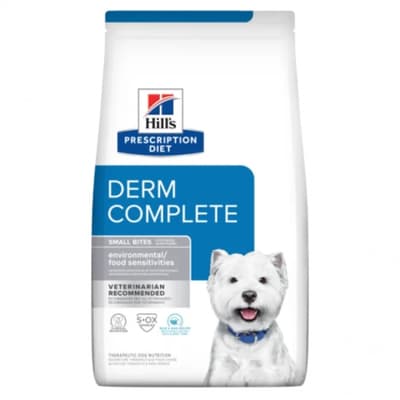
- Hills Prescription Diet Dog Food Derm Complete Skin and Food Sensitive Formula Original Kibble 14.3lbs - HK$994 (price follows the live price shown on the online store). A prescription diet category, suitable for dogs after veterinary assessment; consult a veterinarian before use and complete the course as instructed.
When buying, note that prescription diets and ordinary complete foods serve different purposes, and should not be fed long-term on your own. If your pet is receiving skin treatment, it's best to bring the current food bag or ingredient list to ask your veterinarian.
Summary: skin problems need "location", not luck
Skin problems are hard to deal with because the symptoms are similar but the causes differ. Remember three things: First, use location, appearance and timing to pin things down, and photograph the changes; second, environment and diet are the foundation - parasites need the environment cleaned at the same time, and allergies need an elimination trial to find the source; third, medication must be decided by a veterinarian, including dosage and length of course. Treating early not only makes your pet more comfortable but also prevents the problem from developing into chronic dermatitis that needs long-term management.
If your pet is struggling with a skin problem, start with a checklist, record each item for two weeks, then bring the information to the veterinarian - this record will help the diagnosis more than any online home remedy.
This article is for reference only and cannot replace a veterinary diagnosis. For any persistent or emergency skin problem, contact a veterinarian immediately.