

Quick answer: The biggest beginner mistake is a mismatch: Scottish Fold, Persian, Bengal, and Devon Rex are four high-demand breeds with bone disease, narrow airways, explosive energy, and separation anxiety; instead choose British Shorthair, Chinchilla, American Shorthair, or adopt a domestic cat — similar looks but much easier, for both you and the cat.
🤖 AI summary
The most common beginner mistake isn't 'choosing the wrong cat' but a 'mismatch' — a high-demand breed with an inexperienced owner, leaving both human and cat struggling. This article lists 4 breeds beginners should think twice about (Scottish Fold, Persian, Bengal, Devon Rex), each with an alternative of similar appearance/temperament but easier care, to help you choose the best first cat.
When getting a cat for the first time, many people are drawn to a breed's appearance — the folded ears of the Scottish Fold, the flat face of the Persian, the leopard spots of the Bengal. But the breed itself isn't the problem; the problem is whether your lifestyle and experience match the breed's needs. The following 4 breeds have a particularly high failure rate in beginners' hands.
Blacklist 1: Scottish Fold
Why it attracts beginners: The folded ears are really cute, with lots of adorable photos online.
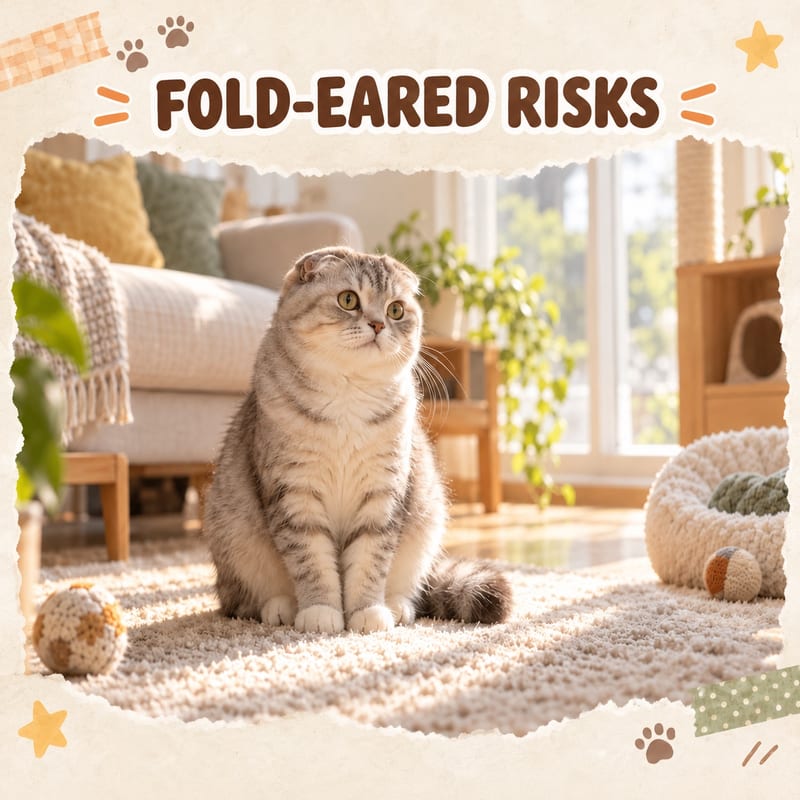
Reality: The folded ear trait comes from a cartilage gene mutation (Fd gene), which also causes osteochondrodysplasia — joint pain, lameness, stiff tail, a lifelong bone disease. All Scottish Folds carry this risk, no exceptions. For detailed pathology and symptoms, see Scottish Fold Osteochondrodysplasia In-Depth Analysis.
Alternative: British Shorthair — also round-faced with big eyes, gentle and quiet, but without inherited bone disease, suitable for beginners.
Blacklist 2: Persian
Why it attracts beginners: Long hair, flat face, elegant and noble, like a doll.
Reality: Flat-faced (brachycephalic) breeds have congenital narrow airways, prone to excessive tearing, noisy breathing, and high risk of heatstroke; long hair requires daily grooming, otherwise it mats and increases hairball risk. Beginners often underestimate the time cost of daily care.
Alternative: Chinchilla — also long-haired and elegant, but with more normal respiratory structure and relatively lower care requirements.
Blacklist 3: Bengal
Why it attracts beginners: The leopard-print look is super stylish, like keeping a mini leopard.
Reality: Bengal has semi-wild ancestry, extremely high energy — needs lots of exercise, vertical space, and interactive play. In a small flat without a cat tree or playmate, it will destroy the home, howl, and even become aggressive. This isn't 'bad', it's their nature not suited to a static home.
Alternative: American Shorthair — also has nice tabby patterns, but stable temperament and moderate activity level.
Blacklist 4: Devon Rex
Why it attracts beginners: Big-eared elf look, short hair easy to manage.
Reality: Devon Rex is extremely clingy, prone to separation anxiety when left alone for long periods; short hair doesn't keep warm, and Hong Kong winters without enough heating can make them cold; also risk of inherited diseases (HCM, myopathy). For more details, see Devon Rex Disadvantages.
Alternative: Domestic cat (mixed breed) — high genetic diversity, strong adaptability, independent yet affectionate, the safest choice for beginners. To learn about the advantages of domestic cats, see Domestic Cat Lifespan and Adoption Notes.
How to tell if you're ready?
Before getting a cat, honestly answer these questions:
- Do I have at least 30 minutes a day to play with and care for the cat?
- Does my home have enough space (at least window screens and a dedicated cat corner)?
- Is my income stable enough to cover several thousand dollars a year in vet fees and daily expenses?
- Does my life plan for the next 15 years (moving, travel, marriage, children) include a cat?
If you answer 'not sure' to any of the above, it's better to do more research first, or start by adopting an adult domestic cat — they are the most down-to-earth and least worrisome. To learn about the budget for beginner cat ownership, see New Cat Cost Checklist for the First Three Months.
3 key principles for beginners choosing a cat
-
Health risks over appearance — inherited diseases are a lifelong burden (money + effort)
-
Grooming time fits your schedule — 15 minutes daily grooming vs once a week makes a big difference
-
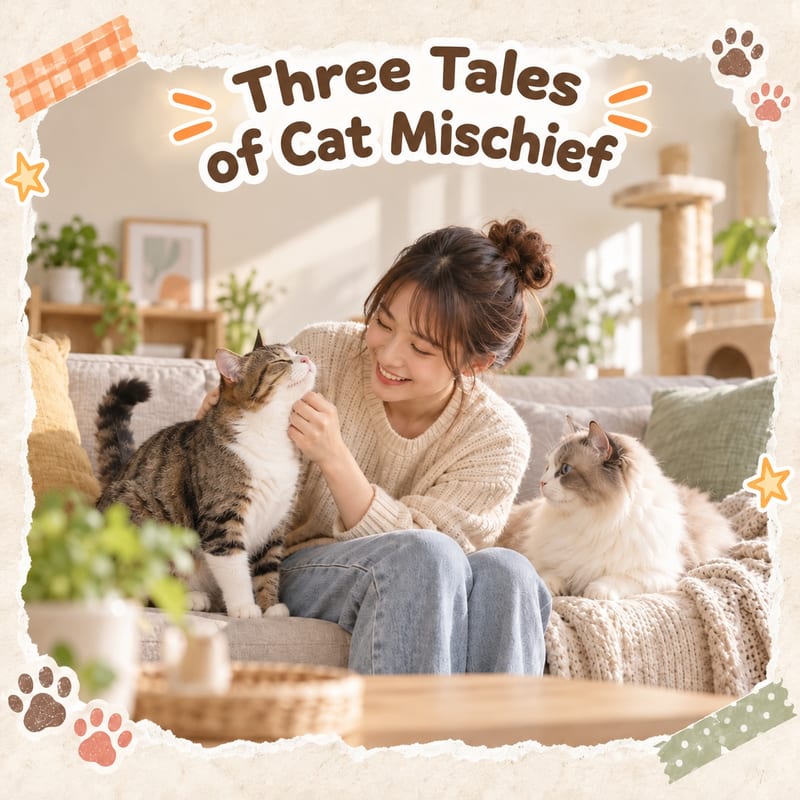
Adopt, don't shop — domestic cats are healthy and smart, and adoption saves a life
| Blacklisted breed | Biggest challenge | Similar appearance/temperament alternative | Beginner friendliness |
|---|---|---|---|
| Scottish Fold | Lifelong bone disease | British Shorthair | ★★★★☆ |
| Persian | Daily grooming + narrow airways | Chinchilla | ★★★☆☆ |
| Bengal | Explosive energy, needs lots of interaction | American Shorthair | ★★★★☆ |
| Devon Rex | Separation anxiety + cold-sensitive | Domestic cat (mixed breed) | ★★★★★ |
Hong Kong small-flat practicalities: 7-day preparation checklist after avoiding the blacklist
Once you've decided not to step on the blacklist, the most practical thing in Hong Kong is 'small space, high rent, long working hours'. The following 7-day checklist helps you get everything ready at once, so you won't be caught unprepared.
Day 1: Measure your home Use a tape measure to record the usable area of living room, bedroom, and bathroom, and ensure there's a window for cat screens. If renting, ask the landlord for permission to drill holes for screens first; don't get scolded after getting the cat.
Day 2: Budget sheet Based on the New Cat Cost Checklist for the First Three Months, list one-time expenses (litter box, cat tree, neutering) and monthly expenses (cat food, cat litter, insurance) separately. Remember to leave a 20% buffer, because Hong Kong vet emergencies can easily exceed a thousand dollars.
Day 3: Choose supplies
- Cat tree: choose a model under 150 cm that can reach the ceiling, saving space and stable.
- Litter box: fully covered in the bathroom, semi-covered in the living room, to reduce odour.
- Food bowls: ceramic or stainless steel, avoid plastic to prevent chin acne.
Day 4: Book a vet Find a nearby 24-hour emergency clinic, add their WhatsApp for midnight consultations. If choosing a domestic cat, you can directly contact SPCA, HKSCDA, or 'Hong Kong Group for Cats' to book a visit.
Day 5: Install window screens The most common accident in Hong Kong is 'falling from height'. Use stainless steel mesh or magic tape screens, ensuring each gap is < 4 cm wide. For rentals, choose drill-free telescopic rod models, removable without trace.
Day 6: Establish a daily routine
- 10 minutes of wand toy interaction before leaving in the morning, to burn off morning energy.
- 15 minutes of grooming after work (if choosing Chinchilla or British Shorthair long-haired).
- Set automatic feeder for supper before bed, reducing midnight wake-ups.
Day 7: Mental preparation Re-read the four questions in 'How to tell if you're ready?' and only proceed when you can answer 'definitely'. Remember, adopting an adult domestic cat usually means already neutered and vaccinated, so you can bring them home as early as Day 7 and start the beginner honeymoon period immediately.
Hong Kong small-flat practicalities: daily 30-minute care schedule
Hong Kong people often work overtime; wanting to 'spend 30 minutes with the cat' daily isn't hard if you break the time into different corners of the home.
Morning 7:30–7:40 (10 minutes) Before leaving for work, use a wand toy for a quick warm-up by the bed; focus on 'high intensity, short time', so the cat burns energy and can nap again, not destroy the house while you're at work.
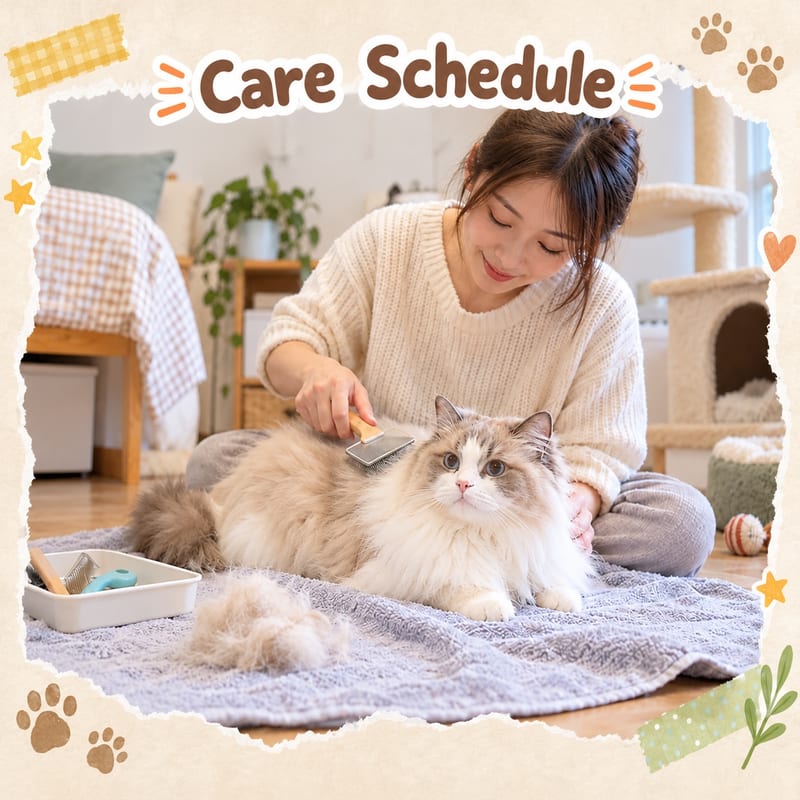
After work 7:00–7:15 (15 minutes) Don't collapse on the sofa immediately when you get home; spend 15 minutes on 'grooming + treat training'. If you chose British Shorthair or Chinchilla, use a steel comb; for domestic cats, rubber gloves are enough. Give small freeze-dried treats while grooming to build a 'grooming = good thing' conditioned reflex.
Before bed 11:00–11:05 (5 minutes) Set an automatic laser pen or electric toy ball for 5 minutes in the living room corner, letting the cat chase and run. You sleep, they burn energy, and both of you are just right the next morning.
Weekend extra Use 30 minutes for 'deep cleaning + deep interaction': change cat litter, wash food bowls, wipe the cat tree, and use a long wand toy to encourage jumping, making up for weekday vertical exercise.
Just break the 30 minutes into '10 + 15 + 5' segments; even the smallest Hong Kong flat has enough space to play, and neither human nor cat will have a mental breakdown from small space.
Related product recommendations
When starting as a new pet owner, basic equipment and staple food should be prepared at once. Here are related products available at PetChill:
- Fuji One Natural Minimal Daily 3.0 Tofu Cat Litter Lavender 6L - Original Import (Fuji One) — tofu litter flushable, low dust
- Fujihime no Awayuki 3.0 Natural Purifying Soy Milk Tofu Cat Litter Original 18L - Original Import (Random Old/New Packaging) (Fujihime no Awayuki) — tofu litter flushable, low dust
Want more: Fuji One Brand Guide
Product prices and latest offers are subject to the product page; this article is for reference only.
📌 Key summary
- ✅ Scottish Fold 100% carries inherited bone disease; British Shorthair is a safe alternative
- ❌ Persian long hair + flat face; daily grooming + respiratory care is no joke
- ✅ Bengal has excess energy; a small flat without a cat tree equals destruction
- ❌ Devon Rex clingy + cold-sensitive; long overtime with no heating at home is a problem
- ✅ Domestic cats have diverse genes, simple care, adoption is least worrisome
 Fuji One full guide →


 Fuji Cat full guide →


 K9 Natural full guide →



