
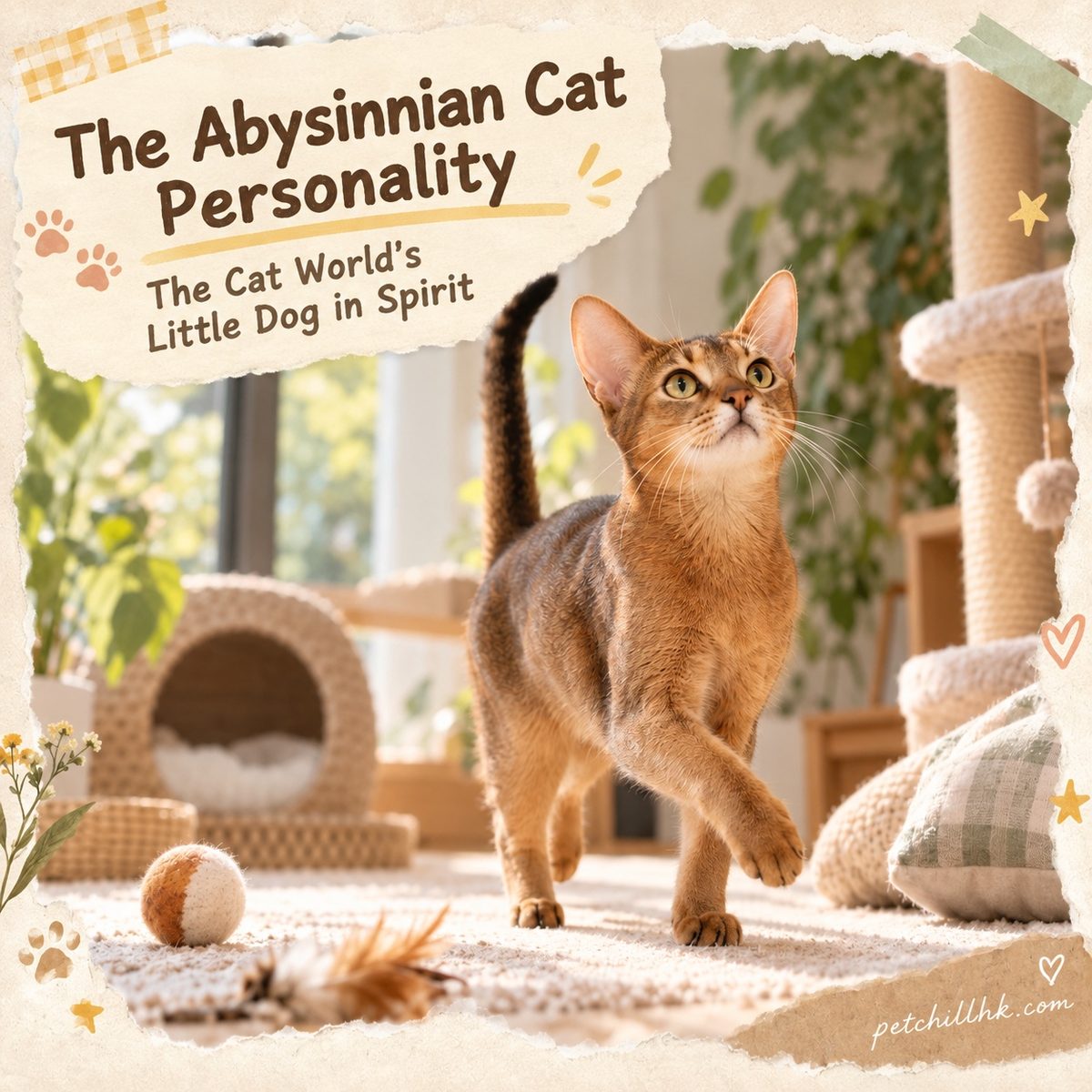
Quick answer: The Abyssinian personality in one sentence: 'a cat that wants you to do things with them.' The TICA standard describes them as always on the move and highly involved with people—not the quiet companion that sleeps next to you, but a colleague-type cat that follows you around the house in a 'joint office.' Intelligence is top-tier among cats: they can unlock things, fetch balls, and learn to sit and high-five; the price is needing lots of entertainment and company, and if bored they'll create their own show. Suitable for people with a fast-paced lifestyle who love interaction.
Want to know the Abyssinian comprehensively? First see the Abyssinian breed profile.
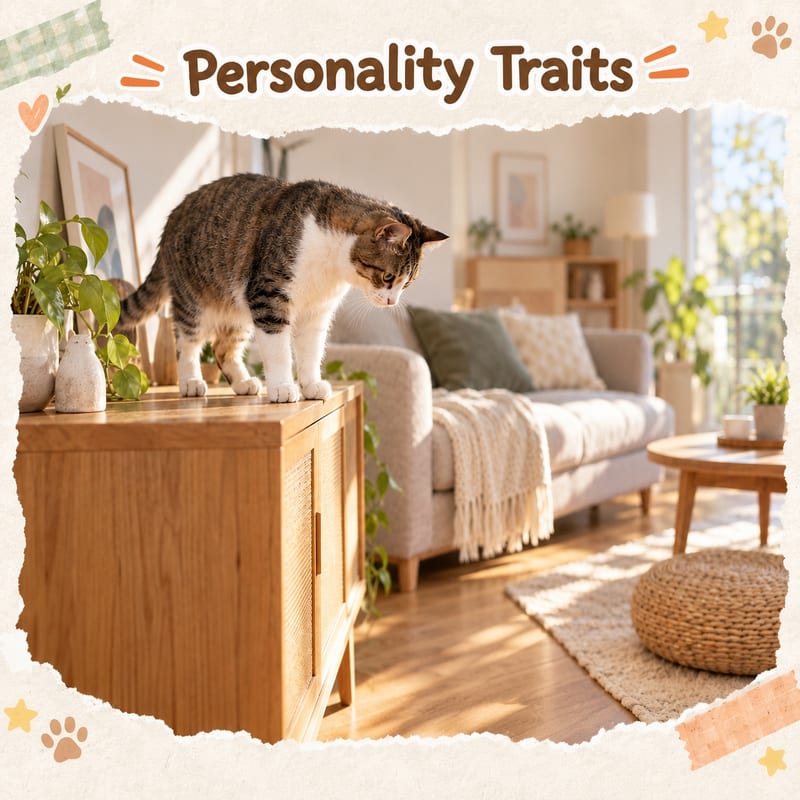
1. Overview of Five Key Personality Traits
| Trait | Daily behaviour | Care implications |
|---|---|---|
| Top activity level | Patrols all high points from floor to ceiling | Three play sessions a day are essential |
| Smart and curious | Opens doors, cabinets, taps | Whole-house puzzle-proofing + rotating puzzle toys |
| People-oriented | Sits on your desk to supervise while you work | Not for being alone, but needs companionship time |
| Confident and bold | Approaches strangers to investigate first | Low stress, but strong escape prevention awareness |
| Gentle talker | Soft continuous 'chirping' conversations | Respond when quiet, don't create a noise loop |
2. The 'Dog of the Cat World' in Reality: Why the Nickname Is Well-Deserved
This nickname is not marketing language. The CFA breed introduction directly points out that Abyssinians retain a strong exploratory instinct and high involvement with people: they don't wait for you to call them—they actively join in everything you do. You cook, they sit on the counter reporting observations; you open your computer, they choose the centre of the keyboard to sleep; you go to the toilet, they sit at the door waiting (not the door-scratching kind, the eye-monitoring kind). This breed's interaction with humans is closer to a dog's: following, patrolling, joint attention (they look where you look). The TICA standard also notes that many individuals have a signature 'standing on one leg and raising a front paw' move—as if ready to high-five you. People seeking an independent cat that 'does its own thing' will feel suffocated; people seeking the experience of 'someone waiting for you at home' will find this the highest-return personality among cats.

3. Intelligence in Practice: A Lock-Picking Level Contestant
The Abyssinian's intelligence is not mystical; it can be broken down into three lines: 1. Observational learning—they grasp the operating logic of window latches, door handles, and fridge doors after watching for two or three days; the rescue community widely recognises this breed's cabinet-opening ability as top-notch; 2. Command training—sit, high-five, fetch are generally taught; high food drive, few repetitions needed; 3. Environmental modification ability—they open taps to drink, pull open bin lids to find food, push window limiters to open windows. Practical implications: all fragile items and medicines in cabinets, fridge magnetic locks or double locks, bins with lids. On the other hand, this intelligence is an educational opportunity: ten minutes of training a day is entertainment for an Abyssinian; puzzle feeders, hiding treats, rotating new commands are standard for their 'mental discharge'—a mentally discharged Abyssinian is much better behaved than a physically discharged one.
4. Living with Children, Cats, and Dogs
With children: this breed treats kids as large playmates—willing to chase and run, doesn't hold grudges, and when hurt usually walks away rather than retaliates. Two prerequisites: teach children 'no tight hugging'; an Abyssinian's love is close contact, not restraint; children under five can't catch up with their speed and height, so play must be supervised by an adult. With other cats: high social needs make them a lubricant in multi-cat households, usually the one initiating play; pairing with similarly active cats (Oriental Shorthair, Siamese, Bengal) is recommended; quiet elderly cats will be annoyed. With dogs: they get along reasonably with gentle dogs without hunting instincts; 'one dog one cat grooming each other' cases are common. In summary: this breed's social position is 'group activity type'—the more play the better; the worst is being the only one plus family members leaving early and returning late.
5. Weakness: Ability to Be Alone and Separation Anxiety
Honestly: separation anxiety is the biggest shortcoming in this breed's personality. Their genetic setting is 'group hunter'—being alone is not enjoyment but deprivation. Individuals left alone for eight to ten hours a day long-term without entertainment may show: excessive vocalisation, increased pushing things off counters, inappropriate urination (first rule out urinary tract disease), and revenge clinginess after you return. Three practical lines: 15 minutes of play before leaving plus leaving puzzle toys, a window bird-watching spot plus timed feeders to fill the day, families with genuinely long working hours should seriously consider a companion cat. Don't expect to train them to 'learn independence'—you can manage entertainment, but you can't change genes.
6. Male vs Female Differences and Tips for Choosing a Cat
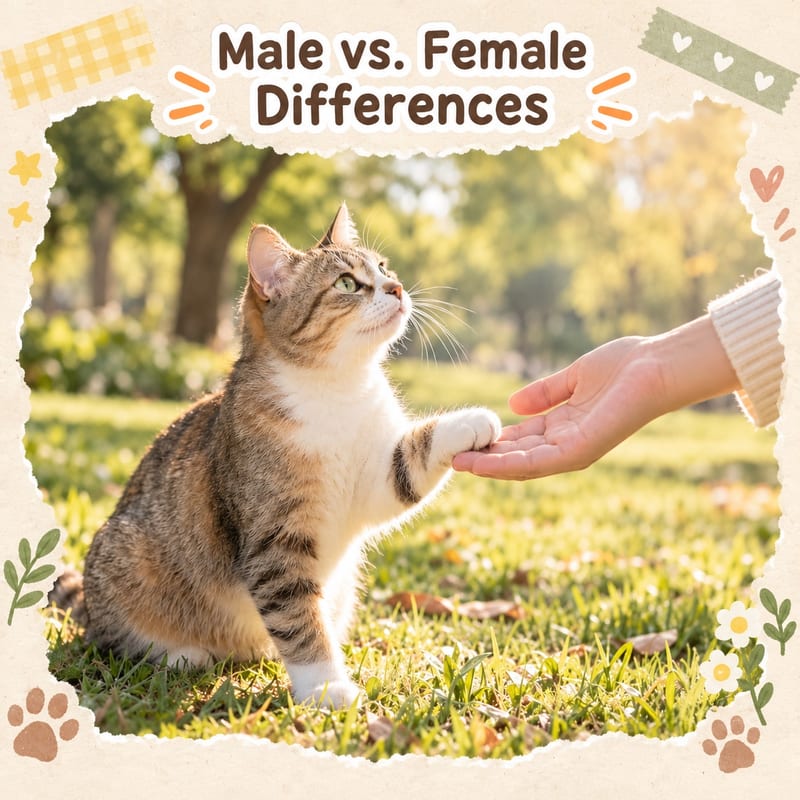
General observations (not absolute): males boldly explore, have weak boundaries, and easily mix with children and dogs; females are alert and attentive, and their closeness with their owner is clearly selective (once they accept you, it's you all the way). Beyond gender, this breed's bloodline differences are worth noting: show lines and companion lines differ in activity level and 'clinging style'; before buying a cat, ask the breeder about the parents' daily style; adopting an adult cat is safest—personality is already set; the one that comes to head-bump your hand versus the one watching you from the corner will give completely different experiences for the next ten years.
For differences in purchase price and adoption opportunities, see the Abyssinian adoption and price guide.
7. Interaction Advice: Designing a Day's Schedule for a 'Colleague-Type Cat'
The correct approach with this breed is to schedule activities: a short play session after morning feeding (discharge energy after waking), ten minutes of hunting simulation before leaving, one hour of floor interaction after returning (plus teeth brushing and ear check), and a chase game before bed. Add training sessions or new toy testing on weekends—their learning window is open for life. Sleep arrangements: allow them to sleep in the bedroom (ideally with their own cat bed next to yours); completely shutting them out causes a stronger stress response in this breed than in average cats. Remember the basic formula: Abyssinian happiness = companionship hours × entertainment standard; if both are sufficient, they are your most loyal 'subordinate'; if one is lacking, you will see all the consequences in the weaknesses section.
8. Training Checklist: Three Lessons to Start Today
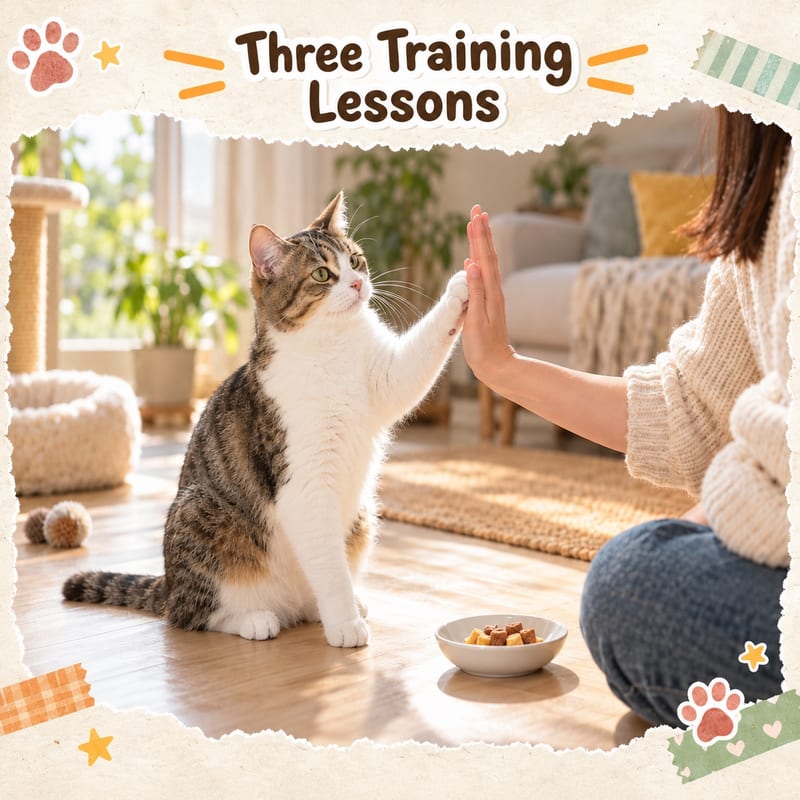
The Abyssinian is one of the breeds most worth training seriously—the learning window is open for life; three lessons from easy to hard, ten minutes a day per lesson is enough:
| Lesson | Method | Time to see results | Practical value |
|---|---|---|---|
| 1. Recall | Shake treat jar → they come → give treat; do regularly before meals | 3–7 days | Life-saving command in emergencies, first lesson in escape prevention |
| 2. Enter carrier | Keep door open, gradually place treats inside, close door for ten seconds after eating then open | 1–2 weeks | Vet visits no longer involve chasing the cat around the house |
| 3. High-five/sit | Hold treat above head to lure sit, touch hand with paw to get treat | 1–2 weeks | Mental discharge, social media material |
Three key points: 1. Positive reinforcement only—this breed reacts to scolding with 'grudges + strike', handle mistakes with 'interrupt + redirect', reward correct behaviour immediately; 2. Keep sessions short—stop at ten minutes; unfinished attention will drag down the next session's quality; better to end on a win than to disperse on a loss; 3. Consistent commands—use the same word and gesture throughout the household; Abyssinians learn 'rules' not just actions; if family members are inconsistent, they will choose the most lenient one.
Extra reward: after completing these three lessons, you have more than a well-behaved cat—the training interaction itself is what they enjoy most as 'doing things with their owner', more directly filling social needs than buying ten more toys, forming a closed loop with the three practical lines in the separation anxiety section.
Related Reading
- Full list of Abyssinian disadvantages
- Abyssinian Hong Kong keeping guide
- Abyssinian lifespan and health full analysis
- Puzzle feeders, puzzle boards, training treats: get them all at PetChill pet supplies.
The behavioural descriptions in this article are general breed tendencies; individual differences exist; for severe separation anxiety or behavioural problems, please consult a cat behaviourist or veterinarian.



