
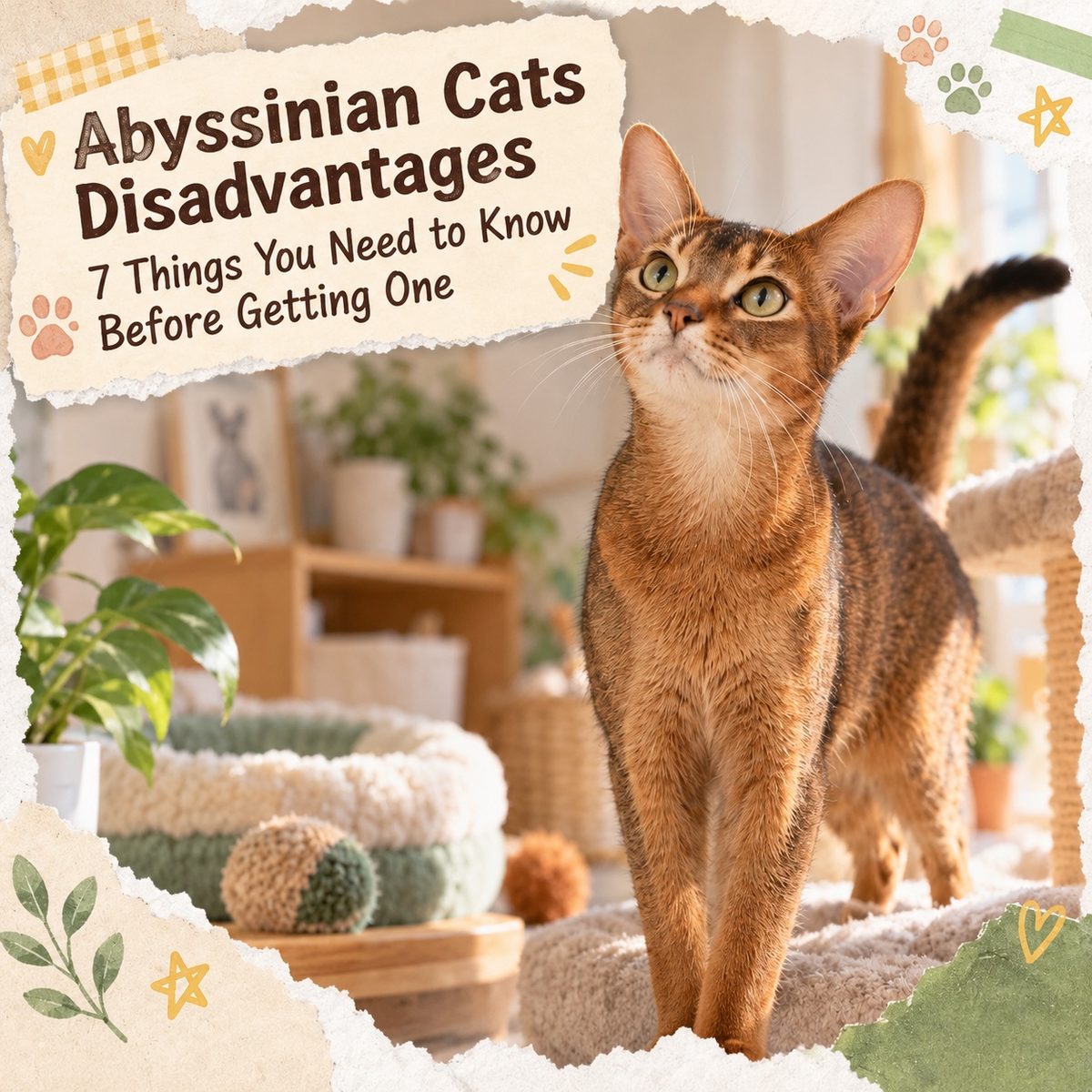
Quick answer: The Abyssinian's seven disadvantages: non-stop activity, destruction when bored, 4am parkour plus chatter, PK deficiency hereditary anaemia risk, two medical lines (kidney and dental), jumping so high that nowhere in the house is safe, and dislike of being held tightly. Each has a coping strategy (see breakdown below), but the premise is that you acknowledge they exist—if you can handle this 'high power consumption' lifestyle, it is the most interesting roommate in the cat world.
Want a full picture of the Abyssinian? Start with the Abyssinian breed profile.
1. Overview table of disadvantages
| Disadvantage | Severity | Root cause | Coping | Cost direction |
|---|---|---|---|---|
| Top-tier activity | High | Hunting-type genetic setup | 3×15 min play daily | Mainly time |
| Boredom destruction | Medium-high | High intelligence, low boredom threshold | Puzzle feeders + vertical route | $50–$150 per month |
| 4am parkour and chatter | Medium-high | Crepuscular activity rhythm | Burn energy before bed, blackout | Almost zero (neighbour relations) |
| PK deficiency haemolytic anaemia | Medium | Hereditary (breed-specific) | Genetic testing, avoid oxidising drugs | Testing fee several hundred |
| Kidney risk | Medium | Breed reports (amyloidosis) | Regular blood and urine tests from age 8 | $600–$1,200 per year |
| Dental problems | Medium | Small jaw, crowded teeth | Daily brushing, annual scaling | Several thousand per session |
| Dislikes being held | Low | Independent companion personality | Respect boundaries, close but not restrained | Zero |
2. 'Can't stop': the price of being the cat world's energy drink
TICA's official description of the breed includes 'constantly in motion'—not a figure of speech, but clinical-level realism. Abyssinians do not sleep next to you; they sleep on top of cupboards, in curtain rods, on your shoulder; they follow you everywhere, and on stairs they fly along the banisters. Implications for daily life: first, the floor never has a 'safe zone'—cups and ornaments go into cupboards; second, exercise is a necessity—three 15-minute hunting play sessions a day plus two puzzle feeders, and if you do not do enough you will see the next chapter 'destruction logic'; third, residents must be mentally prepared: after getting an Abyssinian your living room will slowly fill with cat trees, and the term 'minimalist style' is invalid in front of this breed.
3. Boredom is the root of crime: destruction logic breakdown
The saying 'keeping a cat saves effort' holds for round-bodied cats, but not at all for the Abyssinian. They destroy things in three ways: pushing things off tables (testing gravity and your reaction), opening every cupboard and fridge in the house (puzzle instinct), and a unique stunt—turning on taps to play. The common switch is boredom. The counter formula = 30–45 minutes of interactive play daily + vertical route + rotating puzzle toys; an Abyssinian with an outlet for its energy rarely shows destructive behaviour; the combination of intelligence and high-difficulty toys can even train them to fetch balls, sit, and high-five. If destruction suddenly worsens, first rule out medical causes such as thyroid or pain, then review environmental adequacy.
4. Late-night show: parkour and talking back
The Abyssinian retains a clear crepuscular rhythm: energy peaks at 4–5am and 6–7pm. Parkour from sofa to cupboard top three times, then standing by your pillow softly 'chirping' the sunrise—this combination is torture for light sleepers. Three practical lines: a 15-minute high-intensity play session before bed to discharge energy, blackout curtains and an automatic feeder in the morning to separate you from breakfast requests, respond only when quiet—if it calls and you answer, it calls more; complete non-response plus rewarding quietness shows results in two weeks. To be fair: their volume is generally lower than a Siamese's; the annoyance is frequency and persistence—those who can handle it find it cute, those who cannot treat it as a noise complaint source.
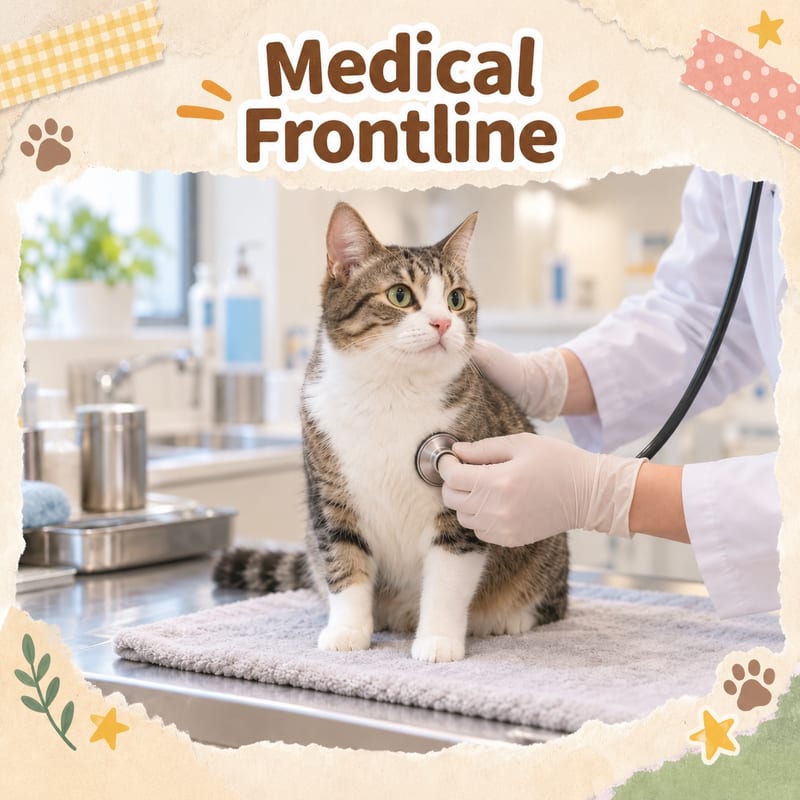
5. Medical side: PK deficiency and kidney, two defence lines
The Abyssinian has two breed-specific medical lines to face. The first is pyruvate kinase deficiency (PK deficiency): a lack of the PK enzyme in red blood cells causes chronic haemolytic anaemia, an autosomal recessive inheritance—both parents must carry the gene for the disease to occur, and severe cases have greatly decreased since screening became widespread. Before getting a cat, ask the breeder for the parents' PK genetic test records; cats that carry the gene must avoid certain oxidising drugs and toxins for life (onions are directly dangerous), but daily life is the same as a normal cat. The second is kidneys: the breed has reports of renal amyloidosis (more common in some lines), with warning signs of a sudden increase in water intake and weight loss—annual blood and urine tests from age 8 are standard. Add the risk of gingivitis from a small jaw and crowded teeth (possibly needing scaling after age 3), and HCM reports in some lines; with these four combined, saving for medical costs from an early age is the most practical approach.
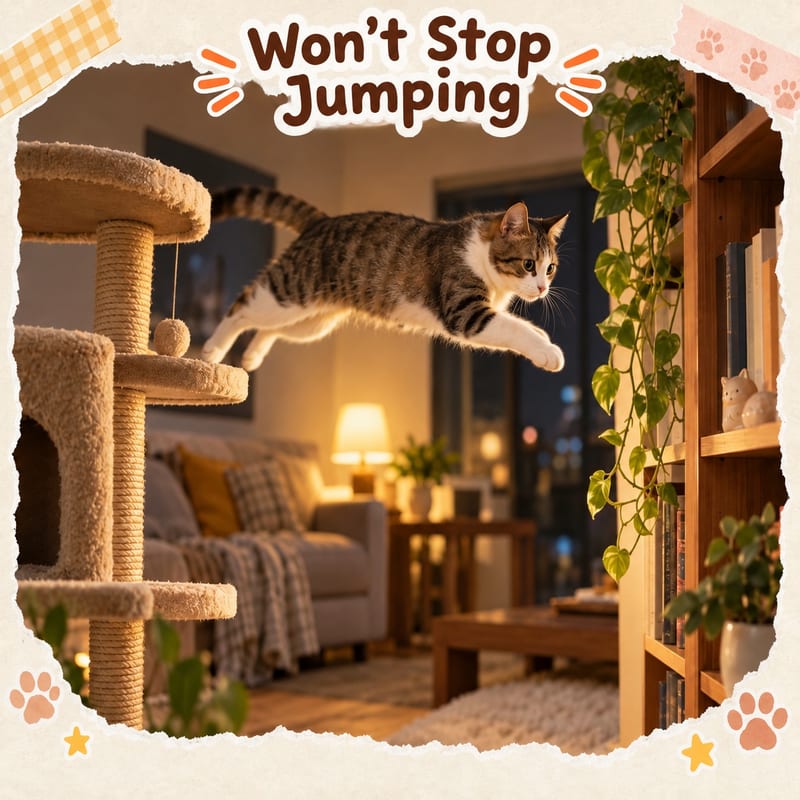
6. No safe place in the house: side effects of vertical jumping
100–140 cm is the standing jump height of an average Abyssinian—meaning tabletops, stove tops, fridge tops, and toilet windows all lack a 'safe if put there' position. Practical adjustments: establish from kittenhood that the kitchen stove is off-limits (entering the kitchen interrupts play; consistency is key), all medicines and cosmetics go into cupboards, and kettles and soup pots are always covered and placed out of cat reach. On the other hand, this 'vertical ability' is exactly why they suit small flats (see the keeping guide); whether it is a disadvantage or an advantage depends on your furniture layout.
7. Emotional side: loves you, but won't let you hold it
Finally, an easily misunderstood 'disadvantage': many prospective cat owners think 'clingy = holdable'. The Abyssinian's clinginess is the 'follows you around while you work, sleeps on top of you' type; being held tightly usually earns an annoyed struggle and a talking-back. This is not lack of love—on the contrary, it chose you as its companion and that is why it follows you everywhere. Families with young children should teach: hold the cat gently, allow it to leave, do not chase. Before getting one, consider visiting a cat show or meeting a real cat—people seeking 'ragdoll-style cuddling' may need an adjustment period with this breed's interaction style.
8. Pre-adoption self-match test: seven honest questions
After reading the disadvantages, the last step is not checking catteries but checking yourself. Answer each honestly; if four or more are 'no', seriously consider a different breed:
| # | Self-question | Failing answer | Why this question is key |
|---|---|---|---|
| 1 | Do you have 45 consecutive minutes daily for play? | No | Three play sessions are a necessity, not a mood |
| 2 | Hearing parkour at 4–5am, would you break down or get used to it? | Break down | Crepuscular rhythm cannot be changed, only managed |
| 3 | Can your ornaments stay put, or will they all go into cupboards? | Stay put | Tabletops will never have a safe zone |
| 4 | Can you accept a cat that won't be held tightly? | Cannot | Its love is following you, not being held |
| 5 | Can you accept claw marks on walls and jump spots on the sofa? | Absolutely not | Vertical routes are its way of life |
| 6 | Is it difficult to set aside $200–400 monthly medical reserve? | Difficult | PK, kidney, dental—three lines need long-term saving |
| 7 | Will your life rhythm change greatly within ten years (emigration, children)? | Yes | During changes, an Abyssinian's adjustment cost is higher than a static cat |
No need to score—you already know the answer in your heart. It is worth emphasising the flip side: for those who pass all seven, the Abyssinian has the highest return of all cats—they will walk stairs with you, supervise your cooking, teach you to play with new toys, for ten years without change. The disadvantage list looks scary, but it really says only one thing: this breed needs a very specific type of owner. In the right person's eyes, all seven points above are lovable in themselves.
Key takeaways
- ✅ Top-tier energy is genetic: three play sessions daily are a necessity, not a bonus
- ✅ Destruction = boredom signal; puzzle feeders and vertical routes are standard
- ✅ 4am parkour is manageable: burn energy before bed, blackout, respond only when quiet—use all three
- ✅ PK deficiency is a breed self-test: ask for parents' genetic test records before getting a cat
- ✅ Kidney and dental are two long lines: annual blood tests from age 8, brushing from young
- ✅ No safe place in the house: fragile items into cupboards, heat sources with rules from young
- ✅ Their love is 'following you', not 'being held by you'—set expectations correctly and this breed is the most interesting companion in the cat world
Related reading
- Abyssinian lifespan and health full analysis
- Abyssinian personality revealed
- Abyssinian Hong Kong keeping guide
- Abyssinian coat colour guide
- Puzzle feeders, tall cat trees, cat toothbrushes: get them all at PetChill pet supplies.
The medical content in this article is general information; for anaemia, kidney, and dental-related symptoms please consult a registered veterinarian—genetic screening beats everything.
 Almo Nature full guide →



