
📌 Key Takeaways
- ✅ Playing with cats using hands and feet teaches them that 'hands are prey', making bites harder over time.
- ✅ When a cat bites, immediately withdraw and leave; cold-shoulder for 30 seconds to 1 minute to end the interaction.
- ✅ Physical punishment only makes cats fearful and pre-emptively aggressive, worsening the behaviour.
- ✅ Stop immediately when you see rapid tail swishing, ears flattened back, or skin twitching.
- ✅ Two to three 10-minute hunting-style play sessions daily can reduce biting.
Many Hong Kong cat owners have experienced this: one second you're happily petting your cat, and the next it suddenly turns and bites you, leaving a row of teeth marks and a head full of confusion. In fact, cat biting is usually not 'spite' but a way for them to express different needs. This article compiles expert analysis from cat behaviourists, breaking down the 5 most common causes of biting, and teaches you the correct correction methods to help you build a more comfortable relationship with your cat.
Why do cats bite? First, understand their 'language'
Cats have been hunters since ancient times; biting and scratching are innate instincts. The issue is not whether they know how to bite, but who they bite. Behaviourists point out that the vast majority of biting cases can be attributed to 5 causes; as long as you address the root cause, the situation can generally improve significantly.
5 major causes of cat biting
1. Play aggression: treating your hand as prey
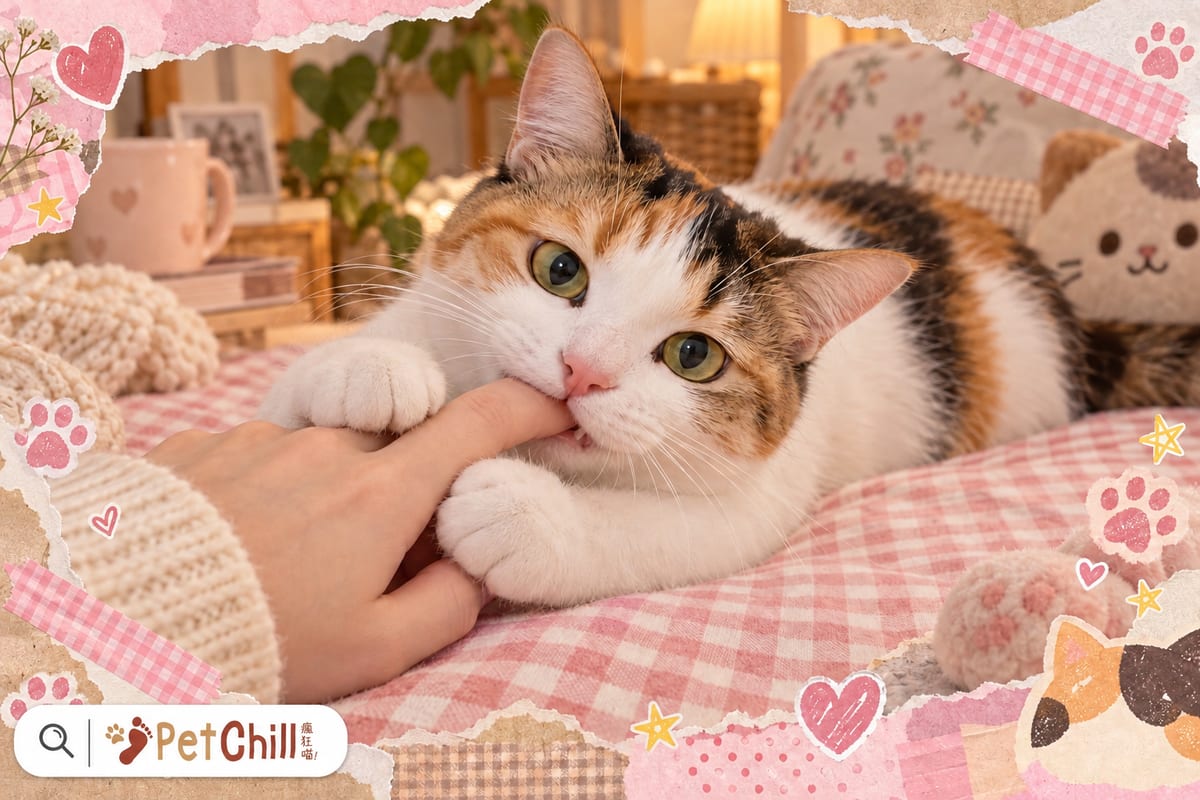
The most common cause. During kittenhood, playing hunting games with littermates involves mutual pouncing and biting to learn social skills and bite inhibition. If owners use hands and feet to play with kittens from a young age, cats learn the wrong conclusion that 'hands are prey'. In a single-cat household, the owner often becomes the only playmate, and grabbing and biting you becomes a daily game. When the cat bites you, your yelling, pulling away, or staring are all seen by the cat as 'successfully getting the owner's attention', so it bites harder.
2. Petting-induced biting: enjoying the petting, then suddenly biting
Another very common situation is called 'petting and biting' syndrome. The cat lies on your lap enjoying the petting, then suddenly bites you. In fact, it has already given multiple 'enough' signals—tail swishing rapidly side to side, ears flattening back, skin twitching, tail tapping—but the owner ignores them and continues petting, so the cat can only bite to say stop. Learn to stop immediately when these signals appear, and biting will greatly reduce.
3. Fear and defensive aggression: the lifelong shadow of physical punishment
If a cat has been physically punished for biting (hit, yelled at), it is very likely to develop 'pre-emptive aggression for self-protection'. Behaviour experts warn: physical punishment does not teach the cat right from wrong; it only makes the cat see the owner as a threat, and later become nervous, meow, or even actively attack when you approach. Once this aggressive pattern forms, it takes a long time to rebuild the relationship and calm down.
4. Redirected aggression: can't get angry at the outsider, so gets angry at you
When a cat sees a stray cat outside the window or hears noise outside the door, and is highly alert but unable to reach the source, it is easy for the cat to 'redirect' the agitated emotion onto people or animals nearby. This type of aggression usually happens suddenly, often preceded by an obvious triggering event.
5. Pain or physical discomfort: biting when a painful spot is touched
When a cat has arthritis, oral pain, skin disease, or internal illness, even normally acceptable petting can become unbearable. If a normally gentle cat suddenly starts resisting contact or even biting, the first priority should be to rule out physical causes and take it to a veterinarian for examination, rather than rushing to 'discipline' it.
How to correct? 4 effective principles
- 'Hands are for petting, toys are for prey': Never use hands or feet to play with cats; use teaser wands, mouse toys, and other dedicated prey substitutes so the cat clearly distinguishes the two.
- Stop interaction immediately when bitten: As soon as the cat bites you, withdraw your hand, stand up, and leave the scene; cold-shoulder for 30 seconds to 1 minute. Let it understand that 'biting = playmate gone'; after a few repetitions, it will stop.
- Never use physical punishment: Yelling, hitting, or spraying water only increases fear and aggression, worsening the situation. Instead of scolding, ignore the cat; a cold response is more effective than any punishment.
- Watch for warning signs before biting: Rapid tail swishing, ears flattened back, skin twitching, and dilated pupils are all signals of 'I don't want to be petted anymore'. Stop immediately when you see them, and the chance of being bitten will naturally decrease greatly.
Additionally, excess energy can increase aggressive behaviour. Arrange two to three 10-minute hunting-style play sessions daily (simulating chasing, pouncing, and capturing) to burn off excess energy; biting frequency often drops significantly.
When to see a veterinarian?
If biting suddenly intensifies, is accompanied by decreased appetite, hiding, reluctance to move, or aggression without warning, take the cat to a veterinarian as soon as possible to rule out pain or health issues such as hyperthyroidism. For any health concerns, veterinary diagnosis is the only standard.
PetChill's Reminder
Biting is a cat's way of communicating, not rebellion. Understand the signals, use toys instead of hands, cold-shoulder when bitten, and add daily scheduled play—most biting problems will improve significantly. Remember: physical punishment is always the worst choice.
To learn more about cat behaviour, stay tuned for PetChill's latest articles!