🤖 AI Summary
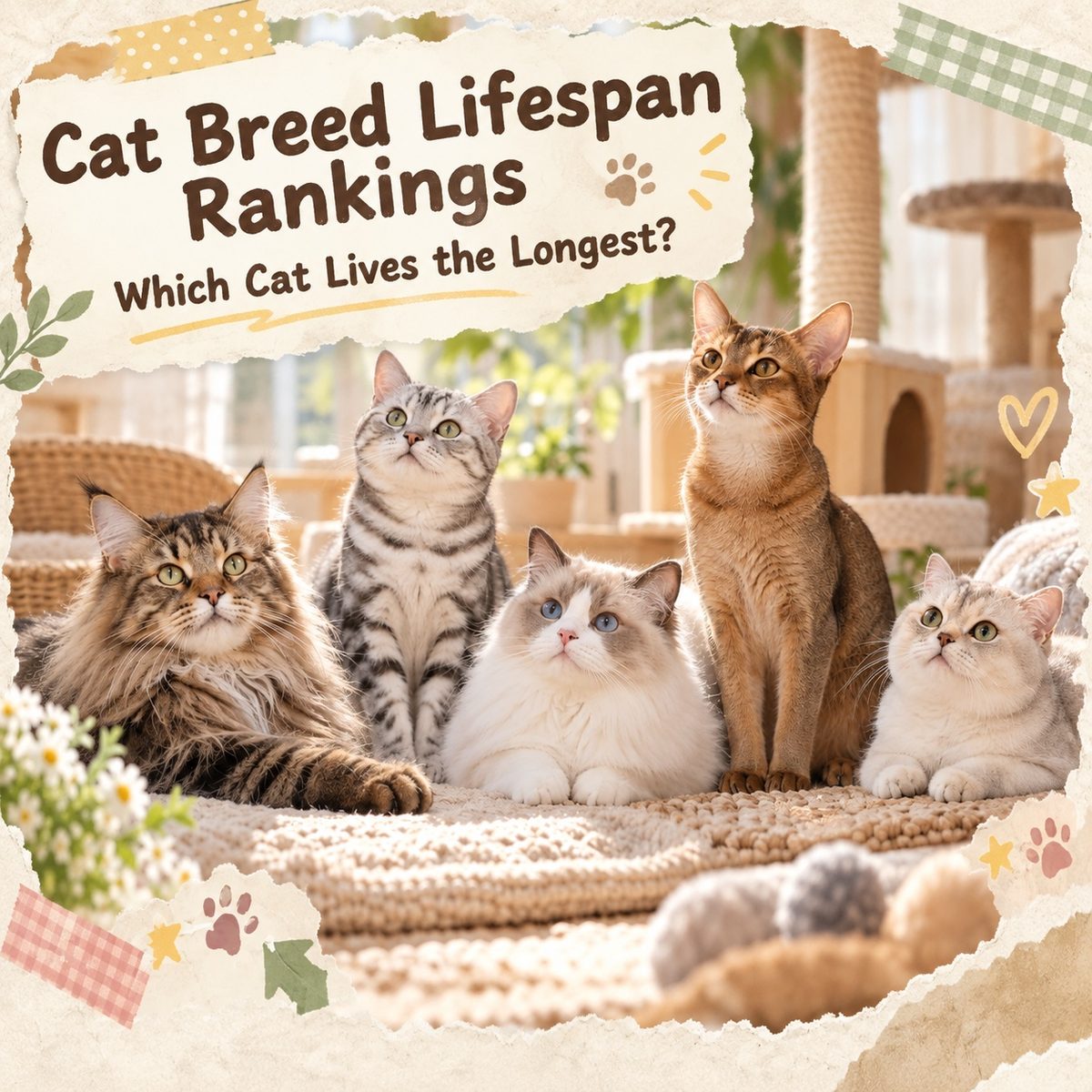
Cat breed lifespan ranking: Domestic cats (moggies) usually live the longest, averaging 14–20 years; Siamese, Maine Coons and Ragdolls about 12–17 years; Persians and Exotic Shorthairs about 10–15 years due to their flat-faced structure; Scottish Folds have shorter lifespans due to inherited bone disease. Factors affecting lifespan: genetics, neutering, indoor living, weight management, regular veterinary checks.
• Longest-lived: Domestic cats 14–20 years
• Medium: Ragdolls, Siamese, British Shorthairs 12–17 years
• Shorter: Persians, Exotic Shorthairs 10–15 years
• Neutered cats live 2–4 years longer on average than unneutered ones
Quick answer: Generally, mixed-breed cats (domestic cats/moggies) have the longest average lifespan, up to 14–20 years, due to high genetic diversity; among purebreds, Siamese and Maine Coons are longer-lived (12–17 years); flat-faced breeds such as Persians and Exotic Shorthairs average 10–15 years due to respiratory structure problems. But breed is only a reference—neutering, indoor living, weight management and regular checks have a bigger impact on lifespan than breed.
Table of Contents
-
Why understand breed lifespans?
-
Cat breed lifespan ranking
-
5 major factors affecting cat lifespan
-
How to help your cat live longer?
-
FAQ
How long do cats live? 30-second summary
Breed is only one variable in cat lifespan. In typical Hong Kong situations, indoor domestic cats average 14–20 years, purebreds 10–18 years, and free-roaming cats may average only 2–5 years due to car accidents, fighting and infectious diseases. The table below gives you an overview; later we break down the ranking, calculation methods and common myths.
| Item | General range |
|---|---|
| Domestic cat/moggie | 14–20 years |
| Purebred cats (overall) | 10–18 years |
| Indoor cats | 12–18 years |
| Free-roaming cats | 2–5 years |
| Neutered vs unneutered | Neutered average 2–4 years longer |
| Obesity impact | Average shortening of over 2 years |
In one sentence: How you keep them matters more than breed. The same domestic cat, kept fully indoors, weight-controlled and with regular blood tests, versus free-roaming, free-fed and unchecked, can differ in lifespan by more than double.
Cat lifespan ranking table: breed × average lifespan × influencing factors
The table below combines veterinary literature and pet insurance claims data to list the lifespan ranges and main influencing factors of common breeds in Hong Kong. The ranking is for reference only; individual cats can vary greatly.
| Rank | Breed | Average lifespan | Main influencing factors |
|---|---|---|---|
| 1 | Domestic cat/moggie | 14–20 years | High genetic diversity, few inherited diseases |
| 2 | Russian Blue | 13–18 years | Few inherited diseases, longer-lived indoors |
| 3 | Siamese | 12–18 years | Strong constitution, watch for respiratory issues in later years |
| 4 | Ragdoll | 12–17 years | Gentle nature, prevent obesity |
| 5 | British Shorthair | 12–17 years | Stable constitution, prone to obesity, control food |
| 6 | Maine Coon | 12–16 years | Late maturing, watch for HCM heart disease |
| 7 | Munchkin | 12–15 years | Short-leg gene, watch spine and joints |
| 8 | Persian | 10–15 years | Flat-faced structure, prone to breathing and kidney problems |
| 9 | Exotic Shorthair | 10–15 years | Similar to Persian, screen for polycystic kidney disease |
| 10 | Scottish Fold | 10–14 years | Osteochondrodysplasia, more joint problems in later years |
Transparent scoring criteria: The above ranges combine international veterinary literature, breed club data and pet insurance claims statistics; actual cat lifespan is affected by living environment, medical standards and genetic background, and individual cats can vary greatly.
How to calculate cat lifespan? Three practical methods
When people talk about cat lifespan, they may mean three different numbers. Distinguish them so you know which number is relevant to you.
Method 1: Breed median. Use the middle value of the breed's statistical range. For example, Siamese 12–18 years, median about 15 years. This is the fastest but crudest method, because individual cats of the same breed can differ by over 5 years.
Method 2: Cat-to-human age conversion. A cat's first year is roughly equivalent to 15 human years, the second year adds 9 years, and each subsequent cat year is roughly 4 human years. For example, a 10-year-old cat ≈ 15 + 9 + 4×8 = 56 years. This method helps you understand the senior stage, not predict actual lifespan.
Method 3: Risk addition/subtraction. Start from a baseline of 15 years: fully indoors +2 years, neutered +2 to 4 years, ideal weight +1 year; conversely, free-roaming −8 years or more, obesity −2 years, no annual checks −2 years. This method is closest to individual circumstances but is only a rough estimate.
The above conversions are common veterinary educational versions, used to understand stages, and cannot be taken as a prediction for an individual cat.
Lifespan gap between indoor and free-roaming cats
The same cat, kept indoors or free-roaming, can differ in lifespan by more than 5 times. Below are the actual differences in the Hong Kong environment:
| Item | Indoor cat | Free-roaming cat |
|---|---|---|
| Average cat lifespan | 12–18 years | 2–5 years |
| Car accident risk | Very low | High |
| Infectious diseases (panleukopenia, leukaemia) | Low (vaccine-preventable) | High |
| Fight injuries | Low | High |
| Poisoning risk | Low | Medium (rat poison, pesticides) |
| Hong Kong recommendation | Fully indoors + window screens | Not recommended |
Note: Hong Kong is densely built with high-rises; "cats have 9 lives, falls are fine" is the most dangerous misconception. Indoor cats falling from height is a common cause of serious injury; window screens must be securely installed and balconies fitted with safety nets.
Care focus at each cat lifespan stage
Cat lifespan is not a single average line but several stages, each with different care priorities. Check the table below to know what to do when.
| Stage | Age | Care focus |
|---|---|---|
| Kitten | 0–1 year | Three vaccinations, deworming, socialisation |
| Adult | 1–7 years | Weight control, annual check-up |
| Mature | 7–11 years | Annual blood and urine tests, watch for kidney disease and hyperthyroidism |
| Senior | 11–15 years | Six-monthly checks, joint and oral care |
| Geriatric | Over 15 years | Prescription diet, home accessibility modifications |
Two most commonly overlooked warning signs:
- Weight loss: After age 7, losing more than 5% in a month is mostly a disease signal, not just ageing.
- Changes in drinking and urination: A large increase mostly points to kidney disease or diabetes; blood tests should be done immediately.
Hong Kong senior cat medical costs (2026 prices)
The longer a cat lives, the higher the medical costs. Below are common senior cat medical items and approximate fees in Hong Kong to help you budget the "cost of longevity".
| Item | Approximate cost |
|---|---|
| Annual check-up for over 7 years (blood + urine tests) | HK$800–1,500 per visit |
| Additional SDMA early kidney marker | HK$300–600 |
| Ultrasound examination | HK$800–1,500 per visit |
| Dental scaling (including anaesthesia) | HK$3,000–6,000 |
| Chronic kidney disease prescription food | HK$400–900 per month |
| Hyperthyroidism medication | HK$200–500 per month |
| 24-hour emergency night consultation | From HK$800–1,500 |
In one sentence: From age 7, setting aside HK$2,000–4,000 per year as a senior cat medical fund is far more practical than scrambling for money on the day something happens.
Want to extend your cat's lifespan? 8 practical tips for Hong Kong small flats
Even in a 300 sq ft unit, you can do all the life-extending work. The following 8 tips all correspond to factors affecting cat lifespan:
- Fully indoors + window screens — minimise car accident, infectious disease and poisoning risks.
- Neuter at 5–6 months — do it before the first heat to reduce the risk of pyometra and mammary tumours.
- Weight control — weigh on a kitchen scale every two weeks; ideal is "ribs can be felt but not seen".
- Feed in 3–4 portions — use a slow feeder or puzzle feeder to avoid binge eating.
- Annual blood and urine tests after age 7 — early detection of kidney disease, hyperthyroidism and diabetes; early intervention can extend lifespan.
- Brush teeth nightly or use dental gel — periodontal disease affects the heart and kidneys; scale teeth once a year.
- Vertical space + 15 minutes of daily play — burns calories while reducing stress and stabilising mood.
- Pheromone diffuser + fixed routine — reduces anxiety from owners working overtime; a stable environment helps longevity.
Four most common cat lifespan myths
| Myth | Reality |
|---|---|
| Purebred cats are always shorter-lived than domestic cats | Not necessarily. With health-screened breeders and good care, purebreds can also live past 15 |
| Cats have 9 lives, falls are fine | "9 lives" is a myth; high-rise falls are a common cause of serious injury in Hong Kong indoor cats; window screens must be securely installed |
| It's normal for senior cats to eat less | After age 7, losing more than 5% body weight is mostly a disease signal, not just ageing |
| Neutering always makes them fat and short-lived | Neutered cats have lower metabolism and need less food, but statistically neutered cats live 2–4 years longer than unneutered ones |
Cat lifespan numbers quick reference
Finally, all key numbers in one page for quick comparison:
| Scenario | Number |
|---|---|
| Average domestic cat lifespan | 14–20 years |
| Average purebred cat lifespan | 10–18 years |
| Average free-roaming cat lifespan | 2–5 years |
| Lifespan increase from neutering | +2 to 4 years |
| Lifespan decrease from obesity | −2 years or more |
| Start of mature stage | 7 years |
| Start of senior stage | 11 years |
| Recommended annual senior cat medical fund | HK$2,000–4,000 |
Why understand breed lifespans?
Keeping a cat is a 10- to 20-year commitment. Understanding breed lifespans is not about "choosing a longer-lived cat", but about:
- Mental and financial preparation — senior cat medical costs increase with age
- Early prevention of breed-related diseases — e.g. Maine Coons need heart monitoring, Persians need kidney monitoring
- Adjusting care approach — different breeds have different senior care priorities
Note: Lifespan data are statistical ranges; individual cats can vary greatly. With good care, many cats can live past 18. For more on senior cat care, see our Domestic Cat Lifespan and Adoption Guide.

Cat breed lifespan ranking
Below are common ranges combining veterinary literature and pet insurance data (for reference only; individual cats will vary):
| Rank | Breed | Average lifespan | Why rated this way |
|---|---|---|---|
| 1 | Domestic cat/moggie | 14–20 years | High genetic diversity, few inherited diseases |
| 2 | Siamese | 12–18 years | Strong constitution, but prone to respiratory problems in later years |
| 3 | Maine Coon | 12–16 years | Late maturing, watch for HCM heart disease |
| 4 | Ragdoll | 12–17 years | Gentle nature, low stress, but prevent obesity |
| 5 | British Shorthair | 12–17 years | Stable constitution, prone to obesity, control food |
| 6 | Russian Blue | 13–18 years | Few inherited diseases, longer-lived indoors |
| 7 | Persian | 10–15 years | Flat-faced structure prone to breathing and kidney problems |
| 8 | Exotic Shorthair | 10–15 years | Similar to Persian, screen for polycystic kidney disease |
| 9 | Scottish Fold | 10–14 years | Osteochondrodysplasia, more joint problems in later years |
| 10 | Munchkin | 12–15 years | Short-leg gene, watch spine and joints |
Transparent scoring criteria: The above ranges combine international veterinary literature, breed club data and pet insurance claims statistics; actual lifespan is affected by living environment, medical standards and genetic background, and individual cats can vary greatly.
For a detailed analysis of Maine Coon lifespan, see Maine Coon Lifespan Feature.
5 major factors affecting cat lifespan
1. Genetic background
- Mixed-breed cats have high genetic diversity; "hybrid vigour" means fewer inherited diseases
- Purebreds need attention to breed-specific inherited diseases (HCM, polycystic kidney disease, bone disease)
2. Neutering
- Neutered cats live 2–4 years longer on average than unneutered ones
- Reduces reproductive cancers, pyometra, prostate problems
- Reduces accidents from roaming during heat
3. Indoor vs outdoor
- Indoor cats average 12–18 years; free-roaming cats may average only 2–5 years due to car accidents, fighting and infectious diseases
- Hong Kong's environment is complex; fully indoor living is strongly recommended
4. Weight management
- Obesity causes diabetes, arthritis and heart disease, shortening lifespan by over 2 years on average
- Maintaining ideal body condition (ribs felt but not seen) is the simplest longevity secret
5. Regular veterinary checks
- From age 7, annual blood and urine tests are recommended for early detection of kidney disease, hyperthyroidism and diabetes
- Early intervention can greatly extend lifespan and quality of life
How to help your cat live longer?
-
Keep fully indoors — avoid car accidents, infectious diseases, poisoning
-
Neuter at the right time — recommended at 5–6 months
-
Quality diet + portion control — no free-feeding, maintain ideal weight
-
Annual health check — add blood tests after age 7
-
Oral care — periodontal disease affects the heart and kidneys; brush teeth or scale regularly
-
Stress-reducing environment — cats are sensitive animals; a stable environment helps longevity
⚠️ If you have any health concerns, please consult a veterinarian.
Hong Kong small-unit practical: 7-tip longevity checklist
Hong Kong living spaces are small, but you can still help your cat live a long life. The checklist below directly corresponds to the 5 major factors mentioned in the article, all doable in a 300 sq ft unit.
1. Indoor exercise route map
- Use windowsills and bookshelves as "vertical space": install shelves or IKEA shelving so the cat can jump all the way up to the air-conditioning unit, burning calories and reducing stress.
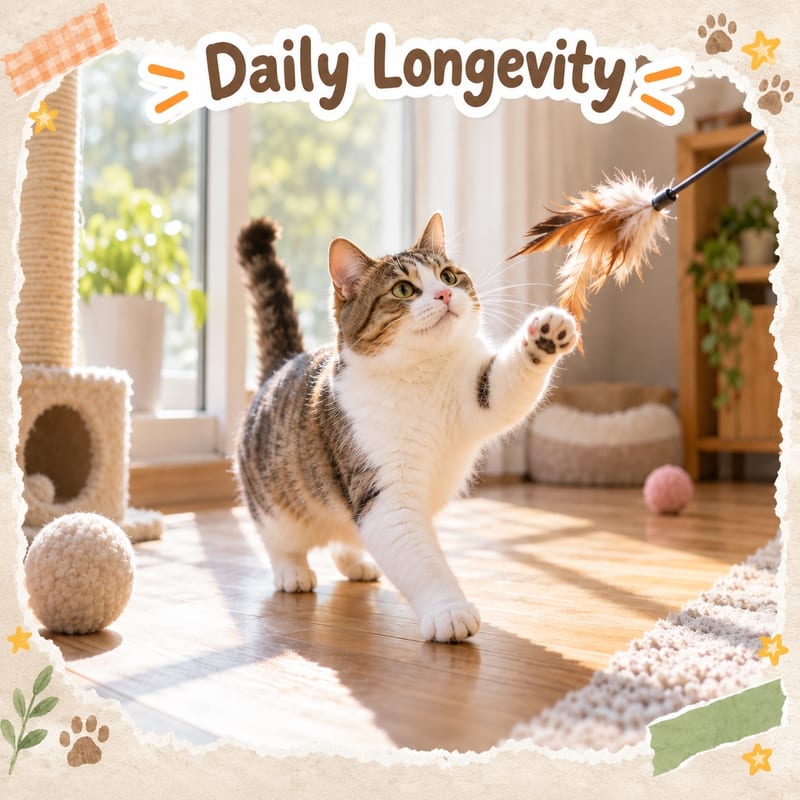
- 15 minutes of "wand toy patrol" every night: the owner stands in the corridor and leads the cat running through the whole unit, equivalent to outdoor exercise.
2. Neutering schedule
- At 5–6 months, go to a private clinic or the SPCA low-cost neutering scheme, before the first heat, to reduce the risk of pyometra later.
- Wear a cone for 7 days after surgery; keep the home air-conditioned and dry to speed wound healing.
3. Weight management measurement method
- Weigh on a kitchen electronic scale every two weeks; ideal is "ribs felt but not seen".
- Use a slow feeder or puzzle feeder to avoid binge eating; divide the daily total food into 3–4 meals to reduce begging.
4. Annual check-up strategy
- After age 7, book a "senior cat health check package" each year; general clinic fees already include blood tests, urine tests and blood pressure—remember to ask about ultrasound discounts.
- For high-risk kidney breeds such as Persians and Exotic Shorthairs, consider adding the SDMA early kidney marker test.
5. Stress-reducing environment setup
- In small, noisy units, place a pheromone diffuser (Feliway) in the cat's favourite resting corner.
- Feed and play at fixed times daily to reduce cat anxiety from owners working overtime.
6. Oral care lazy pack
- Brushing nightly too hard? Use dental gel squeezed between the teeth; the cat licking it can reduce tartar.
- Scale teeth once a year; book it together with the annual check-up to reduce the number of anaesthetics.
7. Emergency medical map
- Note down the 24-hour emergency vet list (Kowloon City, North Point, Sha Tin all have them), save it in your phone map so you don't have to search at night.
- Renew pet insurance annually and check whether it covers inherited diseases to reduce senior cat medical burden.
Follow these, and even in 300 sq ft, you can help your cat live healthily to 18!
📌 Key summary
- ✅ Domestic cats have the longest average lifespan due to high genetic diversity
- ✅ Neutered cats live 2–4 years longer on average than unneutered ones
- ✅ Indoor living avoids car accidents and infectious diseases
- ❌ Free-roaming cats average only 2–5 years
- ❌ Obesity can shorten lifespan by over 2 years