
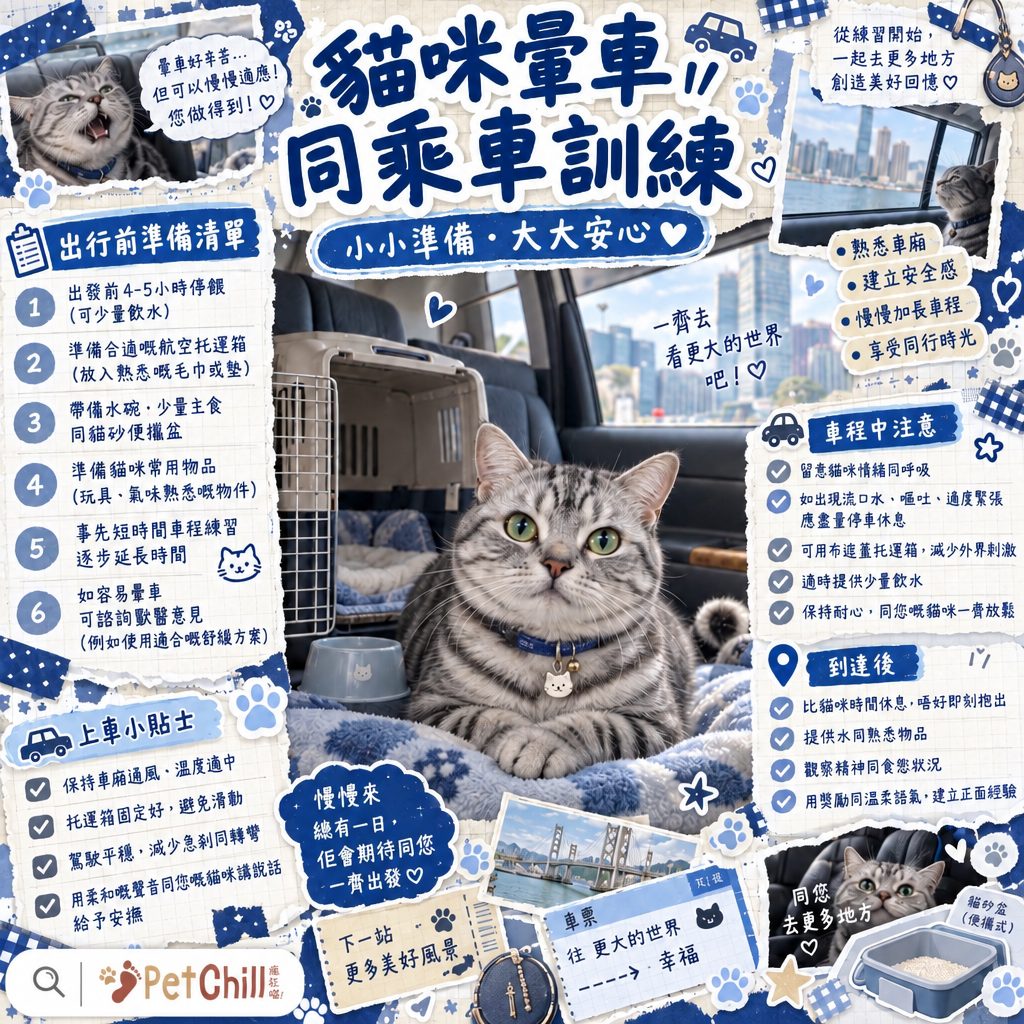
Quick answer: Cats have a well-developed vestibular system, so the proportion of true motion sickness is actually very low. More often, it is excitement and stress "pretending" to be car sickness symptoms (vomiting, drooling, restlessness). The 4 major symptoms of motion sickness = drooling, vomiting, depression, vestibular imbalance (blinking, protruding nictitating membrane, unsteady standing). 3 things to do before departure: stop feeding 4-5 hours before, put a towel with a familiar scent in the carrier, secure the carrier in the back seat + keep air-conditioning no lower than 22°C. The most effective long-term solution is 4-step car ride desensitisation training, starting from opening the carrier door and gradually lengthening the car ride, and the destination should not always be just the veterinarian's clinic. Sedatives must be prescribed by a veterinarian; never give human motion sickness medication on your own (the complete guide to giving cats medication has 3 methods: bare hands, treats, and pill popper).
Key points
- Cats almost never get car sick; only symptoms that consistently appear as soon as they get in the car should raise suspicion of motion sickness.
- 4 major symptoms: drooling, vomiting (often preceded by restlessness), depression, vestibular imbalance.
- 3 high-risk factors: no previous car ride experience, eating within 4-5 hours before departure, exhaust fumes and draughts.
- 3 preparations before departure: stop feeding, familiar scent, secure carrier + temperature control.
- 4-step desensitisation training: carrier becomes a bed → brief door closure → walk around the neighbourhood → feed treats in the car with engine off, then gradually lengthen.
- 5 rules for long trips: rest every 2 hours, steady speed, do not take the cat out of the carrier while driving, never leave the cat alone in the car, bring a litter box.
Taking your cat to the veterinarian, to a pet hotel, or even on a holiday drive back home — the biggest fear is your cat drooling, vomiting and meowing non-stop in the car. Many owners immediately think "my cat is car sick", but the answer from veterinary behaviourists may be the opposite of what you think — in fact, cats have a fairly developed vestibular system, and the proportion of true motion sickness is very low. More often, it is excitement and stress "pretending" to be car sickness symptoms. This time, we have combined professional chapters from 5 cat books in the PetChill library to break down the causes of motion sickness, pre-departure preparations, 4-step car ride desensitisation training and long-distance safety rules, to help your cat travel with peace of mind.
Car sick or excited? First distinguish motion sickness from stress
The "Cat Encyclopedia Continued" chapter "Do cats get car sick?" points out: cats almost never get car sick, which may be related to their well-developed vestibular system; what is truly common is "excitement-induced stress response" — vomiting, drooling, restlessness are very similar to car sickness.
The "Feline Medicine" chapter "Motion Sickness" explains the mechanism of true motion sickness: during air, car or boat travel, rhythmic swaying causes vestibular stimulation, plus visual impulses and car exhaust odours, stimulating the brainstem vomiting centre, ultimately leading to dizziness and vomiting. To distinguish stress from illness, you can refer to the 6 major causes in the complete guide to cat vomiting. The key to judgment is: whether the symptoms consistently appear as soon as the cat gets in the car and synchronise with the swaying of the ride, rather than simply seeing the cat meow.
4 major symptoms of motion sickness + 3 high-risk factors
The main symptoms listed in "Feline Medicine":
- Drooling — drooling continuously after getting in the car, chin soaking wet.
- Vomiting — usually restlessness precedes vomiting.
- Depression — listless, shrinking into a corner.
- Vestibular imbalance — blinking, protruding nictitating membrane, unsteady standing.
High-risk factors include: no car ride experience from a young age (most cats' first car ride is to the vet, creating a negative association), eating within 4-5 hours before departure, and exhaust fumes and draughts in the cabin.
3 preparations before departure (Hong Kong practical version)
-
Timing of stopping food: stop feeding 4-5 hours before departure to avoid stomach discomfort during bumpy rides; if possible, arrange a light meal.
-
Toileting and scent: let the cat eat and use the litter box as early as possible before departure, and place a towel with the cat's scent and a familiar toy in the carrier.
-
Securing and temperature: place the carrier on the back seat and secure it with a seat belt to prevent sliding; the air-conditioning should be set no lower than 22°C, do not point the vent directly at the cat, and keep windows closed in summer to prevent draughts.
4-step car ride desensitisation training (from zero to calm)
The three-step carrier training method from "My First Cat Book" (for the principles of touch and desensitisation, see the complete guide to cat touch training), combined with the "car trial period" from "The Complete Book of Cat Raising", can form a complete training chain:
- Step 1: Keep the carrier in the room where the cat lives daily, with the door open, so it feels like a safe den.
- Step 2: Let the cat go in and out freely, place toys or towels inside; once calm, briefly close the door, then open it.
- Step 3: Take the carrier for a 5-minute walk around the neighbourhood, and reward immediately after.
- Step 4: Hold the cat in the car with the engine off, slowly feed treats, associating the car with positive experiences; then start with 5-minute short trips and gradually lengthen, and the destination should not always be just the vet clinic.
The key is "accumulating happy mileage" — during training, never force the cat, and do not let it out to roam around midway.
| Stage | Method | Completion criteria |
|---|---|---|
| 1. Carrier becomes a bed | Keep the carrier in the daily room, door open | Cat goes in to sleep on its own |
| 2. Brief door closure | Once calm, briefly close the door then open | No hissing, no frantic scratching |
| 3. Walk around the neighbourhood | Take the carrier for a 5-minute walk nearby, reward immediately after | Not panicked when out of the carrier |
| 4. Positive association in the car | Slowly feed treats in the car with engine off, then start with 5-minute short trips | Gradually lengthen car rides, destination not always the clinic |
5 safety rules for long-distance driving
- Rest every 2 hours: let the cat drink and eliminate; water should be given in small amounts frequently, a sip every hour to prevent dehydration.
- Steady speed: avoid sudden braking and sharp turns to reduce swaying stimulation.
- Do not take the cat out of the carrier while driving: a frightened cat will first try to hide under the car seat or floor, which is very dangerous.
- Never leave the cat alone in the car: even if you just get out to buy something for a few minutes, in summer the car interior can be fatal within minutes, and in winter direct sunlight can also raise the temperature rapidly.
- Add a small litter box to the carrier: convenient for toileting on long overnight trips; upon arrival, settle in first before feeding.
When to see a veterinarian?
If the cat shows continuous drooling, repeated vomiting, complete refusal to eat or drink for more than 24 hours, or difficulty breathing, seek medical attention immediately. Car accidents (e.g. injury from sudden braking) are even more of an emergency. As for sedatives, "Feline Medicine" emphasises that dosages vary greatly between individuals and must be prescribed by a veterinarian; cats with a history of epilepsy require special assessment before medication — never give human motion sickness medication on your own (the complete guide to giving cats medication has 3 methods: bare hands, treats, and pill popper).
Frequently asked questions
Q: Do cats really get car sick?
A: Most do not. The books note that cats have a well-developed vestibular system and almost never get car sick; what is common is actually excitement and stress causing vomiting and drooling. Only if symptoms consistently appear during car rides should motion sickness be suspected, and a veterinarian should be consulted.
Q: Should I feed my cat before a car ride?
A: Do not feed within 4-5 hours before departure to reduce vomiting from jolting. However, on long trips, offer small amounts of water regularly — a few laps every hour — and take a break every 2 hours to prevent dehydration.
Q: Can I give my cat motion sickness medication myself?
A: Not recommended. Sedative dosages vary greatly between cats, and some drugs can trigger seizures and abnormal body temperature regulation. A veterinarian must assess and prescribe, and emergency measures should be prepared.
Q: Where is the safest place to put the carrier?
A: Place it on the back seat and secure it with a seat belt or support to prevent sliding. Do not point the air-conditioning directly at the cat, and keep the temperature no lower than 22°C. Do not open the carrier door while driving, to prevent a frightened cat from hiding under the car seat.
PetChill's Reminder
The most important things for car ride training are patience and positive rewards. Start with the carrier and gradually lengthen the car ride, and your cat will become a calm travel companion. Before departure, remember to check that the carrier is secure, water and food are packed, and the car interior is kept cool and ventilated. To be better equipped, PetChill's website sells sturdy airline carriers, non-slip mats and freeze-dried treats — freeze-dried treats are exactly the best reward for training, helping your cat associate "getting in the car" with good things, so next time you won't have to play hide-and-seek with your cat.
To learn more about cat travel and daily care knowledge, please continue to follow PetChill's latest article updates!
References
"Feline Medicine" (Motion Sickness), "My First Cat Book" (Carrier and Car Rides), "The Complete Book of Cat Raising" (Travel Precautions), "Cat Encyclopedia Continued", "Cat Thoughts 1: Cat Behaviour Q&A" — a total of 5 cat books from the PetChill library, 8 chapters.
 Feline Natural full guide →