
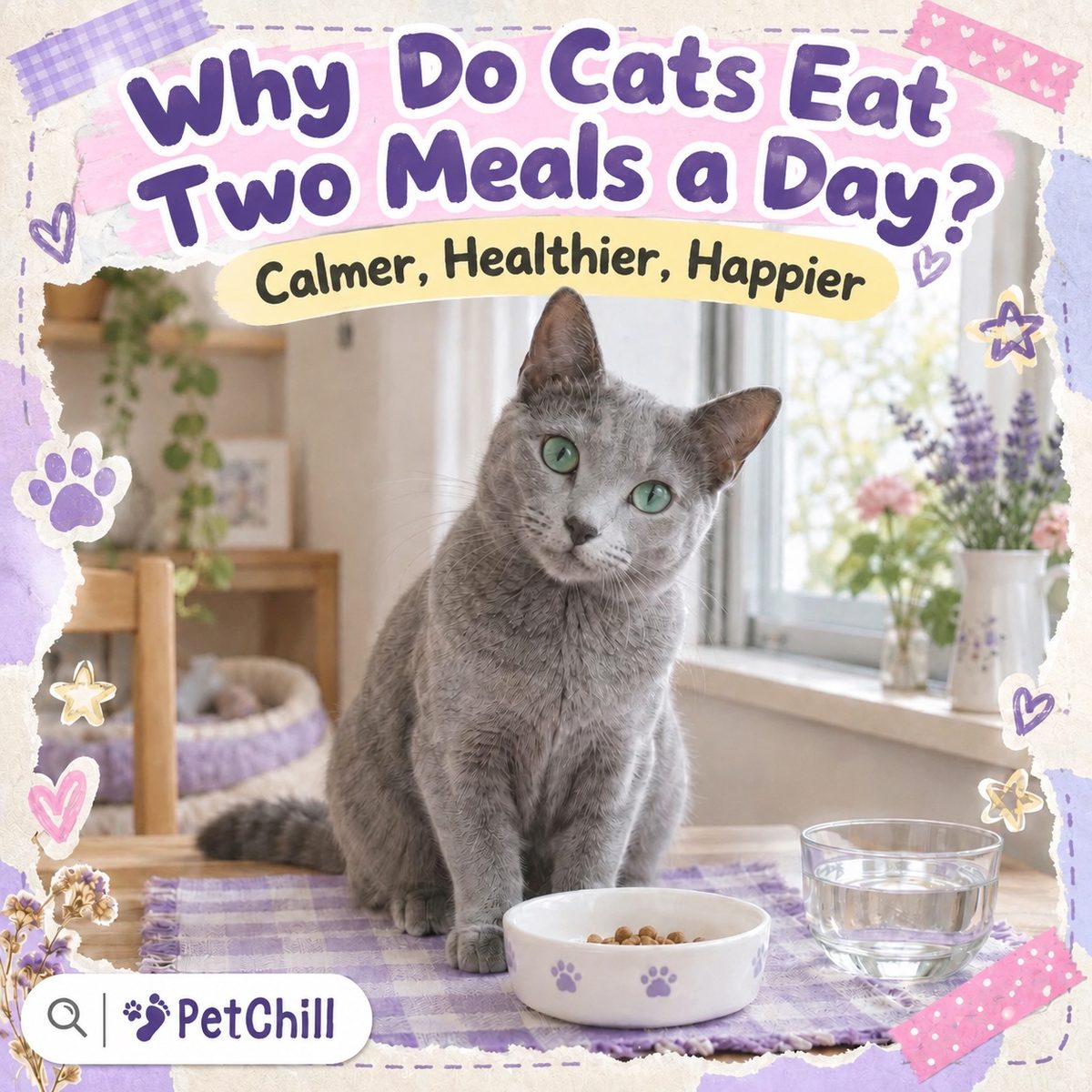
Quick answer: If your cat eats two bites and walks away, it's usually not illness or fussiness—it's the solitary hunter instinct written in their genes. A cat's stomach holds only about 0.3 litres (a human's about 1.3 litres), and they are naturally designed for "small, frequent meals"—around 20 small portions a day. The right approach is to feed 4–6 meals, keep food fresh, place the bowl in a quiet spot away from the litter box; if your cat refuses food for 24 hours straight or shows vomiting or lethargy, see a veterinarian promptly.
If you live with a cat, you've probably seen this: you kindly fill a bowl with cat food, the cat takes two bites and walks off without a backward glance, leaving you staring at half a bowl and questioning life—"Is she not hungry? Or does she hate the food?" Don't rush to throw away the leftovers, and don't rush to switch foods. According to observations in The Complete Book of Cat Care, cats eating "a little, many times" is completely normal behaviour written into their genes, closely tied to their digestive anatomy and hunter instinct. Let's break down the scientific truth behind cats' eating behaviour and how you should feed them for the best.
Why are cats never in a hurry to eat? The solitary hunter instinct
Dogs are social animals; fearing others will steal their food, they naturally gulp down meals quickly—"swallow it before it's taken." But cats are solitary hunters; their ancestors had no "food-stealing" worry, so their eating attitude is completely different: unhurried, take two bites, rest, sometimes even bury part of the food and leave it for later.
This behaviour still appears in domestic cats. So when your cat eats two bites and leaves, it's most likely not illness or pickiness—it's just their instinctive rhythm. Once you understand this, you'll stop fighting with the food bowl.
The 0.3-litre small stomach: cats' digestive wisdom
Cats' eating habits are directly related to their body structure. The data in the book is clear:
- Stomach capacity: cats about 0.3 litres, humans about 1.3 litres, large dogs can reach 7 litres—a cat's stomach is so small it's almost "small quantity, high quality"
- Intestines: small intestine up to about 1.7 metres, large intestine about 0.4 metres; food doesn't stay long, digestion is fast
- Feeding frequency: cats with constant access to food will divide their daily food into about 20 small portions, evenly distributed between day and night
A small stomach and fast digestion mean cats are naturally suited to a diet that is "high-calorie, easy to digest, small portions, many times" rather than two big meals a day. This is the physiological basis for "small, frequent meals."
Cats vs humans vs large dogs: digestive data at a glance
| Item | Cat | Human | Large dog |
|---|---|---|---|
| Stomach capacity | About 0.3 litres | About 1.3 litres | Up to 7 litres |
| Small intestine length | Up to about 1.7 metres | About 5–7 metres | About 3–5 metres |
| Large intestine length | About 0.4 metres | About 1.5 metres | About 0.6–0.8 metres |
| Meals per day | Can be about 20 small portions | 2–3 meals | 1–2 meals |
| Dietary nature | Small, frequent meals; eat anytime | Regular, fixed amounts | Social, competitive eating; fast |
Typical behaviours while eating
- Uses carnivore canine teeth to tear large pieces into bite-sized chunks, tilting the head slightly while tearing
- Sniffs before eating: uses smell to check if food is fresh or too cold; if food is not fresh or too cold, won't eat even if hungry
- Fussy cats may use teeth and claws to paw their favourite parts out of the bowl to eat first, ignoring the rest
- Almost never eats all the food at once; even if very hungry, will "politely" leave some to come back to later
So when you see your cat finish and leave, with half the bowl still there, don't immediately throw it away—wait 30 minutes, and many cats will come back to "clean the plate."
5 principles of scientific feeding: how to feed correctly
-
Feed multiple times: divide the daily portion into 4–6 meals (or use an automatic feeder to simulate multiple meals a day); this suits cats' nature better than filling a bowl once.
-
Keep food fresh: wet food left at room temperature too long changes flavour; cats "inspect" with their noses, and will refuse food that's gone cold or smelly; don't put out too much at once.
-
Bowl placement matters: place in a quiet spot away from foot traffic, and keep distance from the litter box; cats don't like eating next to the "toilet."
-
Fixed schedule: irregular feeding times and a chaotic environment are common causes of "behavioural problems" in cats.
-
Adjust portions by weight: small, frequent meals doesn't mean random extra meals; for adult cats' daily calories, refer to the suggested portion on the cat food packaging—obesity brings risks of joint, urinary and diabetes problems.
Picky eating traps: things cats must not eat
Cats are obligate carnivores; traditional prey (like mice and other small animals) naturally provides balanced vitamins and minerals. The book specifically warns:
- Human leftovers: oil and salt seasoning exceed limits, unsuitable for cats
- Dog food: protein and fat content is less than half of what cats need daily; long-term accidental feeding causes malnutrition (for essential nutrients, see the Cat Nutrition Guide)
- Vegan meals: cats are not herbivores; feeding a vegan diet to cats is harmful
Also, food preferences are largely set in kittenhood. Feeding a varied but safe diet from a young age prevents an extremely picky cat that "won't eat anything but one brand." Diet preferences in kittenhood also affect acceptance of drinks like milk; to know if cats can drink milk, see Can Cats Drink Milk? If your cat suddenly can't eat at all and refuses food for 24 hours straight, see a veterinarian promptly—don't dismiss it as ordinary pickiness; if accompanied by vomiting, refer to the Complete Guide to Cat Vomiting to judge urgency.
Key Takeaway
✅ Cat eats two bites and leaves = normal hunting instinct; small stomach, fast digestion, naturally "small, frequent meals"
✅ Feed 4–6 meals a day, or use an automatic feeder to simulate multiple meals
✅ Place bowl in a quiet spot away from the litter box; remove wet food left at room temperature too long
❌ Don't fill a bowl once for "free feeding" and then blame the cat for not finishing
❌ Don't feed human leftovers, dog food or vegan meals
⚠️ Refusing food for 24 hours straight, vomiting or lethargy = see a veterinarian immediately
PetChill's Reminder
Next time you see your cat eat two bites and walk away, don't worry—she's just following a hunter's script thousands of years old. Feed according to her nature—"small stomach, many meals, freshness needed"—and a happy eater is a healthy cat. PetChill offers selected high-palatability cat food, complete wet food and automatic feeders to help you raise a healthy cat that eats on time even in a small flat.
To help your pet choose the right food and eat healthily, check out PetChill's selected cat food and feeding supplies, or keep following PetChill's latest articles!
 Almo Nature full guide →