

Quick answer: Before moving in a small Hong Kong flat, first observe your cat's fixed routes and base, preserve scent marks, set up an unchanging safe room, then gradually open up new areas, and use pheromones and a regular routine to minimise adjustment stress.
Cats are animals that rely heavily on a sense of territory, and any change in space disrupts their 'scent map'. Before moving, follow these 5 steps — observe routes, make gradual changes, preserve scent, prepare a safe space, and use pheromones — to greatly reduce adjustment stress.
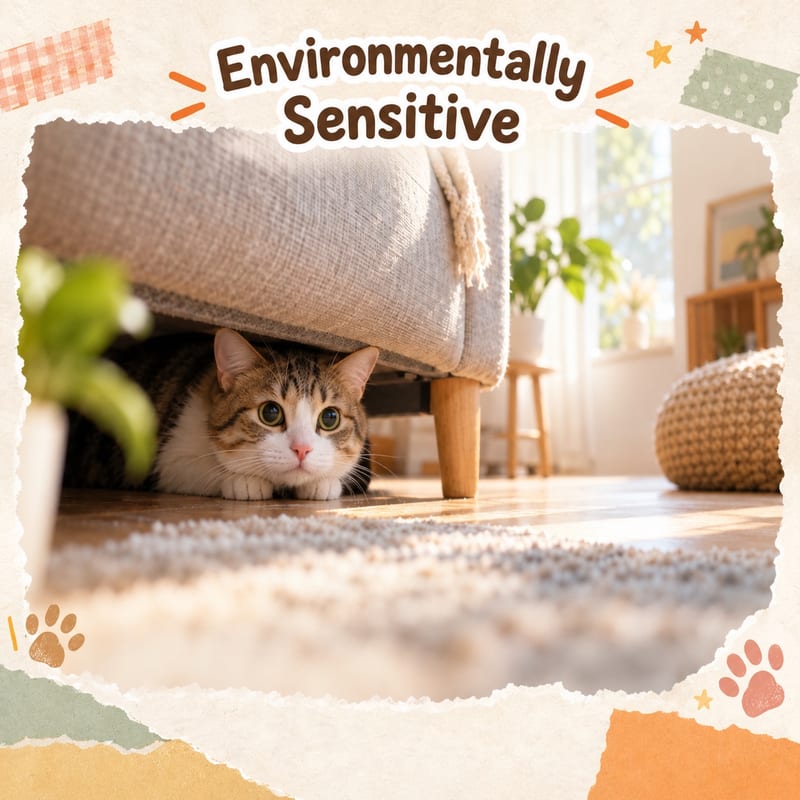
Have you ever moved a piece of furniture and your cat suddenly became unusually anxious, or even urinated outside the litter box or over-groomed? In fact, cats are far more sensitive to environmental change than we imagine. As natural territorial animals, any minor spatial change can make them feel uneasy. This article explains the psychological mechanisms behind this and helps you learn how to help your cat transition smoothly — whether you're moving house, changing the sofa or renovating.
Why are cats so sensitive to environmental change?
Cats are animals that rely heavily on a 'sense of territory'. To them, home is not just a living space but a 'private kingdom' full of scent marks, routes and security.
Scent marking system: Cats rub their cheeks, chin and body against furniture and door frames to leave their scent. These marks form a 'scent map' that tells them where is safe and where they have been. Research shows that a cat's sense of smell is about 14 times more sensitive than a human's; scent changes we cannot detect, they notice immediately. Moving furniture disrupts this map, and the cat instantly loses their sense of direction.
Fixed routes: Cats have daily routines — jumping from the sofa to the windowsill, walking from under the bed to the food bowl, sleeping on a particular shelf. These are 'safe passages' they have built over time. When furniture is moved, the passages are cut off, and they become confused and anxious.
Secret bases: Every cat has their own safe haven — a corner under the bed, the top of a wardrobe or a cardboard box. If these bases are suddenly exposed or disappear, it is a big psychological blow. Veterinarians point out that loss of security is one of the main causes of behavioural problems in cats.
What behavioural problems can environmental change cause?
When cats are overwhelmed by stress due to environmental change, common reactions include:
- Over-grooming: constantly licking the same area, even to the point of bald patches, known as 'psychogenic alopecia'
- Inappropriate urination or defecation: eliminating outside the litter box to re-mark territory with their own scent
- Changed scratching locations: scratching where they never scratched before, such as a new sofa or new bed
- Decreased appetite: losing interest in food, weight loss, long-term health impact
- Prolonged hiding: hiding in corners or under the bed and refusing to come out, day-night reversal
- Increased aggression: hissing or swiping at owners or other cats
- Increased vocalisation: constant meowing to express unease
If behavioural changes persist, remember to rule out health problems first — often 'stress behaviours' closely resemble early symptoms of illness. For example, sudden inappropriate urination may be a urinary tract problem, and decreased appetite may indicate an underlying illness. You can refer to PetChill's Cat Kidney Disease Guide for comparison and observation.
Overview of environmental stress reactions
| Stress source | Common reactions | Affected proportion | Recovery time |
|---|---|---|---|
| Moving house | Hiding, decreased appetite | About 78% of cats | 1–2 weeks |
| Furniture moved | Inappropriate urination, changed scratching | About 45% of cats | 3–7 days |
| New furniture | Scent marking, hiding | About 35% of cats | 1–2 weeks |
| Renovation noise | Over-grooming, aggression | About 60% of cats | Depends on duration of noise |
| New family member | Territorial conflict, hiding | About 55% of cats | 2–4 weeks |
The above proportions reflect overall trends; each cat's personality, experience and health are different: timid cats, those raised indoors from a young age, or those who have been abandoned often take longer to adjust. Hong Kong living spaces are small, with furniture, cat trees and litter boxes close together, so moving one thing often affects everything. Therefore, gradual changes are especially important.
5 preparations before moving or changing furniture
- Observe routes in advance: Spend a day observing where your cat usually stays, their jumping routes and sleeping spots before making changes, and try to recreate the same spatial structure in the new layout.
- Make gradual changes: Don't change everything at once. Move one or two items first, let your cat adjust, then proceed to the next step; change only one area at a time.
- Preserve scent marks: Keep items your cat frequently rubs against as much as possible. If they must be moved, wipe your cat's cheeks with a clean cloth and rub it on the new location to help transfer the scent and rebuild the map.
- Prepare a safe room: Before making changes, set aside a room that remains unchanged, with familiar items, a litter box and food and water; after all changes are complete, let your cat explore gradually from the safe space.
- Use pheromone products: Cat pheromones (such as Feliway) mimic the 'comfort pheromones' secreted by the cheeks. Start using them a few days before changes to help your cat build a sense of security in advance.
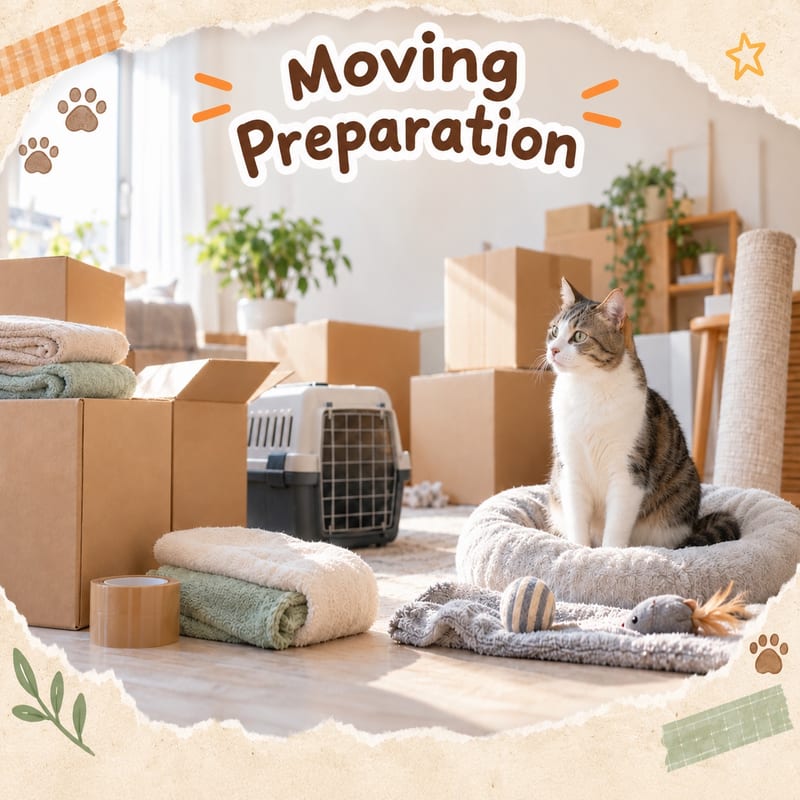
How to help your cat through the adjustment period
Gradual exploration: On the first day in the new home, place your cat in a carrier in the smallest, quietest room, with a litter box, food, water and an old blanket; wait until they relax, eat and sleep there, then open up new areas one by one. If they show signs of stress, immediately let them return to the safe space, and gradually increase exploration time from 10 minutes.
Maintain a regular routine: Keep feeding, play and sleep times fixed to provide stability. Research shows that a regular routine can reduce stress reactions by about 70% — even if the environment changes, don't change the schedule.
Increase interaction and comfort: Play with your cat using their favourite toys, gently stroke and speak softly to help them relax, but never force them to interact with the new environment; let them set the pace.
Positive reinforcement: When your cat actively explores a new area, reward them immediately with treats or praise, linking 'new environment' with 'good things'.
What should multi-cat households pay attention to?
Environmental change is most likely to trigger conflict between cats, because each cat adjusts at a different pace, and 'territory disputes' may arise. It is recommended to provide independent resources (litter box, food bowl, water bowl) for each cat, and ensure there are enough hiding spots and vertical space. Veterinarians recommend that the number of litter boxes in a multi-cat household = number of cats + 1. During the adjustment period, you may need to temporarily separate them, and gradually reintroduce them once each cat is stable.
When to see a veterinarian?
If behavioural problems persist for more than 2 weeks, or if the following occur, consult a veterinarian or animal behaviourist:
- Persistent loss of appetite or weight loss for more than a week
- Frequent vomiting or diarrhoea
- Severe aggression, injuring people or other cats
- Prolonged hiding, signs of depression
- Self-harm: over-grooming causing skin damage and bleeding
Pay special attention: inappropriate urination is not necessarily 'revenge' — urethral inflammation and stones can also cause cats to urinate outside the litter box. If there is frequent urination, blood in urine, or straining with crying, it is an emergency; take your cat to the vet immediately. You can first refer to PetChill's Urinary and Kidney Care Guide.
What you can do starting today
- If you plan to change furniture: start tomorrow by recording your cat's routes and a list of their bases
- Prepare an enzymatic cleaner; thoroughly remove the scent from any inappropriate urination spots
- Set aside a 'never-changing' safe corner with an old blanket and cat bed
- In multi-cat households, check that the number of litter boxes is 'number of cats + 1'
- Start using pheromone products two weeks before moving/renovation to pave the way
Cats' sensitivity to environmental change is natural, not 'fussiness'. Understanding their needs and using patience and methods to help them rebuild a sense of security is the best care. If you want to buy stress-reducing products for your new home, you can refer to PetChill's Cat Tree and Climbing Frame Buying Guide.
This article is for reference only; consult a registered veterinarian for any concerns.
📌 Key summary
- ✅ Observe and preserve your cat's original routes and scent marks
- ✅ Change only one area at a time, and keep a safe room as a buffer
- ✅ Use cat pheromone products to build a sense of security in advance
- ❌ Don't move all the furniture at once or force your cat to explore immediately
- ❌ Inappropriate urination is not necessarily revenge; rule out health problems first