Quick answer: A cat's normal rectal temperature is 38–39°C, 1–1.5°C higher than humans—so feeling "warm" is very likely normal. Only above 39.5°C counts as a fever; if it lasts more than 24 hours or is accompanied by refusal to eat, open-mouth breathing, shivering or pale gums, see a vet immediately. Take the temperature with a pet-specific digital thermometer rectally; do not rely on touch. Never give human fever medication (paracetamol and ibuprofen are highly toxic to cats).
Your cat suddenly has no energy, warm ears, and won't eat—is it a fever? Cats are naturally very good at hiding pain, and their normal body temperature is already higher than ours. Many Hong Kong cat owners feel their cat's forehead and think "it seems warm," assuming it's sick; others wait until the cat is completely still before discovering the temperature has already soared to 40°C. In fact, you cannot judge whether a cat has a fever by touch—you must use numbers. Below we share the normal body temperature range for cats, 3 steps to take a temperature correctly, 4 major danger signs that mean see a vet immediately, and the right way to cool a cat down and what to avoid.
What is a cat's normal body temperature? Remember this "health code"
A cat's normal body temperature is about 38–39°C (rectal), roughly 1 to 1.5°C higher than a human's 37°C. So feeling your cat "warm" is actually very normal and does not mean a fever. Conversely, if a cat's temperature drops below 37.5°C, that is equally dangerous and may indicate hypothermia or a precursor to shock.
It is advisable to record a set of "healthy baseline values" while your cat is healthy, so any abnormality will be obvious in the future:
- Temperature: 38–39°C (rectal)
- Pulse: 110–130 beats per minute
- Respiration: 20–30 breaths per minute
The table below helps you remember the differences in baseline temperatures between cats, dogs and humans:
| Item | Normal cat value | Level to watch | Notes |
|---|---|---|---|
| Rectal temperature | 38–39°C | Above 39.5°C = fever; below 37.5°C = dangerous hypothermia | Can fluctuate by 0.5°C within a day |
| Pulse | 110–130 beats/min | Clearly faster or slower | Measure when calm |
| Respiration | 20–30 breaths/min | Over 40 breaths/min, open-mouth breathing | Slightly faster after exercise is normal |
| Persistent fever | — | More than 24 hours | Must see a vet to find the cause |
To measure the pulse, let the cat sit still and gently place four fingers at the top of the hind leg to feel the beat; to measure respiration, gently place both hands on the chest and abdomen, counting one exhalation plus one inhalation as one breath. Body temperature can fluctuate by about 0.5°C within a day, usually slightly higher in the evening, after exercise or when stressed, so it is best to measure at the same time of day when the cat is calm.
Pay extra attention to temperature changes in kittens and senior cats
Kittens have immature temperature regulation and little fur and fat, so they are prone to fluctuating temperatures; senior cats may have lower body temperatures due to chronic diseases (such as kidney disease or thyroid problems). For these two age groups, once the temperature is abnormal, deterioration is much faster than in adult cats.
How to tell "true fever" from "stress heat"? 3 steps to take a temperature at home
Cats often have "false elevated" temperatures at the vet clinic due to stress, so home measurement is actually closer to the real situation. The steps are as follows:
Step 1: Prepare a pet-specific thermometer
Use a pet or animal-specific digital thermometer. Do not share with humans, and do not use a human mercury thermometer (it breaks easily and mercury is toxic to cats). Before measuring, apply a little water-soluble lubricant or cooking oil to the tip of the thermometer to reduce discomfort.
Step 2: Rectal temperature is most accurate
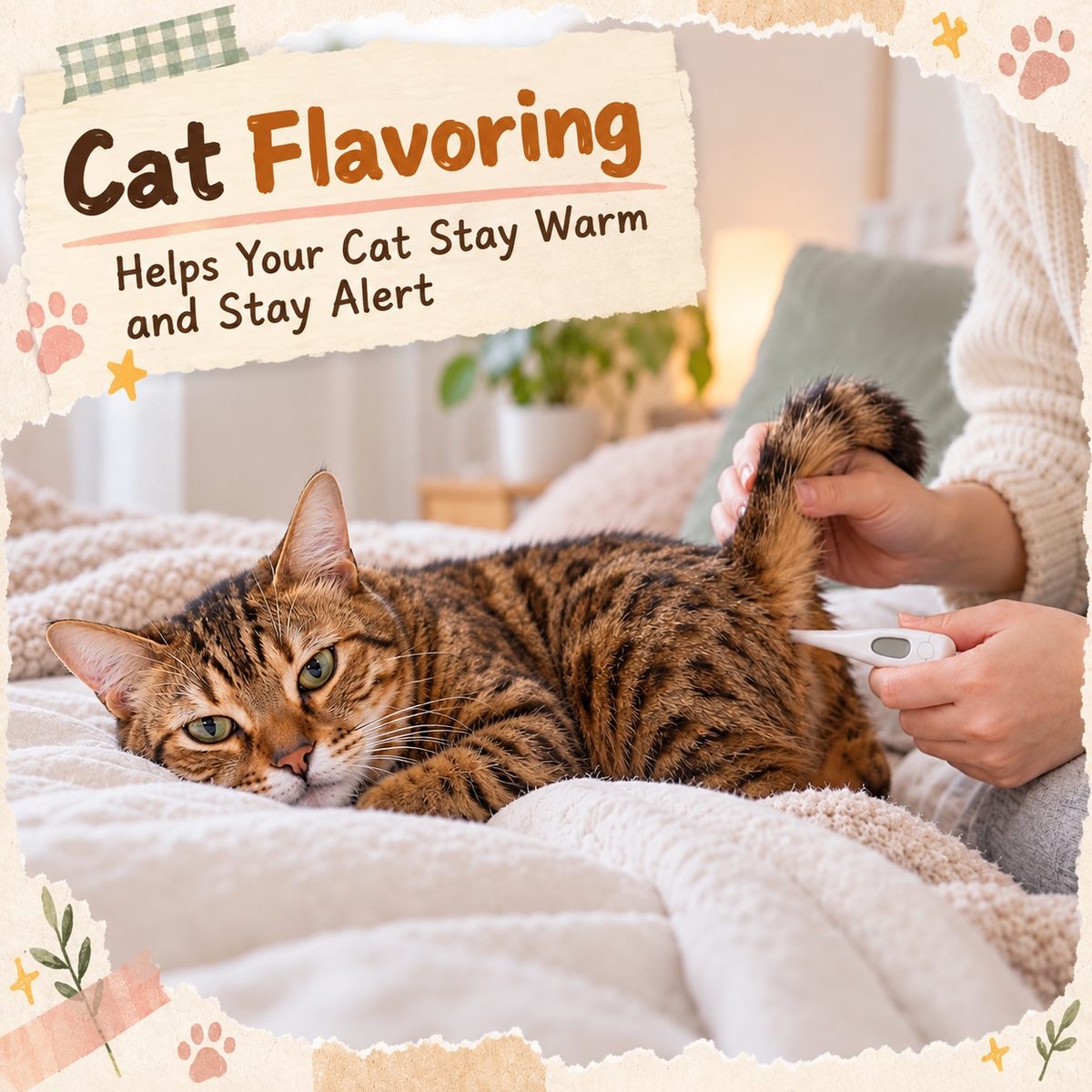
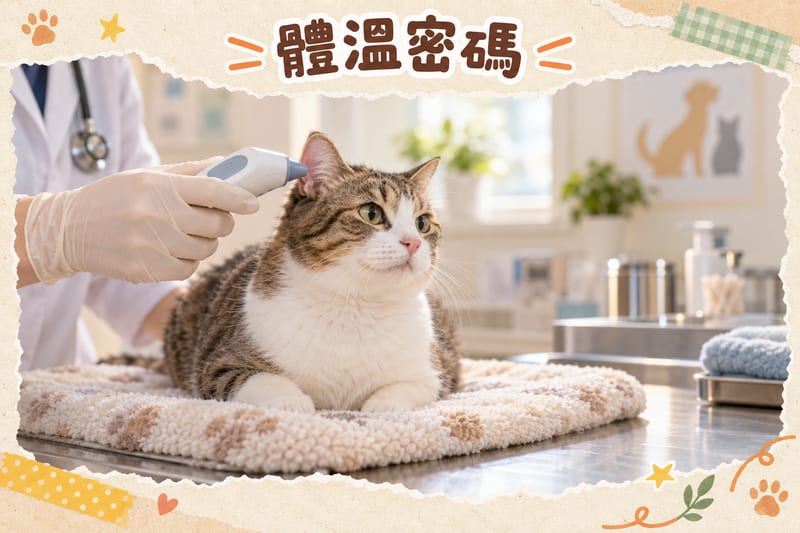
Gently lift the cat's tail and insert the thermometer about 2 to 3 cm into the anus, wait for the electronic beep and read the number. During the process, ask a family member to help hold the cat's upper body, or wrap the cat's body in a large towel ("cat burrito") to reduce struggling and avoid being scratched. Another method is to clamp the thermometer in the groin (armpit); the reading will be slightly lower than rectal temperature and less accurate, so it is for reference only. An animal-specific ear thermometer is the most convenient, but readings will be inaccurate if there is earwax or inflammation in the ear canal.
Step 3: Record the number and observe other symptoms
Besides the temperature, also record whether the cat has a runny nose, diarrhoea, eye discharge, watery eyes or drooling. This information is crucial for the vet to determine the cause—remember to bring the record to the clinic.
4 major danger signs of cat fever: see a vet immediately if these occur
- Temperature above 39.5°C, or fever lasting more than 24 hours
- Open-mouth breathing, rapid breathing, or even a harsh sound
- Complete refusal to eat, persistent vomiting or diarrhoea, drooling, lethargy
- Body shivering, pale gums, cold paws (possible signs of shock)
Causes of cat fever | Not just "catching a chill"
Fever has complex causes, from viral infections to periodontal infections. If your cat has recently had gastrointestinal symptoms such as vomiting or diarrhoea, first distinguish whether it is ordinary gastrointestinal upset or a systemic disease; you can refer to Cat Vomiting Guide | Hairball or Illness? and Cat Hidden Illness Self-Check Guide.
Cat fever is the body's immune response to fight pathogens. Common causes include: viral infections (feline panleukopenia, feline infectious peritonitis FIP, feline leukemia FeLV, feline immunodeficiency virus FIV), pneumonia or bronchitis, pyometra (unneutered female cats), oral ulcers or periodontal infections, severe skin infections, transient reactions after vaccination, and heatstroke. Some cats also have chronic low-grade fever due to immune system diseases or tumors. Therefore, vets usually combine blood tests and imaging to determine the cause, rather than treating with fever medication alone.

How to cool a cat down physically? Doing it wrong can harm your cat
If the cat's temperature is too high, you can do basic cooling first, but the method is very important:
- Correct: Wrap a cooling pack or ice pack in a towel and place it in the armpits and groin; keep the room ventilated and cool, and provide plenty of fresh water.
- Correct: If the cat is shivering, wrap it in a blanket to keep warm before taking it to the vet—shivering indicates imbalanced temperature regulation, so do not cool further.
- Avoid: Do not place ice directly on the skin, and do not wet the cat's body; rapid cooling can cause shock.
- Avoid: Never give human fever medication. Ingredients such as paracetamol and ibuprofen are highly toxic to cats; even a small amount can be fatal.
Remember: cooling only buys time; fever means something is wrong in the body, so you must see a vet as soon as possible.
Key summary
- ✅ Normal cat rectal temperature is 38–39°C, higher than humans; "feeling warm" does not equal fever
- ✅ Above 39.5°C or fever lasting more than 24 hours: see a vet as soon as possible
- ✅ A pet-specific digital thermometer for rectal temperature is most accurate; apply lubricant before measuring, and wrap the cat in a towel to reduce struggling
- ✅ Record "healthy baseline values" for temperature, pulse and respiration while healthy, so you can compare immediately if something is wrong
- ✅ Physical cooling only buys time: wrap ice packs in a towel and place in armpits and groin; do not place ice directly on the skin
- ❌ Never give human fever medication—paracetamol and ibuprofen are highly toxic to cats
- ❌ Do not use a mercury thermometer; if it breaks, mercury is toxic to cats
- ❌ Temperature abnormalities in kittens and senior cats deteriorate faster; do not take chances and wait for them to "get better on their own"
PetChill's Reminder
Cat fever is not a minor issue, especially for kittens and senior cats. Establishing "healthy baseline values" in daily life, keeping the home temperature stable, and vaccinating and deworming on schedule are the best prevention. If your cat has a persistent fever or deteriorating condition, take it to the vet immediately and do not rely on online remedies.
To help your cat build a complete home care routine while healthy (nail clipping, giving medication, checking gums), see Cat Touch Training Guide | 9 Sensitive Areas Desensitisation. How difficult it is to take a temperature largely depends on usual desensitisation training.
To learn more about cat health, please keep following PetChill's latest articles!