
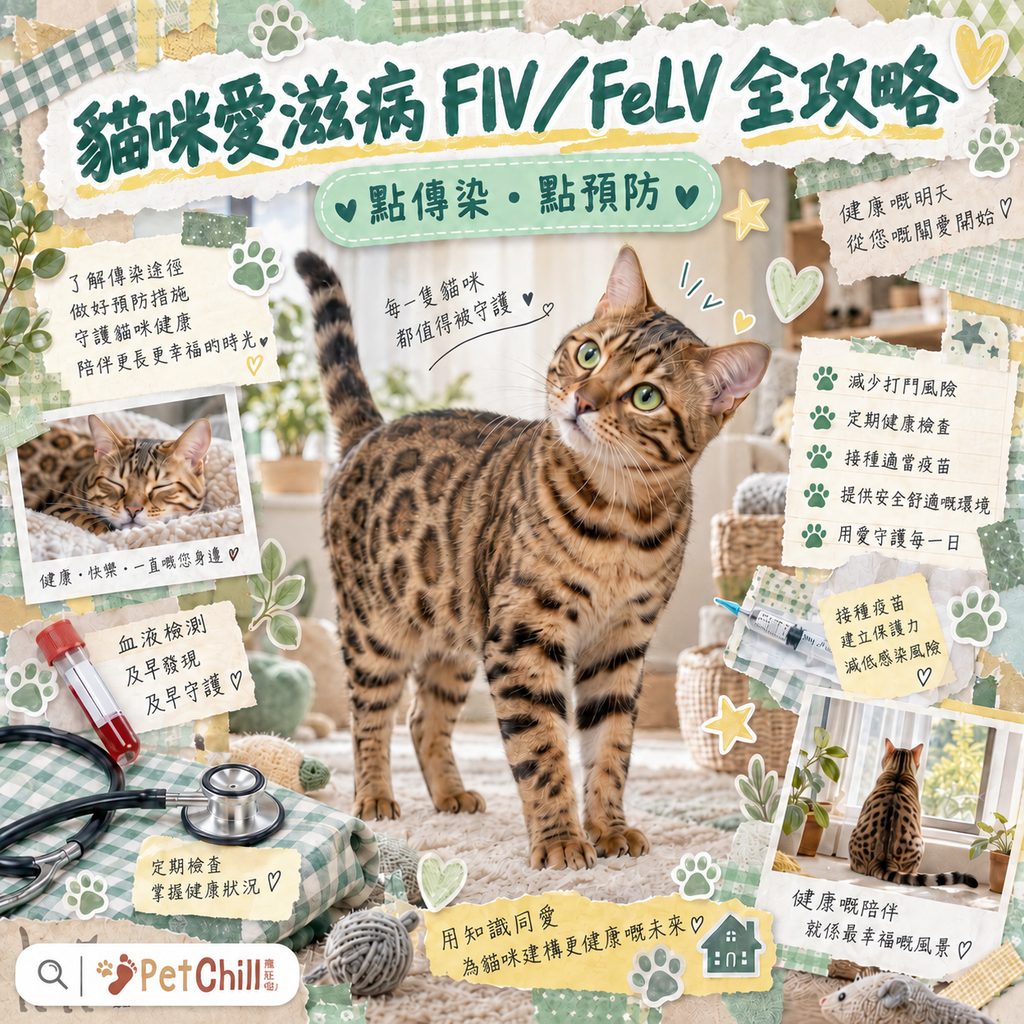
Quick answer: Feline AIDS (FIV) and feline leukemia (FeLV) are two different viruses that only infect felines and cannot spread to humans or dogs. FIV is mainly transmitted through bites (unneutered male cats are at highest risk) and attacks the immune system; FeLV spreads much more easily (saliva, blood, shared food bowls, breast milk) and attacks the blood and lymphatic systems. Neither can be cured, and treatment focuses on managing secondary infections; however, many FIV-positive cats enjoy several years of good quality of life with careful care. The real key is three prevention steps: blood testing, vaccination, and keeping doors closed so cats cannot go outside.
Key points
- FIV = immune system; FeLV = blood and lymph. Dual infection leads to faster onset, more severe symptoms, and quicker death.
- No human-cat transmission—living with an infected cat is safe.
- Biggest risk = bite wounds; unneutered male cats and areas with high stray cat density are highest risk.
- After infection, there can be a symptom-free carrier period lasting years, which is most easily overlooked.
- Warning signs: pale eyelids/nose/lips, recurrent oral inflammation, progressive weight loss, enlarged lymph nodes, prolonged fever.
- Three prevention steps: test (blood test), vaccinate (FeLV is included in combination vaccines), close (indoor living + blood test before new cats enter).
The words "feline AIDS" sound scary, but you may not know: it is completely different from human AIDS, cannot be transmitted between humans and cats, and most infected cats show no symptoms in the early stages. In Hong Kong, indoor cat owners should know about FIV (feline immunodeficiency virus) and FeLV (feline leukemia virus)—because a cat that accidentally slips outside, or has a fight with a stray cat, could bring the virus home. This article compiles veterinary encyclopedia information to explain the differences between the two viruses, transmission routes, symptoms, treatment, and prevention.
What is the difference between FIV and FeLV?
FIV (Feline Immunodeficiency Virus) is a lentivirus that slowly damages a cat's immune system, hence the name "feline AIDS." It is a single-stranded RNA virus that only infects felines, not dogs, and certainly not humans—people working in veterinary and cat care have never tested positive for FIV antibodies.
FeLV (Feline Leukemia Virus) is the number one enemy of a cat's blood and lymphatic systems. Besides causing anemia, it is also a major cause of lymphoma and leukemia in cats. In short: FIV attacks the immune system, FeLV attacks the blood and lymph; the two can infect simultaneously, and cats with dual infection develop disease earlier, have more severe symptoms, and die faster.
| Comparison | FIV (feline AIDS) | FeLV (feline leukemia) |
|---|---|---|
| System attacked | Immune system (lentivirus) | Blood, lymphatic system |
| Main transmission | Bite wounds from fights | Saliva, blood, food bowls, breast milk |
| Highest risk group | Unneutered male cats, stray cats | Any cat with exposure |
| Incubation period | Can be symptom-free for years | Relatively shorter |
| Curable? | No cure; manage complications | No cure; lymphoma mainly treated with chemotherapy |
| Vaccine | Separate vaccine available | Included in 4-in-1 combination vaccine |
How does it spread? Bites are the biggest risk
The main transmission route for both viruses is bites. FIV infection rate is highest in unneutered male cats because they most like to go out and fight over territory; infection rate also increases with age and is proportional to stray cat density.
- FIV: Mainly transmitted through bite wounds from fights; casual contact, sharing food bowls, and mating do not easily transmit it; infected mothers can pass it to kittens via uterus, placenta, or nursing.
- FeLV: Much broader transmission routes—saliva, blood, shared food bowls, and breast milk can all spread it, so even without fighting, sharing a food bowl is a risk.
What happens after infection? Five stages and warning signs
Veterinary research divides FIV infection into five stages: acute phase (4 to 6 weeks after infection: low fever, leukopenia, enlarged lymph nodes), asymptomatic carrier phase (can last up to several years, cat appears completely normal), lymph node enlargement phase, pre-clinical phase (fever, weight loss, anemia), and typical clinical phase (weakness, anemia, recurrent secondary infections, tumors, about 5% show neurological symptoms).
The warning signs most easily overlooked by owners include: pale eyelids, nose, and lips (signs of anemia), recurrent oral inflammation, progressive weight loss, persistently enlarged lymph nodes, prolonged fever, and messy coat. These are similar to the persistent fever and weight loss of feline panleukopenia and other infectious diseases; for differentiation, refer to the 5 major warning signs in that article. FeLV-infected cats may also show loss of appetite and fever, and may later develop lymphoma or leukemia; lymphoma in the chest can cause coughing and difficulty breathing, in the gastrointestinal tract can cause diarrhea and vomiting, and in the central nervous system may cause limb paralysis.
Can it be cured?
Honestly, FIV and FeLV themselves cannot be cured; treatment focuses on managing complications: antibiotics for secondary infections, nutritional support, and regular follow-up to monitor blood counts. Positive cats should be kept indoors to avoid illness or excessive stress. The good news is that many FIV cats can have several years of good quality of life with careful care—the key is not to give up on them. If lymphoma is diagnosed, chemotherapy is the main treatment, with symptomatic management based on tumor location.
How to prevent? Three steps to protect your cat at home
-
Test: Blood tests can prove whether infection is present. Antibodies generally start to appear about 4 weeks after infection, so testing too early may give a false negative; veterinarians usually recommend retesting after an interval.
-
Vaccinate: FeLV is included in the 4-in-1 combination vaccine; when to vaccinate, costs, and side effects are all discussed. For feline AIDS, there is a separate vaccine; consult your veterinarian about vaccination. More vaccines are not necessarily better; setting a schedule with your veterinarian is most reliable.
-
Close: Do not let cats go outside, take anti-escape measures (cat gates, window screens), and test new cats before they enter—these are the three most practical lines of defense (the complete kitten care guide has vaccination and deworming schedules). To help create a safe indoor living space for your cat, PetChill's website offers various anti-escape cat gates, cat trees, dental care products, and nutritional supplements to help you get everything in one go.
PetChill's Reminder
FIV and FeLV are not scary; what is scary is not knowing. One blood test, one suitable vaccine, and one anti-escape cat gate are the best protection you can give your cat.
To learn more about cat health, stay tuned for PetChill's latest article updates!
 Feline Natural full guide →
 Fuji One full guide →

