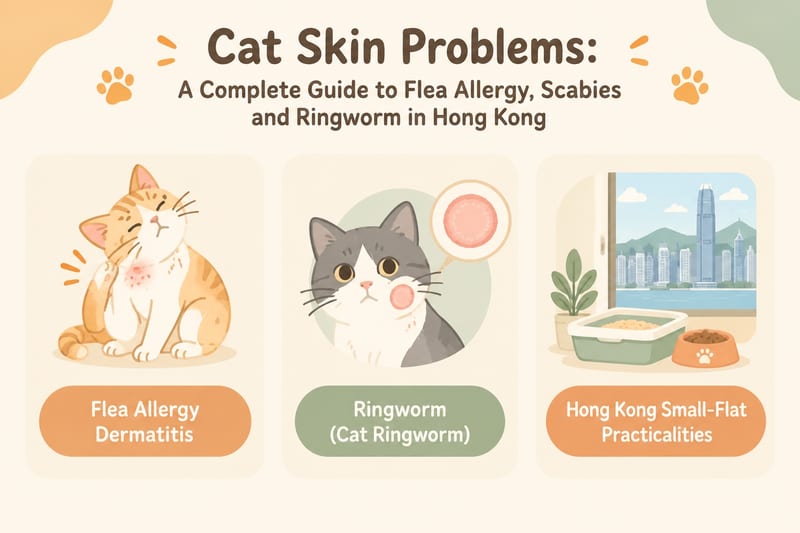
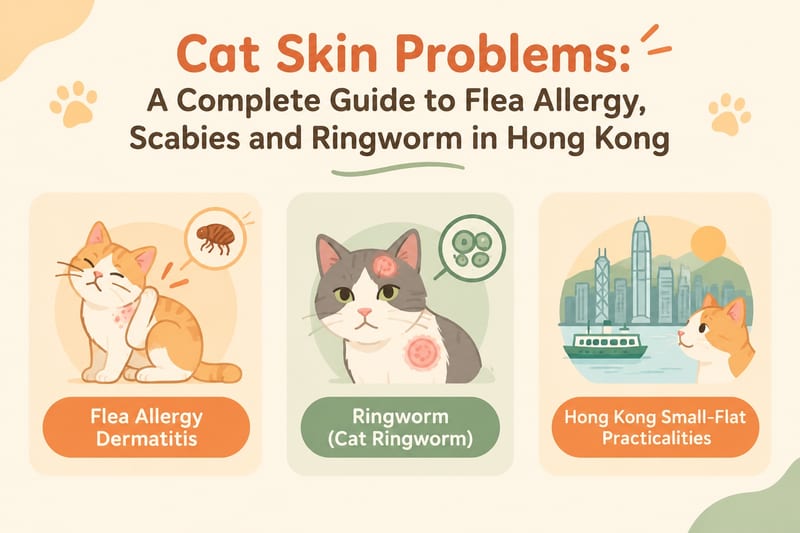
Quick answer: Is your cat scratching non-stop, losing fur or breaking out in rashes? The three most common skin diseases are flea allergy dermatitis, scabies and ringworm. Flea allergy usually appears on the back and near the tail; scabies starts at the ears and spreads; ringworm causes round bald patches. Regular deworming, keeping the environment clean and a balanced diet are the keys to prevention.
Have you noticed your cat scratching and licking itself non-stop lately, or even losing fur and developing rashes? Cat skin diseases are very common health problems, and Hong Kong's humid, muggy climate makes it even easier for bacteria, fungi and parasites to thrive. If not treated promptly, a small problem can worsen into a serious infection. This article takes a deep look at the three most common cat skin diseases and teaches you how to identify symptoms, handle them correctly and do proper daily prevention.
Flea Allergy Dermatitis: The Most Common Skin Problem
Flea allergy dermatitis is one of the most common skin diseases in cats. Not all cats react severely to flea bites — the problem lies in the proteins in flea saliva. Some cats are allergic to these proteins and have a severe reaction once bitten.
Typical symptoms
Rashes appear on the cat's back and near the tail, along with hair loss. Because it is very itchy, the cat will frequently bite and lick the affected area, sometimes scratching until the skin bleeds. If you notice repeated rashes and hair loss on your cat's back near the tail, flea allergy dermatitis is very likely.
Treatment and prevention
Veterinarians usually prescribe steroids or anti-allergy medication to relieve symptoms. But the most important thing is to eliminate fleas completely — not just on the cat, but also by cleaning the indoor environment and destroying hidden flea eggs, larvae and pupae. If you have more than one cat, every cat must be treated preventively together, otherwise cross-infection will occur. To learn more about deworming methods, see the complete cat deworming guide.
Scabies: Intensely Itchy Dermatitis Caused by Mites
Scabies is a skin disease caused by the mite Notoedres Cati living in the cat's skin. It is highly contagious and spreads through direct contact.
Typical symptoms
Cats infected with scabies become extremely itchy, sometimes scratching until the skin bleeds. The first symptoms usually start at the edges of the ears, with rashes and hair loss, then spread to the head, face and limbs. The skin becomes thickened from long-term inflammation, taking on a wrinkled appearance with dandruff. If you notice your cat scratching the edges of its ears especially intensely and shaking its head frequently, pay special attention. To learn how to judge abnormalities in your cat's body, see hidden signs of illness in cats.
Treatment and prevention
Veterinarians use antiparasitic medication to treat scabies. At the same time, the cat bed, bedding and towels the cat uses regularly must be thoroughly disinfected, and the indoor environment must be cleaned comprehensively. If there are multiple cats or other pets at home, all must be treated together to avoid repeated infection. Before a new cat enters the home, it must be isolated and observed to confirm there are no skin problems before introducing it to the group.
Ringworm (Cat Ringworm): A Fungal Skin Disease
Ringworm is a skin disease caused by fungal (mould) infection. Kittens and cats with weakened immunity are especially susceptible. This skin disease can also spread to humans, so extra care is needed when handling it.
Typical symptoms
Roundish patches appear on the cat's face, ears and limbs, along with hair loss, dandruff and scabs. Unlike the previous two skin diseases, the itching caused by ringworm is usually not very intense, so cat owners often overlook it. If you find round bald patches on your cat with dandruff and scabs at the edges, take it to the veterinarian for a check-up as soon as possible.
Treatment and prevention
Veterinarians prescribe antifungal medication, or use antifungal medicated bath solutions and ointments. During treatment, the fur around the affected area needs to be shaved clean, which makes applying medication easier and prevents the infection from spreading. The cat's bedding and daily items should be washed and disinfected frequently. Ringworm treatment usually takes 4 to 6 weeks, and medication must be continued throughout — do not stop on your own just because symptoms improve. During treatment, you can support medicated bathing with the correct bathing method.
Quick Comparison of the 3 Major Skin Diseases
| Item | Flea Allergy Dermatitis | Scabies | Ringworm (Cat Ringworm) |
|---|---|---|---|
| Cause | Allergy to flea saliva | Mite infestation | Fungal infection |
| Common locations | Back, near the tail | Ear edges → head → limbs | Face, ears, limbs |
| Main symptoms | Rashes, hair loss, intense itching | Extreme itching, thickened skin, dandruff | Round bald patches, scabs |
| Itch level | ★★★★ Severe | ★★★★★ Extreme | ★★ Mild |
| Contagiousness | Spreads between cats | Very high, spreads by direct contact | Can spread to humans |
| Treatment course | Deworming + environmental cleaning | Antiparasitic medication + thorough disinfection | 4-6 weeks antifungal treatment |
5 Daily Rules to Prevent Skin Disease
Prevention is always better than treatment. The following 5 daily habits can greatly reduce the risk of your cat developing skin disease:
1. Regular deworming
Whether your cat is kept indoors or goes outside, use deworming medication regularly. Parasites such as fleas and mites can be brought indoors on human clothing and shoes, so do not skip deworming just because your cat does not go out. See the complete cat deworming guide for details.
2. Keep the environment clean
Wash cat beds and bedding weekly, and vacuum and disinfect the home regularly. Hong Kong's humid weather is especially suitable for fungal growth — consider using a dehumidifier to keep the indoor environment dry.
3. Balanced diet
A nutritionally balanced diet helps strengthen your cat's immunity and reduces the occurrence of skin problems. Foods containing Omega-3 and Omega-6 fatty acids are especially beneficial for skin health.
4. Regular brushing
Brushing daily not only reduces shed fur but also helps you spot skin abnormalities early. While brushing, watch for rashes, hair loss, dandruff or scabs. Learn more brushing techniques to catch skin problems early.
5. Isolate new cats
If you plan to bring in a new cat, isolate and observe it for at least 2 weeks first, and only introduce it to the group after confirming there is no skin disease. This step prevents spreading skin disease to your existing cats.