

Quick answer: If a male cat is seen squatting in the litter box for a long time with no urine, or no urine clumps at all, it's a life-threatening emergency—do not wait until morning—complete urethral obstruction for over 24–48 hours can cause death from acute uremia. 5 major warning signs: frequent litter box visits with no urine, smaller and more numerous urine clumps, blood in urine, crying and straining while urinating, frequent licking of genitals. Correct action: take to vet immediately (palpation, blood test, urine test, imaging); do not press hard on the bladder, do not self-medicate. Prevention focuses on more water intake, more wet food, reducing stress, and keeping the litter box clean.
"My cat ran to the litter box a dozen times tonight and squatted for ages but no urine." If you've heard this, don't dismiss it as sulking. Feline Lower Urinary Tract Disease (FLUTD) is one of the most common feline emergencies in Hong Kong veterinary clinics, and male cats are most at risk. Once the urethra is completely blocked by stones, crystals, or inflamed tissue, the cat can die from acute uremia within 24 to 48 hours. Here's a clear breakdown of warning signs, causes, first aid, and prevention.
What is FLUTD? Why are male cats at higher risk?
FLUTD is a general term for diseases from the bladder to the urethra, mainly including:
- Cystitis: Often caused by bacterial infection in the bladder; cats will have frequent and urgent urination.
- Bladder stones: Stones scratch the bladder and urethral lining, causing inflammation and bleeding.
- Urethral obstruction: Inflamed tissue and crystals form urethral plugs; complete obstruction for more than 1 to 2 days can be fatal due to acute uremia.
- Idiopathic cystitis: About 50% to 60% of cases are this type; cause unknown but highly stress-related, and neutered cats seem to be at higher risk.
Male cats have a narrower, longer urethra than females, so any plug or small stone can easily block it; female cats have a short, wide urethra, so small stones pass more easily, but they are more prone to bacterial cystitis.
5 major warning signs: not constipation, but a urinary emergency
Many cat owners mistake difficulty urinating for constipation. If any of the following warning signs appear, seek veterinary advice promptly:
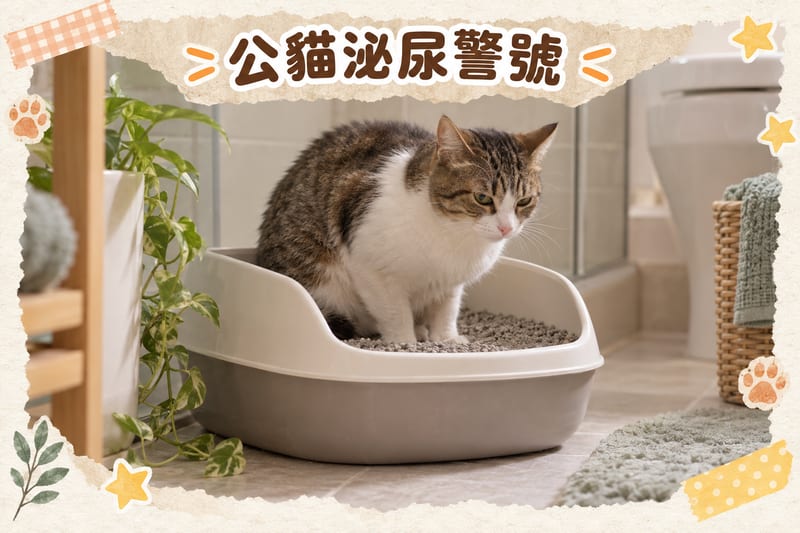
- Running to the litter box a dozen times a day, squatting for a long time but no urine, or only a few drops.
- Urine clumps become smaller and more numerous, total urine volume noticeably decreased.
- Blood in urine: blood streaks in clumps, or pink/red urine.
- Crying and straining while urinating; some cats may even vomit after excessive straining.
- Frequent licking of genitals, not allowing belly touch, urinating outside the litter box (painful urination makes them averse to the box).
⚠️ If a male cat has no urine at all, along with lethargy, refusal to eat, or even low body temperature, it's a life-or-death situation—seek veterinary care immediately.
At a glance: normal elimination vs urinary emergency vs constipation
| Observation | Normal | FLUTD warning signs | Constipation (for comparison) |
|---|---|---|---|
| Daily urine clumps | 2–4 clumps | Runs to box a dozen times, no clumps or only drops | Normal urine clumps but no stool |
| Litter box behavior | Completes calmly | Squats long, strains, cries, vomits | Strains, dry hard small stool |
| Urine clump state | Normal size | Blood streaks/pink/very small | Normal |
| Behavior | Normal | Frequent genital licking, urinates outside box | Bloated abdomen, refuses food |
| Action | — | Take to vet immediately (male cat no urine = emergency) | See vet if no stool for over 2 days |
Why does it happen? 5 major causes
- Insufficient water intake: The most critical factor; less water concentrates urine, making crystals more likely to form.
- Long-term dry food as staple: Dry food has low water content; food with high ash (minerals) increases stone risk.
- Urine pH: Acidic tends to form calcium oxalate stones, alkaline tends to form struvite stones.
- Stress: Moving, new family members, litter box location or litter texture not to their liking can trigger idiopathic cystitis.
- Season and weight: Higher incidence in winter because cold weather makes cats less active and less willing to drink; indoor obesity is also a contributing factor.
Golden 24 hours: what to do and what not to do
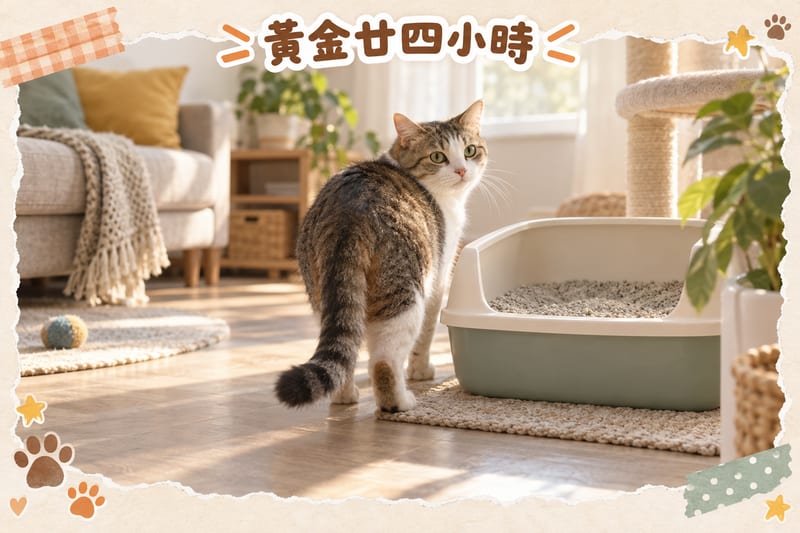
✅ Do: Take to vet immediately. The vet will palpate the bladder, do blood tests (BUN and creatinine may be elevated), urine tests, X-rays or ultrasound to assess kidney damage.
❌ Don't: Do not press hard on the bladder (a distended bladder can rupture); do not wait until morning; do not self-administer human medications or diuretics.
For treatment, non-obstructive cases often use anti-inflammatory drugs or antispasmodics; obstructive cases require early catheter placement to relieve obstruction and fluid therapy. For recurrent obstruction, the vet may recommend urethrostomy. ⚠️ The above is for reference only and cannot replace veterinary diagnosis.
6 daily prevention tips
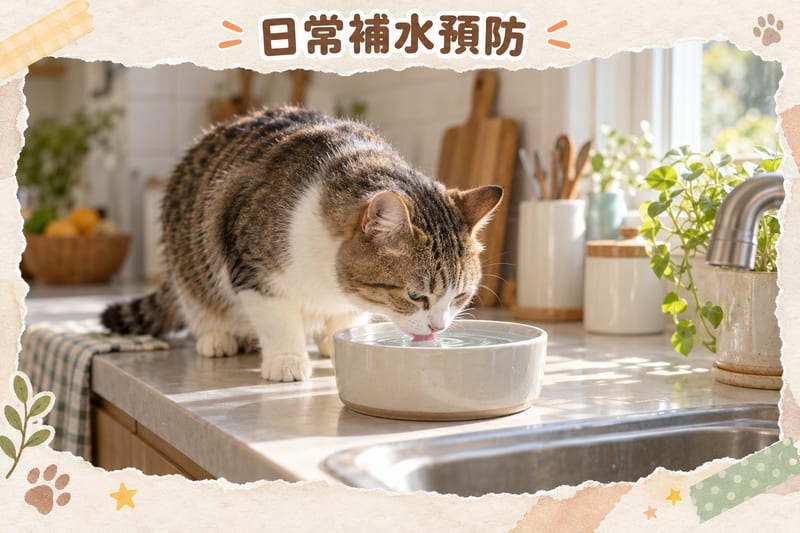
- Increase water intake: Place multiple water bowls, use a flowing water fountain, offer warm water in winter to encourage drinking.
For specific methods, see What to do if your cat won't drink? 7 vet tips to increase water intake. 2. Adjust diet: Follow vet advice to use prescription food or increase wet food proportion to reduce stone recurrence. 3. Reduce high-mineral treats: Dried small fish and bonito flakes are high in minerals; long-term feeding can easily cause urinary stones. 4. Keep the litter box clean: Clean daily, place in a quiet corner; box size, depth, and litter material all affect your cat's willingness to use it.
Litter texture and location affect your cat's willingness to urinate; for choosing the right litter, see Complete cat litter guide: paper, wood, tofu, clay comparison. 5. Reduce stress and increase activity: Keep indoor warmth in winter; for multi-cat households, the recommended number of litter boxes is 'number of cats plus one'. 6. Regular check-ups: Annual bladder ultrasound and urine tests; more frequent for senior cats or those with a history.
Key summary
- ✅ Male cats have a narrow, long urethra; complete obstruction for 24–48 hours can be fatal—'squatting for a long time with no urine' is an emergency, not sulking
- ✅ 5 major warning signs: frequent litter box visits with no urine, smaller and more numerous clumps, blood in urine, crying while urinating, frequent genital licking
- ✅ Take to vet within the golden 24 hours: palpation, blood tests (BUN/creatinine), urine tests, X-ray or ultrasound
- ✅ Prevention relies on more water, wet food proportion, stress reduction, litter box cleanliness, and the 'number of cats + 1' litter box principle
- ✅ When cleaning the litter box daily, glance at the number and size of urine clumps—the cheapest health monitoring
- ❌ Do not press hard on a distended bladder—it can rupture
- ❌ Do not self-administer human medications or diuretics, do not 'wait until tomorrow morning'
- ❌ Do not mistake difficulty urinating for constipation—if unsure, treat as a urinary emergency
PetChill's Reminder
Cats have a very high pain tolerance; by the time you notice something is wrong, it's often already an emergency. Starting today, glance at the number and size of urine clumps in the litter box daily—it's the cheapest and most effective health monitoring. Providing plenty of water and a suitable litter box is the most practical step to prevent urinary problems.
References: 'Cat Family Medicine Encyclopedia' (Lower urinary tract diseases, bladder stones and urethral stones chapters), 'Feline Medicine' (Urinary system syndrome, urolithiasis chapters), 'My First Cat Care Book' (Urinary system diseases section), 'Complete Cat Care' (Urine sand and bladder stones section).
If your cat shows subtle signs like decreased appetite or lethargy, you can refer to Cat hidden illness self-check guide to spot problems early.
To learn more about cat health, stay tuned to PetChill's latest articles.
Related reading
 Feline Natural full guide →