
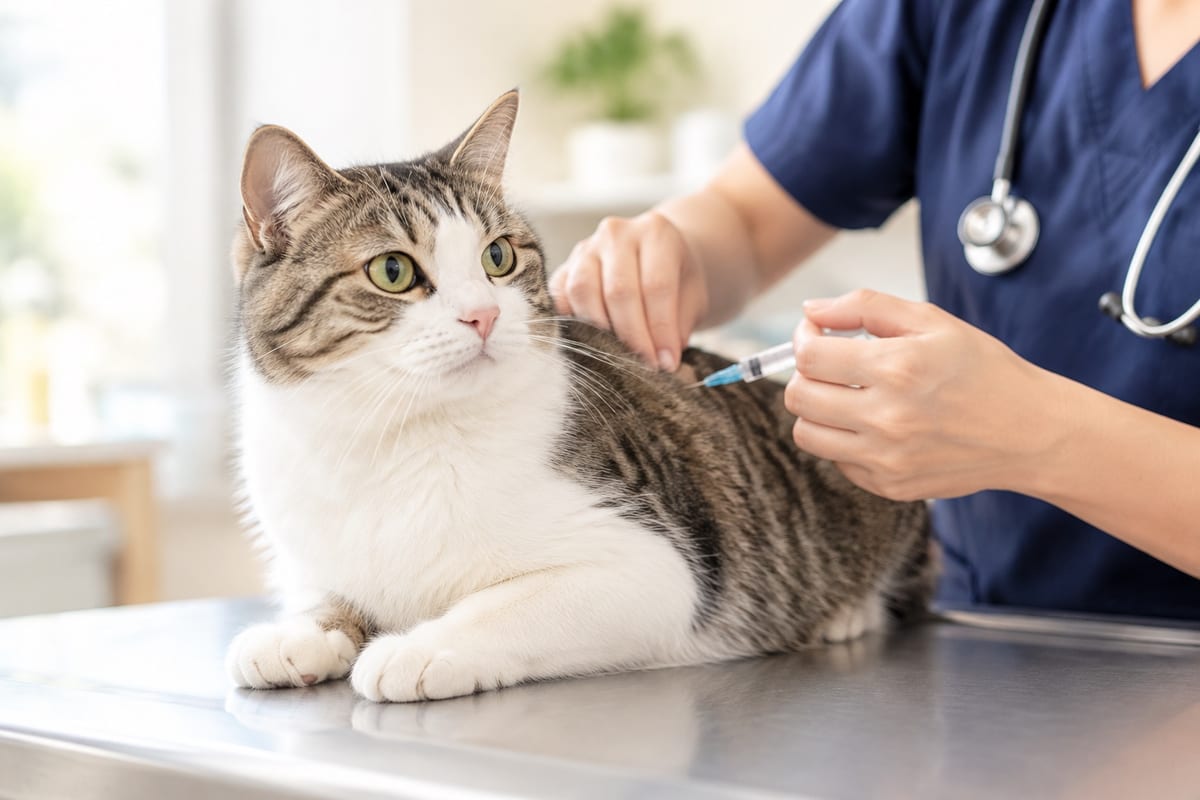

Quick answer: The core vaccine for cats is the "FVRCP" vaccine (protecting against feline panleukopenia, feline rhinotracheitis, and feline calicivirus). Kittens start at 8 weeks of age, receive one dose every 3–4 weeks for a total of 3 doses; after 1 year, boosters are given every 1–3 years depending on the vaccine type. Even strictly indoor cats are recommended to be vaccinated—viruses can be brought into the home on owners' clothing, shoe soles, and by visitors. A health check before vaccination is advised, and staying at the clinic for 30 minutes after vaccination is recommended.
Did you know? According to an analysis of medical records of over 2.2 million cats by Banfield Pet Hospital in the US, cats that receive comprehensive preventive care (including vaccination, neutering, and regular check-ups) have a significantly longer average lifespan than those without. Vaccination is the most basic and cost-effective part of preventive medicine—a disease that can be prevented with one shot may cost thousands of dollars and weeks of hospitalisation to treat. PetChill has put together a complete guide to cat vaccinations, from the kitten schedule to adult boosters, all in one place.
What is the "FVRCP" vaccine? Which three diseases does it prevent?
The FVRCP vaccine (also known as the feline viral rhinotracheitis, calicivirus, and panleukopenia vaccine) is recognised worldwide by veterinarians as a core vaccine, protecting against three highly contagious and potentially fatal diseases with one shot:
| Disease | Pathogen | Main symptoms | Severity |
|---|---|---|---|
| Feline panleukopenia (feline distemper) | Feline parvovirus (FPV) | Severe vomiting, bloody diarrhoea, dehydration, rapid drop in white blood cells | Mortality in kittens can reach 90% |
| Feline rhinotracheitis (feline herpesvirus) | Feline herpesvirus (FHV-1) | Sneezing, eye discharge, fever, loss of appetite | Virus remains latent for life, reactivates under stress |
| Feline calicivirus infection | Feline calicivirus (FCV) | Oral ulcers, drooling, pneumonia | Highly virulent strains can be fatal |
What these three diseases have in common: extremely contagious, long survival in the environment (the panleukopenia virus can survive over a year in the environment), and no specific cure—only supportive treatment. Therefore, prevention is always better than treatment.
FVRCP vs 5-in-1: What's the difference?
There are also "5-in-1" (or 4-in-1 plus chlamydia) vaccines on the market, which cover additionally:
- Feline chlamydia (Chlamydia): causes conjunctivitis and eye discharge
- Feline leukaemia virus (FeLV): transmitted via saliva, can cause anaemia and lymphoma
Which one suits your cat? A simple rule:
- Strictly indoor, single-cat household → FVRCP is usually sufficient
- Outdoor access, multi-cat household, cats of unknown origin → consider the 5-in-1, and test for FeLV first
Discuss with your veterinarian which one to choose, based on your cat's lifestyle and health status.
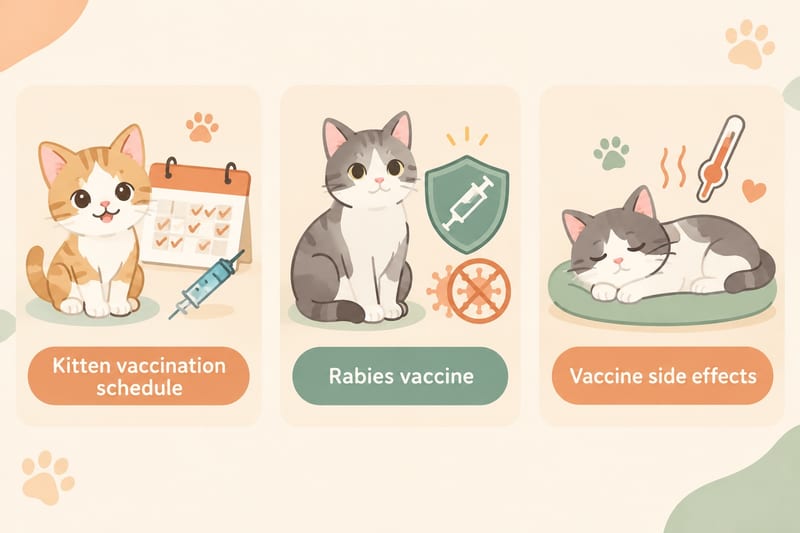
Kitten vaccination schedule
| Age | Vaccination | Notes |
|---|---|---|
| 8 weeks | First FVRCP dose | Maternal antibodies begin to wane; this is the starting point |
| 12 weeks | Second FVRCP dose | 3–4 weeks after the first dose |
| 16 weeks | Third FVRCP dose | Completes the primary series |
| 12 months (1 year) | First booster | Consolidates immunity |
Why 3 doses? Because kittens have maternal antibodies that neutralise the vaccine. The timing of maternal antibody decline varies between cats, so a "multiple-dose strategy" ensures at least one dose takes effect after antibodies have waned—this is the standard recommendation in the World Small Animal Veterinary Association (WSAVA) vaccination guidelines.
⚠️ Important: Before completing all doses, kittens do not have full immunity; avoid contact with cats of unknown origin and sharing items.
How often do adult cats need boosters?
This is the question most cat owners ask. According to WSAVA vaccination guidelines:
- Core vaccines (FVRCP): After primary immunisation, immunity lasts at least 3 years; adult cats can be boosted every 3 years (depending on the vaccine brand's label)
- Non-core vaccines (e.g., FeLV, chlamydia): Immunity is shorter, usually boosted annually, and whether to continue should be assessed based on lifestyle risk
- Rabies vaccine: According to local regulations (see next section)
Actual frequency depends on the vaccine brand used and your veterinarian's advice—some vaccine labels state 1 year, others 3 years; do not decide on your own.
Why do indoor cats need vaccinations too?
"My cat never goes out, why vaccinate?" This is the most common misconception. The truth is:
- Viruses come in with people: The panleukopenia virus is extremely resilient and can stick to your shoe soles, trouser hems, and handbags, bringing it in from outside
- Visitor transmission: Friends who have contacted other cats may carry pathogens on their clothing
- Risk of accidental escape: A door or window left open and the cat may dash out; an unvaccinated cat exposed to a sick cat can suffer severe consequences
- Boarding/grooming settings: Cat hotels and veterinary clinics are high-risk environments where many cats gather
Statistically, panleukopenia has a very high mortality rate in unvaccinated kittens, and the virus can survive in the environment for over a year—indoors does not mean sterile.
Rabies vaccine: Do Hong Kong cat owners need it?
Many cat owners ask: "Does my cat really need a rabies vaccine?"
- Current situation in Hong Kong: Hong Kong is rabies-free; legally, rabies vaccination is mainly targeted at dogs; there is no mandatory requirement for cats
- However, consider it in these situations: If you plan to take your cat abroad/relocate (most countries require proof of rabies vaccination), if your cat goes outdoors, or if your veterinarian recommends it based on individual circumstances
If you have plans to take your cat abroad, consult your veterinarian at least 1 month in advance—many countries require 21 days after vaccination before entry.
Vaccine side effects: normal reactions vs warning signs
Most cats have no obvious reaction after vaccination; a few may experience mild discomfort, which is normal immune system activity:
Normal reactions (usually resolve within 24–48 hours):
- Mild fever, lower energy, drowsiness
- Temporary decrease in appetite
- Slight swelling and tenderness at the injection site
Warning signs (contact your veterinarian immediately if any occur):
- Persistent vomiting or diarrhoea
- Swelling of the face or around the eyes, difficulty breathing (allergic reaction)
- Severe lethargy, complete refusal to eat for more than 24 hours
- A lump at the injection site lasting more than 2–3 weeks or growing larger
For safety, it is recommended to stay at the clinic for 30 minutes after vaccination to confirm no acute allergic reaction before leaving; and to schedule vaccination in the morning so that if a reaction occurs, a veterinarian is available during the day.
Precautions before vaccination
- Can my cat eat before vaccination? Yes, normal feeding is fine; no need to fast. But if your cat is prone to car sickness or stress, a small meal 2–3 hours before vaccination can reduce the risk of vomiting
- Health check first: Vaccines are only suitable for healthy cats. Cats with fever, diarrhoea, active skin disease, or recent surgery should be vaccinated after recovery
- Observe a new cat at home for 7–14 days: Let the cat adjust to the environment and confirm health before vaccination
- Do not deworm and vaccinate on the same day: It is recommended to separate them by at least a week
- Bring your vaccination record: Record previous vaccination dates and vaccine brands to help your veterinarian plan boosters
Cat vaccination cost reference (2026 Hong Kong market)
The following are market reference ranges; actual fees vary by clinic:
| Item | Reference cost range (per dose) |
|---|---|
| FVRCP vaccine | HK$200–500 |
| 5-in-1 / FeLV vaccine | HK$300–600 |
| Rabies vaccine | HK$200–400 |
| First vaccination package (including consultation) | HK$500–1,000 |
Tip: Some clinics offer kitten vaccination packages and annual health check plans, which on average work out cheaper than paying per dose. Ask the clinic for a breakdown of fees before vaccination.
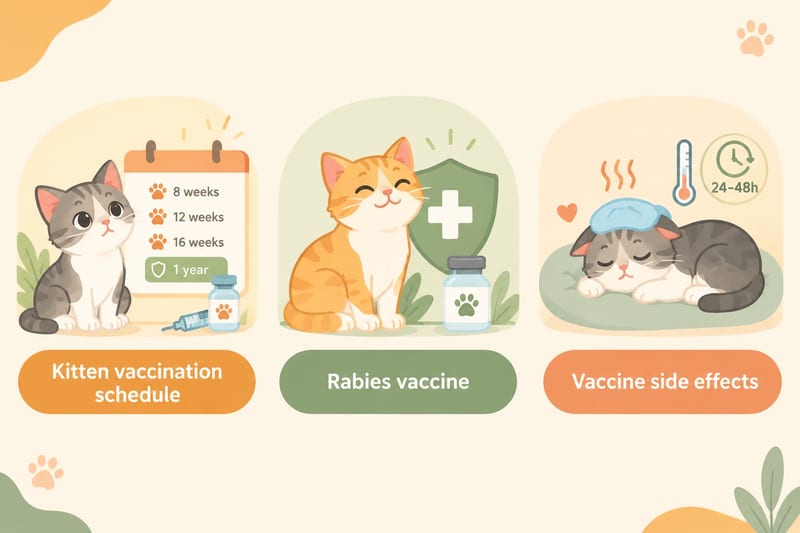
Key takeaways
- ✅ FVRCP is a core vaccine that prevents three fatal diseases: feline panleukopenia, feline rhinotracheitis, and feline calicivirus
- ✅ Kittens start at 8 weeks, one dose every 3–4 weeks, 3 doses in total, with a booster at 1 year
- ✅ Adult cats need core vaccine boosters about every 1–3 years (according to vaccine brand and veterinarian's advice)
- ✅ Indoor cats need vaccination too—viruses enter the home via shoe soles, clothing, and visitors
- ✅ Stay at the clinic for 30 minutes after vaccination; morning appointments are recommended
- ❌ Do not rush to vaccinate a sick cat or a newly arrived cat
Frequently asked questions (FAQ)
Q: Do indoor cats really need vaccinations? A: Yes. Viruses such as feline panleukopenia can be brought into the home on owners' shoe soles, clothing, and by visitors, and the panleukopenia virus can survive in the environment for over a year. The World Small Animal Veterinary Association (WSAVA) lists the FVRCP vaccine as a core vaccine for all cats, including strictly indoor cats.
Q: When should the FVRCP vaccine be given, and how many doses are needed? A: Kittens start their first dose at 8 weeks of age, then receive a dose every 3–4 weeks for a total of 3 doses (at 8, 12, and 16 weeks), with the first booster at 1 year of age.
Q: How often do cats need vaccinations? A: After completing the kitten primary course, core vaccines (FVRCP) are generally boosted every 1–3 years in adult cats, depending on the vaccine brand; non-core vaccines (such as FeLV) are usually given annually. Always follow your veterinarian's advice.
Q: What should I do if my cat has a fever or seems lethargic after vaccination? A: Mild fever, drowsiness, and reduced appetite are normal immune responses and usually resolve within 24–48 hours. If your cat vomits, has facial swelling, difficulty breathing, or completely refuses food for more than a day, seek veterinary care immediately.
Q: Can my cat eat before vaccination? A: Yes, there is no need to fast; normal feeding is fine. For cats prone to stress or car sickness, a small meal 2–3 hours before the appointment can help reduce the risk of vomiting.
Q: Does my cat really need a rabies vaccine? A: Hong Kong is rabies-free, and rabies vaccination is not mandatory for cats. However, if you plan to take your cat abroad, relocate, or if your cat goes outdoors, vaccination is recommended—most countries require proof of rabies vaccination for entry.
Q: How much does cat vaccination cost? A: In the Hong Kong market, FVRCP is about HK$200–500 per dose, and the 5-in-1 is about HK$300–600; actual fees vary by clinic. Some clinics offer kitten packages that are more cost-effective on average.
Q: Is there anything special to note after vaccination? A: Avoid bathing, changing the environment, or introducing a new cat within a week after vaccination, to allow the immune system to build protection steadily. If a lump at the injection site persists for more than 2–3 weeks, have it checked at a follow-up visit.
References: World Small Animal Veterinary Association (WSAVA) vaccination guidelines, Cornell University College of Veterinary Medicine cat vaccine information, Banfield Pet Hospital pet health data. This article is for reference only and cannot replace professional veterinary diagnosis. For your cat's specific vaccination plan, please consult your attending veterinarian.
PetChill's Reminder: Vaccination is the most basic step in protecting your cat's health! Want to stock up on daily care supplies for your cat? Check out PetChill HK now!
 Feline Natural full guide →
 Wellness Core full guide →