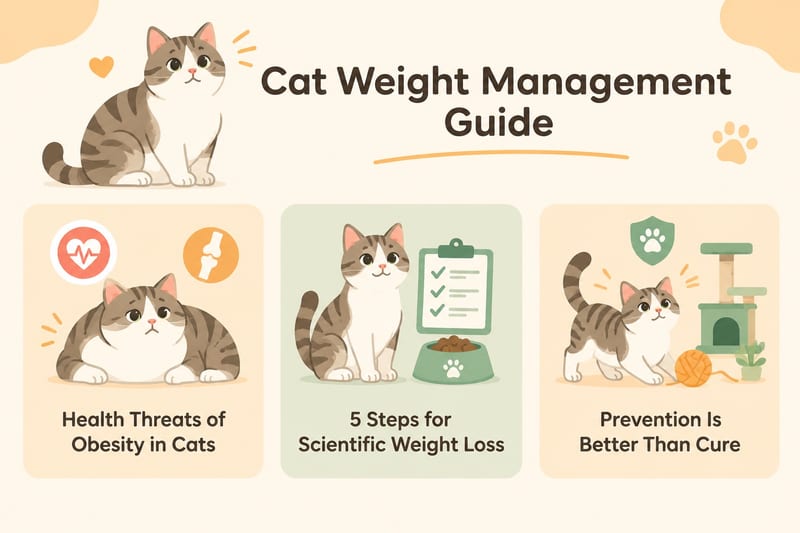
Quick answer: A cat's ideal weight varies by breed (3-8 kg), with a Body Condition Score (BCS) of 4-5 being the standard. You can tell if a cat is overweight by feeling the ribs and looking at the waistline. Feeding at set times and amounts daily, along with 15-20 minutes of interactive play, can effectively manage weight.
Have you ever picked up your cat and thought, "Wow, you've gotten heavy"? According to veterinary research, over 40% of domestic cats worldwide are overweight or obese, and the situation is even worse for indoor cats in Hong Kong. Cats can't tell you they're too fat, but obesity significantly increases the risk of diabetes, arthritis, fatty liver, and other diseases. Today, we'll teach you the simplest methods to help your cat maintain a healthy body condition!
How to Tell If Your Cat Is Overweight
You don't need precision instruments—just your hands and eyes for a preliminary assessment. Veterinarians commonly use the Body Condition Score (BCS) to evaluate cat weight, on a scale of 1-9, with 4-5 being ideal.
Rib Check
Gently press both hands along the sides of your cat's ribcage. If you can easily feel the ribs with a thin layer of fat covering them, the body condition is normal. If you can't feel the ribs at all, the fat layer is too thick and the cat is overweight.
Waistline Check
Look down at your cat from above. A cat with normal body condition should have a visible waist indentation. If the body is barrel-shaped with no waistline, that's a sign of obesity. From the side, the abdomen should be slightly tucked up, not hanging down as a "belly."
Ideal Weight Reference Table for Common Breeds
| Breed | Ideal Weight (kg) | Characteristics |
|---|---|---|
| British Shorthair | 4.0 - 6.0 | Sturdy build, prone to obesity |
| Siamese | 3.0 - 4.5 | Slender build, high activity level |
| Ragdoll | 4.5 - 8.0 | Large breed, matures slowly |
| American Shorthair | 3.5 - 5.5 | Strong constitution, medium build |
| Scottish Fold | 3.0 - 5.5 | Fragile joints, weight control especially important |
| Bengal | 3.5 - 5.5 | Very active, less prone to obesity |
| Persian | 3.5 - 5.5 | Flat-faced breed, fluffy coat can hide obesity |
| Hong Kong domestic cat (mixed breed) | 3.5 - 5.5 | Varied builds, assess by BCS |
Note: Male cats generally weigh 0.5-1 kg more than females. The above figures are for reference only; actual assessment should be based on a veterinarian's BCS evaluation. For other health indicators, see the cat hydration guide for daily water intake.
How Many Calories Does a Cat Need Daily?
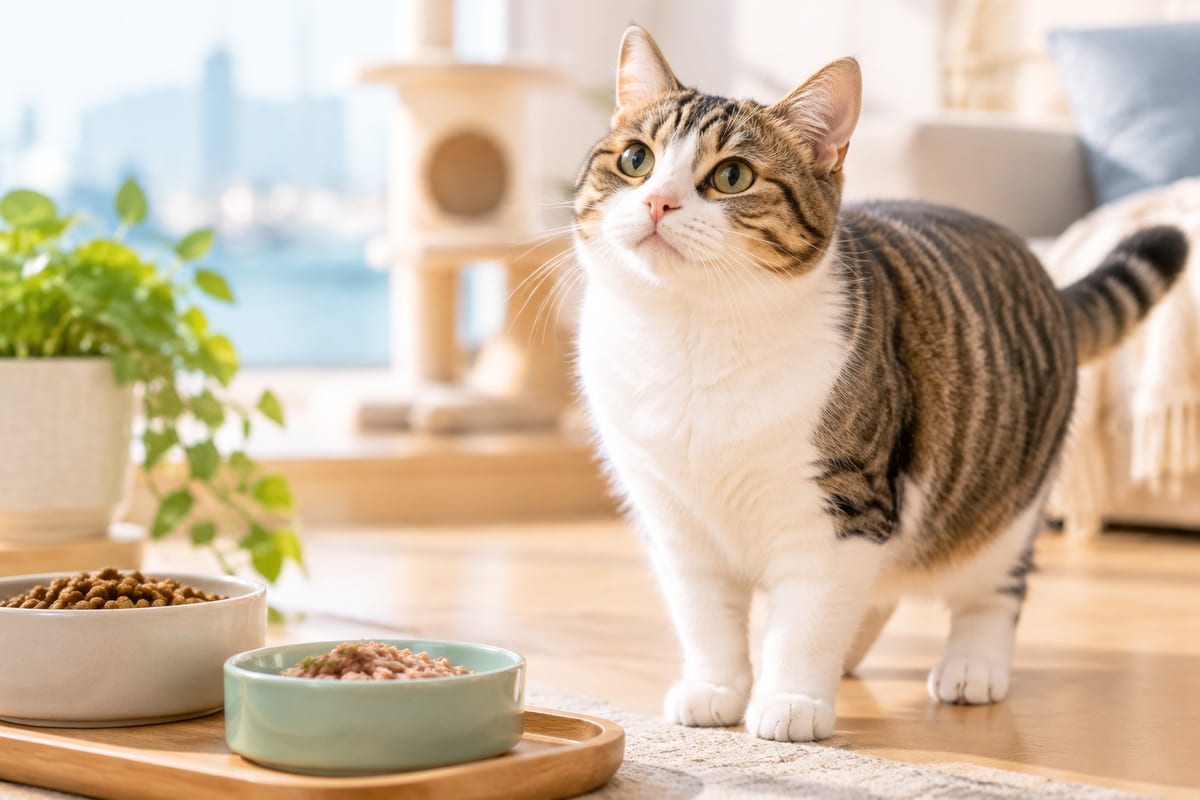
A 4 kg adult cat needs about 250 kcal (approximately 1100 kJ) per day. This number varies with activity level, age, and neuter status. After neutering, a cat's metabolism drops by 20-30%; if food intake isn't reduced, weight gain can happen quickly.
Feeding Amount Reference Table
Daily feeding amount for adult cats (grams):
- 3 kg body weight: about 45 g dry food
- 4 kg body weight: about 60 g dry food
- 5 kg body weight: about 70 g dry food
- 6 kg body weight: about 80 g dry food
These figures are for reference only; actual feeding amounts should be adjusted according to the cat food packaging recommendations and veterinary guidance. Wet food (canned) has high water content, so the gram amount fed will be correspondingly higher.
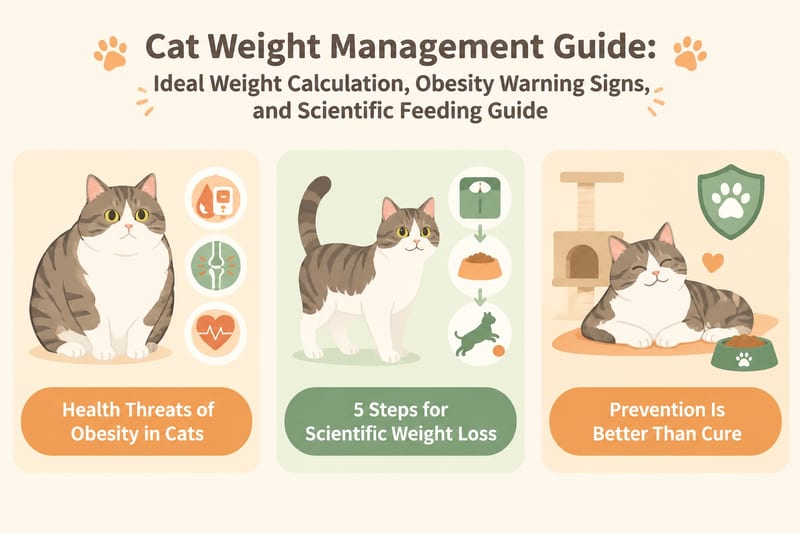
Health Threats of Obesity in Cats
Being overweight isn't just "cute"—obesity can cause a range of serious health problems:
Diabetes: Obese cats are 4 times more likely to develop diabetes than normal-weight cats. Insulin resistance prevents the body from properly regulating blood sugar, and daily insulin injections may eventually be needed.
Arthritis: Excess weight accelerates joint wear, especially in the hind legs and spine. Cats may reduce activity due to pain, creating a vicious cycle: "the more pain, the less they move; the less they move, the fatter they get."
Fatty liver (hepatic lipidosis): If an obese cat suddenly stops eating (e.g., due to illness-related anorexia), the liver rapidly breaks down fat, leading to fatty liver, which can be fatal. If you notice your cat suddenly not eating or becoming lethargic, refer to the hidden signs of illness in cats to determine if emergency care is needed.
Urinary system problems: Obese cats are more prone to lower urinary tract diseases, including urethral obstruction, which is an emergency requiring immediate medical attention.
5 Steps for Scientific Weight Loss
If your cat is confirmed overweight, don't suddenly cut food drastically—that can trigger fatty liver. The correct approach is gradual:
Step 1: Calculate target calories. Consult your veterinarian to calculate daily calorie needs based on your cat's ideal weight, generally reducing current intake by 10-20%.
Step 2: Feed at set times and amounts. Stop free-feeding (leaving food out all day) and switch to 2-3 scheduled meals per day. Use a kitchen scale to measure portions accurately.
Step 3: Increase interactive play. Spend 15-20 minutes daily playing with your cat using toys like wand toys and laser pointers. Breeds like Bengals and Siamese especially need more activity. Also ensure your cat gets enough rest; understanding the secrets of cat sleep can help you create a reasonable activity and rest schedule.
Step 4: Reduce treats. Treats should not exceed 10% of daily calorie intake. Replace high-calorie treats with freeze-dried chicken pieces, or use part of the regular meal as training rewards.
Step 5: Monitor regularly. Weigh your cat every 2 weeks and record changes. Healthy weight loss is 1-2% of body weight per week—don't rush.
Prevention Is Better Than Cure: Daily Management Tips
- Adjust food intake after neutering: Start reducing feeding amount by 20-30% within 48 hours after neutering surgery, and monitor weight changes.
- Don't feed human food: The salt and seasonings in human food are harmful to cats, and calories are hard to control.
- Separate feeding in multi-cat households: If you have multiple cats, ensure each has its own food bowl to prevent competition leading to overeating.
- Regular check-ups: Take your cat for a health check at least once a year; the veterinarian will assess weight and overall health.