
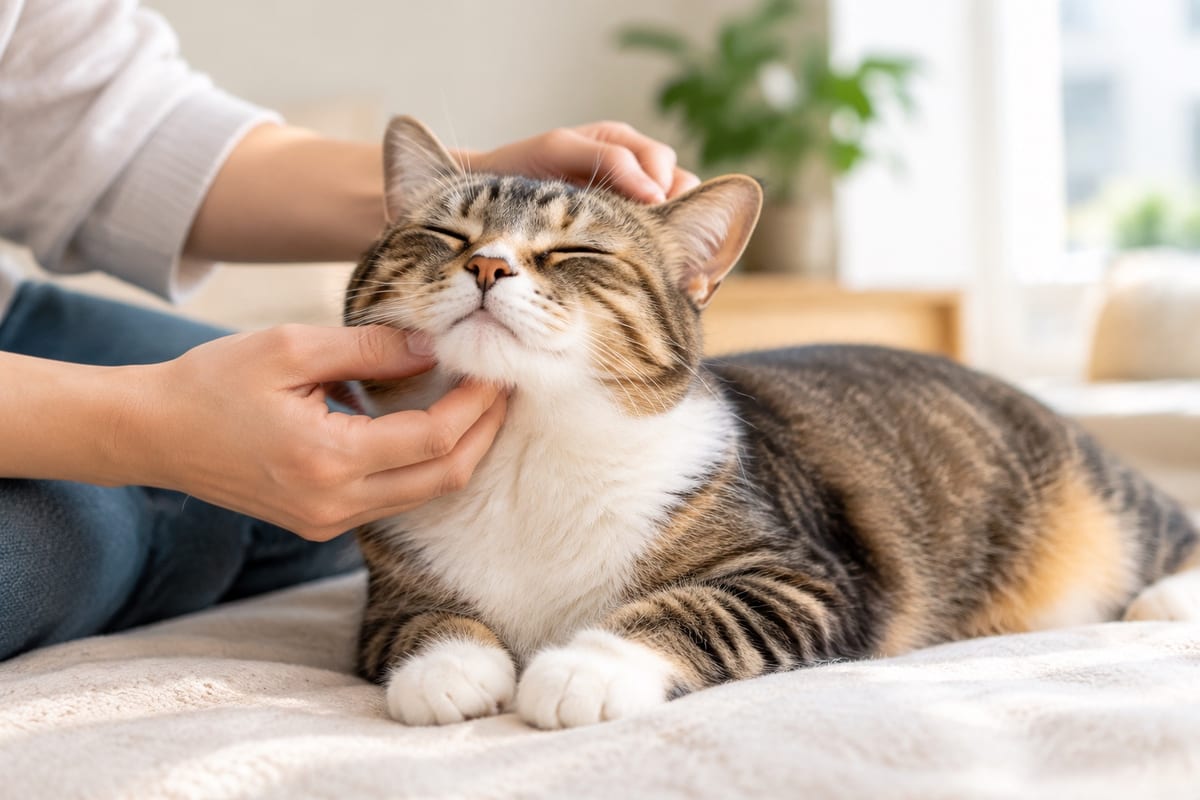
Quick answer: The safest and most popular spots for cat massage are the chin, base of the ears, cheeks (whisker roots) and base of the tail. Use your fingertips to press gently for 30 seconds to 1 minute per area, and watch your cat's reaction — if their ears flatten back, they swish their tail hard, or they want to walk away, stop immediately. The belly and paws are sensitive areas, and abdominal massage for constipated cats requires a special technique. Massage can relieve stress, boost circulation and help you spot health problems early, but it must never replace a veterinarian.
Have you ever gently stroked your cat's chin and watched them automatically tilt their head towards you, squinting with a blissful look? Cats actually have several "switches" on their bodies — press them the right way and your cat will instantly enter relaxation mode. Today we'll teach you how to massage your cat correctly, so you can build an even deeper bond of trust with your feline friend!
Why massage your cat?
Many cat owners think stroking a cat is the same as massaging, but there's a big difference. A proper massage isn't just about showing affection — it has these benefits:
- Relieves stress: Gentle massage helps cats relax and reduces anxiety
- Boosts blood circulation: Appropriate pressure helps improve peripheral circulation, especially for less active senior cats
- Early detection of abnormalities: While massaging, you can check for lumps, wounds or skin problems
- Strengthens the human-cat bond: Regular massage builds trust and makes your cat feel closer to you
But note: not every cat likes being massaged, and both the areas and the technique matter. Using the wrong method can make your cat uncomfortable or even cause pain!
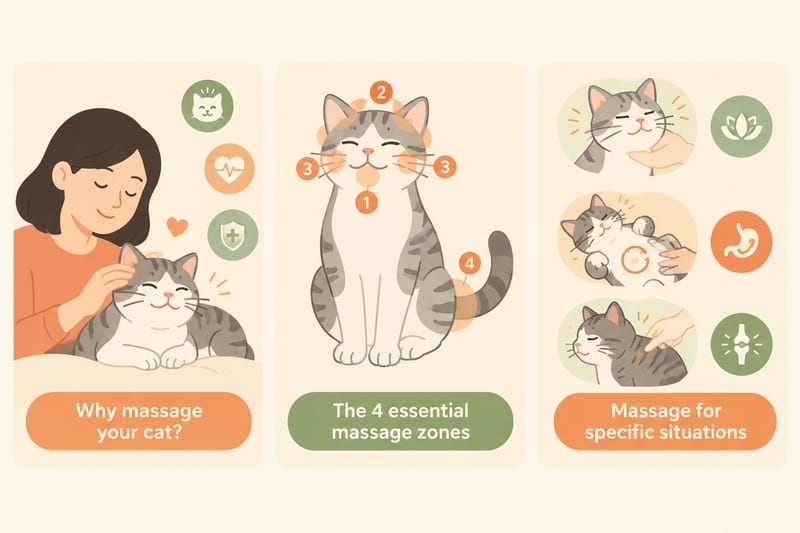
The 4 essential massage zones
| Zone | Technique | Cat's reaction | Caution |
|---|---|---|---|
| Chin | Stroke upwards from below with four fingers | Tilts head up and leans in | Don't scrape with nails |
| Base of ears | Rub the ear base and forehead gently with the index finger | Squints, purrs | Use an extremely light touch |
| Cheeks (whisker roots) | Gently stroke the whisker roots with fingertips | Automatically "switches on" and purrs | Be careful with cats that have periodontal disease |
| Base of tail | Stroke or tap gently with the palm | Tail lifts, rubs head against you | Don't pull the tail |
Chin
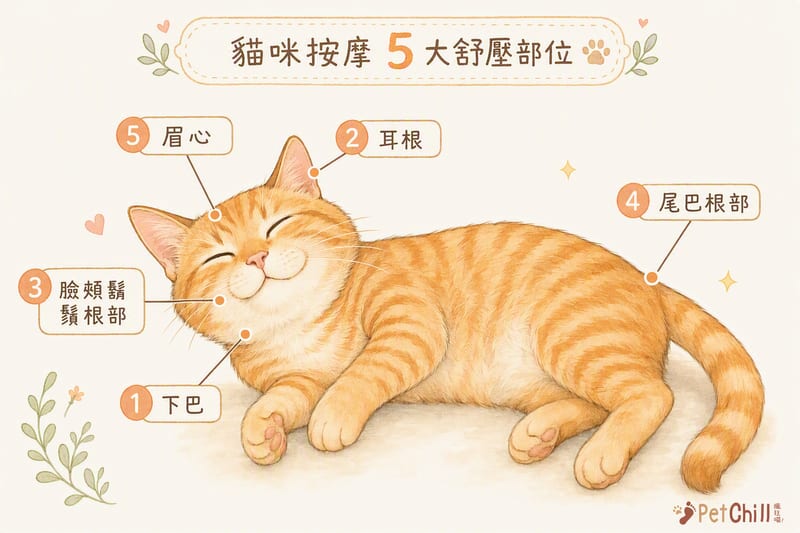
This is the favourite spot for most cats! Use four fingers to gently stroke upwards from under the chin. Keep the pressure light and don't scrape with your nails. If your cat lifts their chin towards your hand, they're really enjoying it!
Around the ears
Gently rub the base of the ears and the area around the forehead with your index finger. If your cat doesn't seem annoyed, you can gently cup the ear between your thumb and index finger and rub back and forth. This area has many nerve endings, and gentle stimulation feels very pleasant to cats.
Behind the cheeks and whiskers
From behind, place both hands on your cat's cheeks and gently rub and stroke the whisker roots with your fingertips. This is a sensitive but pleasant area for cats — many will automatically "switch on" when massaged here, meaning they start purring!
Base of the tail
Gently stroke the base of your cat's tail with your palm, and you can even tap lightly. This is a special "happy switch" on a cat's body — many cats will automatically lift their tail when touched here, and may even rub their head against you!
Also, stroking back and forth with your fingertips from between the eyes (where humans have their brow point) up to the top of the head will make your cat very happy too!
The correct steps for massaging your cat
- Wait for your cat to approach you — don't pull them over by force
- Start with a spot your cat likes (usually the chin or behind the ears)
- Use a gentle touch with your fingertips, not your nails
- Massage each area for 30 seconds to 1 minute
- Watch your cat's reaction at all times — if they say no, stop immediately
- Reward with a treat afterwards to build a positive association
Massage for specific situations: constipation, nasolacrimal ducts, senior cats
Beyond everyday relaxation, massage can play a supportive role in specific health situations. The following is for daily care reference only — if symptoms persist or are severe, you must take your cat to a veterinarian:
Abdominal massage for constipated cats
Constipation is very common in cats, especially senior cats and those with low water intake. Correct abdominal massage can help stimulate intestinal movement:
- Technique: Place your palm on your cat's belly and make very gentle clockwise circles around the navel
- Pressure: Only as much as resting your palm lightly on the skin — never press down
- Duration: 1–2 minutes each time, 1 hour after a meal
- When not to do it: If your cat's belly is hard and swollen, they are vomiting, they haven't passed stool for over 2 days, or they clearly resist or show pain when pressed — see a veterinarian immediately and don't handle it yourself
Supportive massage for blocked nasolacrimal ducts
Some cats with tear-staining problems have blocked nasolacrimal ducts. A veterinarian may instruct owners to gently massage the inner corner of the eye to help clear it. This massage must be done under veterinary guidance — the wrong position or pressure can injure your cat's eye, so don't try it yourself.
Relief for senior cats with arthritis
For senior cats with arthritis, the goal of massage is relief, not treatment:
- Massage only the muscles around the joint, never press directly on the joint itself
- Use a lighter touch than usual and slower movements
- Before and after massage, you can apply a warm towel compress (temperature close to room temperature — don't use hot water)
- If your cat shows a pain response, stop immediately and consult your veterinarian
Massage contraindications and danger signals
Although massage has many benefits, pay attention to the following:
- Watch reactions: If your cat's ears flatten back, their tail swishes hard, their body stiffens or they want to walk away, stop immediately
- Avoid sensitive areas: Cats generally dislike having their belly and paws touched — don't force it
- Be careful with cats that have periodontal disease: If your cat has periodontal disease or stomatitis, touching the chin and around the whiskers will cause pain. If your cat shows resistance, stop immediately
- Don't use scented products: Essential oils and fragrances are harmful to cats — never use them during massage
- Choose the right moment: The best time is when your cat is relaxed, half-asleep, or actively rubbing against you
Never massage in the following situations — see a veterinarian immediately:
- Suspected blood clot: Sudden hind-leg weakness, cold paws, crying out in severe pain — this is an emergency; massage will worsen the injury
- Trauma or fracture: Any swelling, deformity or open wound
- During fever or acute illness: Your cat is extremely lethargic and not eating at all
- Surgical wounds that haven't healed
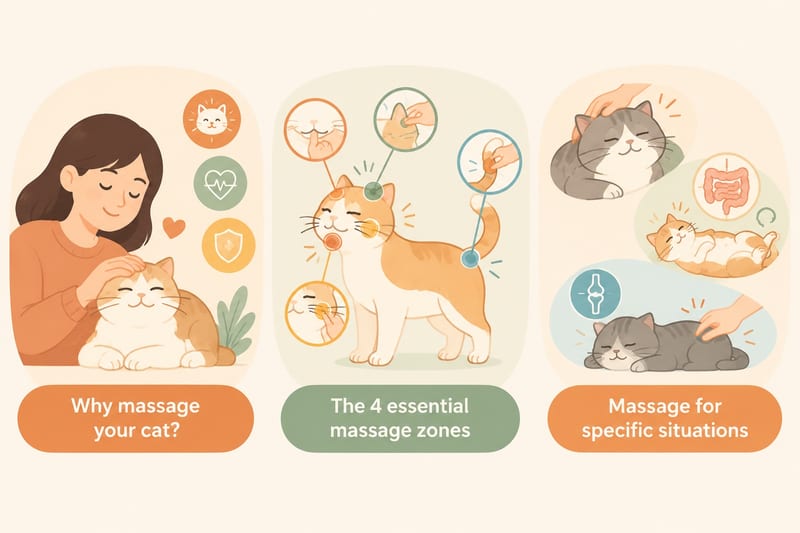
Key takeaways
- ✅ 4 safe massage zones: chin, ear base, cheeks (whisker roots), base of tail
- ✅ Use fingertips with gentle pressure, 30 seconds to 1 minute per area
- ✅ For constipated cats, gently stroke the belly clockwise, but if the belly is hard or there's been no stool for 2 days, see a veterinarian
- ✅ For senior cats' joints, massage only the surrounding muscles, not the joint
- ✅ Massage is a chance to check for lumps and wounds, catching health problems early
- ❌ Ears flattened back, hard tail swishing, body stiffness = stop immediately
- ❌ Never massage if a blood clot is suspected, or with a fracture or fever
Frequently asked questions (FAQ)
Q: How many times a day can I massage my cat? A: Aim for 1–2 sessions a day, 5–10 minutes each. Most importantly, respect your cat's wishes — if they want to leave, don't force it.
Q: Can I massage a newly adopted cat straight away? A: No, it's not recommended. A new cat needs time to settle in; wait until they approach you voluntarily, build basic trust with gentle touch, then gradually move on to massage.
Q: Can massage replace a vet visit? A: Absolutely not. Massage is only a daily care and bonding method. If you notice an abnormal lump, a pain response or a skin problem during massage, take your cat to the veterinarian as soon as possible.
Q: What should I watch out for when massaging a senior cat? A: Senior cats may have arthritis or bone problems, so use a lighter touch than usual and avoid pressing directly on joints. If they show pain, stop immediately and consult your veterinarian.
Q: How do I massage a constipated cat? A: Place your palm on the belly and make very gentle clockwise circles around the navel for 1–2 minutes, 1 hour after a meal. If your cat hasn't passed stool for over 2 days, has a hard swollen belly or is vomiting, see a veterinarian immediately — don't massage on your own.
Q: Can I massage my cat's belly? A: Most cats dislike having their belly touched, and forcing it can make them resistant or even cause scratching and biting. Unless your cat is well-trained and highly trusting, or you need to do constipation massage (with an extremely gentle technique), it's best to avoid the belly.
Q: Are cat massagers and massage machines useful? A: There are many pet-specific massage brushes and massagers on the market that can serve as auxiliary tools, but results vary — some cats like the texture of a massage brush, while others are afraid of the vibration sound. Start at the lowest intensity, observe your cat's reaction, and don't force it.
Q: How do I know my cat enjoys being massaged? A: Positive signals include: actively rubbing their head or body against your hand, relaxed squinting, purring, and a tail held upright with a slight curve. If you see ears flattened back, vigorous tail swishing, skin twitching, a sudden bite, or them walking away, stop immediately.
This content is for daily care reference only and cannot replace professional veterinary diagnosis. If your cat shows symptoms such as persistent constipation, joint pain or abnormal movement, please consult your attending veterinarian as soon as possible.
PetChill's Reminder: Massage is a great way to build trust with your cat, but every cat has a different personality — some simply don't enjoy being touched. Remember, the most important thing is to respect your cat's wishes; their happiness comes first!