
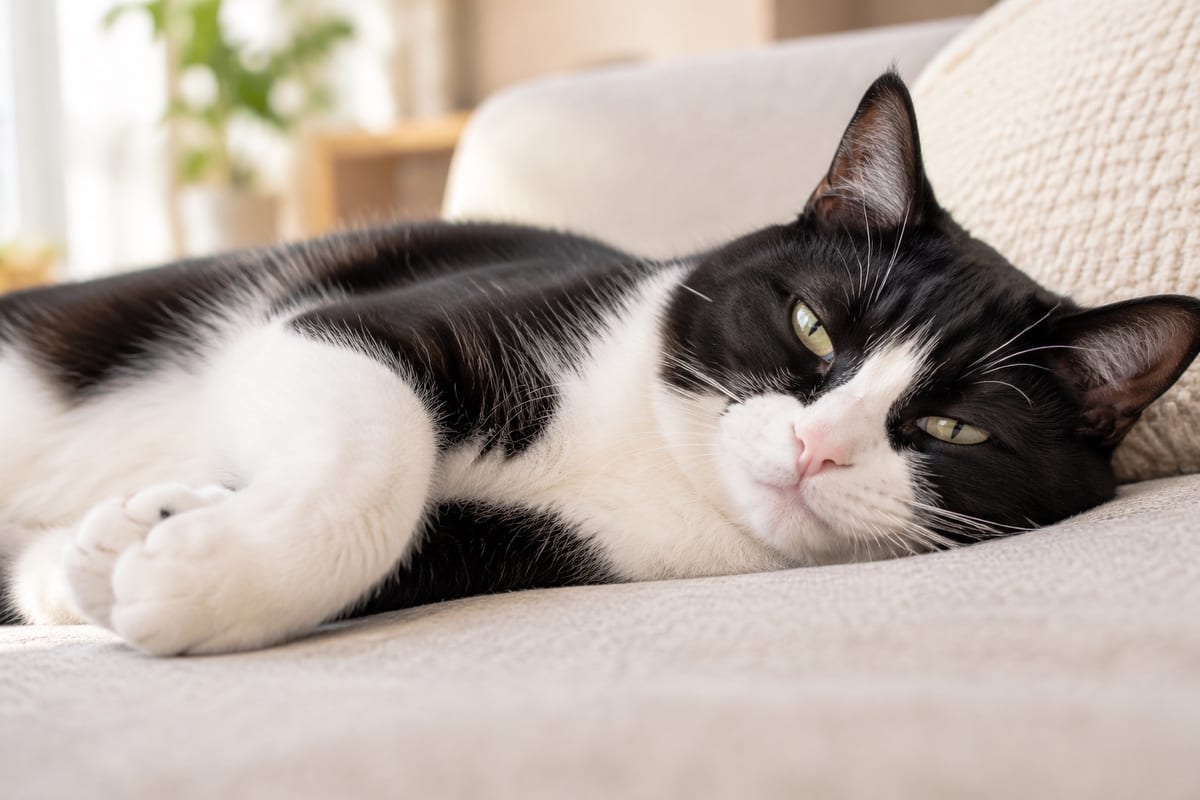

Quick answer: Yes! Cats really do hold grudges—but more precisely, they firmly remember experiences that made them feel threatened or uncomfortable. A cat's long-term memory can last for years or even a lifetime, especially their scent-based memory system, which makes them instinctively hide at the sight of a medicine bottle, nail clippers, or vet carrier. The good news is that with treat rewards and positive associations, you can help your cat gradually 'wash away' these negative memories.
Have you ever clipped your cat's nails and then found it refused to come near you for days? Or taken it to the vet and, once home, it immediately hid under the bed and wouldn't come out? Don't think it's just a coincidence—cats really do hold grudges!
How impressive is a cat's memory?
Many people think cats are aloof and ignore you, but scientific research confirms that cats actually have excellent memories:
- They recognise their owner's voice: In a noisy environment, cats can accurately distinguish their owner's voice from others.
- They remember friends and enemies: Cats remember people who visit often, and also other cats that have threatened them in their territory.
- Scent is the core of memory: A cat's memory system is centred on scent, combined with tone of voice and gestures to form comprehensive memories.
- Long-term memory is enduring: Cats can remember certain experiences for years or even a lifetime.
Short-term memory vs long-term memory
Cat memory can be divided into two types:
- Short-term memory (working memory): Generally lasts only a few minutes to a dozen or so minutes, for example remembering where you just put down a toy.
- Long-term memory: Experiences strongly linked to emotions go directly into the long-term memory bank—whether happy or frightening, they can be remembered for years or even a lifetime.
This is the key to why cats 'hold grudges': negative experiences accompanied by strong emotions are remembered more deeply and for longer than everyday trivialities.
Why do cats 'hold grudges'?
The reason cats hold grudges is simple: they firmly remember experiences that make them uncomfortable. This is their survival instinct—in the wild, remembering the source of danger allows them to avoid it and increases their chances of survival. Even as domestic cats, this mechanism is still operating.
The three biggest 'grudge' triggers
- Giving medication: Cats remember the bitter taste of medicine; next time they see you pick up the medicine bottle, they'll immediately walk away.
- Clipping nails: After one clipping, they'll withdraw their paws every time they see the nail clippers.
- Going to the vet: The pain of an injection stays in their memory.
Common signs of a cat 'holding a grudge'
Cats don't 'take revenge' like humans; their grudges are actually an avoidance response:
| Behaviour | Underlying reason |
|---|---|
| Walking away as soon as they see you pick up a certain object | Associating the object with a negative experience (e.g., nail clippers = pain) |
| Hiding from you for days after a vet visit | Associating 'being picked up and taken out' with stress |
| Being particularly sensitive to certain sounds | Associating the sound with an unpleasant experience (e.g., the sound of opening a medicine bottle) |
| Suddenly refusing to let you touch certain areas | That area once caused them pain or discomfort |
How long can a cat hold a grudge?
This is the question many cat owners care about most. The answer depends on the intensity of the experience:
- Mild discomfort (e.g., a single nail clipping): Usually fades within days to weeks.
- Strong fright (e.g., being trapped, being scared): Can be remembered for months.
- Traumatic experience (e.g., abuse, serious injury): May be remembered for a lifetime.
Importantly, a cat's memory is scent-driven—so even after a long time, as long as they smell a similar scent, the whole memory can be triggered. This is also why some cats, even after moving house and being apart for years, still recognise people who were kind to them.
How to repair your relationship with a 'grudge-holding' cat?
Use treats to build positive associations
After each 'unpleasant' task, immediately give a treat reward. Cats will gradually associate 'nail clipping/medication' with 'something tasty', and the negative impression will be overridden.
Gentle interaction
Gently stroke the areas they like (chin, behind ears, base of tail), using slow movements and a soft tone of voice to rebuild their sense of security with you.
Take it step by step
Don't rush to pick them up or force interaction. Let the cat decide when to approach you; coming to you on their own is the true sign of trust.
Maintain consistency
Cats like routine. Feed, play, and clean the litter box at fixed times; a stable daily routine makes them feel secure and speeds up relationship repair.
Frequently asked questions
Q: Do cats really hold grudges? A: Yes! Cats have excellent memories and will firmly remember experiences that made them uncomfortable. Strictly speaking, though, this is an avoidance response rather than 'revenge'—cats just want to avoid things that make them uncomfortable.
Q: How long can cats remember things? A: A cat's long-term memory can last for years or even a lifetime. The more intense the experience and the deeper the emotion, the longer it's remembered. Traumatic experiences may even be remembered for life.
Q: How can I stop my cat from holding a grudge? A: After each unpleasant experience, immediately use treats and gentle interaction to build positive associations. Combined with a stable daily routine, your cat will gradually rebuild trust in you.
Q: Will my cat take revenge on me if it holds a grudge? A: Cats do not 'take revenge' like humans. So-called grudge behaviours (hiding, withdrawing paws, ignoring you) are actually avoidance responses for self-protection, not deliberate punishment. Understanding this means you don't need to feel too guilty.
Q: If I move house or we're separated for a long time, will my cat still recognise me? A: Very likely yes! Cats rely on scent as the core of their memory. Even after months or years apart, as long as your scent, tone of voice, and interaction style are familiar, cats can usually recognise you. By the way, a cat's purr when happy is the best proof of trust—to learn more, check out our article on cat purring.
Practical Hong Kong small-flat guide: a 3-day relationship repair schedule
Day 1: De-stress immediately upon returning home
- Before getting out of the car: At the taxi or MTR station exit, give two local freeze-dried treats inside the carrier so your cat starts to link 'going out' with 'something tasty'.
- Within three minutes of entering the flat: Don't rush to pick them up; first place the carrier on the floor and open the door so they can walk out on their own. Hong Kong streets are noisy, so turn on the air-conditioning or a fan slightly to create white noise and reduce sudden outside sounds.
- Dusk: Put their favourite canned food (a Hong Kong-made grain-free range is recommended) in the usual feeding spot, then sit two metres away scrolling on your phone and let them decide when to come out and eat.
Day 2: Rebuild the scent map
- Morning: Fold a T-shirt you've worn overnight (with your scent) and place it at the entrance of the cat tunnel, letting them smell a familiar scent. At the same time, position the tunnel near the window to use natural light to increase their sense of security.
- When you get home from work: Don't turn on the big lights immediately; use a warm desk lamp first. Slowly walk towards the litter box and softly say 'I'm home~'. If they come out, immediately give a low-salt freeze-dried treat; if not, leave the treat at the tunnel entrance for them to take themselves.
- Before bed: Use the same towel to gently wipe your hands, then wipe the cat's cheeks to exchange scents and help them re-mark their 'safe territory'.
Day 3: Proactive interaction test
- Before breakfast: Place the nail clippers on the coffee table without touching them, just letting the cat see them from a distance. If they don't immediately run away, give a treat from a distance to build the initial association 'seeing nail clippers = food'.
- Evening playtime: Use a common Hong Kong feather wand (the $20 type from ParknShop or pet shops), slowly wave it in the middle of the living room and let them pounce on their own. After play, immediately open a can of wet food as a reward, linking 'interacting with you' with 'fun + tasty'.
- Before sleep: If they're already willing to head-bump your hand on their own, that means the relationship is successfully repaired; if they're still hiding, repeat Day 2's steps and give them another day or two of patience.
Still no improvement after three days? If your cat continues to refuse to come out and drink water for more than 72 hours, completely stops using the litter box, or shows vomiting or diarrhoea, contact your nearest Hong Kong vet clinic immediately, such as the 24-hour emergency centres in Mong Kok or Causeway Bay, to ensure stress hasn't triggered a health problem.
Key takeaways
- Cats really do hold grudges—negative experiences accompanied by strong emotions go directly into long-term memory.
- A cat's memory is scent-centred, and long-term memory can last for years or even a lifetime.
- 'Holding a grudge' is actually an avoidance response, not revenge—cats just want to avoid things that make them uncomfortable.
- Mild discomfort fades within days to weeks; traumatic experiences may be remembered for life.
- Treat rewards + gentle interaction + a stable routine can help cats rebuild trust and override negative memories.
PetChill's Reminder
Patience and love are the best secrets to building a long-lasting relationship with your cat! Cats don't hold grudges because they're petty, but because they remember deeply—by the same token, they will remember your kindness in their hearts too.
To learn more about cat behaviour, keep following PetChill's latest articles!