
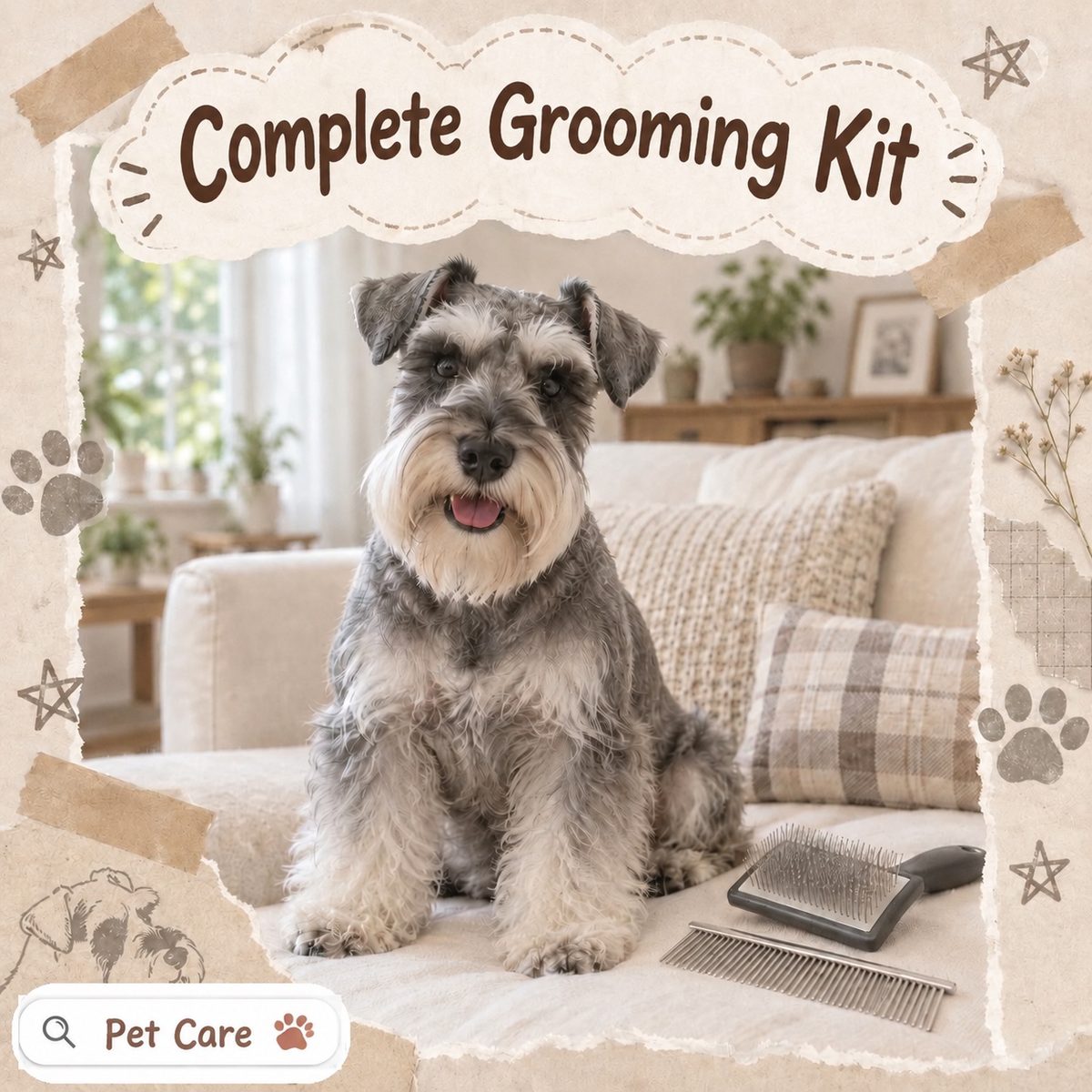
📌 Key Points
- ✅ For tangles, first apply a little olive oil to soften, then gently loosen with your fingers—don't pull hard
- ✅ For tight knots, use round-tipped scissors to cut along the length of the hair; never cut across the knot
- ✅ Long-haired and double-coated dogs should be brushed daily for about 10 minutes each time
- ✅ Start brushing from the neck, then move to the back, chest, waist, abdomen, hindquarters, head, and finally the limbs and tail
- ✅ Never shave the hair on the limbs; the skin on the paws is thin with many small blood vessels, and clippers can easily cause injury
Many owners see their dog's hair matted into felt and their first reaction is to "shave it all off." In fact, matted hair can be untangled layer by layer with the right method—random shaving can actually lead to more skin and coat problems. This article breaks down your dog's coat structure, brushing order, de-matting steps and tool selection to help you achieve professional-level care at home.
First, understand your dog's coat: single or double?
Dogs have lived with humans for over 10,000 years, and their coats have become incredibly diverse. By texture, they can be divided into four main types: wire-haired (coarse and stiff, e.g., Schnauzer), long-haired (e.g., Yorkshire Terrier, Rough Collie), short-haired (e.g., Pug) and hairless (e.g., Chinese Crested).
By structure, there are two layers:
- Top coat: the outermost layer, relatively stiff, responsible for blocking dirt and moisture
- Undercoat (bottom coat): the dense fluffy hair growing beneath the top coat, providing insulation and waterproofing; generally grows in autumn and sheds the following summer
This divides breeds into two main camps:
- Single coat: no undercoat, only top coat, e.g., Poodle, Bichon Frise, Yorkshire Terrier, Maltese. They shed little, but their hair grows continuously and needs regular trimming and styling
- Double coat: top coat plus undercoat, e.g., Husky, Corgi, Sheltie, Golden Retriever. During shedding season, the undercoat sheds heavily; if not brushed out in time, dead hair tangles with new hair and mats easily
Knowing whether your dog is single- or double-coated is the first step to choosing the right care strategy.
Why does dog hair mat? Three main causes
-
Not enough brushing: shed dead hair stays on the body, intertwines with new hair, and becomes denser over time
-
Friction and moisture: after a walk, the hair on the paws is damp; lying on the floor rubs the armpits, inner thighs, behind the ears and other thin-haired areas, which are most prone to small knots
-
Wrong tools: a brush only reaches the top layer of long hair; the undercoat (fine fluff) is not reached at all. The surface may look smooth, but underneath it's already matted—this is the so-called "false smoothness"
Mats don't just affect appearance—they trap moisture and dirt, preventing the skin from breathing, and over time can cause eczema and fungal infections; hard mats close to the skin can pull on the skin, causing your dog daily pain.
Correct brushing order: 10 minutes a day is enough
The standard order taught in books is "front to back, top to bottom": start from the neck, then the shoulders, followed by the back, chest, waist, abdomen, hindquarters, then the head, and finally the limbs and tail; finish one side, then do the other.
Key technique: brush quickly in the direction of hair growth. Long-haired dogs must be brushed "layer by layer"—after brushing the top layer of long hair, fold it back and brush the undercoat beneath, layer by layer, to brush thoroughly.
4-step de-matting method (use only when there are tangles)
-
Apply oil to soften: rub a little olive oil on the tangle and wait a few minutes to loosen the hard knot
-
Loosen with fingers: gently separate the tangle with your fingers—don't pull hard, to avoid breaking hair and pulling the skin
-
Cut the tight knot: if it has become a solid mat, use round-tipped scissors to cut along the length of the hair, then comb; never cut across the whole clump
-
Comb layer by layer: use a pin brush with a rubber pad, first comb the ends, then the roots; then go over carefully with a wide-toothed and a fine-toothed metal comb—first lift the outer coat to comb the undercoat, and finally back-comb the outer coat
After finishing, you can wipe the whole body with a hot towel to remove fine dust, making the coat look better. If your dog is nervous during the process, you can do it in stages, 5-10 minutes each time, with treats as rewards to build positive associations.
How to choose tools? Brushes, pin brushes and metal combs each have their role
- Brush: can comb the ends of long hair to make it fluffy, but cannot reach the undercoat—suitable for daily use on short-haired dogs
- Flexible steel pin brush (with rubber pad): the main tool for long-haired and double-coated dogs; reaches the undercoat without hurting the skin
- Long, wide-toothed metal comb: for final checking; only when it glides through without resistance is the coat truly clean
⚠️ Shaving advice: never shave the limbs indiscriminately
Professional pet grooming tip: a dog's limbs are the least suitable area for shaving, especially above the paws. There are two reasons: first, the skin around the paws is thin and rich in small blood vessels, so clippers can easily injure them; second, the hair here is also used by dogs to "wash their face," and shaving it off directly affects their grooming habits. Therefore, the hair on the limbs is usually not shaved, just trimmed neatly.
As for the myth of "shaving in summer to cool down"—the undercoat of double-coated dogs naturally insulates and protects from the sun; shaving it all off actually disrupts temperature regulation and may damage hair follicles, causing abnormal hair regrowth. The best approach is: during shedding season, brush more frequently to remove all dead undercoat, and your dog will naturally feel cooler.
PetChill's Reminder
Don't rush to shave when your dog's hair mats—apply oil to soften, loosen with fingers, cut along the length, and comb layer by layer; these four steps can save the whole clump of hair. 10 minutes a day, plus a good pin brush during shedding season, is the most worthwhile skin care investment. To learn more about dog grooming and care, stay tuned for the latest articles from PetChill!