
📌 Key Points
- ✅ Get down low for 30 seconds and look around at dog height; note dangerous items within reach
- ✅ Tackle electrical cords, chemicals and small objects first, then chronic items like non-slip measures
- ✅ Use a pedal bin with a lid; add a gate at the stairs to stop puppies going up and down on their own
- ✅ Toys must not shatter, tear apart, be swallowable, or have sharp edges
- ✅ In the first few weeks after moving, don't change food; have non-slip bowls and a crate ready
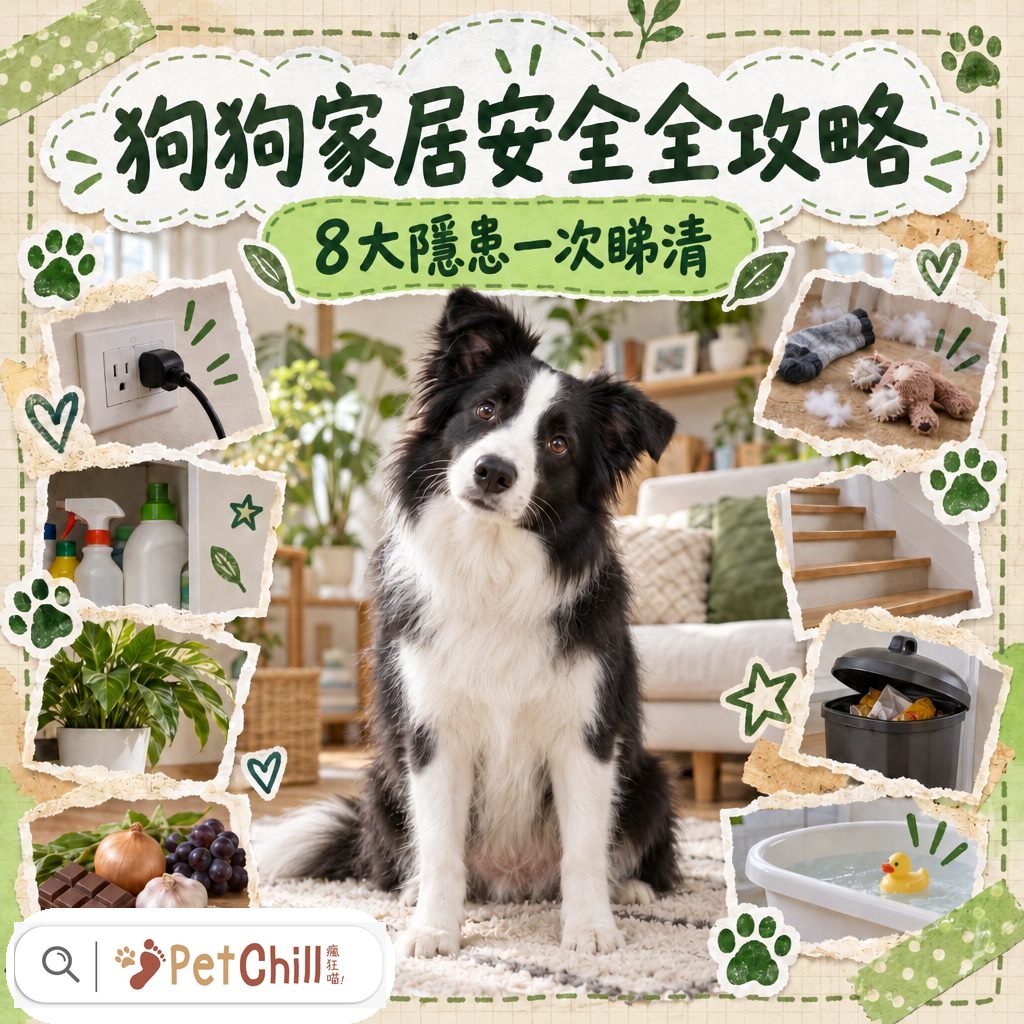
Many owners bring a dog home and immediately set up a bed and buy toys, but overlook one thing: the home can be full of hidden dangers for a dog that crawls on four legs and puts everything in its mouth. Electrical cords, cleaning products, small objects, slippery floors—these everyday items can become deadly traps for dogs. This article shows you how to do a complete dog home safety check from a 'dog's-eye view'.
1. Why check your home from a 'dog's-eye view'?
A dog is only ten-odd centimetres tall; its line of sight is under the sofa, in the gaps of drawers, and at small objects on the floor. They have no concept of 'what's edible and what's not'—they explore the world with their nose and mouth. Places owners think are safe are often the source of danger. Here's a three-step check:
-
Get down low for 30 seconds: In the living room and hallway where the dog often moves, lie down and look around at its height. Note what it can reach and bite.
-
List hazards by zone: Living room, kitchen, bathroom, garden—note dangerous items zone by zone.
-
Fix within 48 hours: Deal with lethal items first (cords, chemicals, small objects), then chronic items like non-slip measures.
2. 8 indoor hazards (item by item)
1. Electrical cords and sockets
A dog chewing a cord can get an electric shock instantly, even fatally. Tidy cords and tuck them behind the sofa or cabinet; cover unused sockets with tape or safety caps.
2. Cleaning products and other chemicals
Dish soap and disinfectants can be toxic to dogs. Store them on the top shelf of a closed cabinet or somewhere the dog cannot reach.
3. Bin
Many dogs love treasure-hunting in the bin; chicken bones, chocolate, plastic bags can cause trouble at any time. Use a pedal bin with a lid.
4. Indoor green plants
Flower pots on the floor attract dogs to dig and eat soil, and some houseplants are toxic to dogs. Move plants out of the dog's reach or add a barrier.
5. Slippery floors and rugs
Floors that are too slippery can make dogs slip and injure their joints, and expensive rugs get chewed. In the first few weeks, roll up valuable rugs and lay non-slip mats in areas where the dog often moves.
6. Stairs
Stairs are a common accident spot for puppies—they can fall or tumble down, and going up and down long-term can damage joints. Install a gate at the stairs and forbid puppies from going up and down on their own for the first few months.
7. Small objects and unsuitable toys
Building blocks, toy eyes, shoes and socks, cellophane, plastic bags, string knots—none should be left for the dog to chew. Swallowing them whole can cause intestinal blockage. Choose toys that don't shatter, can't be torn apart, and have no sharp edges.
8. Ribbons and thin cords on collars
Don't tie ribbons around a dog's neck: chewing them can cause digestive problems, and getting caught can cause choking. Collars should be adjustable and snug but not tight; for small dogs, a harness is recommended.
3. Garden and outdoors: 5 high-risk spots
- Field ridges and ponds: Add low fences to important ridges and protect pond edges to prevent falls into water.
- Cellar: An open cellar is a time bomb—always close and lock it.
- Farm tools and fertiliser: Ploughs and rakes are sharp and heavy; lock fertiliser pellets in the storage room.
- Fences and balconies: Regularly check fences for holes to prevent escape; balcony railing gaps must be too small for the dog to squeeze through.
4. How to choose safe toys and daily items
Toys help dogs exercise and satisfy their chewing needs; every dog needs them, but two or three are enough, such as leather skip ropes and rope balls. The principle is: don't shatter, can't be torn apart, can't be swallowed, no sharp edges. Avoid soft rubber, fur, and sponge toys meant for toddlers.
5. Checklist of essentials before moving in
Before your dog moves into a new home, have ready: the food it was already eating (don't change food in the first few weeks), non-slip food and water bowls, an easy-to-clean dog bed, a few toys, a suitably sized crate, an adjustable collar and lead.
PetChill's Reminder
With good home safety, your dog can explore the home with peace of mind. Starting today, take a walk around from your dog's perspective: first block the most dangerous spots like cords, chemicals and small objects, then gradually improve non-slip measures and outdoor protection. To learn more about dog care, keep following PetChill HK's latest articles!