
📌 Key Points
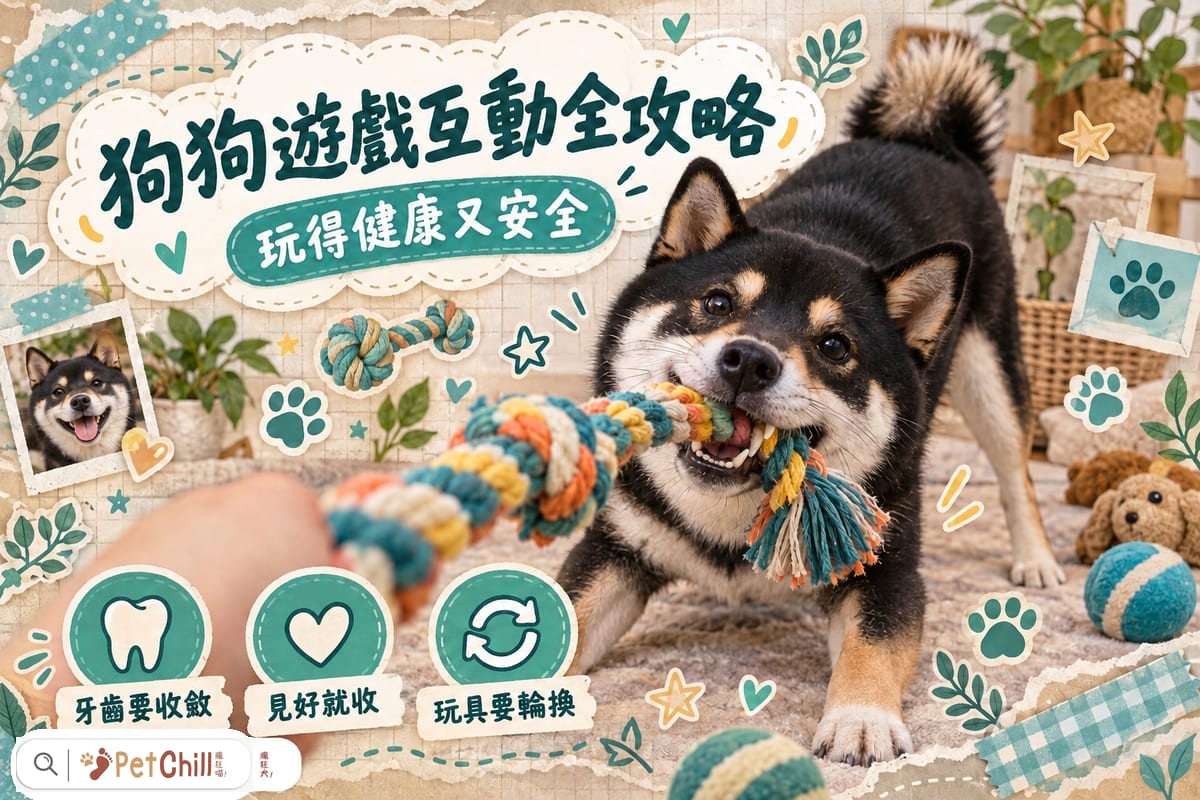
- ✅ If your dog bites you painfully, immediately yelp to stop and walk away; don't continue teasing.
- ✅ Stop and put toys away when your dog is most engaged to keep play attractive.
- ✅ Keep only 1 to 2 toys that your dog can play with alone in the bed; rotate the rest.
- ✅ During tug-of-war, don't forcefully pull if your dog won't let go; use treats or cues to train release.
- ✅ Small dogs: 10 to 15 minutes per session; medium to large dogs: 20 to 30 minutes is enough.
Many owners think 'playing with the dog' is simple—throw a ball, tug a rope. In fact, dog play is the most important social lesson: play correctly, and your dog will learn to control his teeth, manage impulses, and build trust with you; play incorrectly, and it's easy to develop bad habits like biting, snatching, and getting overexcited. This article compiles practical advice from dog training books to explain play rules, toy management, and outdoor training techniques.
Why is dog play so important?
For dogs, play isn't just about burning energy. Dog play is their innate learning mode; dogs practice bite inhibition, impulse control, and social reading during play. A dog that plays by the rules usually performs better in obedience training and daily life. Conversely, if every play session ends in overexcitement and loss of control, the dog will gradually associate 'playing with owner' with 'excitement,' and later won't even listen to basic commands. So rather than dealing with correction later, it's better to establish rules from the start.
4 Key Play Rules: Safe Play
Rule 1: Teeth must be controlled—never bite people
Dogs don't have thick human skin as a buffer, so it's easy to hurt the owner when excited. In the first few rough plays, you can yelp 'ouch' loudly to interrupt the game, or let out a pained groan and walk away. Most dogs will understand after a few times that play stops, and naturally learn to control their force. The key is not to continue teasing, not to push the dog to the point of showing teeth.
Rule 2: Stop while they're most excited
Many owners play until the dog loses interest, and as a result, the dog quickly finds play boring. The correct approach is to stop and put the toy away when your dog is most engaged, so play remains attractive in the long run. This habit also indirectly trains your dog's self-control.
Rule 3: Don't leave all toys out at once
If the dog bed is always full of toys, everything is readily available, and the dog will naturally find everything boring. It's recommended to keep only 1 to 2 toys that your dog can play with alone in the bed, and rotate the rest. When toys are 'out of stock' for a few days and then reappear, the novelty instantly returns.
Rule 4: Use favorite toys as rewards, put them away after play
Especially liked toys can be kept as training rewards or as a distraction when out. Reward your dog with a short play then put it away to maintain the toy's appeal; it also teaches your dog that the owner controls the toys.
How to play with toys? 3 key points for tug-of-war
Tug-of-war is one of the most popular interactive games for dogs. First, use sounds and movements to entice your dog to join: for quiet dogs, let them grab it quickly—the sense of achievement will make them more engaged; for active ones, tease a bit longer. Second, during the tug, maintain balance and don't stir up your dog's competitiveness too much. Third, if your dog absolutely won't let go, never forcefully pull—use treats or cues to train release, and find a way to ensure you end up with the tug toy, so your dog understands who controls the toy.
What to do if play gets out of control?
If your dog continues to be excited, jumping and biting hands, the solution is simple: immediately stop the game, silently put the toy away, turn and leave, or even leave the room for a minute or two. Most dogs will noticeably become gentler after about a week of consistent practice. The key is that all family members must react consistently; no one can soften and continue playing, otherwise the dog will never learn which boundary is serious.
Outdoor play: Turn walks into training sessions
You can put your dog's favorite toy in your bag and only bring it out at the end of the walk, then leave after playing; your dog will cherish each play session more. Further, choose environments with distractions like birds or wild ducks, give a 'look here' cue to attract your dog's attention, wait until their gaze is on you before starting play, and even back away toward the distraction while playing. Your dog will learn that playing with you is always more interesting than surroundings, attention will naturally improve, and they won't chase every cat or dog they see.
3 things to note when playing with children
If there are children at home, first, let the dog play fully before having the child train the dog; at that time the dog is more cooperative and the child more confident. Second, stop training when the dog is completely out of control, and wait until both dog and child calm down. Third, when children race with the dog, it easily triggers the dog's competitiveness, chasing and biting clothes or pant legs; at that moment, immediately redirect the dog's attention with a ball or toy.
Teething dogs especially like to chew
During teething, puppies will noticeably increase chewing, even chewing things they usually ignore; this is normal. Provide chew toys, rawhide rolls, or other suitable chew toys regularly, and put away things you don't want chewed so they can't access them. If you see blood on chewed items, it's usually just a lost baby tooth; but if a baby tooth hasn't fallen out after more than a week and the new tooth has already grown, take your dog to the veterinarian.
PetChill's Reminder
Play is the fastest way to build trust between dog and owner, but rules are the key to lasting play: control teeth, stop while ahead, and rotate toys. To learn more about dog play and training, stay tuned for PetChill's latest articles!