
📌 Key Takeaways
- ✅ Treats should not exceed 10% of daily total calories; pre-portion to control amounts
- ✅ Freeze-dried pure meat has a single ingredient and is a low-carb, high-protein reward
- ✅ Only feed raw recreational bones; cooked bones splinter and can pierce the stomach and intestines
- ✅ If you see xylitol, corn syrup, BHA, or similar ingredients, put it back on the shelf
- ✅ Training treats should be small, moderately soft/hard, and low-calorie so they don't slow the training pace
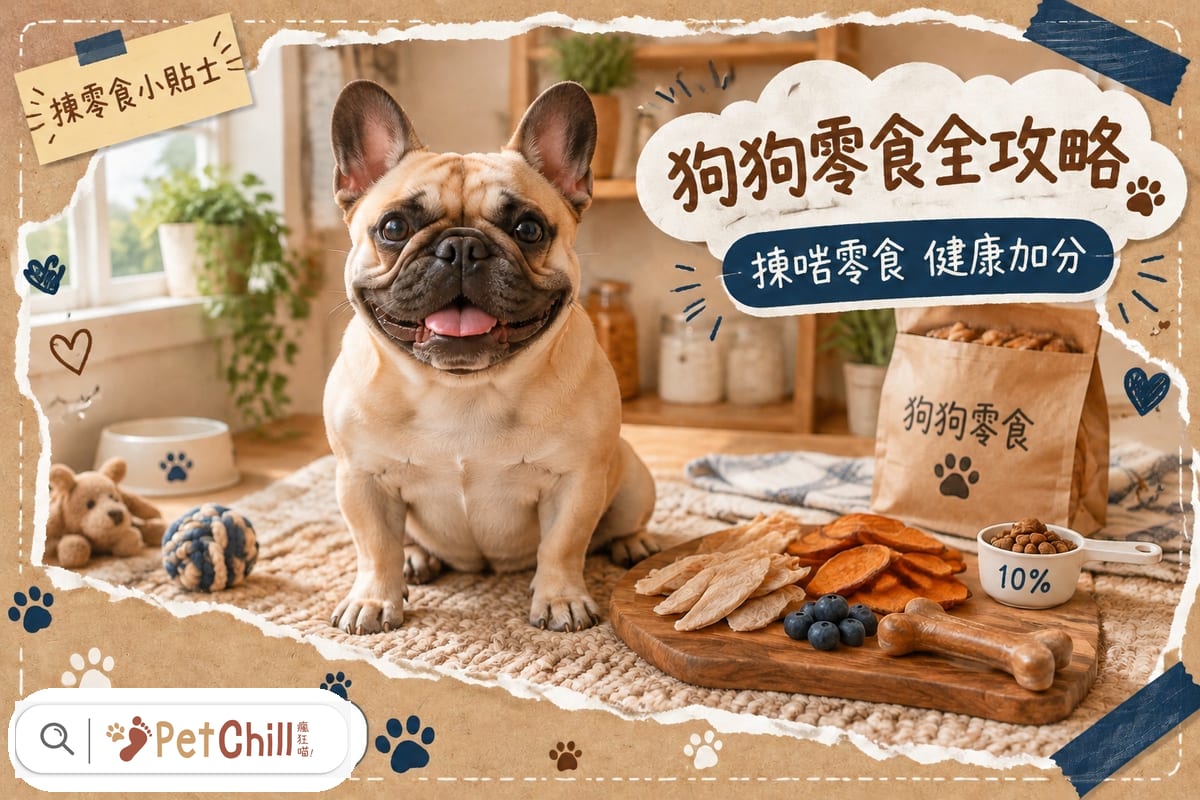
Have you ever stood in front of the pet treat shelf, overwhelmed and unsure which to buy? The packaging says "natural," "low-fat," "high-protein," "with probiotics," but the ingredient list is a dense mess of chemical names. In fact, once you master the 5 treat types, learn to read labels, and control portions, choosing treats is not difficult at all. This article breaks it all down: 5 healthy treat types, a 4-point comparison of wrong vs right choices, the golden 10% treat rule, raw bone dental care tips, and how to use training treats correctly. After reading, you'll confidently choose truly healthy, suitable treats for your pet.
1. Why do dog treats need careful selection?
Your dog's main meals are already nutritionally balanced by dog food; if treats are chosen carelessly, the effects accumulate over time and affect health. Nutritional research indicates that treats should ideally make up no more than 10% of a dog's daily total calorie intake. If high-carb, high-fat processed treats are given without limit, dogs are prone to obesity, blood sugar fluctuations, and skin allergies. Moreover, dogs have a taste preference for the savoury flavour of meat; choosing the wrong treats can spoil their appetite and make their regular food seem "not tasty enough."
Additionally, treats have another often-overlooked function—training rewards. A small, moderately soft/hard reward treat can double training effectiveness. But if you use high-sugar, high-salt human food or large hard treats, your dog will only become more impatient and disrupt the training rhythm. So treats are not just "rewards"; they are tools for health and training, worth the owner's time to choose wisely.
2. The 5 healthy treat types at a glance
① Freeze-Dried Meat
Freeze-dried dehydrated pure meat is one of the hottest treat types in the pet world in recent years. The production principle is to rapidly freeze fresh meat and then remove moisture, retaining nearly 97% of protein and original flavour, and it can be stored long-term without added preservatives. Common flavours include chicken, duck, lamb, salmon, beef liver, lamb lung, etc. When choosing freeze-dried treats, pick single-ingredient styles labelled "pure meat," for example "freeze-dried lamb lung" contains only lamb lung—zero carbs, zero fillers. These treats are suitable as training rewards; every bite is high-protein, low-fat, and easy on the stomach.
② Dehydrated Veggies
For dogs needing weight control or with blood sugar issues, dehydrated fruit and vegetables are a low-calorie, high-fibre good choice. Common styles include dehydrated sweet potato slices, dehydrated pumpkin, dehydrated apple slices, dehydrated broccoli, etc. The dehydration process retains most vitamins and dietary fibre, and slow chewing also helps clean teeth. It's best to choose plain dehydrated styles with no seasoning or added sugar, avoiding salted or oiled flavoured versions. If your dog has a sensitive stomach, start with a small amount and observe bowel movements before increasing.
③ Raw Recreational Bones
Raw recreational bones for dental care are a natural cleaning method advocated by veterinarians in Europe and the US. Studies found that dogs chewing raw bones for three consecutive days can remove most plaque and tartar from molars and premolars, with an effect similar to "toothbrush plus dental floss" mechanical cleaning. When choosing raw bones, follow three principles: the bone must be larger than the dog's head, otherwise it can cause choking or oral injury; only choose "raw" recreational bones, and never feed cooked bones (they splinter and pierce the stomach and intestines); in multi-dog households, feed separately to avoid food-guarding conflicts. Dogs with pancreatitis should avoid high-fat marrow; choose recreational bones with the marrow removed.
④ Training Treats
Training treats must meet three conditions: small (eaten in one bite without slowing the training pace), moderately soft/hard (too hard requires long chewing, too soft crumbles on biting), and low-calorie (10-20 pieces used in a day's training won't exceed the limit). There are small treats designed specifically for training on the market, usually based on chicken, turkey, or fish, with about 1-3 calories per piece. If you don't have training-specific treats on hand, you can use a small portion of regular dog food as rewards, cut into pea-sized pieces—more economical and won't disrupt the nutritional balance of main meals.
⑤ The 10% Portion-Control Treats
Different treats have different calories; the safest approach is to buy a measuring cup with a "10% mark" or pre-portion bags, and measure out the daily treat allowance. The 10% rule calculation: first check the "daily recommended feeding amount" on the dog food packaging, then multiply by 10%—that's the maximum calories treats can provide. For example, a 5 kg adult dog eating 200 calories of main food daily has a treat limit of 20 calories. Divide this amount into 2-3 rewards to prevent picky eating from too many treats.
3. Wrong vs right: 4 comparisons
❌ Wrong: Feeding sandwich crusts
Human food has complex seasonings and contains ingredients unsuitable for dogs, such as onions, garlic, sausage, cheese. Even seemingly "plain" bread crusts or cracker crumbs are high in carbohydrates, increasing the risk of obesity and diabetes. Dogs have different digestive systems and nutritional needs from humans; you can't just feed them whatever you eat.
✅ Right: Freeze-dried pure meat first choice
Freeze-dried dehydrated pure meat treats have a single ingredient, low carbs, high protein, and are closest to a dog's natural dietary needs. When choosing, remember to check the ingredient list and pick styles listing only one type of meat, e.g., "100% freeze-dried chicken," and avoid products with more than 3 additives.
❌ Wrong: Carb-heavy biscuits
Many dog biscuits claim "dental care," but that's just marketing. Studies indicate that hard crispy biscuits have almost zero effect on removing plaque; dogs chew for a few seconds and swallow, with no real time for mechanical friction on teeth. Plus, biscuits contain lots of carbohydrates, and long-term feeding increases the risk of obesity and blood sugar fluctuations.
✅ Right: Simple, single ingredients
A good treat's ingredient list should be simple at a glance, e.g., "dehydrated free-range rabbit," "freeze-dried lamb lung," "beef liver, blueberry, turmeric." Every ingredient you recognise; the fewer unrecognisable chemical names, the better. If the ingredient list has more than 5 fillers and artificial additives, put it back on the shelf.
4. The golden 10% treat portion rule
No matter how healthy the treats you choose, portion control is key. The 10% rule is a standard used internationally in pet nutrition: treats must not exceed 10% of daily total calorie intake. If you're unsure how much 10% is, use the "eyeball method": spread treats flat on your palm; they should not exceed 1/4 of the palm area; during training, even less—each piece no larger than a pea.
Also, timing of treats matters. Studies found that feeding treats at the wrong time (e.g., too close to main meals or before bedtime) can interfere with a dog's autophagy mechanism, affecting metabolism and immunity. The best treat times are during training, as a small reward after a walk, or as a snack between meals. Avoid feeding treats when the dog begs or when the owner is eating, to prevent begging habits.
Moreover, treat frequency should not be too high. The ideal approach is to use treats as "purposeful rewards," e.g., after completing a command, behaving well, or after a walk. Avoid using treats as the only way to express love—your hugs, kisses, and playtime are equally precious rewards for dogs, and calorie-free.
5. Three key points for reading labels
① Check ingredient order
Ingredients are listed by weight from highest to lowest, so the first ingredient is the largest proportion. A high-quality treat's first ingredient should be a specific meat (chicken, fish, lamb, etc.), not vague terms like "meat by-products," "meat meal," or "animal fat."
② Avoid high-risk ingredients
Avoid these ingredients when you see them: propylene glycol (BHA, BHT and other artificial preservatives), corn syrup, wheat gluten, soy protein (some dogs are allergic), xylitol (a sweetener lethal to dogs, absolutely forbidden), salt (excess increases kidney burden).
③ Look for "human-grade"
More and more premium treats state "Human-Grade Ingredients," meaning the ingredients meet human food standards. These treats are usually more expensive but offer better quality and safety assurance. For extra peace of mind, prioritise products with stated origins (e.g., "New Zealand free-range lamb," "Iceland wild cod").
PetChill's Reminder
The essence of choosing dog treats is not picking the most expensive brand, but the style that best suits your pet. Every dog's age, weight, health condition, and activity level differ, so treat needs differ too. Starting today, use the three principles—"read labels, control 10%, choose natural"—to gradually build your treat list. Remember, treats are tools for health and training, not the main meal. Next time you walk past the pet treat shelf, you'll confidently pick the most suitable style for your pet, and from today, eat with peace of mind and joy.
To learn more about dog nutrition, stay tuned for PetChill's latest articles!
For more details on choosing treats and product recommendations, see PetChill's complete guide!