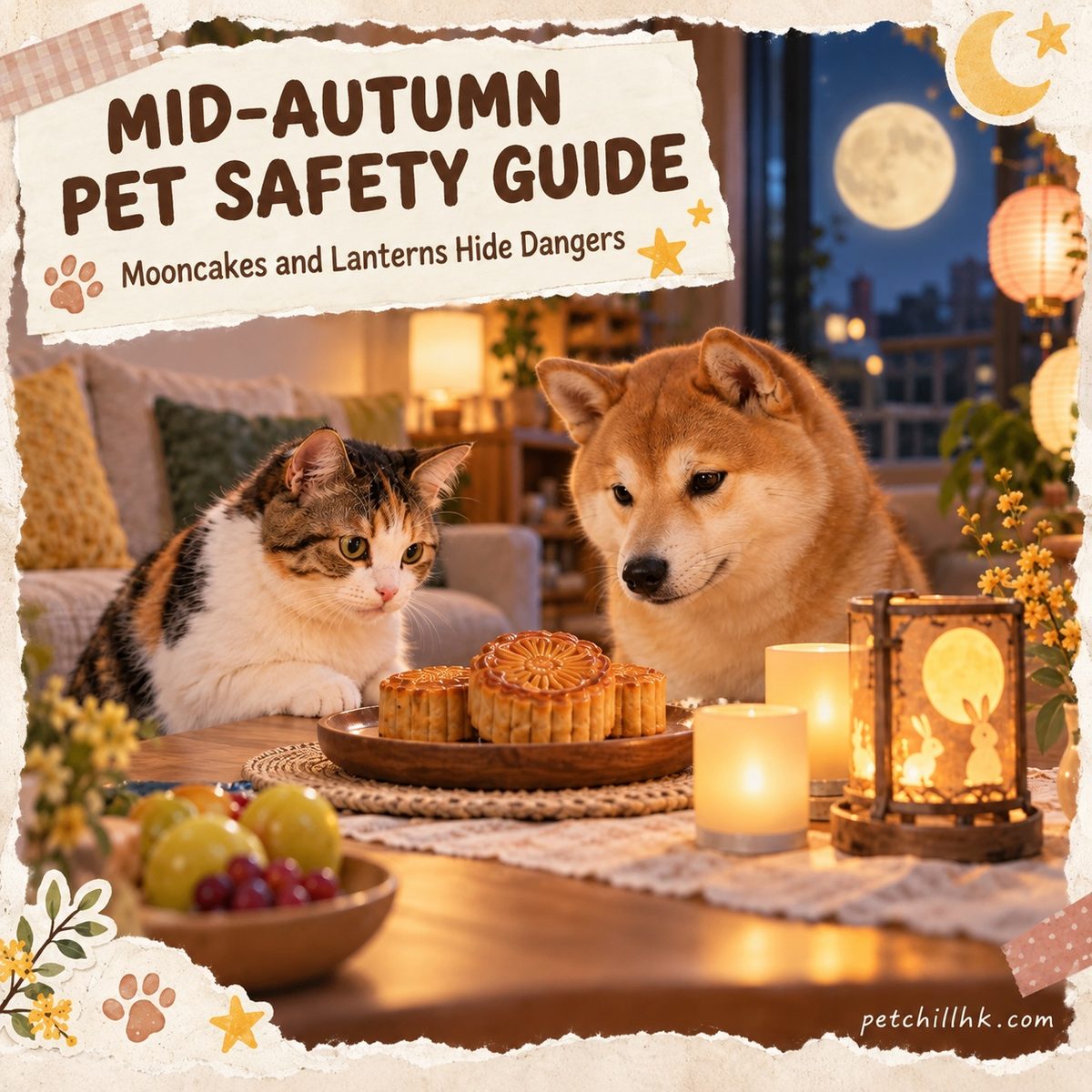
Quick answer: Mid-Autumn is a "high-risk festival" for pets: human mooncakes are high in oil, sugar and salt and must not be shared with cats or dogs; raisins, chocolate and xylitol in fillings and fruit platters are outright lethal ingredients. Remember four things for a safe festival — put the mooncakes away, swap real candles for electronic LEDs, close windows and draw curtains from dusk to prevent frightened pets going missing, and give your pet a quiet safe corner before guests arrive. If a high-risk food is eaten, do not induce vomiting yourself — note the ingredients and amount and seek veterinary help immediately.
Families reunite under the full moon, and pets should enjoy the festival too — but for cats and dogs, the mooncakes at home, the lit candles and the fireworks outside the window are all hidden risks. This Mid-Autumn pet safety guide draws on veterinary and canine-feline nutrition knowledge to break down each high-risk festive scenario, so you can keep everyone — humans, cats and dogs — safe through the festival.
Why is Mid-Autumn a "high-risk day" for pets?
Around Mid-Autumn, the home suddenly changes: mooncakes and candles appear on low coffee tables, lanterns hang all over the living room, bangs drift in from outside the window, and friends and relatives visit, bringing more foot traffic. Cats and dogs hear and smell several times more keenly than we do, and sudden changes in their environment put them on high alert — and that's when accidents happen: bolting in fright, eating things they shouldn't, even dashing out the front door. Understanding that "festival = stacked environmental risks" is the first step in protecting your pet.
Mooncakes, pomelo and festive food: what can and can't be fed?
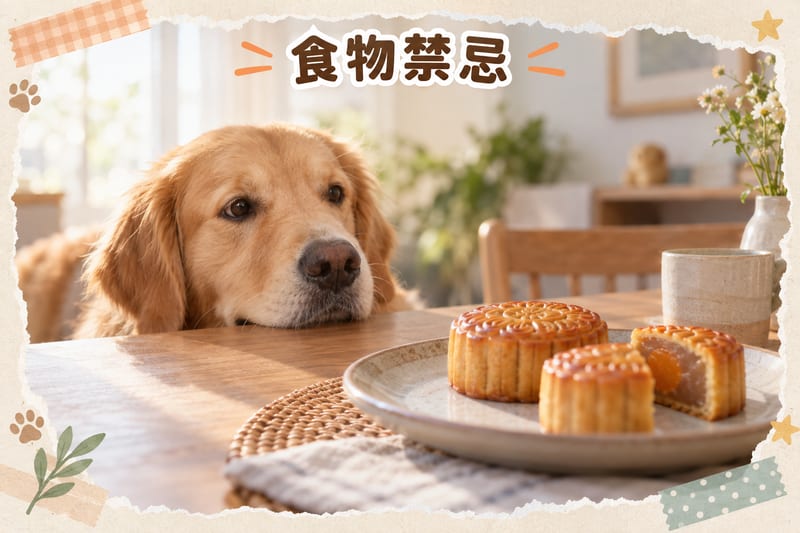
The answer is simple: do not share human mooncakes with cats or dogs. Mooncakes are high in oil, sugar and salt; the pastry is greasy and lotus paste and five-kernel fillings are intensely sweet. Cats' and dogs' digestive systems can't cope — even a small amount can trigger vomiting, diarrhoea or even acute pancreatitis.
Based on canine and feline nutrition information, these common festive foods are highly dangerous to pets:
- Raisins and sultanas: common in mooncakes and fruit platters; can cause acute kidney failure, and even a small amount is unsafe for dogs
- Chocolate and cocoa: contain theobromine, which can cause a racing heart and seizures
- Xylitol: found in some sugar-free festive foods; causes blood sugar to crash and liver failure
- Onion and garlic: destroy red blood cells and cause anaemia
- Alcohol, strong tea and coffee: toxic to the nervous system
- Small sharp bones and leftovers: can pierce the digestive tract and cause obstruction
Use this table to quickly sort the Mid-Autumn dinner table into red and green lights:
| Festive food | Risk to pets | Safety level |
|---|---|---|
| Human mooncake (lotus paste / five-kernel) | High oil and sugar; vomiting, diarrhoea, even acute pancreatitis | Red |
| Fillings with raisins/sultanas | Risk of acute kidney failure | Red (lethal) |
| Chocolate mooncakes/desserts | Racing heart, seizures | Red (lethal) |
| Sugar-free foods (xylitol) | Blood sugar crash, liver failure | Red (lethal) |
| A little pomelo flesh | Irritates the gut; some cats and dogs get diarrhoea | Amber (not recommended) |
| Pet-specific mooncakes/freeze-dried treats | Low oil and sugar, safe ingredients | Green (count towards daily calories) |
The right approach is simple: put human food away and keep the table clean; if you want to include your pet in the celebration, give them PetChill freeze-dried pet treats or pet-specific mooncakes, counted within their usual daily meals — don't add extra meals just because it's a festival. To check a full list of toxic foods at home, see the toxic food list for cats; to tell how serious vomiting after ingestion is, see the complete guide to cat vomiting.

Candles, lanterns and incense: singed fur and fire risk
Scented candles on a low living-room table, little lit tea lights and narcissus candles are a double danger to curious cats and dogs: first, a swishing tail or an inquisitive nose can singe fur or cause burns; second, knocking them over can ignite paper decorations and curtains and start a house fire.
Safe approach: switch to electronic LED candles and battery lanterns for atmosphere; if you use real candles, put them high up in a covered holder and blow them out the moment you leave the room; avoid incense and mosquito coils where possible and use mosquito nets and window screens for physical protection instead.
Fireworks and loud bangs: bolting in fright, the top cause of pets going missing
If firework bangs aren't handled well, they can leave dogs with lasting fear responses; cats are just as sensitive. On Mid-Autumn night the bangs come one after another, and a frightened pet's first instinct is to "flee" — through the gate, out the window, slipping the leash.
Do all four of these to prevent your pet going missing:
- Close doors and windows and draw the curtains from dusk to reduce sound and light stimulation
- Take extra care at the door to stop a frightened pet bolting out
- Keep collar tag, phone number and microchip details up to date — to see how microchips help reunite lost pets, read the complete guide to cat microchipping
- Prepare a "safe den" indoors — a quiet room with white noise where they can retreat on their own
Cat owners in high-rise flats should also note: a frightened cat may easily dash to a window "lookout" spot, so check that screens and anti-fall nets are secure in advance — see the guide to preventing cats falling from height.
Aromatherapy, mosquito coils and air fresheners: invisible toxins
Chemical fragrances are an often-overlooked source of household toxins. Cats lack certain liver enzymes and struggle especially to metabolise essential oils such as tea tree and eucalyptus; the pyrethrins in electric mosquito liquid and mosquito coils are likewise a risk to cats. If you want fresher air during the festival, opening windows for ventilation or using pet-safe physical cleaning is enough.
Guests visiting: give your pet a safe corner
Feed your pet and have water and the litter tray ready before the lights go on, then settle them in a quiet room with a white-noise machine or soft music to mask the voices. Never force them out to meet guests — respecting their escape route is the best festive gift you can give.
What if something is eaten? The golden three steps
- Stop: immediately remove the remaining food and stop further eating
- Record: note what was eaten, how much and when
- Seek help: contact a veterinarian as soon as possible — never induce vomiting yourself or give medication on your own
Remember: just because humans can eat it doesn't mean cats and dogs can. Keeping dangerous food out of reach every day will always beat panicking afterwards.
Key takeaways
- ✅ Never share human mooncakes with cats or dogs: high in oil, sugar and salt, even a small amount can cause vomiting, diarrhoea or even acute pancreatitis
- ✅ Raisins, chocolate and xylitol are the three lethal ingredients in mooncake fillings — even one bite means seeking veterinary help immediately
- ✅ Swap real candles for electronic LEDs or battery lanterns to eliminate singed fur and fire risk in one go
- ✅ Four steps to prevent pets going missing: close windows and draw curtains, watch the gate, update microchip and tag details, prepare a safe den with white noise
- ✅ Golden three steps after ingestion: stop, record the ingredients, amount and time, seek help — never induce vomiting yourself
- ❌ Aromatherapy, essential oils and electric mosquito liquid have hidden toxicity for cats — don't use them for atmosphere during the festival
- ❌ Don't force your pet out to meet guests — respecting their escape route is the best festive gift
PetChill's Reminder
The star of Mid-Autumn is reunion, not the clinic. Put the mooncakes away, swap out the real candles and close the doors and windows — three steps to keep your pet safe for the night. To celebrate with peace of mind, PetChill's selection of freeze-dried pet treats, anti-loss ID tags and white-noise machines can help you and your cat or dog enjoy a worry-free Mid-Autumn.
To learn more about festive pet safety, keep following PetChill's latest articles.